Martial Arts / Taekwondo / Karate Area Flooring in Pakistan
Creating a safe, high-performance training space for martial arts — whether it’s Taekwondo, Karate, Judo, or mixed martial arts — starts from the ground up. The right flooring protects athletes, improves technique, increases longevity of equipment, and projects professionalism for studios, clubs, schools, and gyms. At Unicorn Flooring, we design and install martial-arts-specific surfaces across Pakistan that balance impact absorption, traction, hygiene, and durability — all while fitting local budgets and climate realities.
This in-depth guide walks you through everything you need to know: the best flooring types for martial arts, technical features to prioritise, local considerations for Pakistan, estimated costs, maintenance tips, installation insights, case studies and a short FAQ to answer common questions. If you’re planning a new dojang, renovating a karate dojo, or upgrading a community centre, this article will help you make the right flooring decision.
Why flooring matters more than you think
Flooring for martial arts is not just about aesthetics. It directly affects:
- Safety — proper shock absorption and stable traction reduce the risk of concussions, joint injuries, and slips.
- Performance — the right surface lets athletes pivot, strike and land with confidence; it also gives consistent footing for footwork and kicks.
- Durability — training spaces endure daily impact, sweat, and equipment; flooring must resist wear and maintain properties over time.
- Hygiene — porous or hard-to-clean surfaces foster bacteria and fungi; a hygienic surface reduces infections and skin problems.
- Liability & insurance — safer floors reduce injury claims and may even affect insurance premiums for commercial facilities.
- Image & retention — a well-finished floor signals professionalism and helps retain members by improving the training experience.
In Pakistan, where training spaces range from professional clubs in Lahore and Karachi to grassroots academies in smaller cities, choosing the right balance of safety, cost, and maintenance is crucial.
What martial arts floors need (technical checklist)?
Before choosing a product, make sure it can deliver these fundamentals:
Shock absorption & impact attenuation
- Protects knees, ankles, hips and spine during falls and repeated impact.
- Measured as percentage of force reduction — higher is better for high-impact sports.
Controlled traction
Enough grip to prevent slipping during kicks and pivots, but not so sticky that it causes joint-twisting when a foot is anchored.
Surface friction uniformity
Consistent grip across the floor prevents surprises during footwork.
Energy return & stability
A slightly responsive surface helps in explosive movements but should remain stable for balance work.
Shock isolation between sections
For modular mats, seams should not create hard edges that cause injury.
Durability & wear resistance
Able to withstand daily training, occasional dropping of gear, and frequent cleaning.
Hygiene & moisture resistance
Impervious or sealed surfaces that can be wiped and disinfected; resistance to sweat absorption.
Fire resistance & safety standards (where applicable)
Non-flammable or slow-burning materials preferred for commercial installations.
Comfort & noise reduction
Padding that reduces noise and makes training more pleasant for neighbours in shared buildings.
Flooring options for martial arts — pros, cons, and when to choose them
Below are the most common and practical flooring solutions suitable for martial arts in Pakistan, with their strengths and limitations.
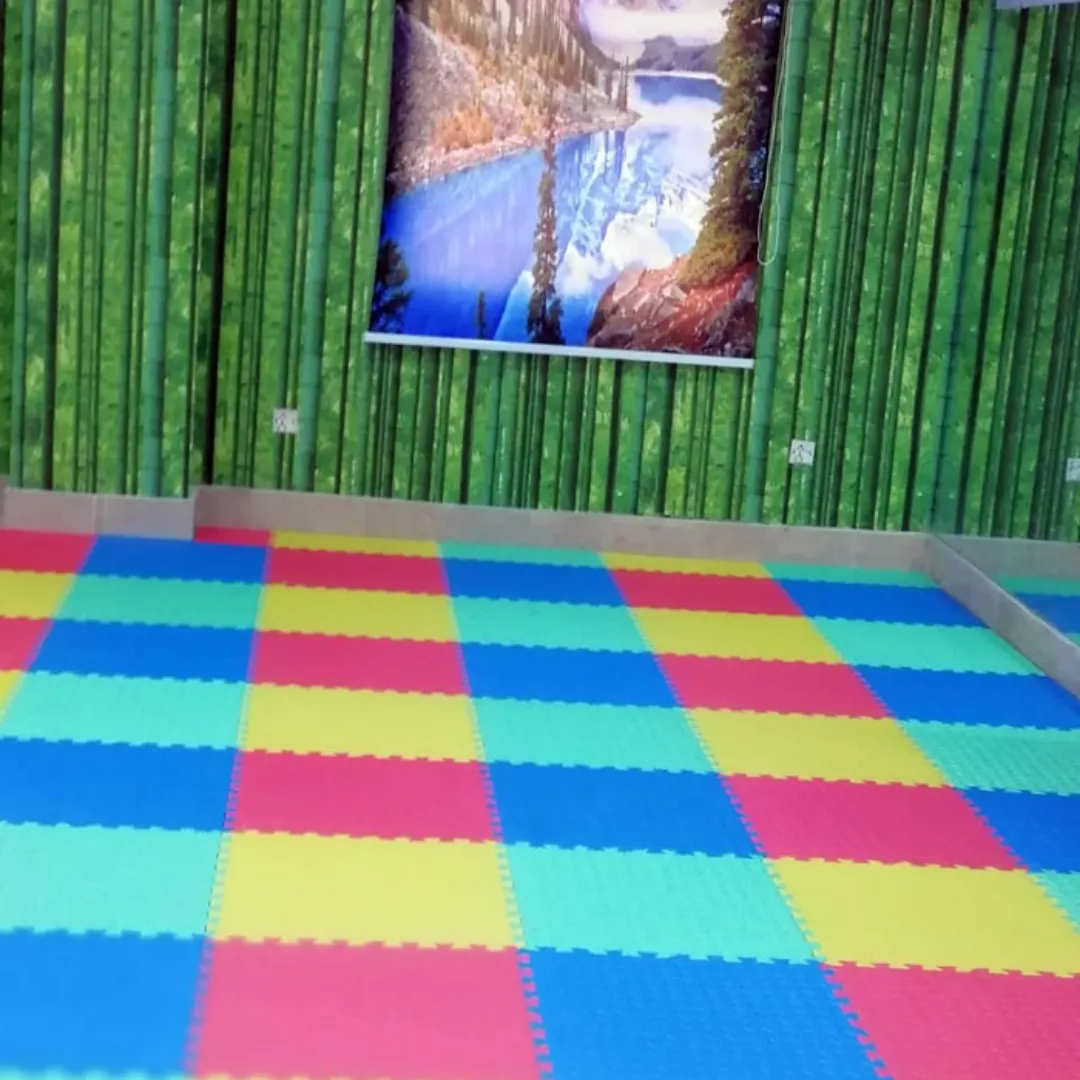
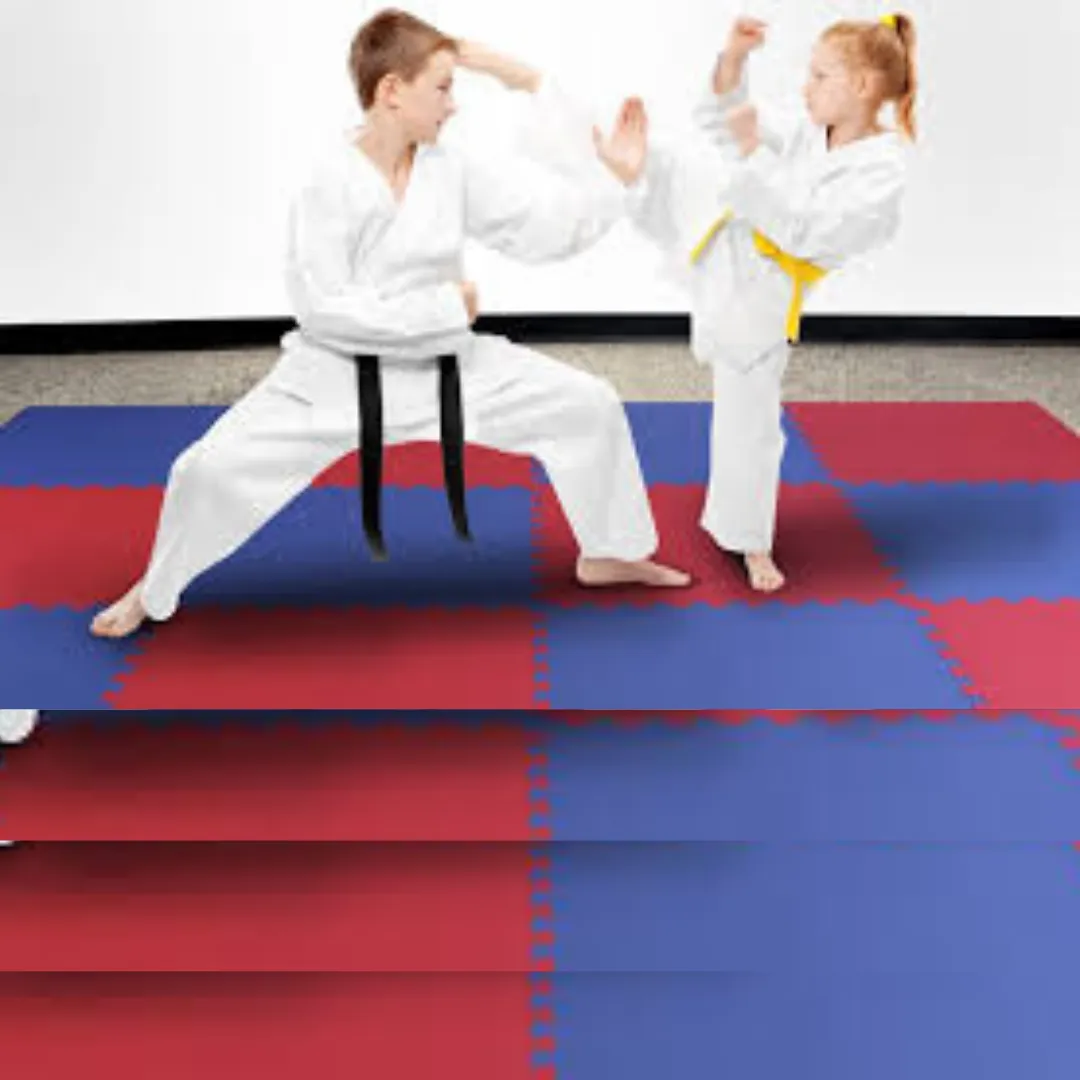
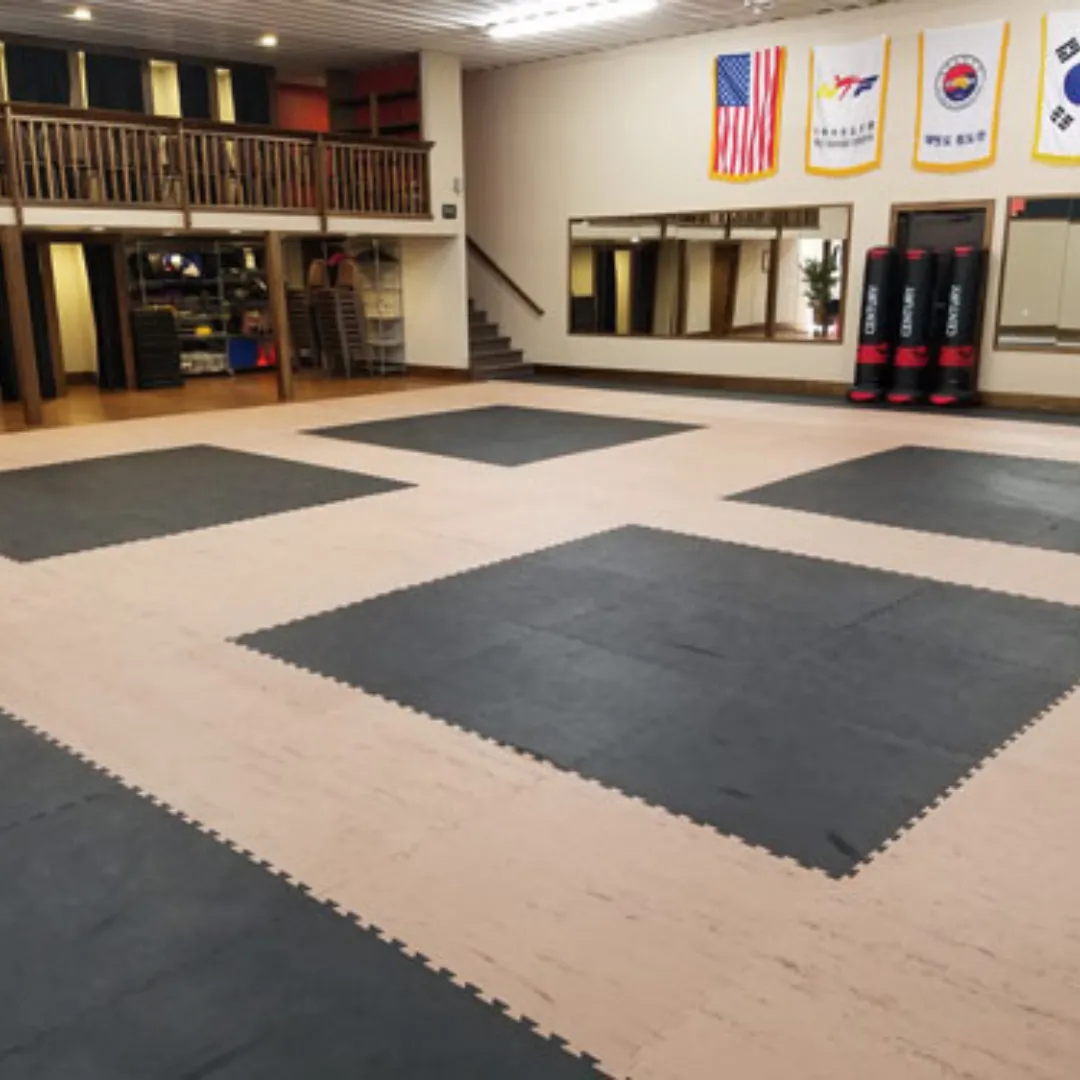
1. Puzzle EVA Foam Mats (Interlocking Mats)
Overview
Interlocking EVA foam tiles (commonly 20mm–40mm thick) are widely used for martial arts due to affordability and easy installation.
Pros
- Excellent initial shock absorption for light to moderate falls.
- Easy to install, replace, and relocate.
- Available in multiple colours and protective top layers.
- Good for home gyms, community centres, and beginner dojos.
Cons
- Can compress over time with heavy weight and repeated high-impact use.
- Edges and seams may separate under repeated lateral stress unless properly installed and taped.
- Not ideal for heavy commercial use without thicker, high-density variants.
Best for
Small academies, kids’ classes, temporary setups, dojos with lower daily footfall.
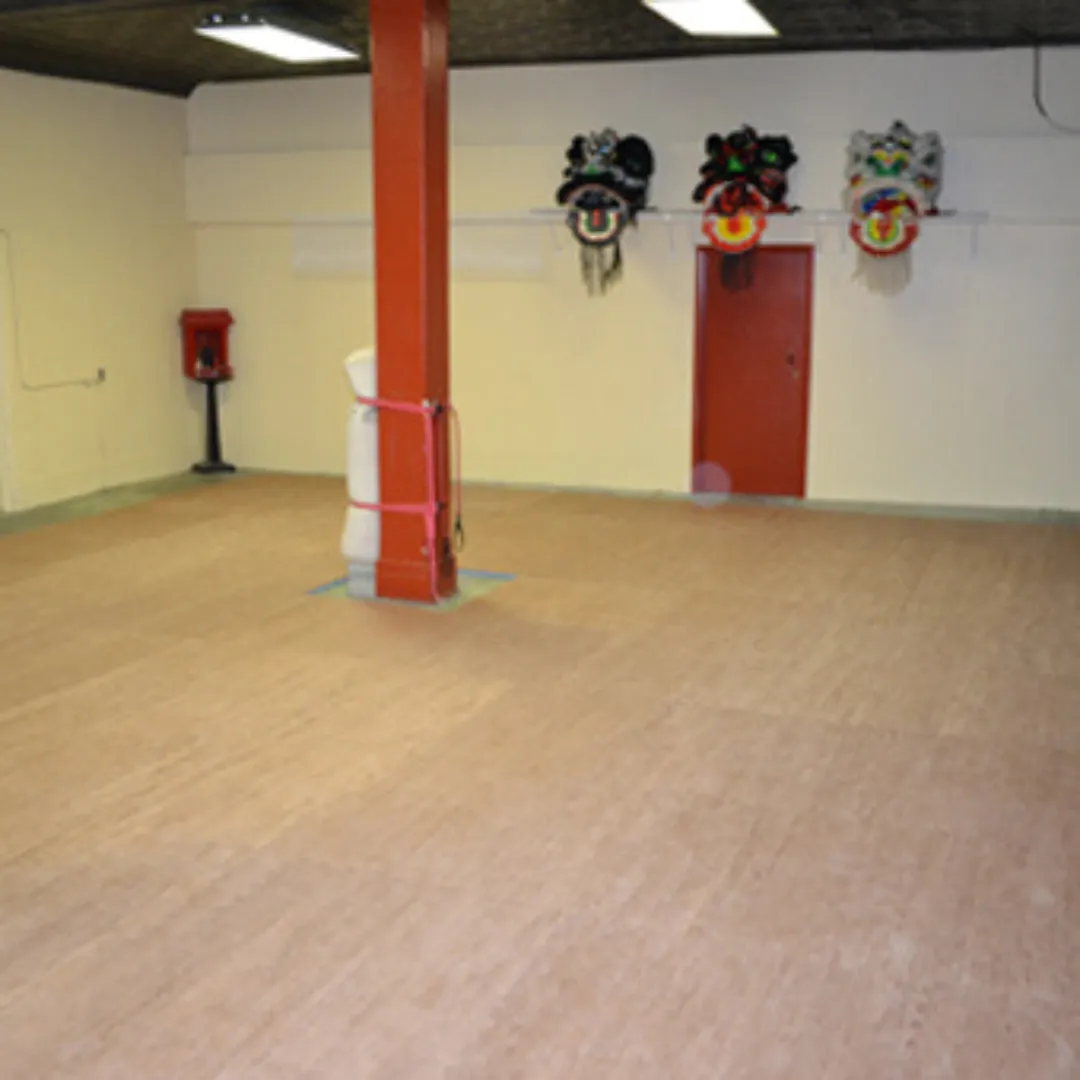
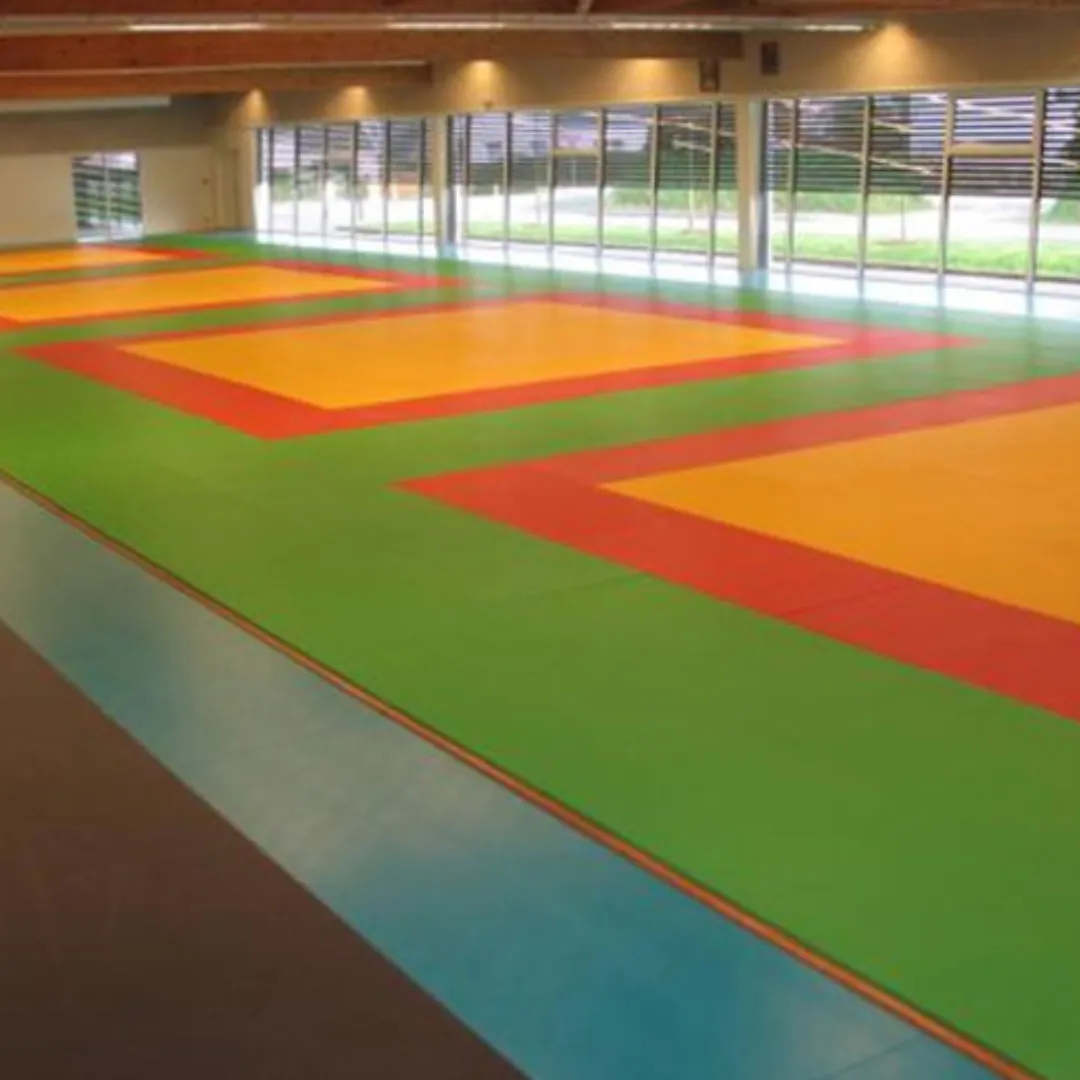
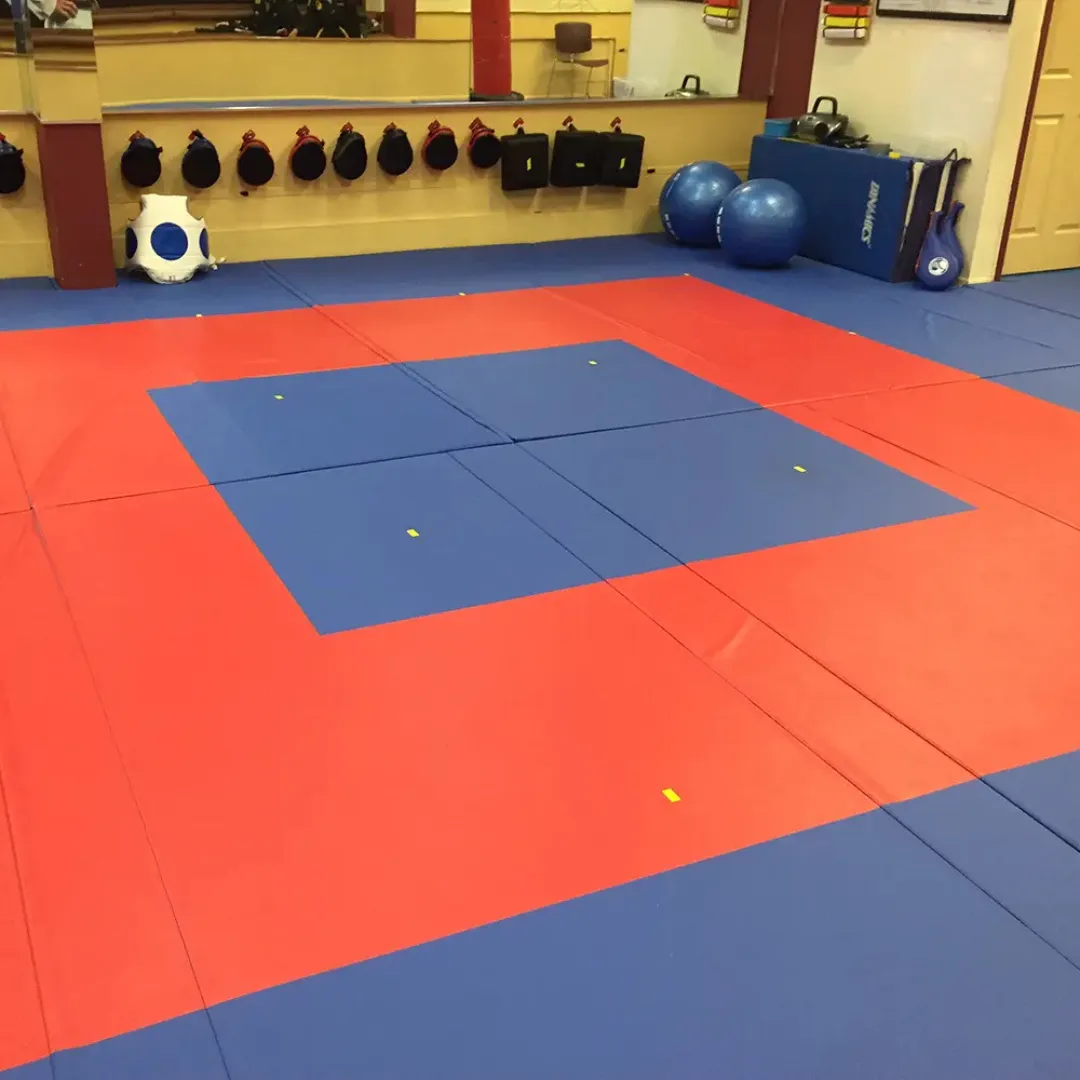
2. Vinyl Sports Flooring with Underlay (PU / Vinyl on Foam or Wood Substrate)
Overview
A professional solution — durable vinyl or polyurethane surface bonded to resilient underlay or installed over a sprung subfloor.
Pros
- Durable and easy to clean.
- Provides excellent combination of traction and shock absorption.
- Seamless options reduce bacteria build-up.
- Long lifespan in commercial settings.
Cons
- Higher upfront cost and requires professional installation.
- Needs a properly prepared subfloor to avoid defects.
Best for
Commercial dojos, fitness centres, schools and universities; clubs seeking a long-term professional finish.
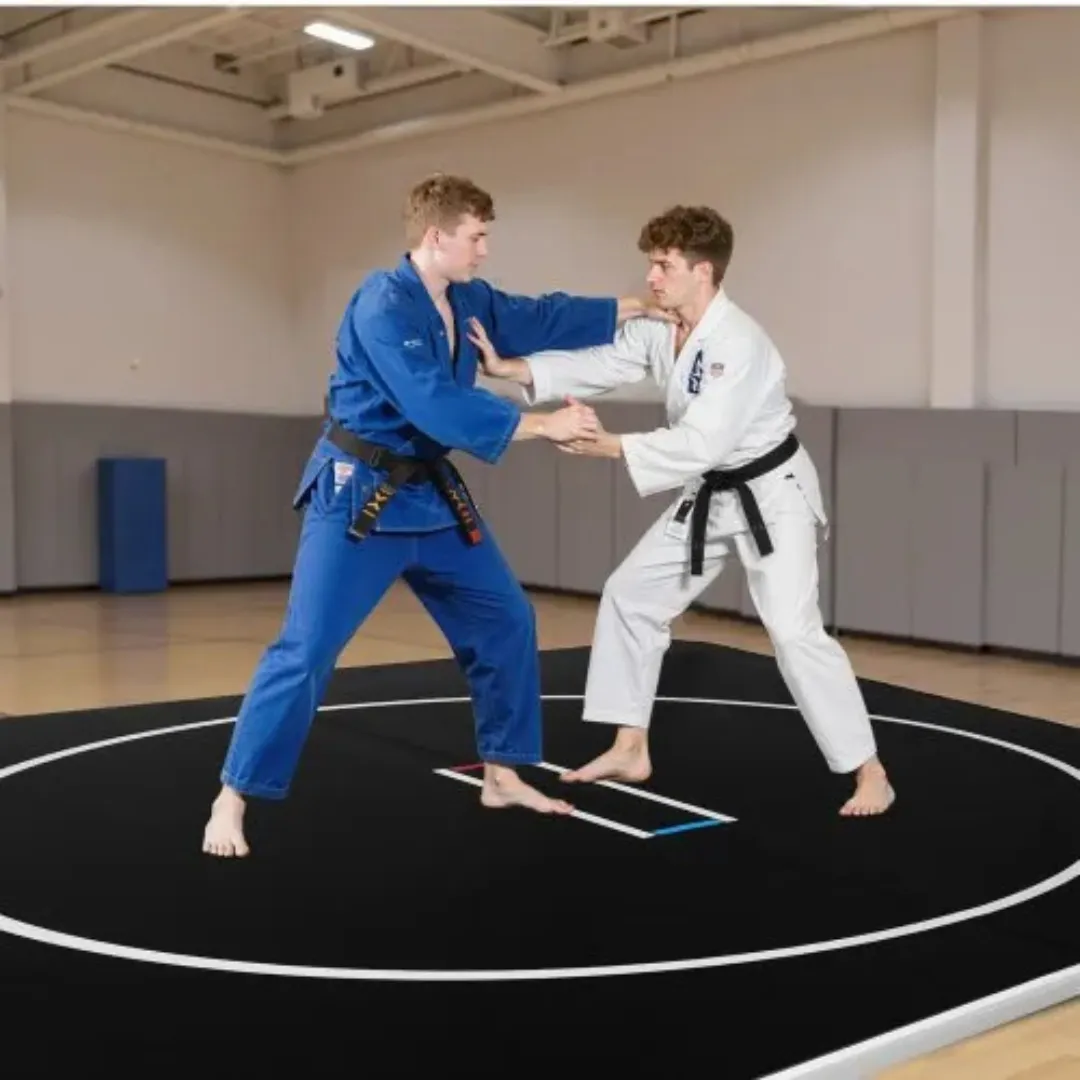
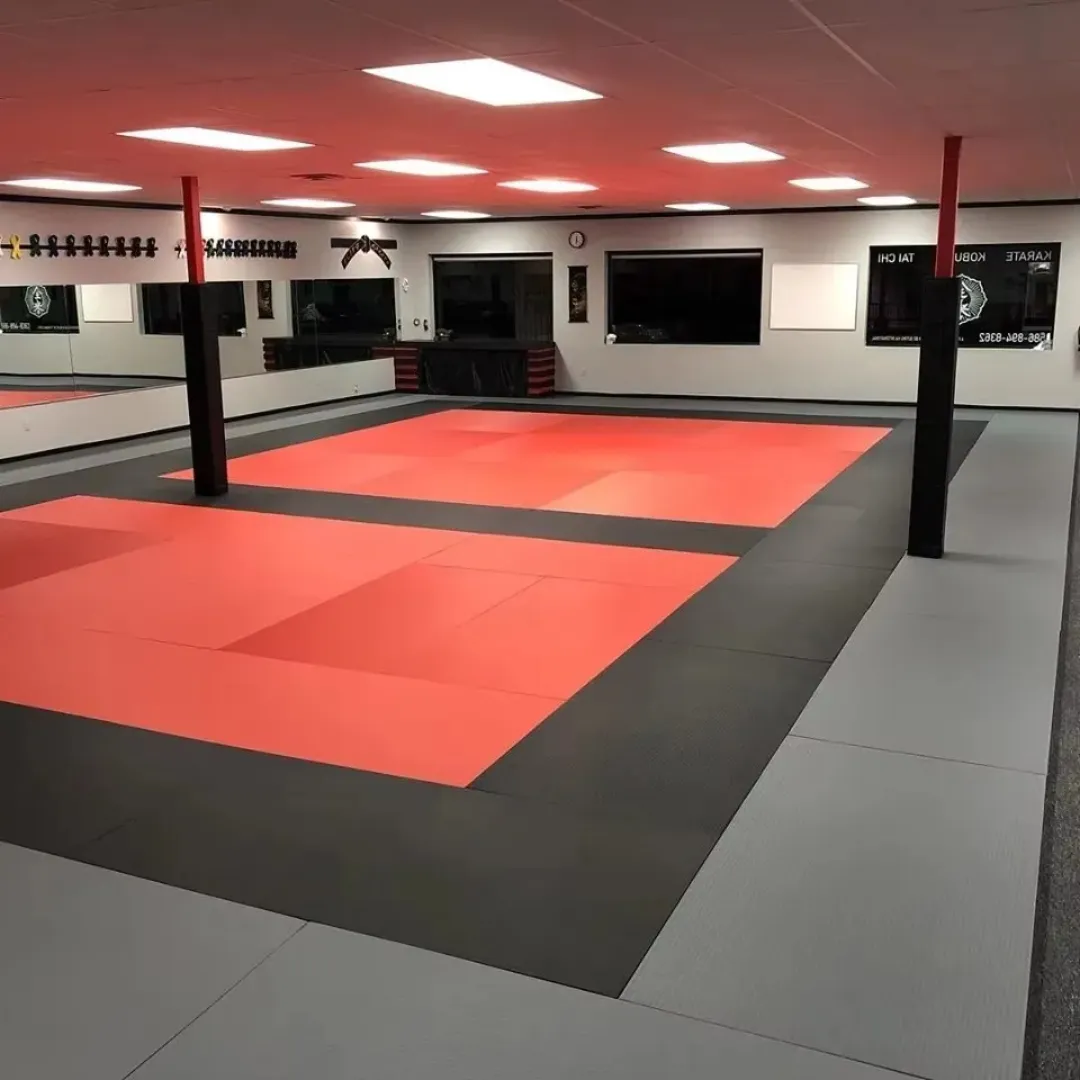
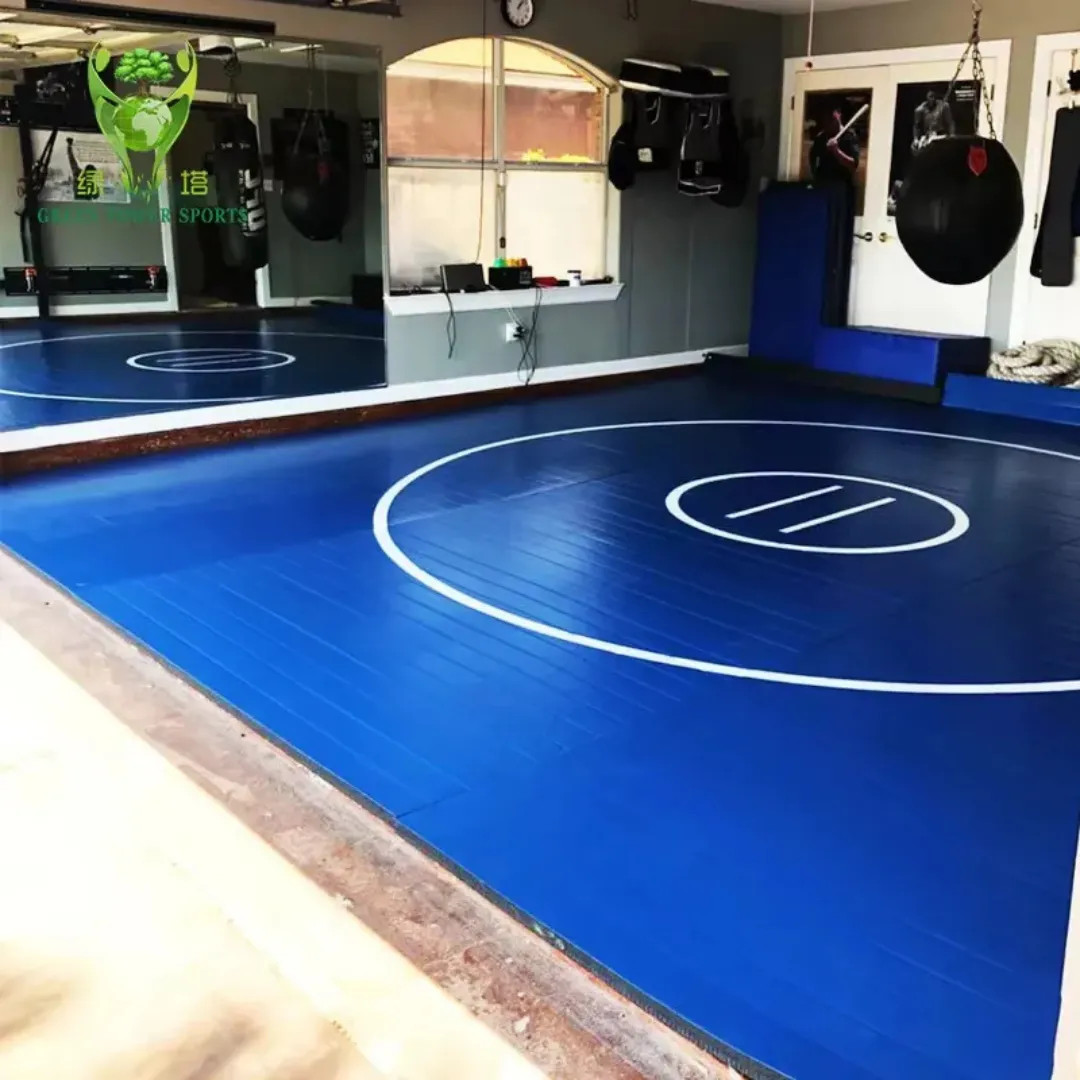
3. Tatami Mats (Wrestling/Judo/Tatami style)
Overview
Traditional tatami-style mats are used for Judo and some Karate or Taekwondo applications, either made from foam with a vinyl tatami surface or woven materials.
Pros
- Excellent for thrown martial arts because of high shock absorption.
- Cultural authenticity for traditional dojos.
- Often modular for flexible layouts.
Cons
- Heavier and more expensive than EVA foam.
- Requires storage solutions and careful cleaning to prevent moisture problems.
Best for
Judo clubs, throw-heavy styles, traditional dojos.
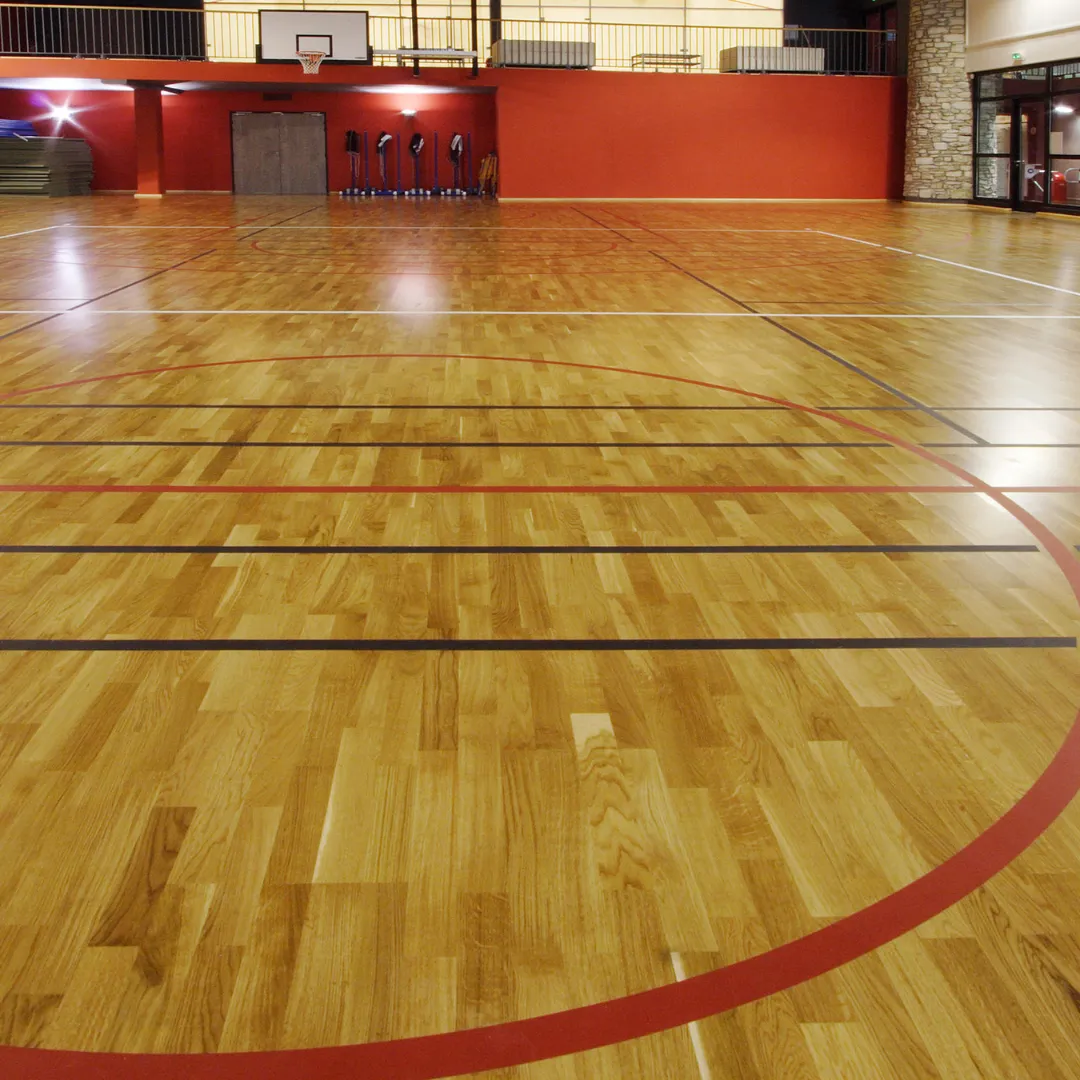
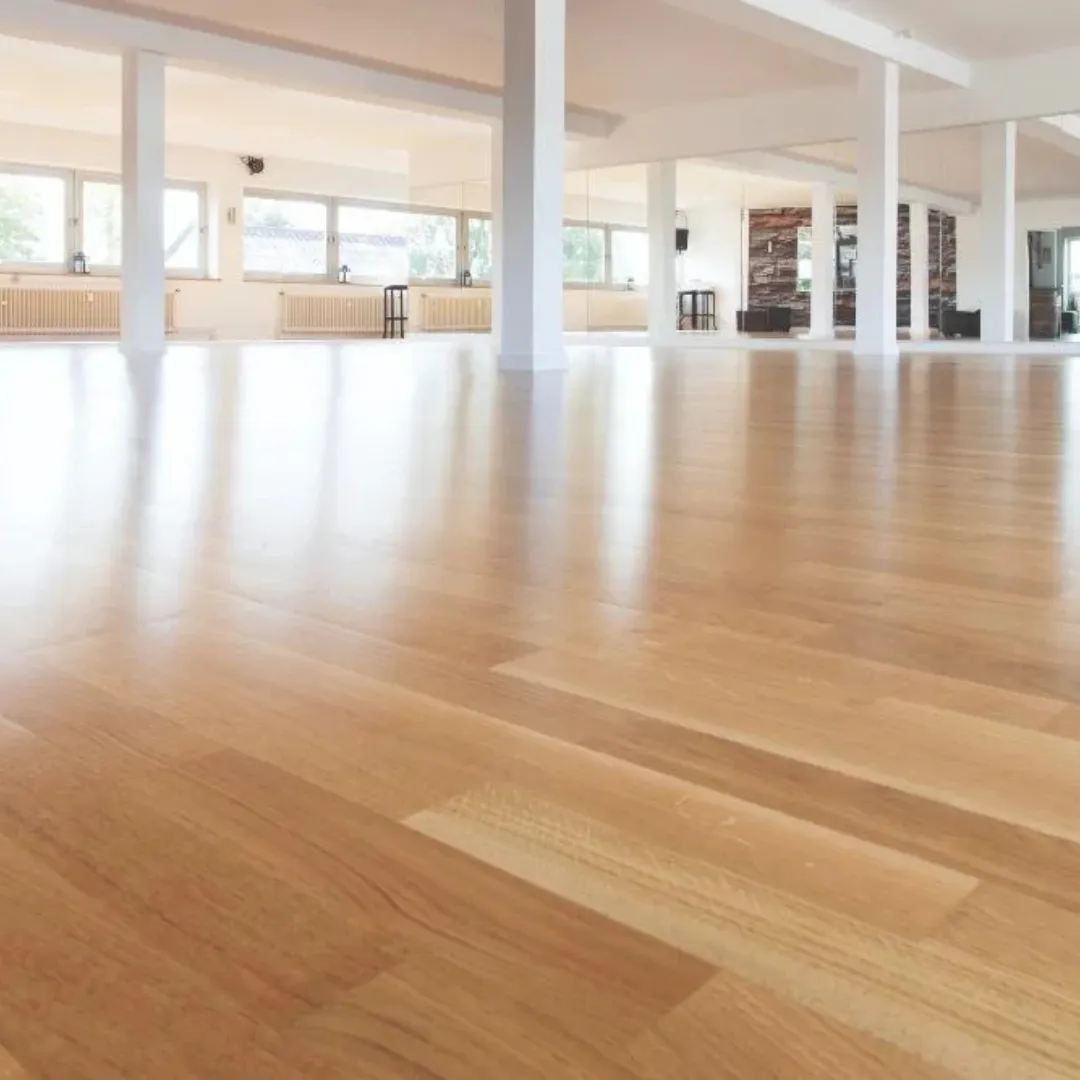
4. Sprung Wooden Floors with a Resilient Top Layer
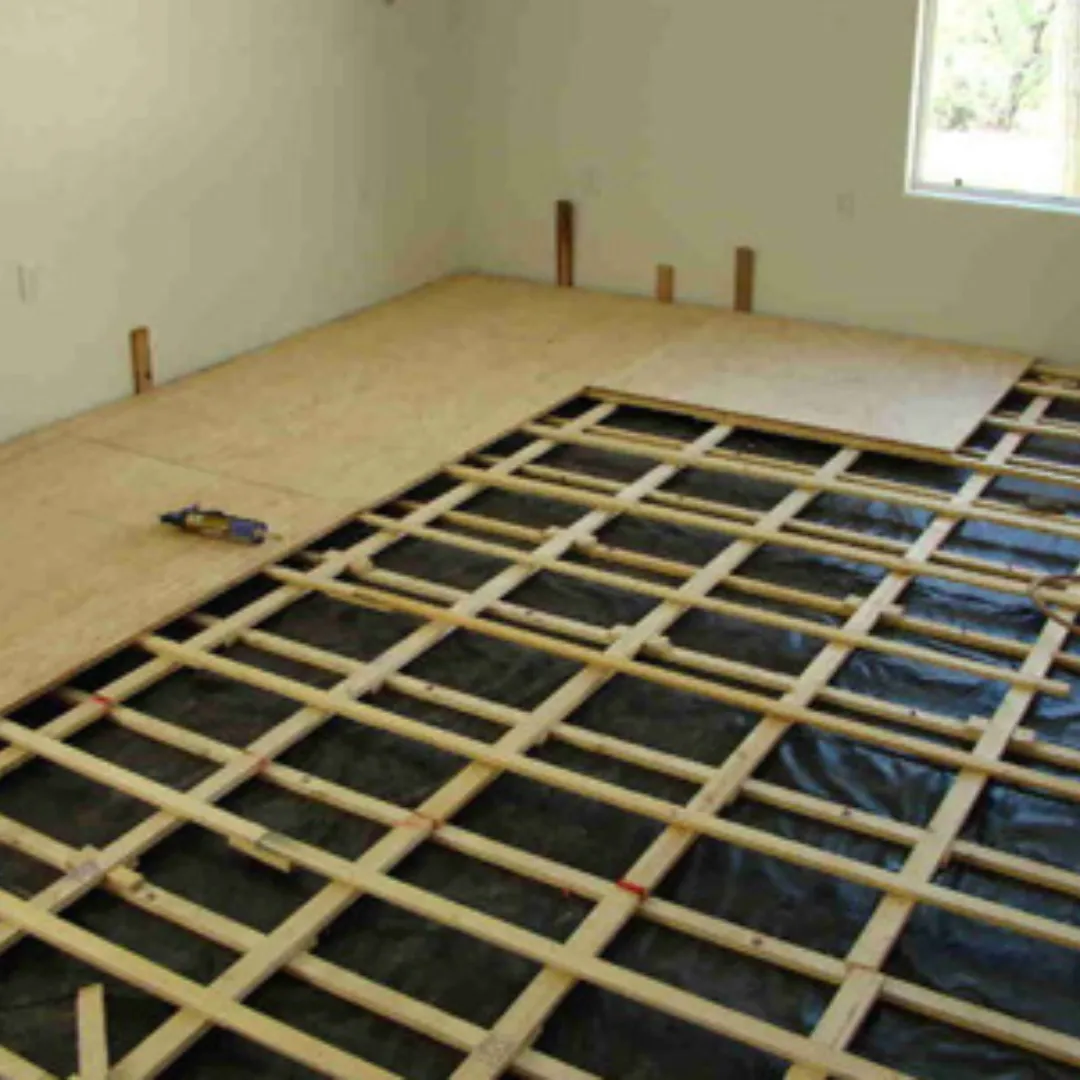
Overview
Sprung subfloor with wooden surface topped by a protective finish or thin sports layer.
Pros
- Excellent energy return and balance for footwork-heavy styles.
- Premium look and long service life if maintained.
Cons
- Much higher cost.
- Not ideal for high-impact throws unless combined with additional matting.
- Susceptible to moisture — Pakistan’s humid regions require climate control.
Best for
High-end academies, performance halls, training centres emphasizing footwork and kata.
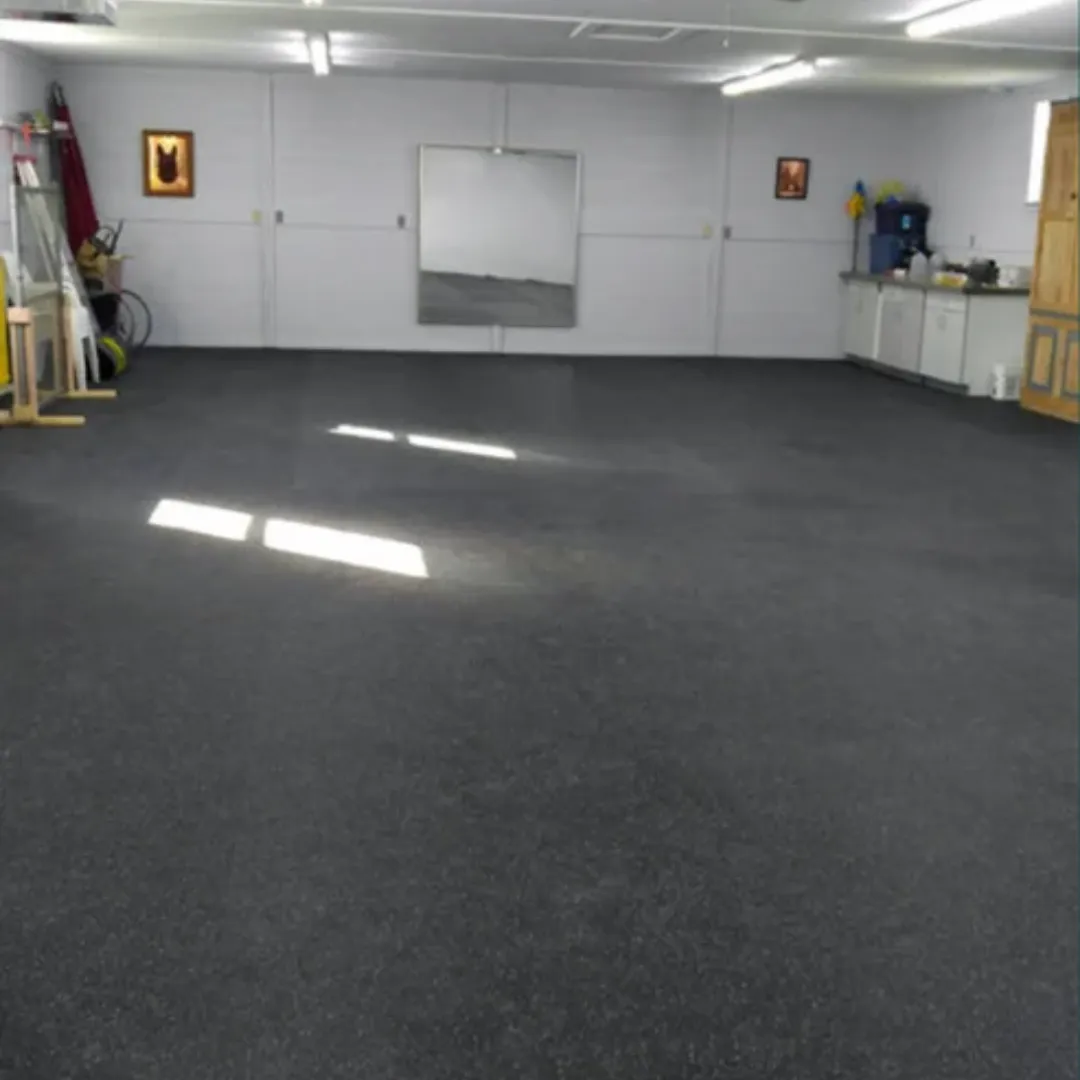
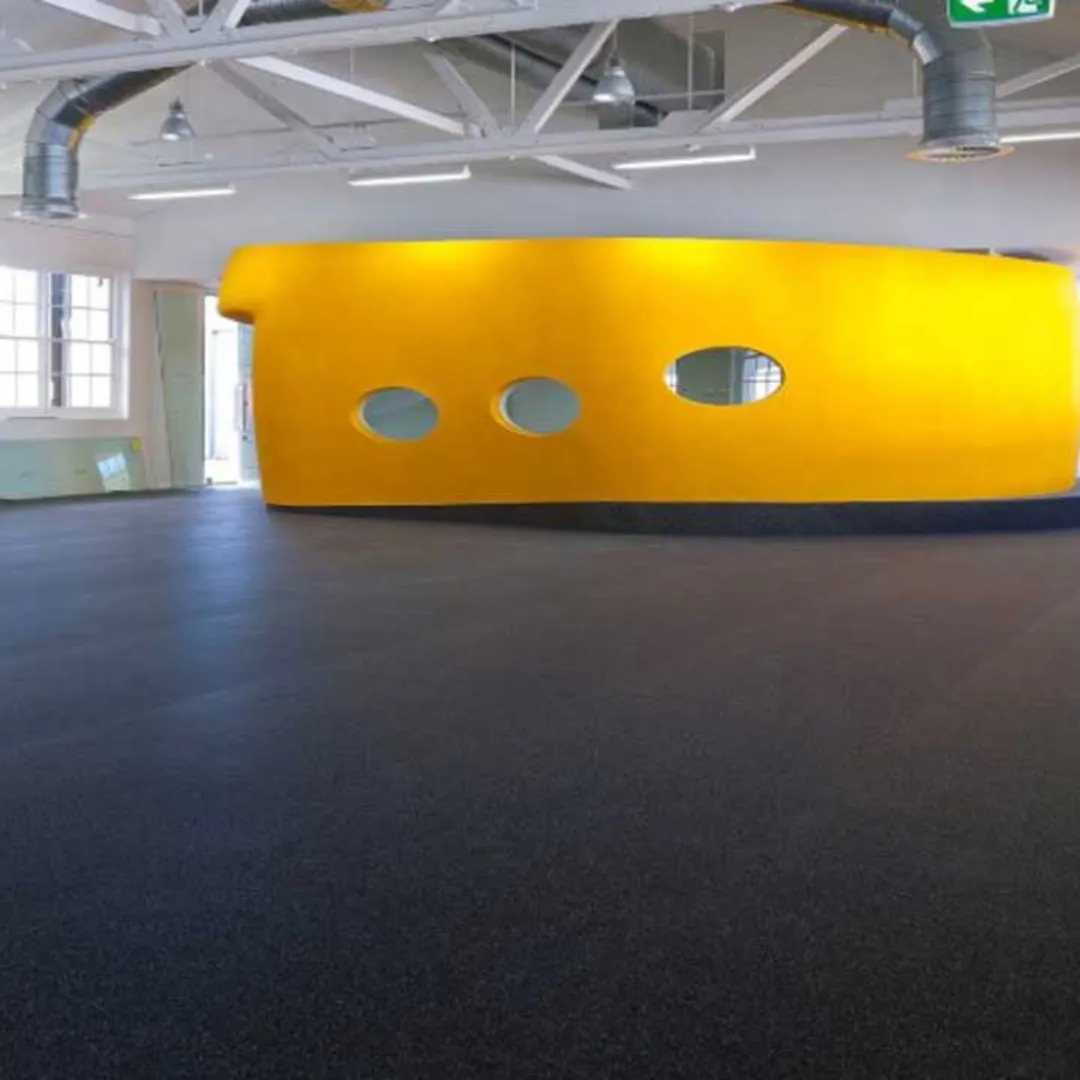
5. Rubber Roll Flooring
Overview
Rubber sheets (6mm–10mm and higher) used more for general gyms but can be combined with mats for martial arts.
Pros
- Durable, easy to maintain, and good under heavy equipment.
- Great for adjacent zones like strength areas.
Cons
Too firm alone for throwing arts; may be paired with mats for impact zones.
Best for
Mixed-use facilities where martial arts and weight training co-exist.
Choosing the right thickness and density
Thickness and density are the two parameters that determine a floor’s protective qualities.
- EVA Foam (Puzzle Mats): 20mm for light training; 25–40mm preferred for dojos with moderate impact. High-density EVA at 30–40mm is best for commercial schools.
- Tatami-style: 40mm–50mm with high-density foam core for judo/throws.
- PU/Vinyl on underlay: Underlay thickness and material provide the primary shock absorption; top vinyl thickness typically 2–4mm with a 6–12mm resilient underlay.
- Sprung floors: Subfloor design and spring action determine shock characteristics — must be engineered per local codes.
Unicorn Flooring recommends selecting materials with proven dynamic load-bearing properties and testing small areas where possible. We can provide sample panels and demonstrations to feel the balance between grip and cushioning.
Climate & local considerations for Pakistan
Pakistan’s climate varies — hot and dry in many parts, humid in coastal regions, and colder in northern areas. These realities affect material choice:
- Humidity & moisture: Avoid materials that trap moisture or degrade quickly. Use sealed surfaces (vinyl/PU) or closed-cell foam that resists sweat absorption. Ensure underfloor ventilation in humid zones.
- Heat resistance: Dark surfaces in direct sunlight can get hot. Choose materials rated for higher temperatures and avoid direct sunlight exposure through large glass windows.
- Dust & sand: In cities like Karachi and Lahore, dust can abrade surfaces. Regular cleaning protocols and entrance mats are essential.
- Local installation & repair services: Opt for suppliers who offer local support; Unicorn Flooring provides nationwide installation and service across major Pakistani cities.
Installation: what to expect
Site survey & subfloor check
A qualified technician inspects the subfloor for levelness, moisture, and exposed services.Subfloor preparation
Repairs, levelling compound, and moisture barriers may be applied as required.Acclimatisation
Certain materials (vinyl) may need time in the training environment to settle.Laydown & bonding
Interlocking mats are assembled; roll goods are glued or heat-welded; sprung floors are installed per engineering spec.Sealing & finishing
Edges anchored, transitions to other surfaces finished, and surface sealed where required.Quality check & handover
Unicorn Flooring runs impact/traction checks and trains onsite staff on maintenance.
Typical installation time varies with size and complexity — a single standard dojo (100–300 sq. ft) can often be completed in 1–3 days for modular mats, and up to 1–2 weeks for fully bonded PU systems.
Maintenance and cleaning — keep your floor safe and durable
Daily and weekly maintenance keeps performance and hygiene high:
Daily: Dry mop to remove dust and grit; spot-clean sweat and spills immediately.
Weekly: Damp-mop with mild detergent or manufacturer-approved cleaner. Avoid harsh solvents that break seals.
Monthly: Inspect seams, edges, and fastenings. Replace any damaged modular tiles promptly.
Annual: Deep-cleaning and re-sealing if recommended for your floor type.
Avoid dragging heavy equipment across the surface. Use wheel-free trolleys or lift equipment where necessary. For disinfecting, use hypoallergenic products safe for floor materials; Unicorn Flooring supplies recommended cleaning solutions compatible with our installations.
Cost guide (Pakistan) — ballpark estimates
Costs vary widely based on material, thickness, installation complexity, and location. Below are approximate ranges per square foot (PKR), for budgeting purposes only. For an accurate quote, Unicorn Flooring provides free site surveys.
- EVA Puzzle Mats (20–30mm): PKR 400 – 900 / sq. ft (material + basic installation)
- Tatami-style Mats (40–50mm, high-density): PKR 900 – 1,800 / sq. ft
- PU/Vinyl Sports Flooring (fully bonded, with underlay): PKR 1,200 – 2,800 / sq. ft
- Sprung Wooden Floor (premium installations): PKR 2,500 – 6,000+ / sq. ft
- Rubber Roll Flooring (for mixed-use zones): PKR 700 – 1,500 / sq. ft
These ranges are indicative, and prices can fluctuate with market conditions and project scope. Unicorn Flooring offers transparent quotations and phased payment options for larger projects.
Case study (typical): Community Karate Dojo — Lahore
Challenge: A community dojo with 40 regular students needed a safe surface for Taekwondo and Karate, budget-conscious, minimal disruption.
Solution: 30mm high-density interlocking EVA mats with reinforced vinyl top layer; taped edges and perimeter ramping for transitions.
Outcome
- Improved safety and lower incidence of minor injuries.
- Installation completed in two days.
- Easy to clean and low maintenance.
- Scalable — additional tiles bought and stored for future expansion.
Safety standards & certification
While Pakistan does not have a single national standard exclusively for martial arts flooring, international test methods (shock absorption, slip resistance, fire classification) provide useful benchmarks. Unicorn Flooring sources materials with test certificates from recognised labs and can supply conformity documentation on request.
If your academy is part of a school, university, or government project, we advise early engagement so flooring specifications align with procurement requirements and safety codes.
Designing your layout — practical tips
- Zoning: Mark warm-up, sparring, and equipment zones. Use different colours or demarcations for clarity and safety.
- Seamless fall zones: Ensure high-fall areas have continuous impact-absorbing coverage (no hard edges).
- Edge ramps: Provide smooth transitions to adjacent flooring to prevent tripping.
- Storage: Store extra mats flat in dry, ventilated spaces to prolong life.
- Lighting & ventilation: Proper ventilation reduces moisture and odour; even lighting reduces missteps.
Why choose Unicorn Flooring?
At Unicorn Flooring we combine material expertise with local on-the-ground experience across Pakistan. Here’s what sets us apart:
- Local presence & nationwide installation — teams in major cities for timely installation and service.
- Material selection tailored to martial arts — from high-density tatami to commercial vinyl solutions.
- Transparent quoting & real-world testing — sample panels and demo installs so you can feel the surface before committing.
- Aftercare & maintenance packages — optional service plans for cleaning, repairs, and warranty support.
- Custom design & branding — custom colours, logo inlays, and layout design to match your academy’s identity.
Final thoughts
Selecting the right martial arts flooring in Pakistan requires a balance between safety, performance, durability and cost. Whether you run a grassroots karate club, a professional Taekwondo academy, or a mixed-use gym, the right flooring transforms your training environment — keeping students safe, building confidence, and reflecting your academy’s standards.
Unicorn Flooring is ready to help: from free site surveys and material demos to professional nationwide installation and ongoing maintenance. If you want a tailored recommendation for your space — including samples and a transparent quote — contact us and we’ll help you choose the best floor for your martial art, budget and training goals.
FAQ’S
Which floor is best for Taekwondo and high-impact kicking?
A high-density EVA mat or tatami-style mat (30–50mm) that offers strong shock absorption and enough traction for pivoting. For professional academies, PU/Vinyl over resilient underlay is excellent.
Are puzzle mats hygienic?
Closed-cell EVA puzzle mats are hygienic and easy to clean; choose a top layer that resists sweat penetration and disinfect with recommended cleaners regularly.
How long will a commercial martial-arts floor last?
With proper maintenance: EVA/tatami mats 3–7 years (depends on density and use); vinyl/PU bonded systems 8–15 years or more.
Can I install flooring over existing tiles?
Often yes, but subfloor may need levelling and moisture checks. Unicorn Flooring inspects and recommends preparation steps.