Jogging track flooring options in Pakistan
Jogging tracks are more than painted lanes around a field — they’re an invitation to move, socialize and build healthier communities. In Pakistan, where parks, schools, housing societies, and corporate campuses increasingly prioritise active lifestyles, the right jogging track flooring can make the difference between a space that’s used every day and a track that sits empty. This in-depth guide explains types of jogging track surfaces, pros and cons, design and installation considerations, local cost pointers, maintenance best practices, and buying tips tailored to Pakistan’s climate and budgets.
Why the right jogging track floor matters?
A jogging track’s surface affects comfort, safety, durability, maintenance cost, athletic performance and accessibility:
- Injury prevention & comfort: Shock-absorbing surfaces reduce joint stress and lower the risk of impact injuries.
- Year-round usability: Weather-resistant materials let facilities stay open through hot, wet, or variable conditions.
- Traction & safety: Good grip reduces slips when the surface is wet or during quick turns.
- Aesthetics & branding: Colour, lane markings and logos create identity and improve wayfinding.
- Lifespan & total cost of ownership: Initial price is important, but maintenance and replacement frequency drive long-term cost.
Given Pakistan’s diverse climates — from humid coastal zones to extreme heat in interior cities, and seasonal monsoon rains — choosing a surface that handles high UV, heat, and occasional heavy rain is essential.
Common jogging track flooring options (pros & cons)
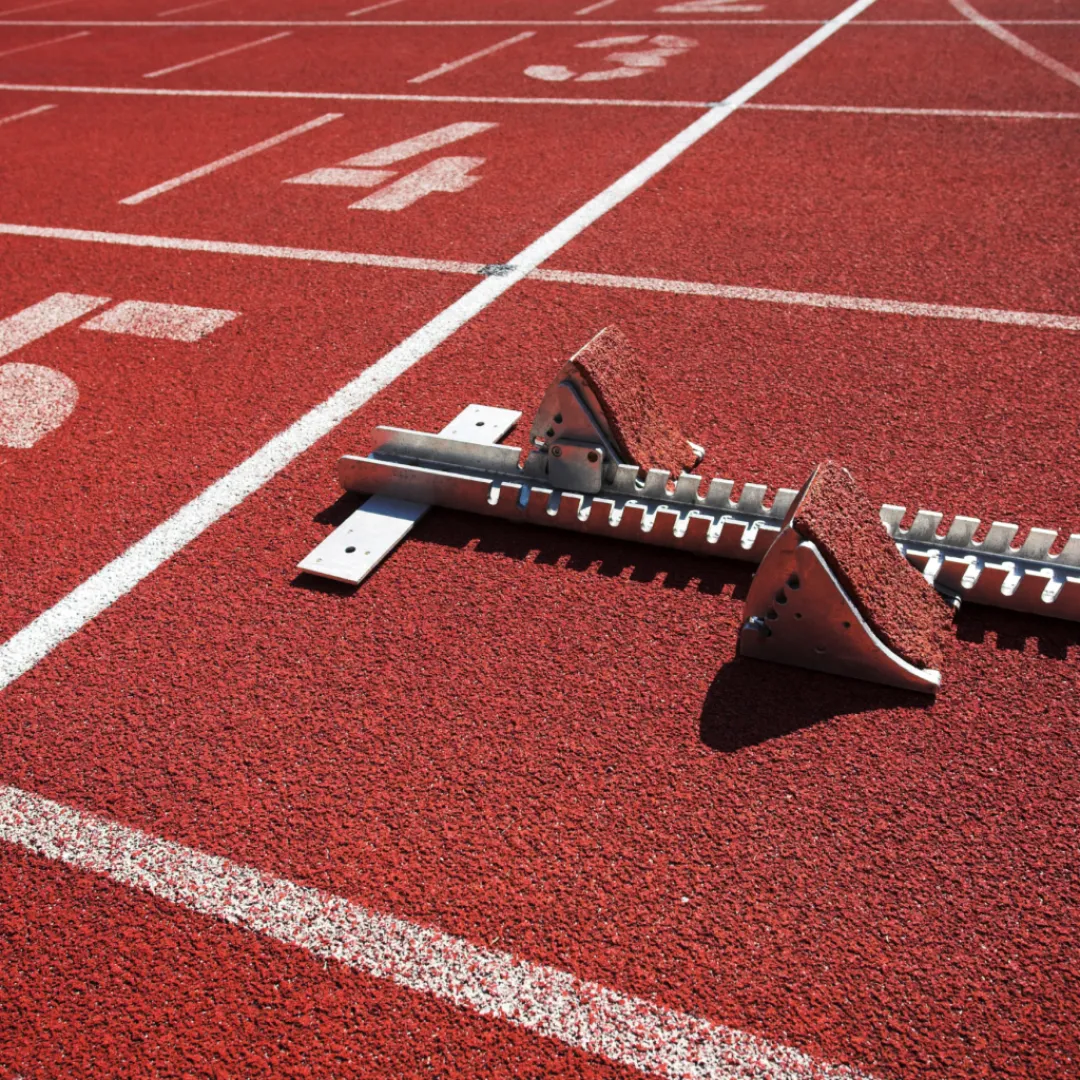
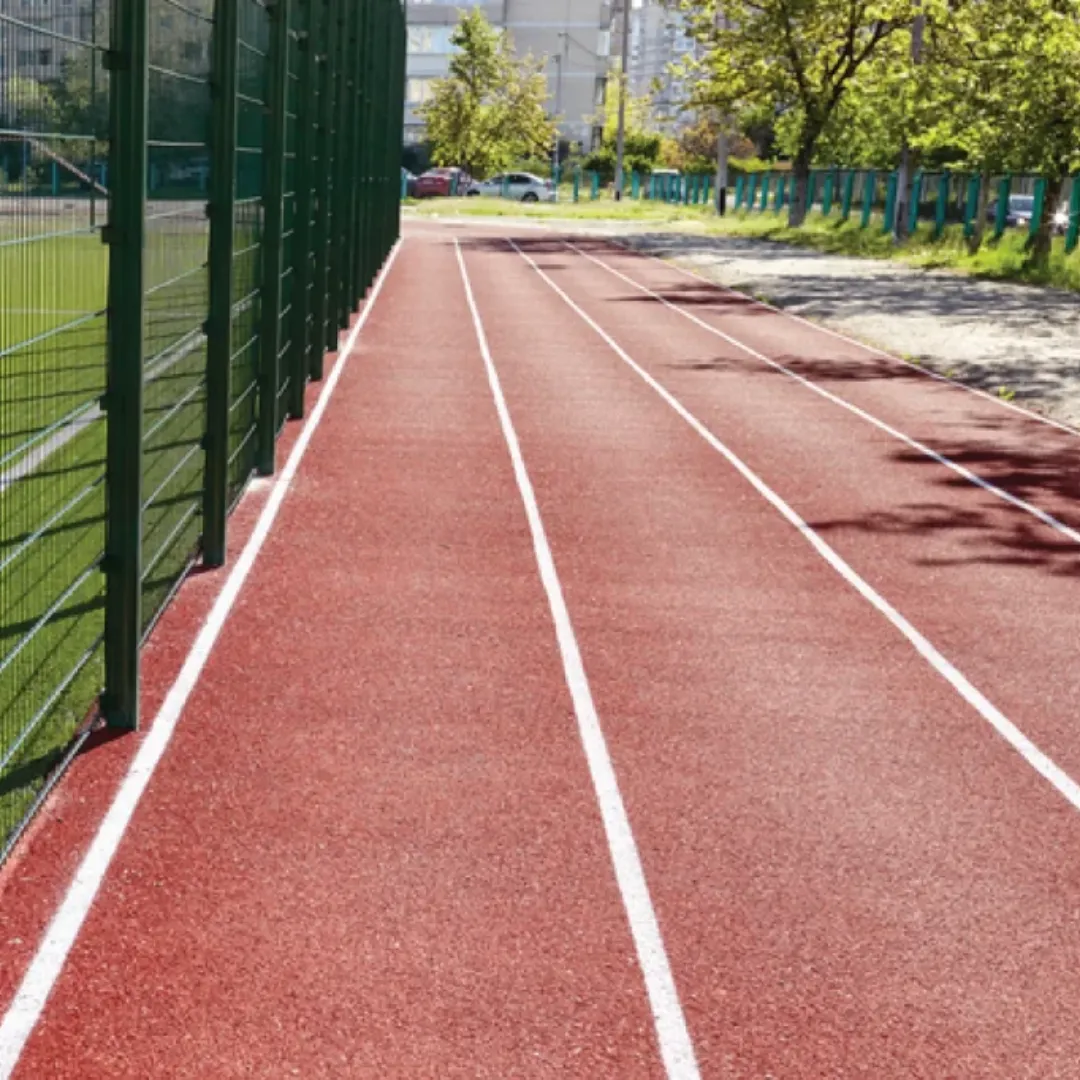
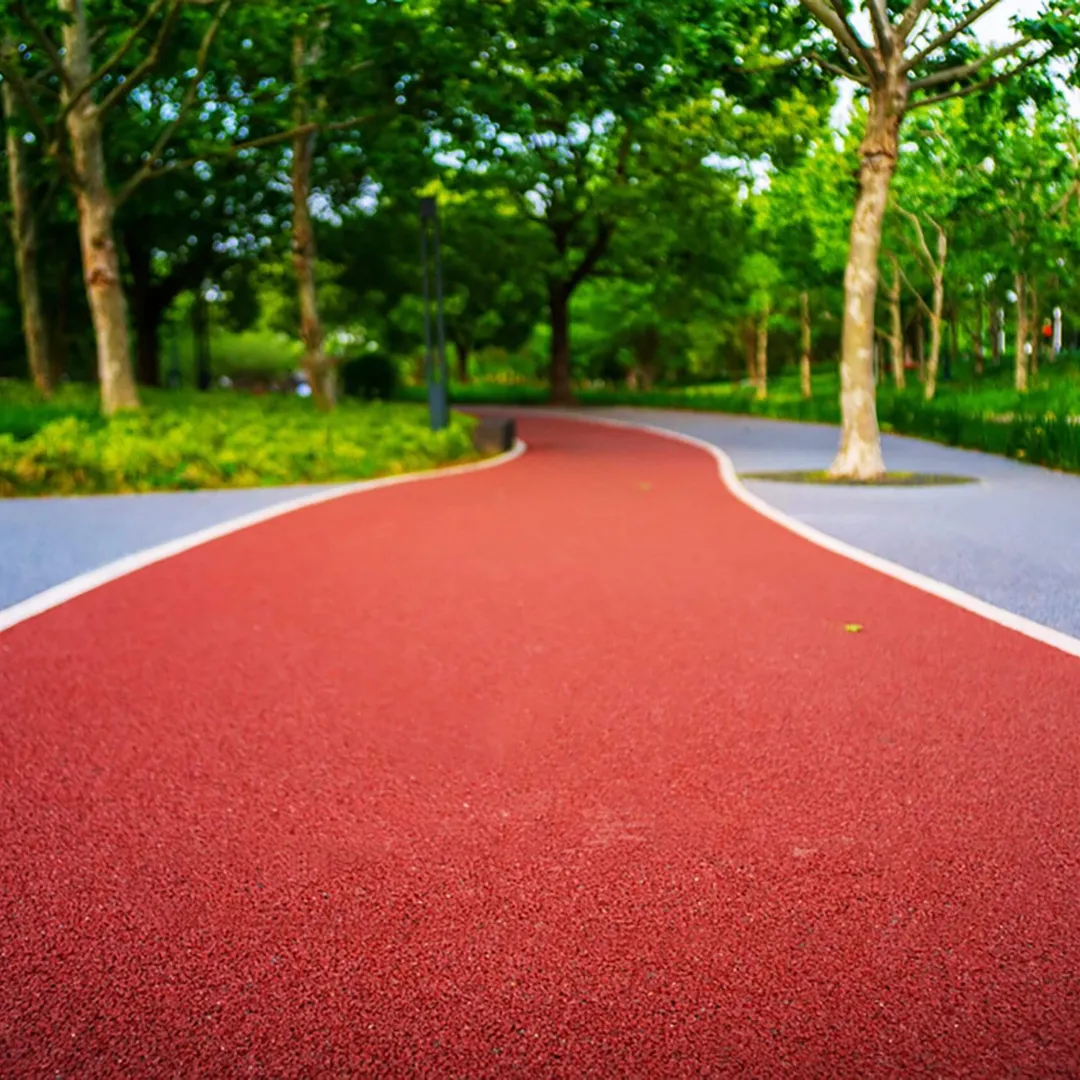
1. Synthetic Rubber (EPDM / SBR) — poured-in-place (PIP) or prefabricated tiles
What it is
Rubber granules bound with polyurethane to form a seamless poured surface or tiles.
Pros
- Excellent shock absorption and comfort.
- Good traction in dry/wet conditions.
- Can be installed in colours; easy to add lane markings and logos.
- Durable when properly installed; good lifespan (8–15 years depending on use).
- Accessible for wheelchairs when done to standard thickness.
Cons
- Higher initial cost than basic asphalt.
- Requires proper drainage and sub-base to prevent waterlogging.
- UV and heat can eventually degrade some formulations if low-quality binders are used.
Best for
Municipal parks, schools, residential societies and athletic centres wanting a high-quality, all-weather surface.
2. Polyurethane (PU) Bound Surfaces (Spray or Pour)
What it is
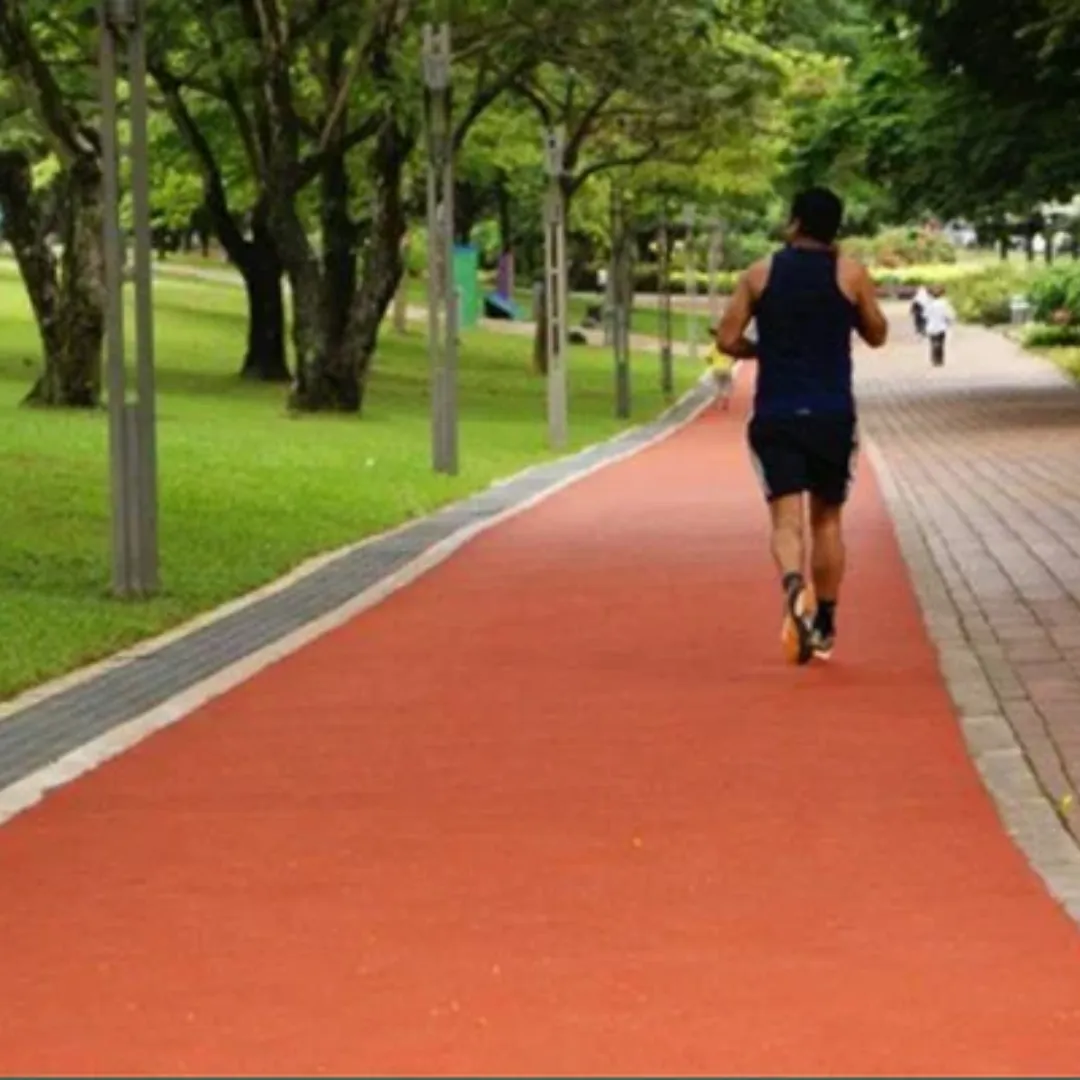
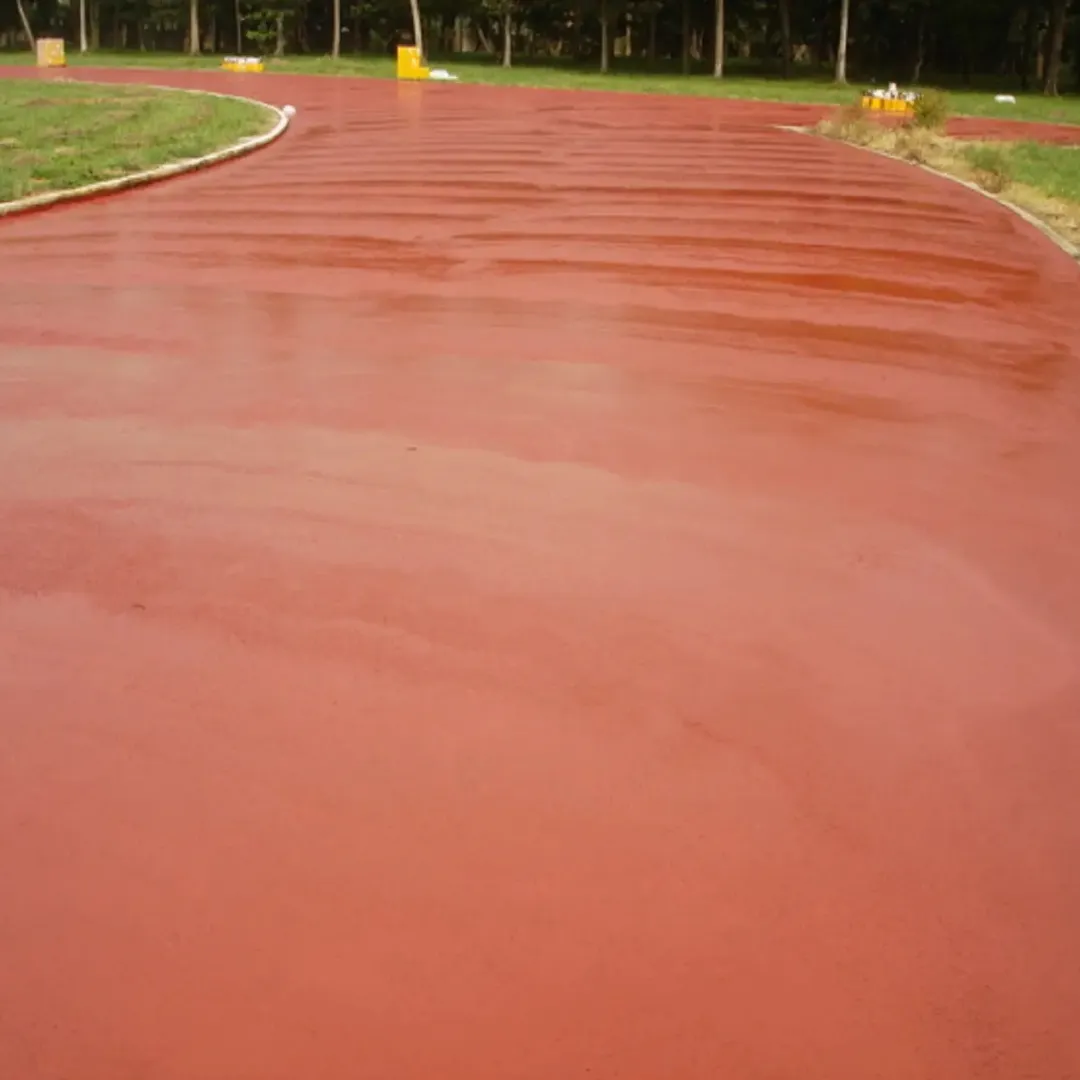
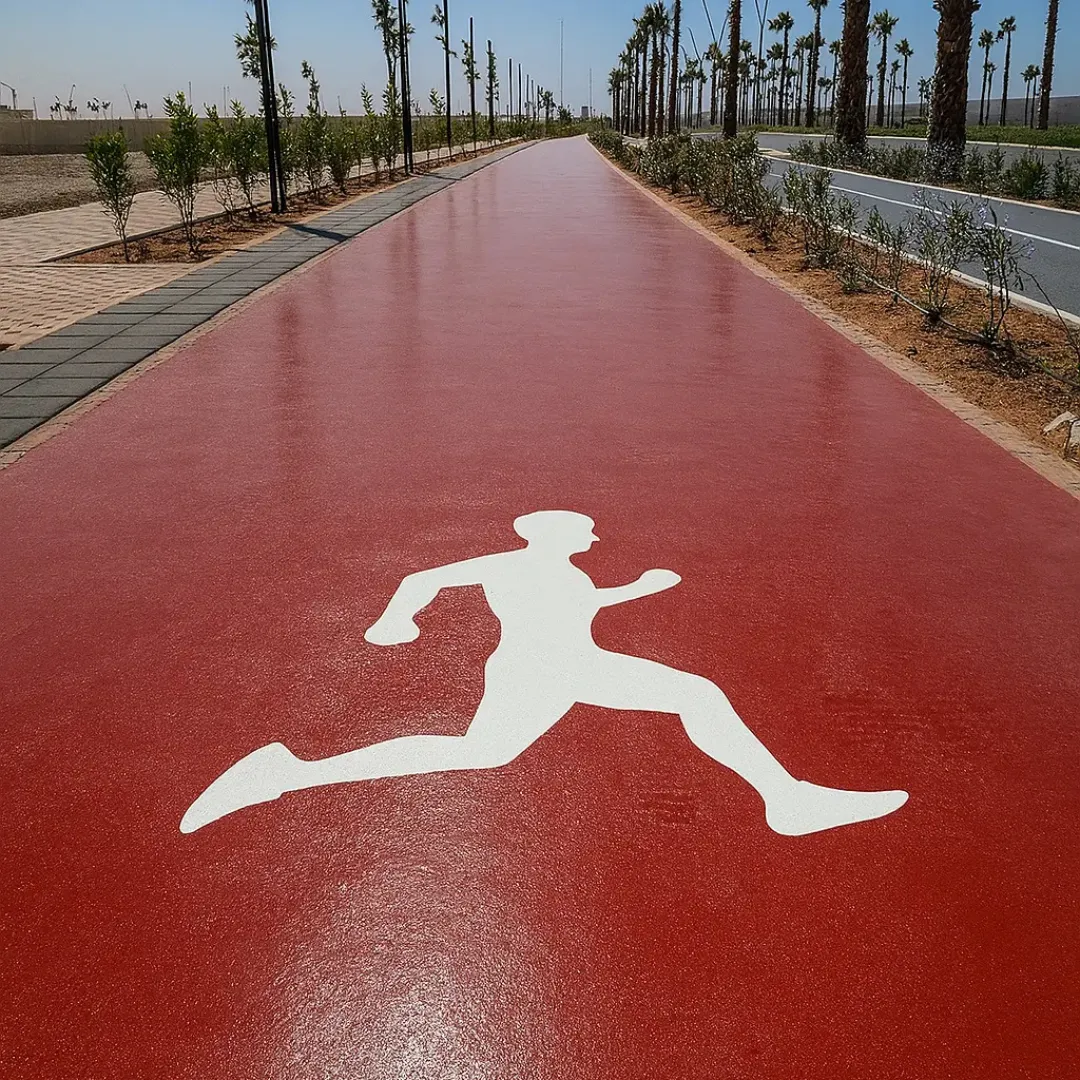
Multi-layer system, usually with a base shock-absorbing layer and a wear layer of polyurethane, often with a textured finish for grip.
Pros
- Professional athletic surface — used on many tracks worldwide.
- Good balance of cushioning and energy return (responsive feel).
- Long lifespan and repairable.
- Exceptional UV resistance if quality materials used.
Cons
- Higher cost and requires skilled applicators.
- Sensitive to substrate irregularities; base must be well-prepared.
Best for
Competitive facilities and high-end public installations.
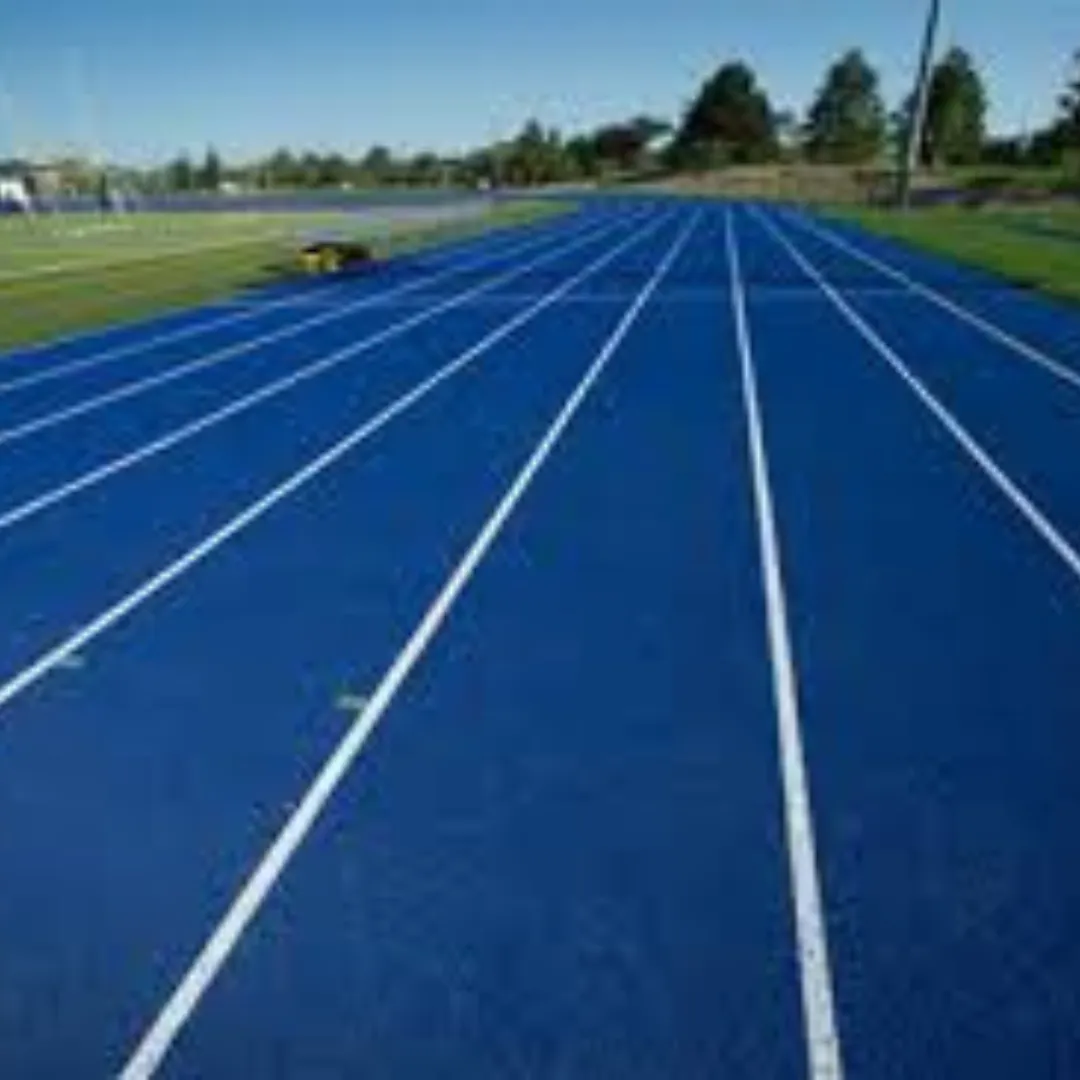
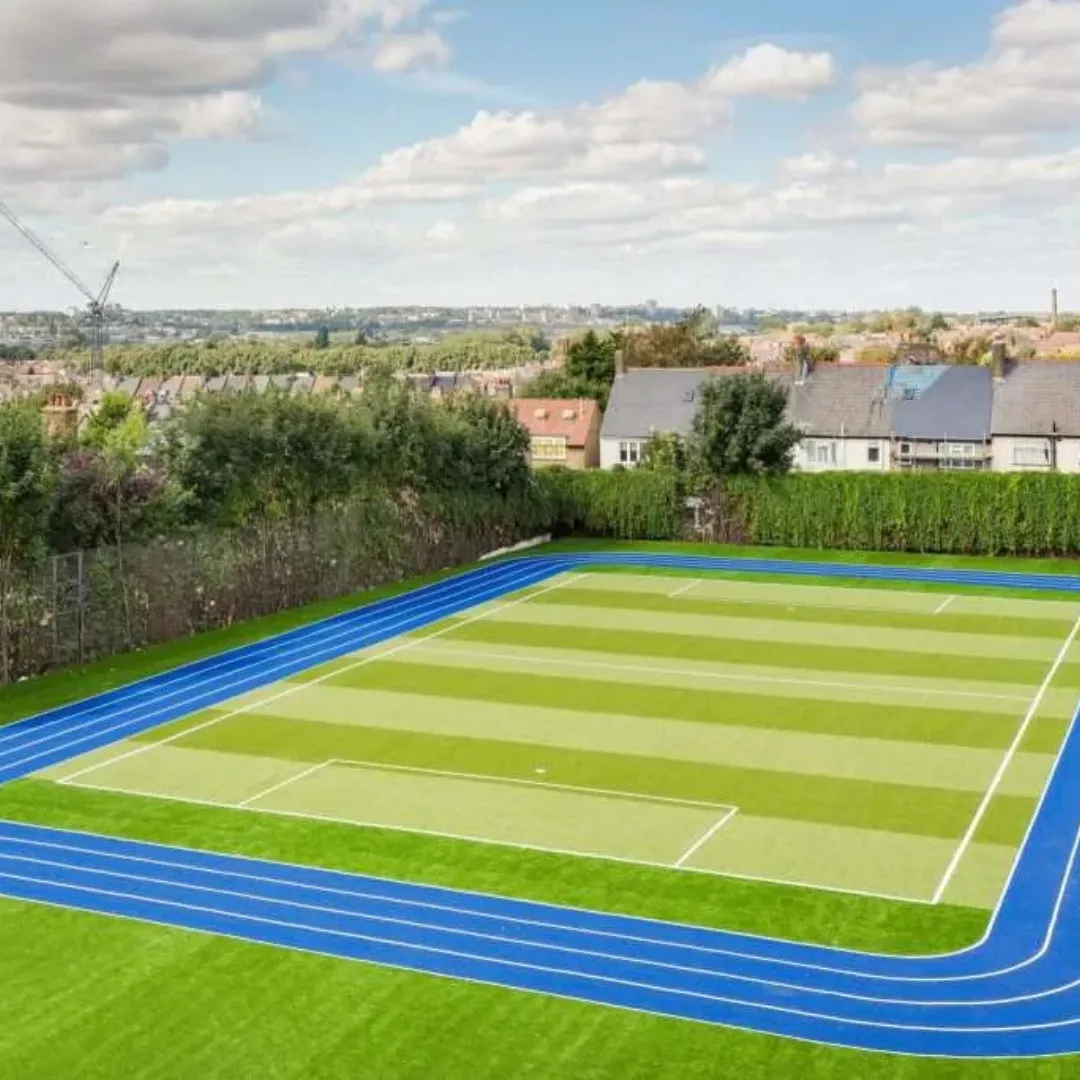
3. Synthetic Turf with Shock Pad (Running lanes on artificial grass)
What it is
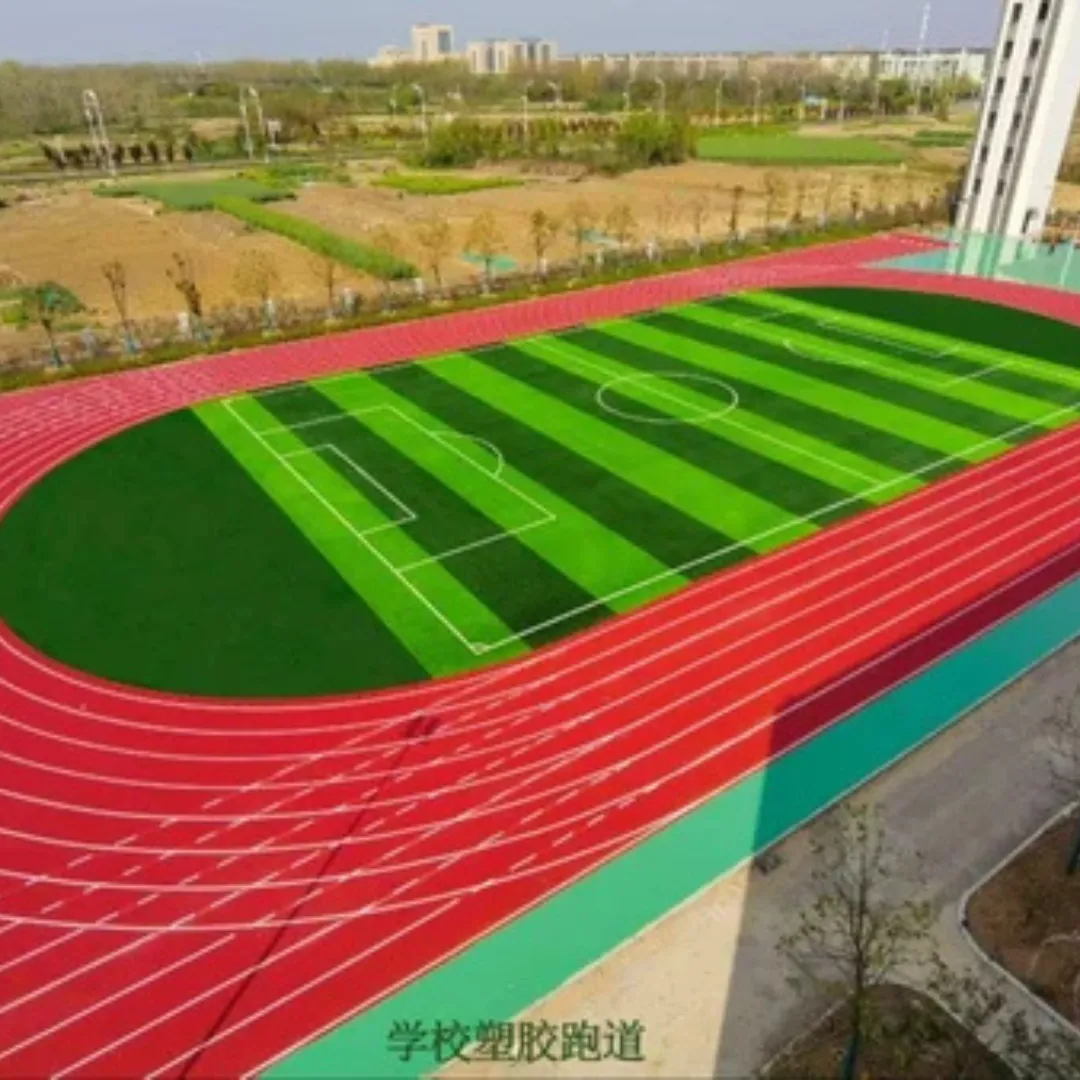
Artificial turf laid over foam shock pad — sometimes used for multi-use tracks around sports fields.
Pros
- Multi-use (runs, walks, other activities).
- Low maintenance for appearance.
- Can be built quickly.
Cons
- Typically less forgiving than rubber; may not be ideal for dedicated running tracks.
- Heat retention — turf gets hot in direct sun.
- Wear patterns can develop with repeated foot traffic.
Best for
Multi-use community spaces where running is one of several activities.
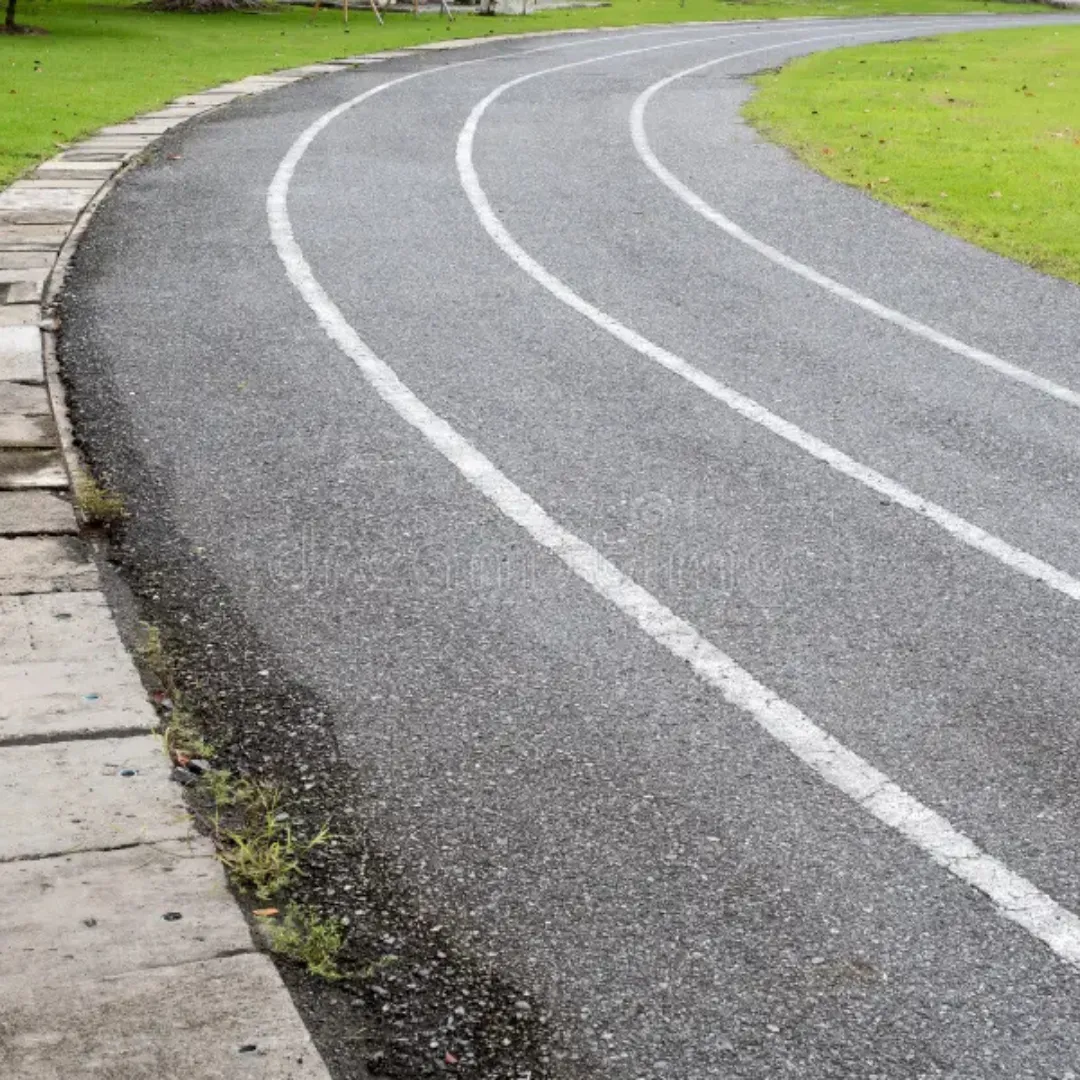
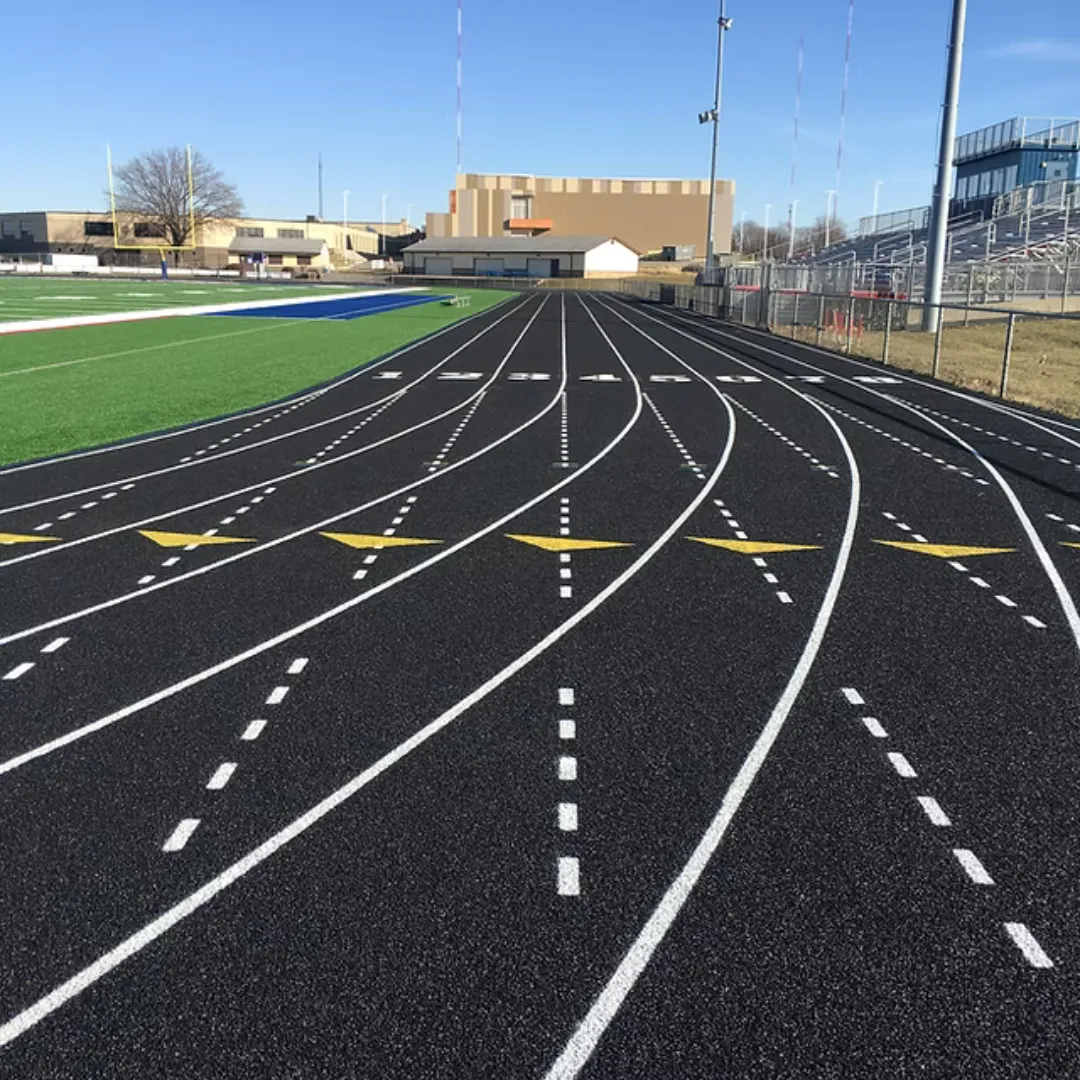
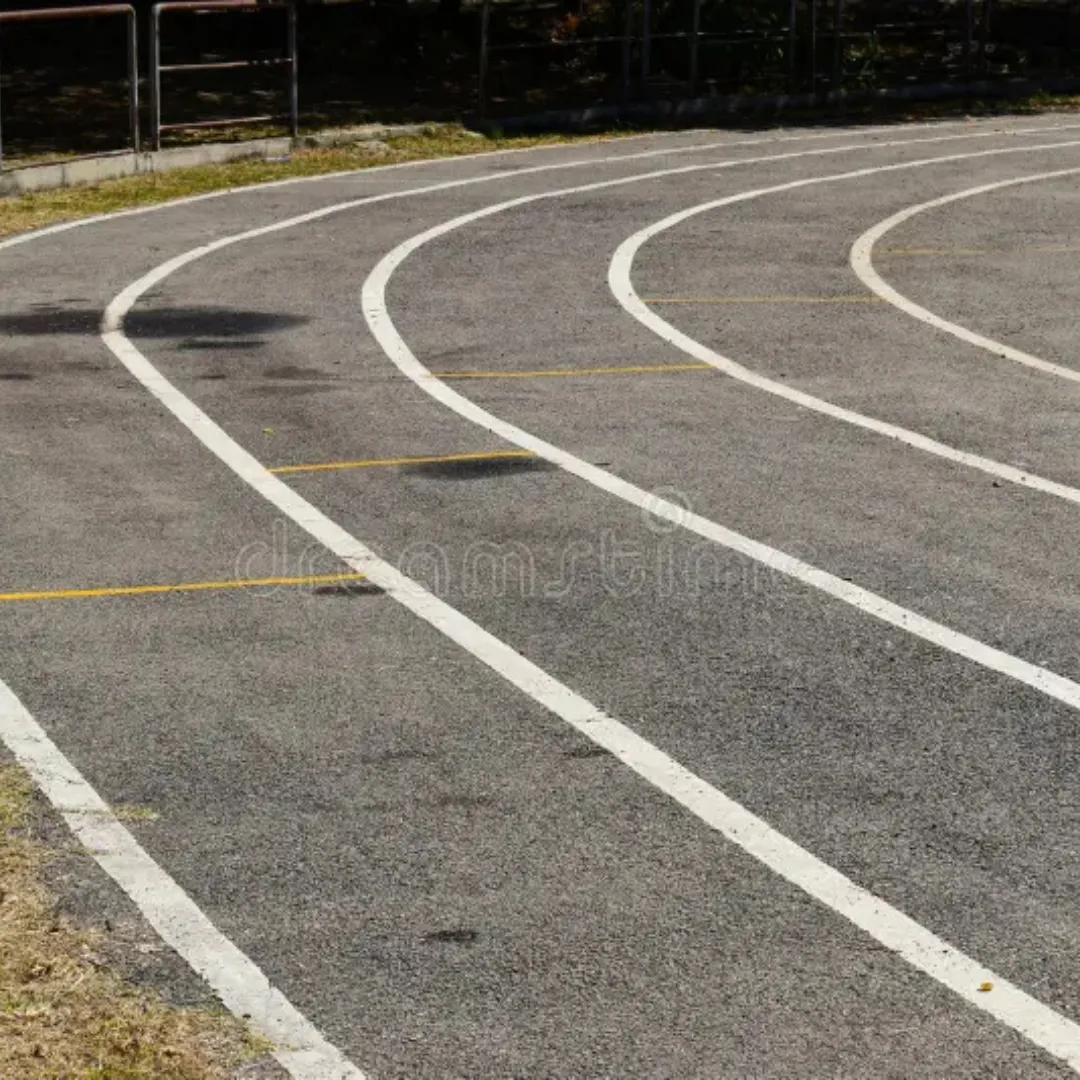
4. Asphalt / Tarmac Surface (with coating)
What it is
Traditional base of compacted asphalt, sometimes overlaid with acrylic or rubberised coatings.
Pros
- Low initial cost.
- Fast construction and widely familiar to contractors in Pakistan.
- Can be resurfaced with coatings for improved grip and aesthetics.
Cons
- Hard underfoot — higher impact on knees and joints.
- Asphalt can soften in extreme heat and move with temperature cycles.
- Coatings may peel if base isn’t properly prepared.
Best for
Budget-constrained projects or temporary tracks.
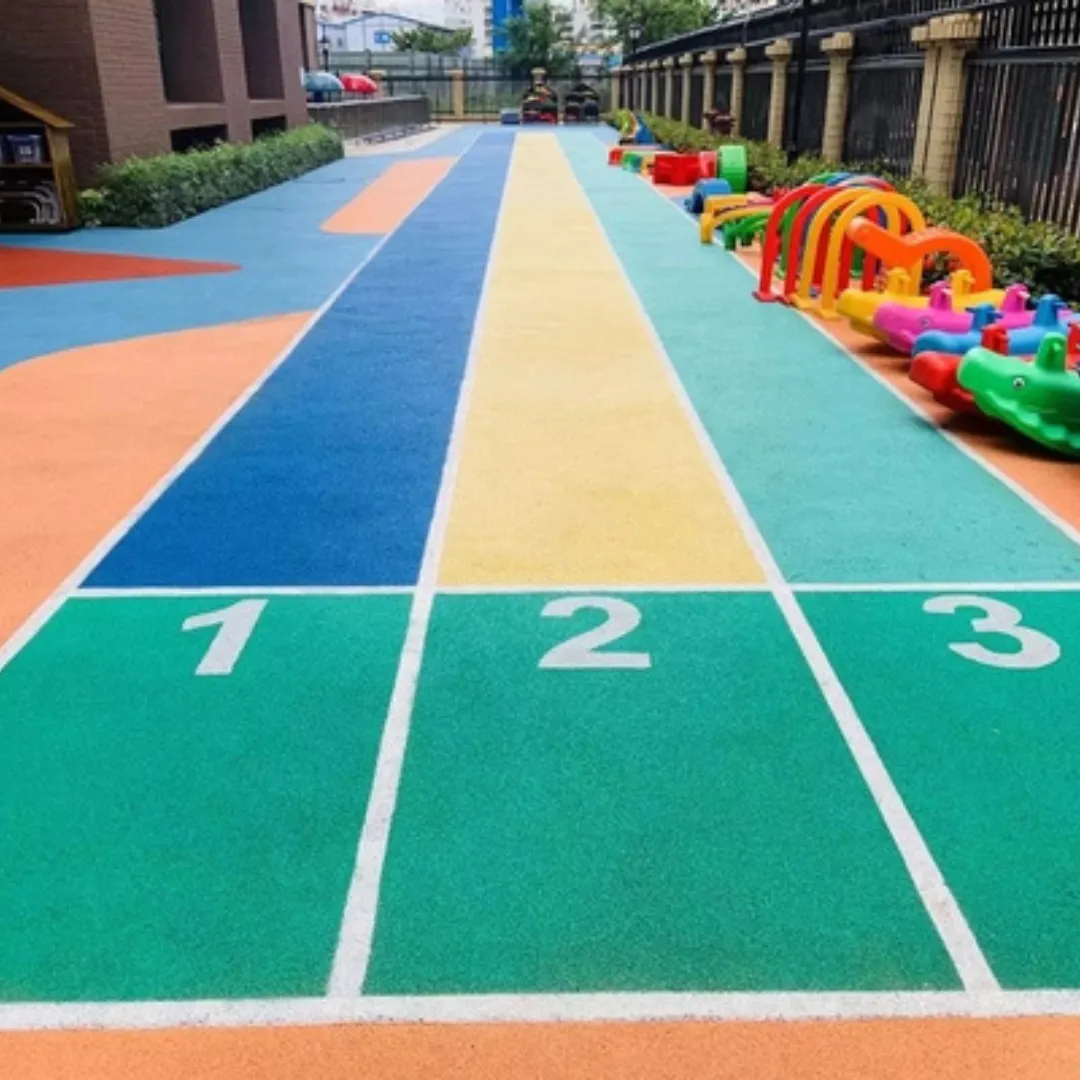
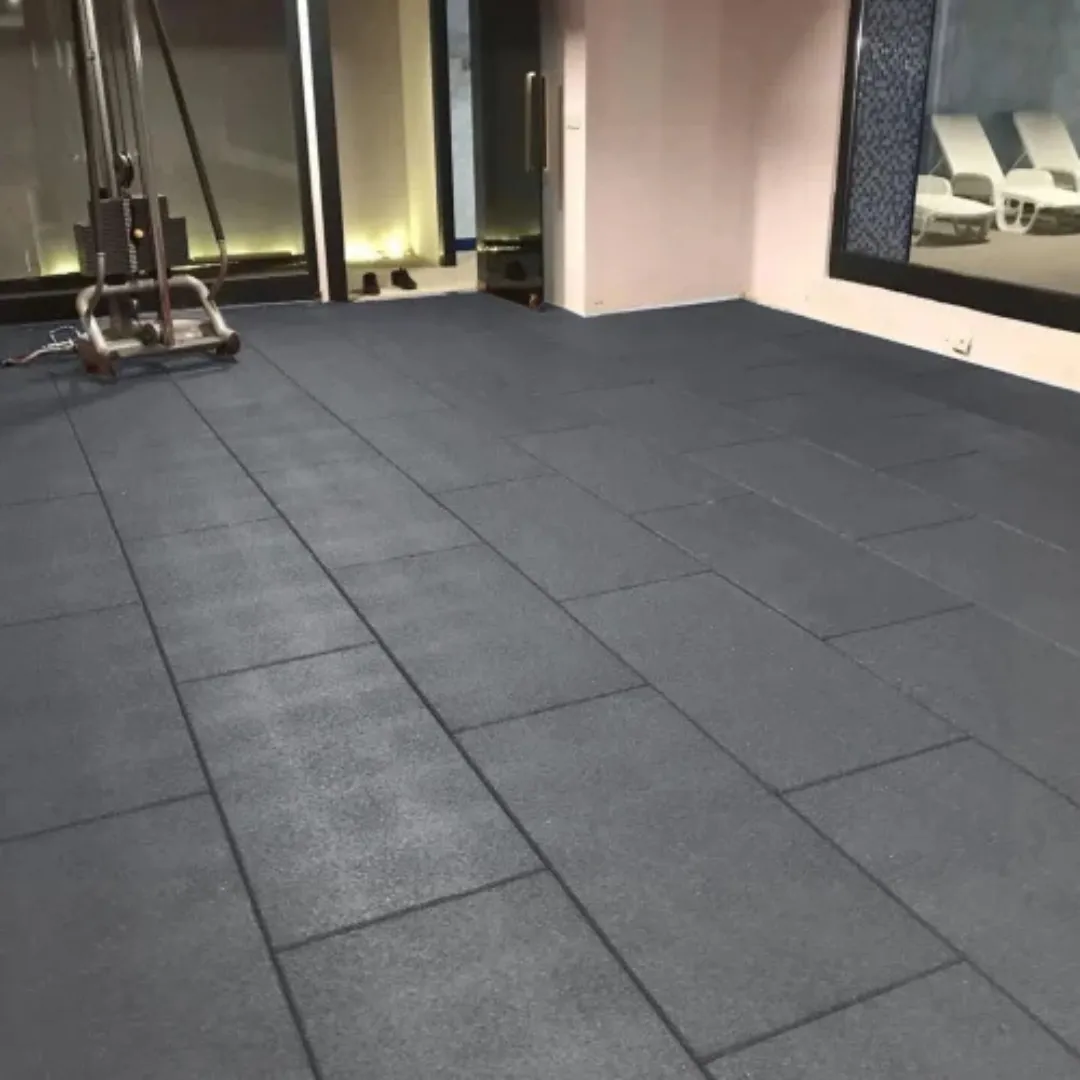
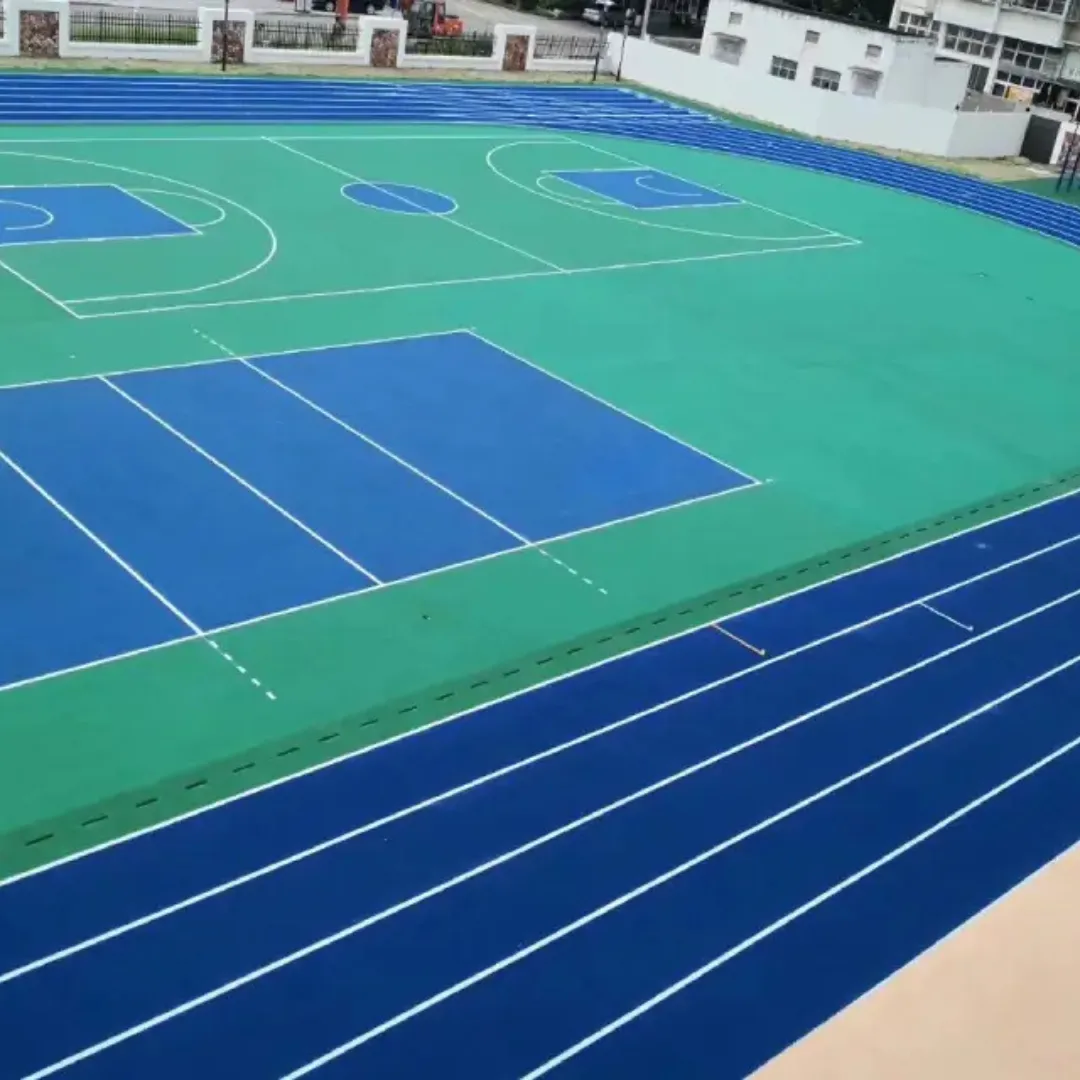
5. Interlocking Rubber Tiles
What it is
Preformed rubber tiles that click together.
Pros
- Fast installation and easy to repair by replacing tiles.
- Reasonable shock absorption and traction.
- Portable options available for temporary events.
Cons
- Joints can open over time if base settles.
- Not as seamless or long-lasting as poured systems.
Best for
Small parks, rooftop tracks, or temporary installations.
Design considerations specific to Pakistan
Climate and UV exposure
High UV and intense heat in many parts of Pakistan demand UV-stable binders and pigments. Materials should be specified for UV resistance to avoid faster ageing, colour fading and binder breakdown.
Drainage
Monsoon rains and sudden downpours are common in several regions. Design must include adequate slope, perimeter drains, and porous sub-base so water doesn’t pool on the track surface. For paved substrates, ensure channels and catch basins are planned.
Sub-base & site prep
A uniform, well-compacted base is the most critical factor for longevity. Poorly prepared bases lead to cracks, unevenness and premature surface failure. Typical sub-base systems include compacted granular layers and asphalt wearing courses depending on the surface chosen.
Shade and heat management
Tracks exposed to direct sun benefit from lighter colours (reflect heat) or tree-shading where possible. Some modern materials incorporate heat-reflective additives; discuss options with suppliers.
Accessibility & multi-use planning
Design lanes with standard width, include accessible entry ramps, and think about adjoining amenities: seating, water fountains, lighting for early/late use, signage, fitness stations and lighting for safety at night.
Safety & fall zones
Surrounding surfaces should be forgiving too — consider rubber surfacing at high-use entrances/exits and near benches or equipment to protect from falls.
Installation process (typical steps)
Site assessment & layout: Survey, mark alignment, and establish levels and drainage slopes (typically 1–2% slope to drains).
Excavation & sub-base preparation: Remove topsoil, compact base materials, place geotextile if needed, and compact layers to design density.
Asphalt or concrete base (if required): Many poured systems require a stable asphalt or concrete base; thickness depends on load and soil conditions.
Primer & levelling layers: Repair joints, fill cracks, and apply primers where needed.
Shock pad / base layer (for PU/EPDM systems): Spray or pour-in-place shock layer for cushioning.
Wear layer application: Apply PU or EPDM top layer; cure times vary.
Markings & finishing: Paint lines, stencils and logos with UV-stable, outdoor-grade paints.
Quality checks & handover: Verify flatness, drainage, bond strength and surface evenness.
Professional installation reduces long-term cost — local installers in Pakistan experienced with athletic surfacing are preferable for poured systems.
Maintenance tips (keep your track safe & long-lasting)
Regular maintenance preserves performance and extends lifespan. Typical tasks:
- Daily/weekly: Clear debris (leaves, litter), check for water pooling after rain and remove standing water.
- Monthly: Inspect seams, tiles and edges for lifting; check drainage inlets.
- Quarterly/biannual: Clean the surface with low-pressure water; avoid high-pressure washing that may damage binders.
- Annual: Treat and seal small cracks; repaint faded lane markings with UV-resistant paints.
- As-needed: Replace damaged tiles or repair localized delamination; consult the original installer for warranty-covered repairs.
Avoid harsh chemicals and solvents. For turf systems, groom and infill as recommended.
Costs in Pakistan — ballpark figures & budgeting advice
Costs vary widely by material quality, site prep and region. Below are rough indicative ranges (prices in PKR, per square metre) to help budgeting — these are illustrative and may change based on suppliers, scale and inflation:
- Basic asphalt/tarmac (with painted lines): PKR 1,200 – 2,200 / m²
- Interlocking rubber tiles (mid-range): PKR 2,500 – 4,500 / m²
- EPDM poured-in-place rubber (good quality): PKR 4,500 – 8,500 / m²
- Polyurethane multi-layer athletic system: PKR 6,500 – 12,000 / m²
- Artificial turf with shock pad (running lane style): PKR 2,800 – 6,000 / m²
Factors that push costs up
- Extensive excavation or poor soils requiring stabilization
- Complex drainage or landscaping work
- Import of specialised materials (e.g., UV-stable binders, elite track surfacing)
- High-quality branding/colors and custom logos
- Working in remote areas or during difficult seasons
Tips
- Get at least 3 local quotes and compare detailed scope (warranty length, material specs, base prep).
- Ask suppliers for material datasheets (UV resistance, age tests, hardness, porosity).
- Always budget 8–12% contingency for unexpected groundwork issues.
Choosing suppliers & installers in Pakistan — what to ask
Experience & references: Ask for project examples in Pakistan or similar climates. Request client contacts to verify performance.
Material specifications: Request product datasheets (binder type, granule size, UV-stability, fire rating if relevant).
Installation process: Ask about sub-base compaction standards, drainage details, curing times and QA tests.
Warranties: Clarify what the warranty covers (materials vs. installation) and length (3–10 years typical depending on material).
Local support & maintenance: Can they provide scheduled maintenance/services in future? Availability of spare tiles/materials?
Testing: Will they perform post-installation tests (evenness, skid resistance, bond strength)?
Contracts should spell out payment milestones, timelines, acceptance criteria, and remediation for defects.
Sustainability and environmental considerations
Sustainable choices can reduce environmental impact and operating costs:
- Recycled rubber content: Many EPDM/SBR products use recycled tyres; confirm percentage and leaching data.
- Permeable designs: Permeable sub-bases and drainage reduce runoff and flooding stress.
- Low-VOC binders: Choose low-emission polyurethane systems where possible to reduce on-site fumes.
- End-of-life planning: Ask suppliers about recyclability or take-back programs for worn surfacing.
Balancing durability and sustainability often saves money over the track’s life.
Case uses & placement ideas in Pakistan
- Community parks: Durable, low-maintenance rubber tiles or PU surfaces for frequent use.
- School tracks: Consider shock-absorbing EPDM surfaces to protect growing joints.
- Housing societies: Aesthetic colour options with clear lane markings help attract regular users.
- Corporate campuses: PU systems with integrated fitness stations and branding.
- Stadium warm-up areas: High-performance PU or track-grade surfaces for athletics warm-up.
- Rooftop tracks: Interlocking tiles or thin PU layers over concrete require thorough waterproofing.
Local site constraints, budgets, and intended intensity of use should guide the material choice.
Common pitfalls & how to avoid them
- Skipping sub-base prep: Leads to cracks, pooling and surface failure. Invest in proper base work.
- Choosing lowest-cost material blindly: Initial savings can lead to higher maintenance and earlier replacement.
- Ignoring local climate effects: Failure to choose UV-stable and heat-resistant systems accelerates degradation.
- Poor drainage planning: Standing water damages many surfaces and causes mold and slippage.
- Unclear warranties: Always ensure clear, written warranties and post-installation support in contract.
Example project timeline (for a medium-size park track, 400–600 m perimeter)
- Week 0–1: Site survey, design approvals and material procurement.
- Week 2–3: Earthworks, excavation and sub-base preparation.
- Week 4: Base (asphalt/concrete) works and curing.
- Week 5: Application of shock layer / PU base.
- Week 6: Top wear layer and curing; line painting and finishing.
- Week 7: Final inspection and handover.
Timelines vary with weather, permitting and the availability of specialised installers.
Final checklist before you sign a PO
- Detailed scope: materials, thickness, sub-base specs, drainage and markings.
- Written warranty with clear duration and coverage.
- Material datasheets showing UV stability, hardness, and slip resistance.
- References & site visits to completed projects.
- Clear payment milestones tied to completion stages.
- Post-installation maintenance plan and estimated lifecycle costs.
- Contingency budget for unforeseen groundworks.
Closing — build a track people will use
A jogging track is an investment in health and community life. In Pakistan, thoughtful choices about material, installation and maintenance — guided by the climate and usage patterns — turn that investment into a facility that is safe, attractive and durable. Whether you’re a municipal planner, school administrator, housing society manager or a contractor bidding on a job, prioritise a solid sub-base, UV-resistant materials, and experienced installers. The result will be a track that invites people to step out, move and return again.
If you want, I can help next with: a) a short specification template you can send to local contractors, b) an itemised budget estimate for a specific track size, or c) a list of questions to vet installers in Pakistan — tell me which and I’ll draft it right away.
FAQ’S
Which jogging track surface is best for schools in Pakistan?
EPDM poured-in-place rubber or good-quality interlocking tiles — both offer shock absorption and safety while balancing cost.
How long do PU and EPDM surfaces last?
With proper base and maintenance, 8–15 years is typical. High-quality PU systems can last longer with spot repairs.
Can asphalt be upgraded later to a synthetic surface?
Yes — asphalt is often used as a base for later application of PU/EPDM surfacing if it’s well-constructed.
Do synthetic surfaces get too hot?
Dark-coloured surfaces can retain heat; choose lighter colours, tree shading, or heat-reflective additives to reduce surface temperature.
How often does a track need resurfacing?
Depends on use — generally every 8–12 years for mid/high-grade systems; timely repairs and maintenance can extend life.