Introduction: Why Your Factory Floor Is Costing You More Than You Think
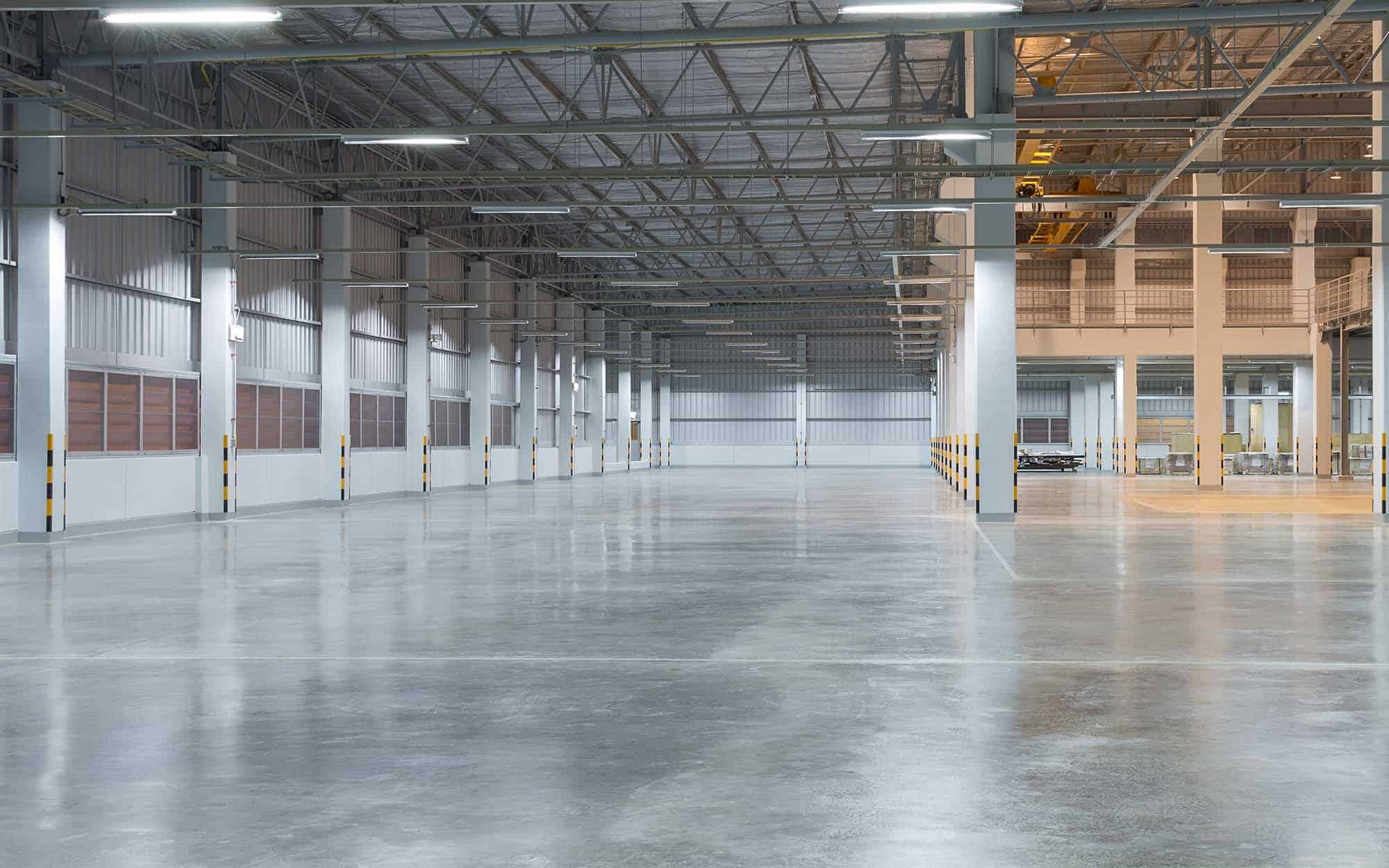
Walk through almost any factory in Pakistan’s industrial heartlands — Lahore’s Kot Lakhpat, Karachi’s SITE area, Faisalabad’s textile belt, or Sialkot’s surgical. Sports goods manufacturing clusters — and look down. What do you see? In many cases, bare concrete that has been patched, repainted, or left to deteriorate under the daily punishment of forklifts, chemical spills, heavy machinery vibration, and the constant movement of workers and trolleys.
That deteriorating floor is not a minor inconvenience. Every crack collects dust. All porous surface harbours oil contamination. Every uneven patch is a trip hazard. Every flaking painted area releases particles into your production environment. And every day you run production on a compromised floor, you absorb the hidden costs of slower cleaning cycles, increased maintenance callouts, machinery damage from uneven surfaces, and the very real liability of worker injuries.
Factory epoxy flooring in Pakistan offers a solution that addresses every one of these problems simultaneously. A professionally installed, chemically bonded industrial floor surface Pakistan factory owners and plant managers are increasingly recognising as a fundamental operational investment rather than an optional upgrade.
This guide gives you the complete picture: why epoxy is specifically engineered for manufacturing environments. Which factory zones demand which specifications, what the installation process involves. What realistic epoxy flooring cost Pakistan pricing looks like for industrial projects in 2026.
What Is Industrial Epoxy Flooring and Why Was It Designed for Factories?
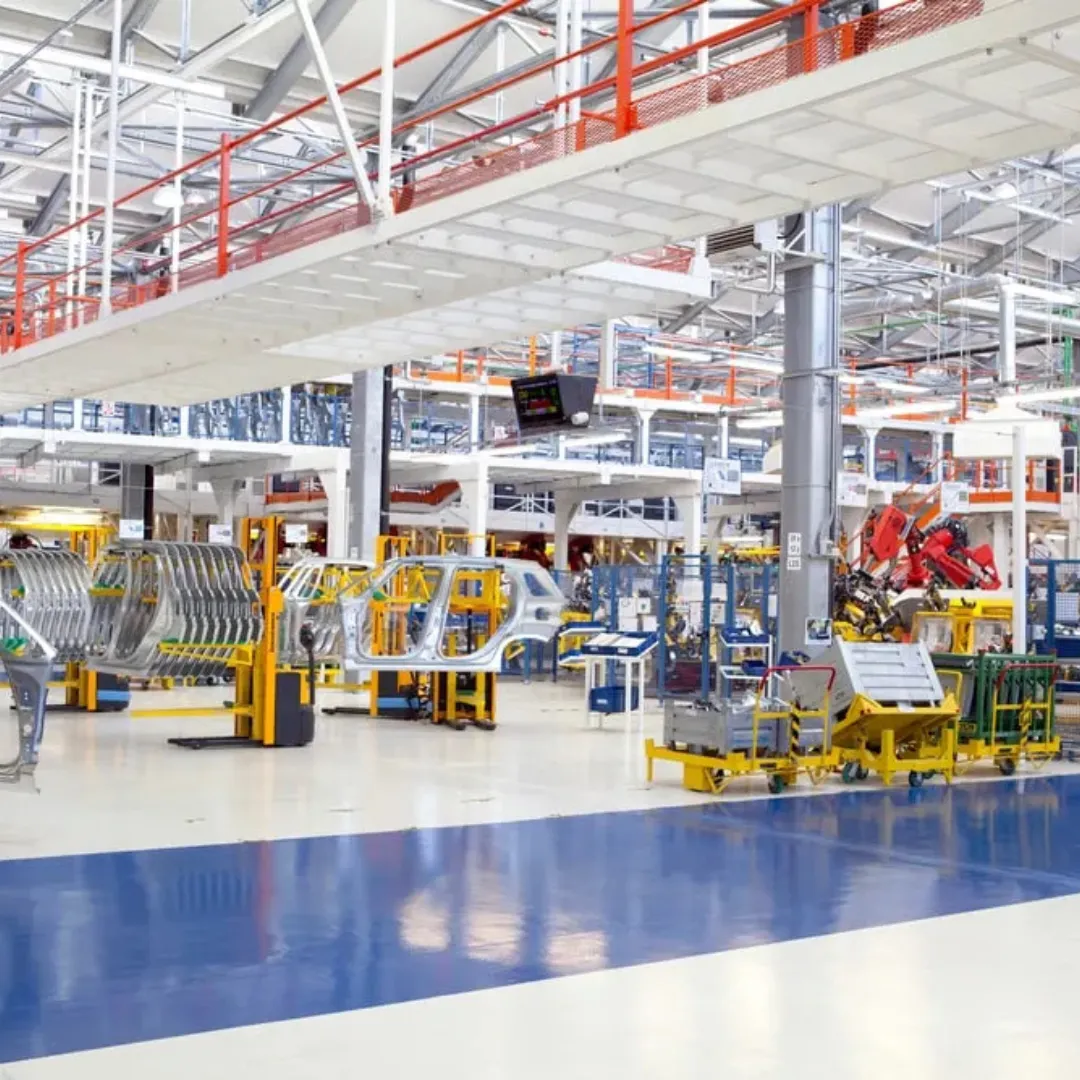
Industrial epoxy flooring Pakistan is not the same product used in homes, showrooms, or offices. While all epoxy systems share the same fundamental chemistry — a two-part system of resin and hardener that undergoes an exothermic chemical reaction to form a rigid, bonded matrix — industrial formulations are engineered to tolerances that standard decorative or light-commercial systems simply cannot meet.
The defining characteristics of a properly specified industrial floor surface Pakistan are as follows:
Compressive Strength
Compressive strength measured in megapascals (MPa) rather than general impressions of hardness. Heavy-duty epoxy flooring for factories is typically formulated to exceed 70 MPa compressive strength, compared to 20–30 MPa for light commercial systems. This matters when a fully loaded forklift exerts point pressure through its wheels onto a small floor contact area.
Abrasion Resistance
Abrasion resistance quantified by Taber abrasion testing. An abrasion-resistant floor coating specified for factory use will have a Taber loss rating significantly lower than decorative epoxy, meaning the surface wears far more slowly under the grinding action of steel wheels, dragged loads, and grit from outdoor environments tracked in by workers.
Chemical Tolerance
Chemical tolerance across a defined spectrum of industrial substances. A chemical-resistant industrial floor for factory environments must resist not only obvious threats like lubricating oils, hydraulic fluids, and cleaning solvents. But also the specific chemicals used in that facility’s production process — textile dyes, tanning chemicals, food processing acids, pharmaceutical reagents, or metalworking coolants, depending on the sector.
Thickness
Thickness sufficient to bridge surface defects, absorb impact energy, and maintain integrity over years of operational loading. Where decorative epoxy might be applied at 0.5–1mm. A floor coating for heavy machinery environments is typically installed at 3–6mm minimum, with epoxy mortar flooring systems reaching 6–9mm for the most demanding industrial applications.
These are not incremental differences. They represent a categorically different class of product — one that the concrete floor coating Pakistan market now supplies through multiple local and international material brands, installed by contractors with genuine industrial flooring experience.
The Problems Factories Face Without Proper Industrial Flooring
To appreciate what factory epoxy flooring in Pakistan actually solves, it helps to catalogue the specific failures of inadequately specified factory floors. All of which are common observations in Pakistani manufacturing environments:
Concrete Dusting
Untreated or poorly sealed concrete produces fine siliceous dust as foot traffic, machinery vibration, and forklift wheels abrade the surface. This dust settles on machinery, contaminates products, clogs air filters, and poses a respiratory hazard to workers over time. A dust-proof factory floor created through a properly bonded epoxy floor coating system eliminates this entirely by sealing the concrete matrix. Providing a dense, non-friable surface that does not shed particles under normal operational loading.
A dust-proof factory floor is particularly critical in sectors like pharmaceuticals, electronics assembly, food processing. Precision engineering where surface contamination directly affects product quality and regulatory compliance.
Chemical Penetration and Substrate Damage
In textile mills, leather tanneries, and food processing facilities, liquid spills are unavoidable. On bare concrete, these liquids penetrate the porous substrate, react with the cementitious matrix, and cause progressive degradation from within. The surface cracks, delamination occurs at depth, and the floor eventually requires expensive reconstruction. A chemical-resistant industrial floor prevents this cycle entirely by interposing an impermeable barrier. Between the production environment and the structural concrete substrate.
Slip Hazards and Worker Safety
Factory floors that become contaminated with oil, process liquids, or fine dust represent a serious and legally consequential worker safety risk. Pakistan’s Factories Act and more recent workplace safety frameworks place specific responsibility on employers to maintain safe floor surfaces. An anti-slip factory floor specified with appropriate surface aggregate or textured finish reduces slip incidents dramatically, protecting both workers and factory management from the human and financial consequences of preventable falls.
Forklift and Heavy Equipment Surface Damage
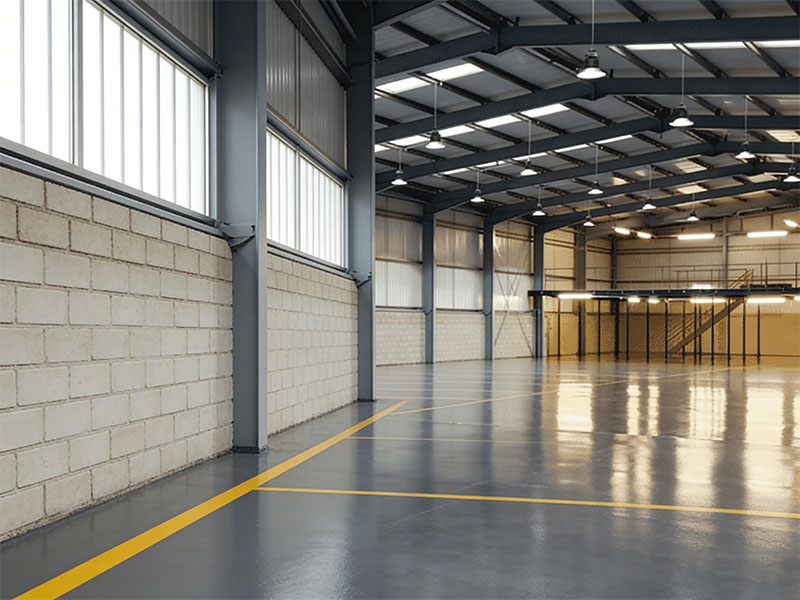
Forklifts operating in Pakistani factories are typically rated between 1.5 and 5 tonnes capacity. Under loaded conditions, the wheel contact areas of a forklift exert extraordinary point pressures on the floor surface. Thin or inadequately specified coatings fail rapidly under this loading, developing cracks, depressions, and surface delaminations. That then become obstacles to smooth forklift operation and entry points for further contamination. A forklift-rated epoxy floor specified at the correct compressive strength and thickness eliminates. This degradation pattern and maintains a smooth operational surface over a full production service life.
Factory Zones and Their Specific Epoxy Flooring Requirements
Factories are not uniform environments. A food processing production floor has entirely different technical requirements from a textile mill corridor. A pharmaceutical clean room, or a metal fabrication workshop. Understanding zone-by-zone requirements is essential to specifying the right system for each area.
Production Floor / Main Manufacturing Area
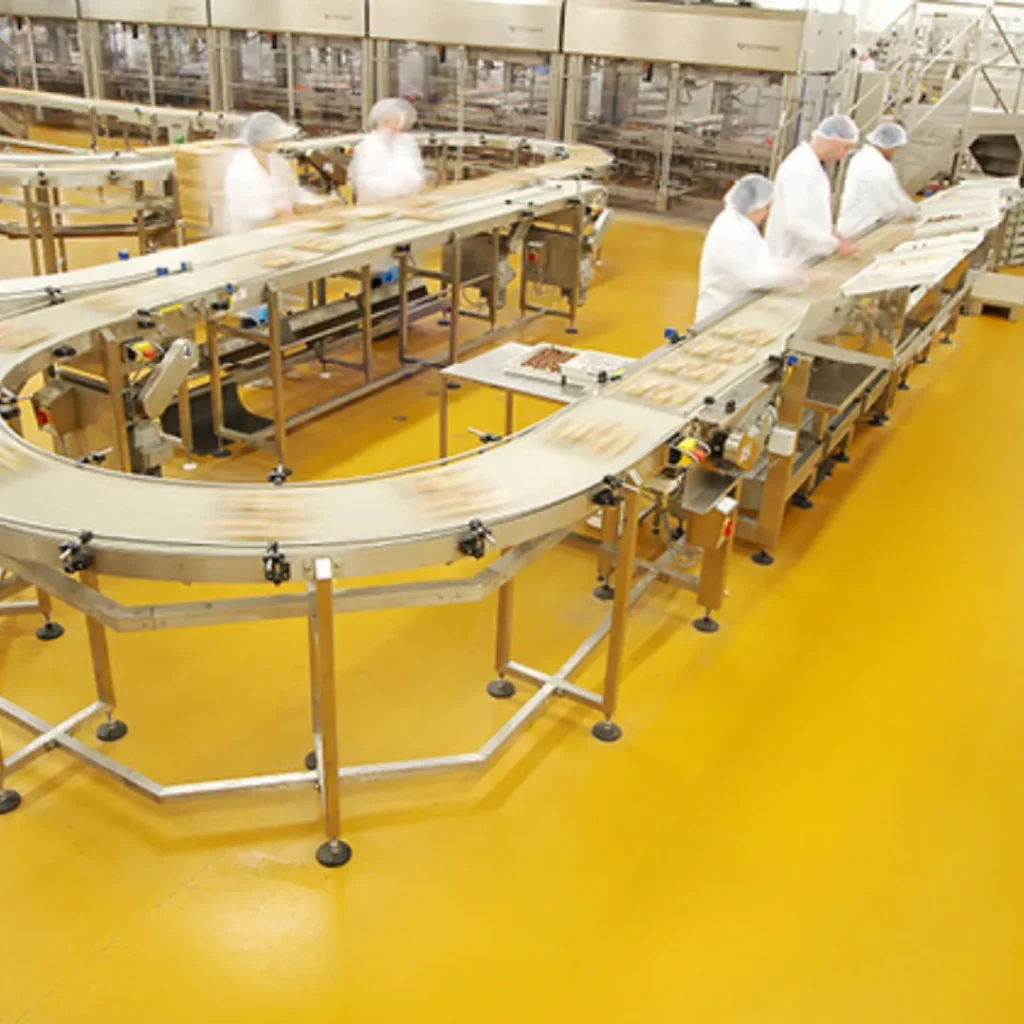
The production floor is where industrial epoxy flooring Pakistan delivers its most visible value. This zone carries the combined demands of heavy-duty epoxy flooring performance: forklift traffic, heavy machinery footprint loads, process chemical exposure, high-frequency cleaning with industrial agents, and the need for a visually clean, organised working environment.
The recommended system for main production floors in Pakistani factories is a self-leveling epoxy at 3–4mm with a broadcast anti-slip aggregate finish and a chemical-resistant topcoat. Self-leveling epoxy in this application creates a perfectly flat, seamless industrial floor. That accommodates precise machinery levelling, facilitates efficient floor washing, and reflects overhead lighting to improve visibility across the production area.
For particularly aggressive environments — metal fabrication shops, battery manufacturing, chemical processing. An epoxy mortar flooring system at 6–9mm provides additional mechanical protection and thermal resistance. Epoxy mortar flooring uses a filled matrix of epoxy resin combined with graded aggregate, creating a floor. That combines the chemical resistance of epoxy with the compressive strength approaching engineered concrete.
Loading Bays and Forklift Traffic Areas
Loading bays, dock levellers, and the primary forklift travel corridors are among the most mechanically demanding areas in any factory. The repeated impact of forklift wheels negotiating the transition from outdoor hardstanding to interior floor. Combined with the dynamic loading of braking and acceleration under full loads, places extreme demands on the floor surface.
A forklift-rated epoxy floor in these zones should use a heavy-build system at minimum 4mm with a broadcast quartz aggregate for anti-slip performance and impact resistance. The seamless industrial floor construction ensures there are no joints or transitions. That forklift wheels can catch, lift, or damage during operation. Floor coating for heavy machinery areas in Pakistani factories should be specified with an impact resistance rating. That accounts for accidental pallet drops and the vibration transmitted by counterbalance forklift chassis.
Colour coding in loading bay areas — using contrasting epoxy floor strips to demarcate pedestrian walkways from forklift corridors. It is an additional safety feature that can be integrated into the epoxy installation without requiring separate materials or processes.
Storage and Warehouse Sections
Warehouse and factory epoxy systems for storage areas balance the need for mechanical durability against the lower chemical exposure profile typical of these zones. The primary demands are resistance to point loads from racking feet, abrasion resistance under pallet jack movement, and a smooth, clean surface that facilitates efficient inventory management.
A self-leveling epoxy system at 2.5–3mm with a semi-gloss topcoat performs excellently in warehouse storage areas attached to Pakistani factories. The reflective finish improves ambient light levels, reducing energy requirements in storage racking areas where natural light is limited. Warehouse and factory epoxy systems can also integrate zone markings, safety lines, and bay identification graphics directly into the topcoat layer, creating a permanent, wear-resistant wayfinding system.
Food Processing Zones
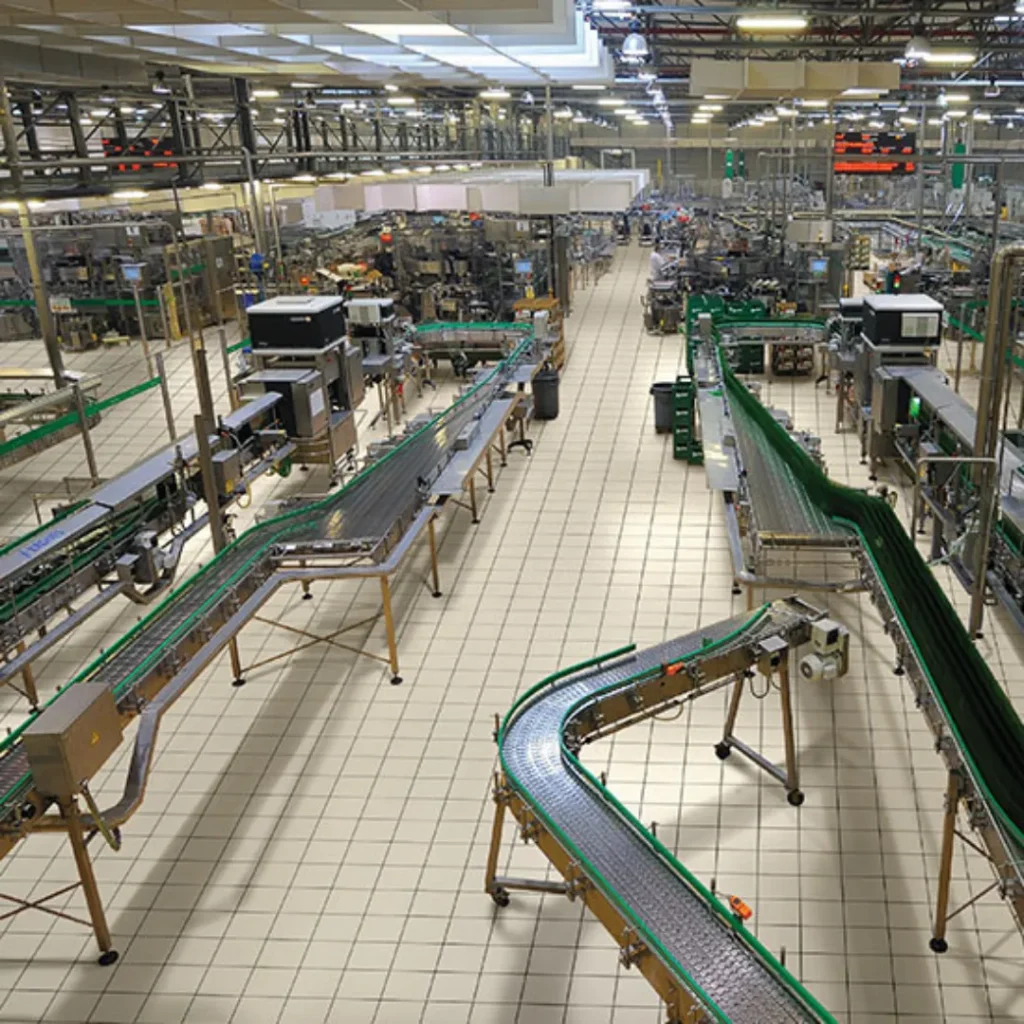
Food-grade epoxy flooring represents a specialist subset of industrial floor surface Pakistan specifications. In food processing factories — dairy plants, biscuit manufacturers, beverage facilities, poultry processing units. The floor must satisfy hygiene standards applicable to direct food contact environments while simultaneously withstanding. The aggressive cleaning and sanitisation chemicals required to maintain food safety compliance.
Food-grade epoxy flooring formulations used in Pakistani food factories are certified free of substances. That could migrate into food contact areas, are fully compatible with steam cleaning and high-pressure wash-down, and incorporate coved skirting systems at wall junctions to eliminate the bacteria-harbouring gap between floor and wall that creates compliance issues during food safety audits.
The anti-slip factory floor requirement is particularly important in food processing environments where wet conditions are essentially continuous. Aggregate broadcast profiles in food-grade epoxy flooring must provide adequate grip for workers in rubber-soled safety footwear without creating surface profiles so aggressive. That they impede floor cleaning and create hygienic dead zones.
Textile Mill Floors — Textile Mill Flooring Pakistan
Textile mill flooring Pakistan presents a combination of challenges specific to the sector. Cotton lint and fibre accumulation on floor surfaces represents a fire hazard. If the floor surface has uneven features that trap fibre bundles. The vibration transmitted through the floor from high-speed looms and spinning frames must not cause progressive surface fatigue in the coating. Chemical exposure from sizing agents, dyes, and finishing chemicals must be addressed through appropriate chemical-resistant industrial floor specification.
For textile mill flooring Pakistan, the recommended approach uses a medium-build self-leveling epoxy at 2.5–3mm with a smooth, low-profile finish. That allows fibre lint to be swept or vacuumed efficiently without catching in surface texture. Anti-static topcoat formulations are available for textile environments where static electricity generation presents a product quality concern, particularly in synthetic fibre processing.
Textile mill flooring Pakistan benefits significantly from the light-reflective characteristics of epoxy. Many Pakistani textile mills operate in large, deep-plan buildings where artificial lighting is a major operational cost. An off-white or light grey epoxy floor surface can increase effective light levels measurably, contributing to both energy savings and improved worker visual comfort.
Paint Shops and Surface Treatment Areas
Paint spray booths, powder coating operations, and surface treatment areas in engineering and manufacturing factories present specific epoxy flooring requirements. Chemical exposure in these areas includes solvent-borne coatings, acid etch pre-treatments, and alkaline degreasers. The floor must resist all of these while maintaining a smooth, easily cleanable surface that does not accumulate overspray or chemical residue in surface texture.
High-build epoxy coating systems are the standard specification for paint shop areas in Pakistani factories. A high-build epoxy coating in this context means a minimum 4mm application with a chemical-resistant topcoat formulated for resistance to the full spectrum of chemicals used in the specific surface treatment process. Where solvent exposure is particularly aggressive, a specialist vinyl ester or novolac epoxy topcoat may be specified over the standard epoxy base system.
Types of Epoxy Flooring Systems Used in Pakistani Factories
The manufacturing plant flooring market in Pakistan offers several distinct system types, each suited to different operational profiles:
Epoxy Mortar System
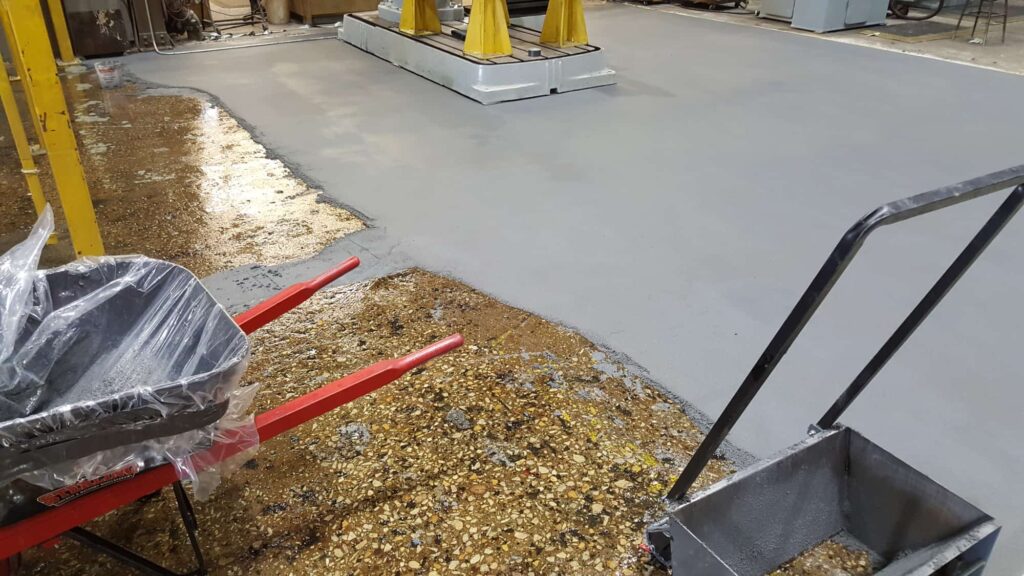
The most mechanically robust option available, epoxy mortar flooring consists of epoxy resin mixed with graded aggregate. To create a cementitious-equivalent system with superior chemical and impact resistance. Applied at 6–9mm, epoxy mortar flooring is the specified choice for heavy engineering, metalworking, and chemical processing factory floors in Pakistan. Its compressive strength and impact resistance make it genuinely impervious to forklift damage and dropped load events. Installation is more labour-intensive than thin-build systems, reflecting its position as the premium end of industrial floor surface Pakistan options.
Self-Leveling Epoxy System
The most widely used system across Pakistan’s diverse manufacturing base, self-leveling epoxy delivers a smooth, consistent, dust-proof factory floor surface at 2–4mm application thickness. The liquid consistency of the mixed product allows it to flow across the prepared substrate and find its own level, correcting minor surface irregularities without trowelling. This makes self-leveling epoxy particularly suitable for large production areas where manual levelling of thicker systems would introduce application inconsistency. Abrasion-resistant floor coating performance at this thickness class is adequate for the majority of light to medium industrial applications.
Broadcast Epoxy System
A broadcast system uses a self-leveling epoxy base coat as the matrix into which dry aggregate. Typically washed silica or aluminium oxide — is scattered while the base coat is still wet. Once the base coat cures, excess aggregate is swept off and a clear or pigmented epoxy topcoat is applied to lock the aggregate in place and seal the surface. The result is a textured, slip-resistant floor for workers. That maintains the chemical resistance of the epoxy matrix while providing the mechanical grip essential in wet or contaminated factory environments.
High-Build Epoxy Coating
High-build epoxy coating systems apply at 300–500 microns (0.3–0.5mm) per coat and build up to 1–1.5mm total through multiple applications. While not classified as heavy industrial systems, high-build epoxy coating is appropriate for light manufacturing areas, office and administrative zones within factory buildings, and areas where budget constraint requires a cost-conscious approach to improving an otherwise marginal floor surface.
Factory Epoxy Flooring Installation Process in Pakistan
The installation of manufacturing plant flooring using epoxy follows a disciplined process. That, if rushed or incorrectly executed, will fail regardless of the quality of materials used. Pakistan’s industrial flooring market has matured sufficiently that experienced contractors are now available in all major industrial cities, but quality differentiation between contractors remains significant.
Phase 1: Pre-Installation Survey and Specification
Before any material is committed, a competent industrial flooring contractor will conduct a detailed survey of the existing floor. This includes a moisture vapour emission test (critical — epoxy will not bond to concrete with high moisture vapour transmission). A visual and physical assessment for cracks, delamination, contamination, and surface hardness, and a thickness and flatness measurement where precision levelling is required for sensitive manufacturing processes.
The survey informs the written specification: system type, thickness, aggregate selection, topcoat chemistry, and estimated coverage area. Any reputable contractor offering factory epoxy flooring in Pakistan. They should be able to provide a written specification document that identifies materials by manufacturer and product code, not merely by generic description.
Phase 2: Surface Preparation
Surface preparation is the single most important determinant of long-term epoxy floor performance. For industrial applications, this invariably means mechanical surface preparation — diamond grinding, shot blasting, or a combination of both. To remove laitance, contamination, and the carbonated surface layer of older concrete, and to create a surface profile that provides mechanical keying for the epoxy primer.
Oil and chemical contamination common in factory floors requires additional degreasing treatment, and in severe cases, the contaminated concrete layer must be mechanically removed entirely before clean substrate is exposed for coating. Cracks are routed and filled with compatible epoxy filler. Any hollow or delaminated concrete areas are marked, broken out, and reinstated with rapid-setting repair mortar before coating begins.
The quality of surface preparation directly determines both the adhesion strength of the finished floor. Its ability to resist delamination under the dynamic loading of factory operation. Epoxy floor installation Pakistan contractors who attempt to apply coatings over inadequately. Prepared concrete are a primary source of the premature floor failures that give some factory managers a sceptical view of industrial epoxy flooring generally.
Phase 3: Primer Application
An industrial-grade epoxy primer penetrates the prepared concrete pores, consolidates the surface, seals residual dust. It creates the chemical bonding layer between the concrete substrate and the main epoxy system. For floors with elevated moisture levels — common in ground-floor factory slabs across Pakistan. A moisture-tolerant primer formulation is specified to prevent osmotic blistering beneath the main coating.
Phase 4: Main System Application
Depending on the specified system, the main application may involve a single pour of self-leveling material. Multiple trowelled coats of epoxy mortar, or successive roller applications of high-build epoxy coating. Each coat must achieve a minimum specified film build confirmed by wet film thickness measurement. It must be applied within the manufacturer’s recoat window to ensure inter-coat adhesion. Temperature and humidity conditions during application — which vary significantly across Pakistan’s seasonal and geographic range. That must fall within the material’s stated application parameters.
Phase 5: Topcoat and Finishing
The topcoat layer provides the final functional and visual surface. For floor coating for production areas, this is typically a pigmented, chemical-resistant polyurethane-modified epoxy or a pure polyurethane sealer. That combines the chemical resistance of epoxy with the abrasion and UV resistance of polyurethane chemistry. Any line marking — safety demarcation lines, bay numbers, directional arrows, hazard zone. It is applied at this stage using compatible line-marking paint or integrated into the topcoat itself.
Phase 6: Curing and Return to Service
Epoxy cure times in Pakistani factory environments vary with ambient temperature. In summer conditions across Lahore, Karachi, and Faisalabad, surface cure sufficient for light foot traffic typically occurs within 12–16 hours. Full chemical cure adequate for forklift traffic and heavy loading typically requires 5–7 days. In cooler winter conditions in Islamabad or northern industrial areas, these timescales may extend considerably. Planning the installation schedule to accommodate cure requirements without excessive production downtime. It is an important element of project management for factory epoxy flooring in Pakistan.
Epoxy Flooring Cost Pakistan — Industrial and Factory Pricing Guide 2026
Epoxy flooring cost Pakistan for factory projects is determined by a combination of system specification, floor condition, project size, and the city where the work is carried out. The following table provides 2026 indicative pricing for common factory flooring systems:
| Application / System Type | Approximate Cost (PKR per sq ft) |
|---|---|
| High-build epoxy coating — light industrial | PKR 280–450 |
| Self-leveling epoxy 2mm — warehouse/storage | PKR 380–550 |
| Self-leveling epoxy 3mm — production floor | PKR 500–750 |
| Broadcast aggregate anti-slip system — loading bay | PKR 550–800 |
| Epoxy mortar 6mm — heavy engineering | PKR 900–1,400 |
| Food-grade epoxy with coved skirting | PKR 700–1,100 |
| Anti-static epoxy — textile/electronics | PKR 600–950 |
| Line marking (per linear metre) | PKR 80–180 |
For a 50,000 sq ft factory production floor with a mid-specification self-leveling epoxy system. The total installed cost in 2026 typically ranges between PKR 25 million and PKR 38 million depending on the factors above. Compared to the ongoing cost of bare concrete maintenance, patch repairs, cleaning inefficiency, and machinery damage attributable to poor floor conditions. This represents a favourable return on investment for most Pakistani manufacturing operations over a five-year horizon.
Epoxy flooring cost Pakistan for industrial projects is also influenced significantly by the condition of the existing substrate. A factory slab with extensive cracking, oil contamination, and surface delamination. It will require substantially more surface preparation time and material than a well-maintained, relatively new slab. This variance — which can shift costs by 30–50% — underlines the importance of a detailed pre-installation survey before any budget commitment is made.
Sector-Specific Applications: Where Factory Epoxy Flooring Is Most Used in Pakistan
Pakistan’s manufacturing economy is diverse, and concrete floor coating Pakistan demand reflects that diversity. Key sectors driving factory epoxy flooring adoption include:
Textile and garment manufacturing — particularly in Faisalabad, Lahore, and Karachi, where textile mill flooring Pakistan represents a major market segment. The combination of fire safety (lint control), worker safety (anti-slip), and operational efficiency (easy cleaning) drives specification across both legacy and greenfield facilities.
Pharmaceutical manufacturing — where cleanroom floor surface requirements and regulatory compliance with Pakistan’s Drug Regulatory Authority demand seamless, cleanable, non-particle-shedding industrial floor surface Pakistan solutions.
Food and beverage processing — where food-grade epoxy flooring with hygiene-certified formulations and coved skirting is increasingly required for both domestic market operation and export market customer audit compliance.
Automobile and engineering — where forklift-rated epoxy floor systems withstand the operational demands of assembly lines, fabrication shops, and component storage areas.
Electrical and electronics assembly — where anti-static specifications protect sensitive components from electrostatic discharge damage on the manufacturing floor.
Maintaining Factory Epoxy Floors in Pakistan — Protecting Your Investment
A properly installed factory epoxy floor requires thoughtful factory floor maintenance Pakistan practice to achieve its full service life of 10–15 years under industrial conditions. The key elements of an effective maintenance programme are straightforward:
Daily cleaning using a mechanical floor scrubber with a compatible neutral or mildly alkaline cleaning solution removes production contamination before it can accumulate into surface staining. For chemical spills — which are inevitable in any production environment. Immediate containment and cleanup prevents prolonged chemical contact that could affect the topcoat even on a chemical-resistant industrial floor.
Periodic inspection of the floor surface for any developing cracks, chips, or delamination allows early intervention. A small epoxy repair to a localised impact damage zone costs a fraction of what a full floor recoat requires if damage propagates unchecked. Factory floor maintenance Pakistan should include a quarterly walk-through with a documented condition record.
Machinery installation and repositioning should use load-spreading plates or moving skates rather than dragging on the floor surface. The most common cause of localised floor damage in Pakistani factories. It is not operational loading but the movement of heavy machinery during production layout changes.
Why Epoxy Outperforms All Other Industrial Floor Options in Pakistan
The Pakistan industrial flooring market offers several alternatives to epoxy, and each has legitimate uses. Bare concrete with hardener treatment is cost-effective for very large, low-value storage areas where aesthetics are irrelevant. Ceramic tiles are sometimes used in factory washroom and canteen areas. PU screed systems are available for extreme chemical exposure scenarios. But for the core production and operational areas of a Pakistani factory, no alternative matches. The combination of properties that manufacturing plant flooring in epoxy delivers.
Bare hardened concrete dusts under forklift traffic and cannot be made genuinely chemical-resistant. Tiles develop grout-line contamination, crack under point loads, and create trip hazards at damaged edges. Polyurethane screeds perform excellently but come at a cost premium that most Pakistani factory projects cannot accommodate for large area coverage. Epoxy occupies the optimal position on the cost-performance curve. That genuinely industrial-grade performance at a cost point that delivers a realistic return on investment for operations of almost any scale.
Conclusion: Factory Epoxy Flooring in Pakistan Is an Operational Decision, Not Just a Flooring Decision
The shift from bare concrete to properly specified industrial epoxy flooring Pakistan is not primarily about appearance. It is about operational performance — reducing cleaning time, eliminating contamination risk, protecting the structural floor asset from chemical and mechanical degradation. Improving worker safety, and projecting the standard of facility management that today’s export buyers, regulatory auditors, and corporate customers expect to see when they visit a Pakistani manufacturing operation.
Whether you operate a textile mill in Faisalabad, a food processing plant in Lahore, a pharmaceutical facility in Karachi, or an engineering workshop in Sialkot, the concrete floor coating Pakistan market now provides access to fully specified, professionally installed industrial floor systems at pricing that competes favourably with the long-term cost of any alternative.
epoxyflooring.pk offers site assessments, zone-by-zone technical specifications, and certified factory floor installation across all of Pakistan’s major industrial cities. Contact us for a detailed survey and 2026 project quotation.
FAQ’S
Can epoxy flooring handle the weight of heavy CNC machines and industrial presses?
Yes, when correctly specified. Epoxy mortar flooring systems installed at 6mm+ with a compressive strength exceeding 70 MPa are rated for static point loads from heavy industrial machinery. For extremely heavy equipment — presses, large CNC machining centres — additional base slab reinforcement may be required, which your contractor should evaluate as part of the pre-installation survey.
How long can a Pakistani factory remain out of production during epoxy installation?
For a typical 10,000 sq ft production floor, allow 5–7 working days from surface preparation through to a floor that can accept forklift traffic. Phased installation — working zone by zone while maintaining partial production elsewhere in the facility — is a common approach to minimising operational disruption.
Is epoxy flooring suitable for factory outdoor areas and loading yards?
Standard epoxy formulations are designed for interior use. Outdoor factory areas and loading yards require UV-stable polyurethane topcoat systems or specialist exterior epoxy formulations that resist the UV degradation and thermal cycling that cause interior-grade epoxy to chalk and delaminate when exposed to Pakistan’s direct sun. Your contractor should specify clearly whether any proposed system is interior or exterior rated.
What happens if our factory floor has significant oil contamination from years of use?
Oil contamination in concrete is one of the more challenging surface preparation scenarios. Depending on penetration depth, the contractor may use chemical degreaser treatment, mechanical surface removal, or a combination of both. In severe cases where oil has penetrated deeply into the slab, a specialist oil-tolerant primer is applied before the standard system. This adds to preparation cost but is essential — oil contamination is the primary cause of epoxy delamination failure in factory environments.
Can we add company colours, safety markings, and zone labels to the epoxy floor?
Absolutely. This is one of the most practical benefits of factory epoxy flooring in Pakistan. Zone demarcation, pedestrian walkway markings, hazard boundaries, bay numbers, directional arrows, and equipment footprint indicators can all be integrated directly into the topcoat layer using contrasting epoxy colours. This creates a permanent, wear-resistant floor communication system that paint-on-concrete markings cannot replicate.