Paddle Tennis Court Flooring in Pakistan
Paddle tennis is growing fast in Pakistan — from gated communities to clubs, more players are discovering how social, fast and addictive the sport is. A great paddle court starts where your feet meet the ground: the flooring. Pick the wrong surface and you’ll fight the ball, fight traction, and pile up maintenance costs. Pick the right surface and players will notice smoother rallies, fewer injuries, and lower long-term costs. This guide walks you through everything you need to know about paddle tennis court flooring in Pakistan — materials, climate considerations, costs (practical ranges), installation, maintenance and how to choose a contractor.
What makes paddle court flooring different from other racquet sports?
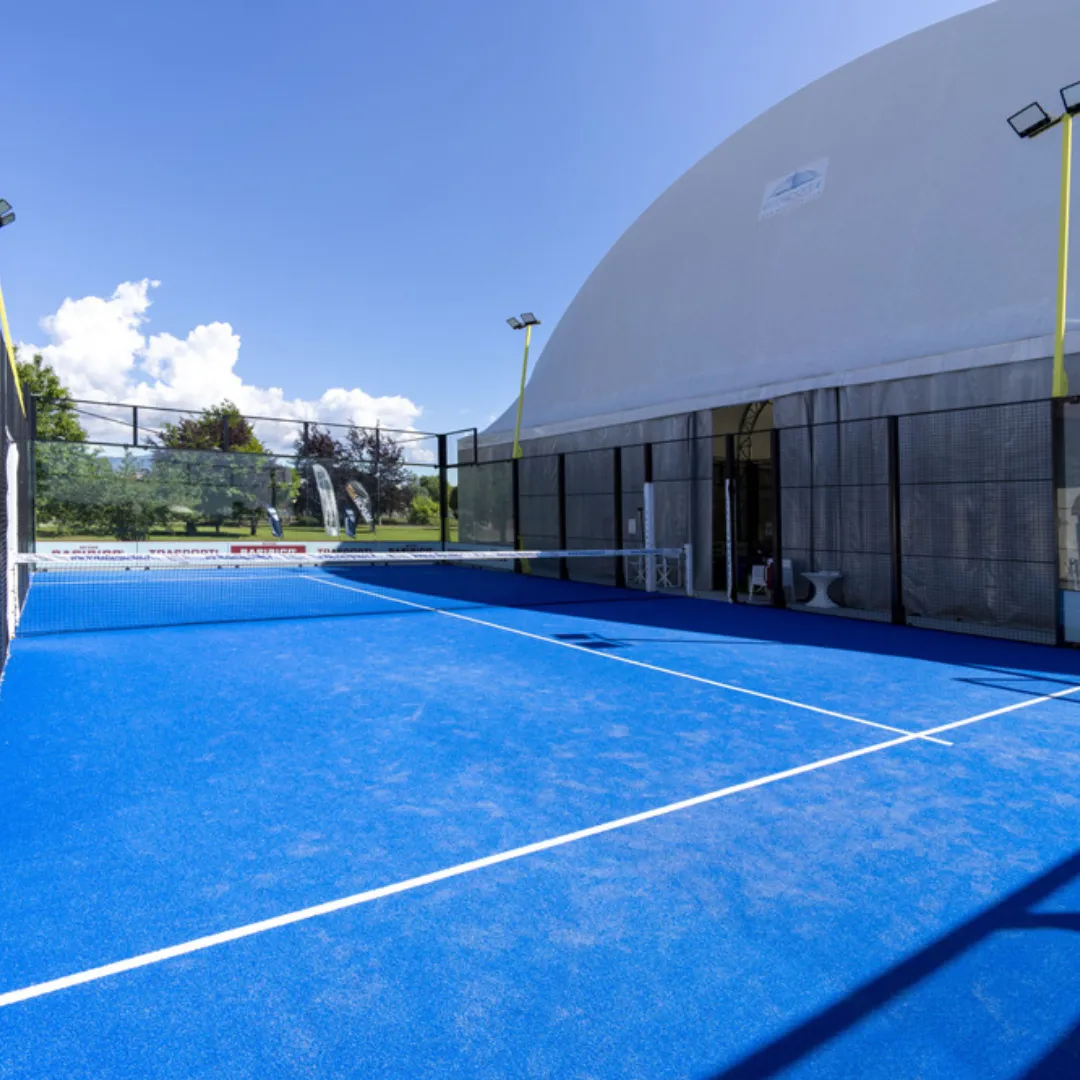
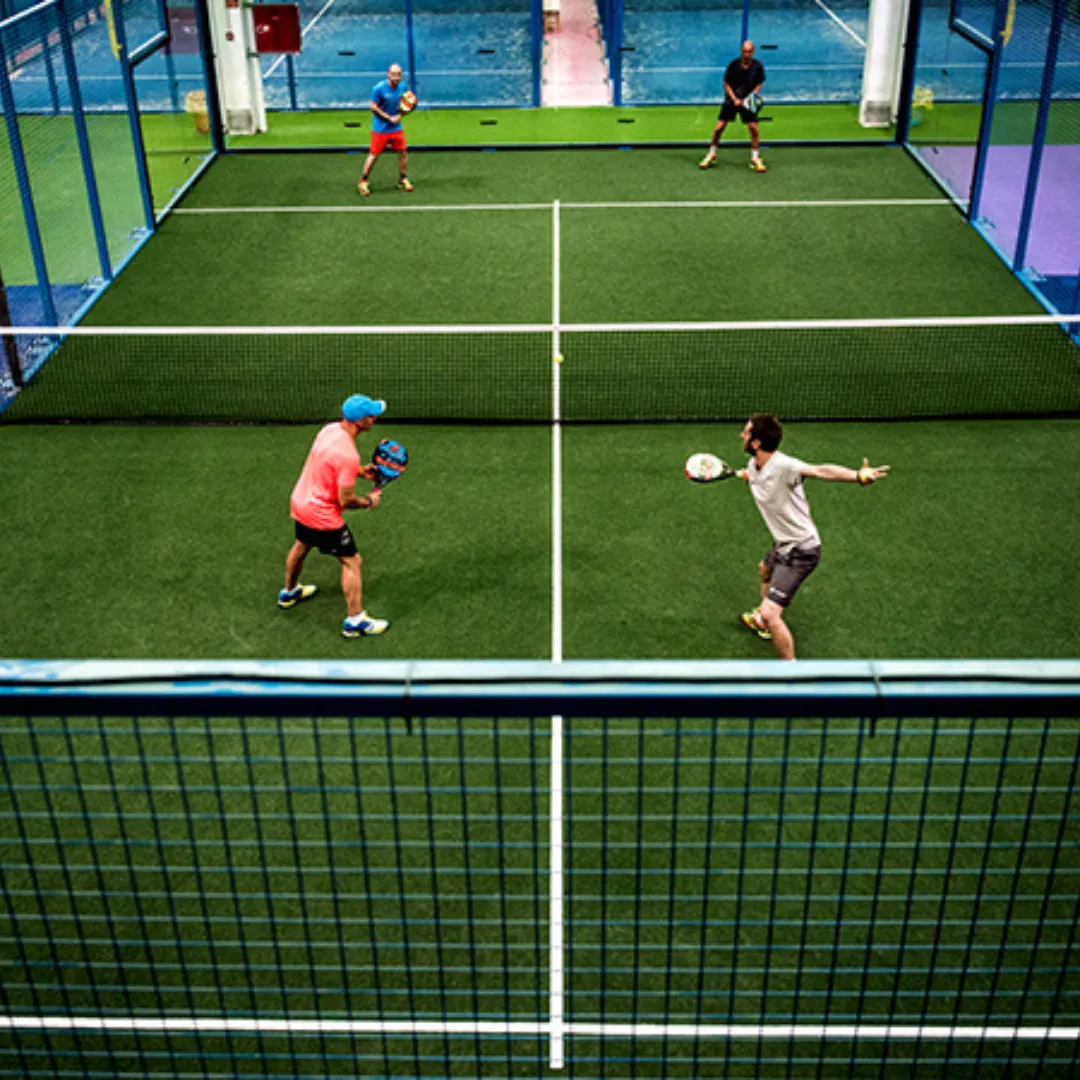
Paddle tennis (also known as padel in many places) is played on a smaller court than tennis, enclosed by glass or fencing, with ball bounce and player movement unique to the sport. The flooring for paddle must deliver three core things:
Controlled ball bounce — Paddle uses a pressurized, lower-bounce ball than tennis, but surfaces must still be predictable so players can set up their shots.
Player traction & slide balance — Enough grip to prevent slips, but some slide is useful for quick directional changes.
Shock absorption — Repeated cutting movements and jumps require a surface that reduces impact to knees and ankles.
Because paddle courts are often built indoors, outdoors, or semi-enclosed in Pakistan, the chosen flooring must also handle local climate, drainage, UV exposure and maintenance realities.
Common Flooring Options for Paddle Courts
Below are the most common and practical flooring types used for paddle courts globally and in climates similar to Pakistan’s. I’ll explain how each performs and what to watch out for in Pakistan.
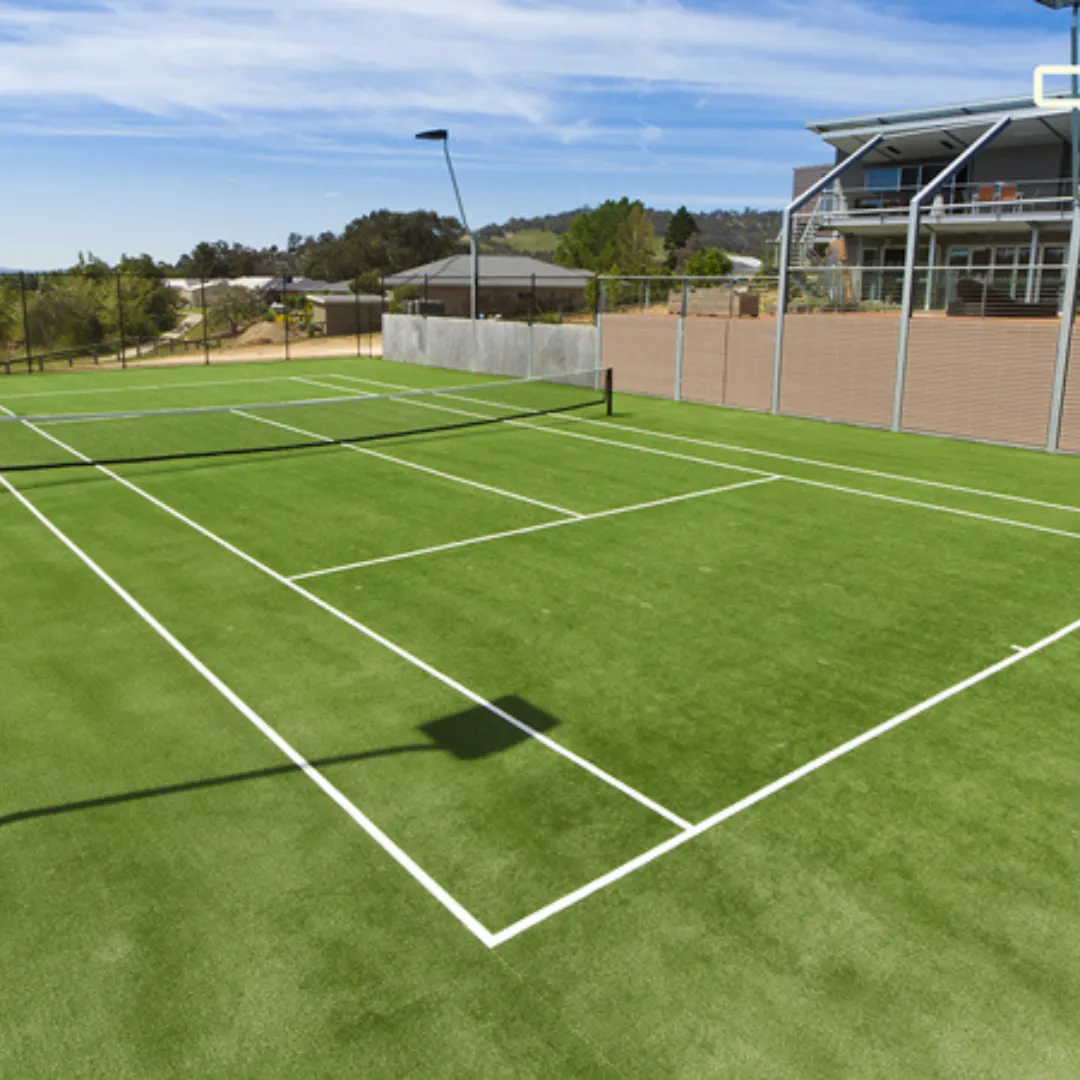
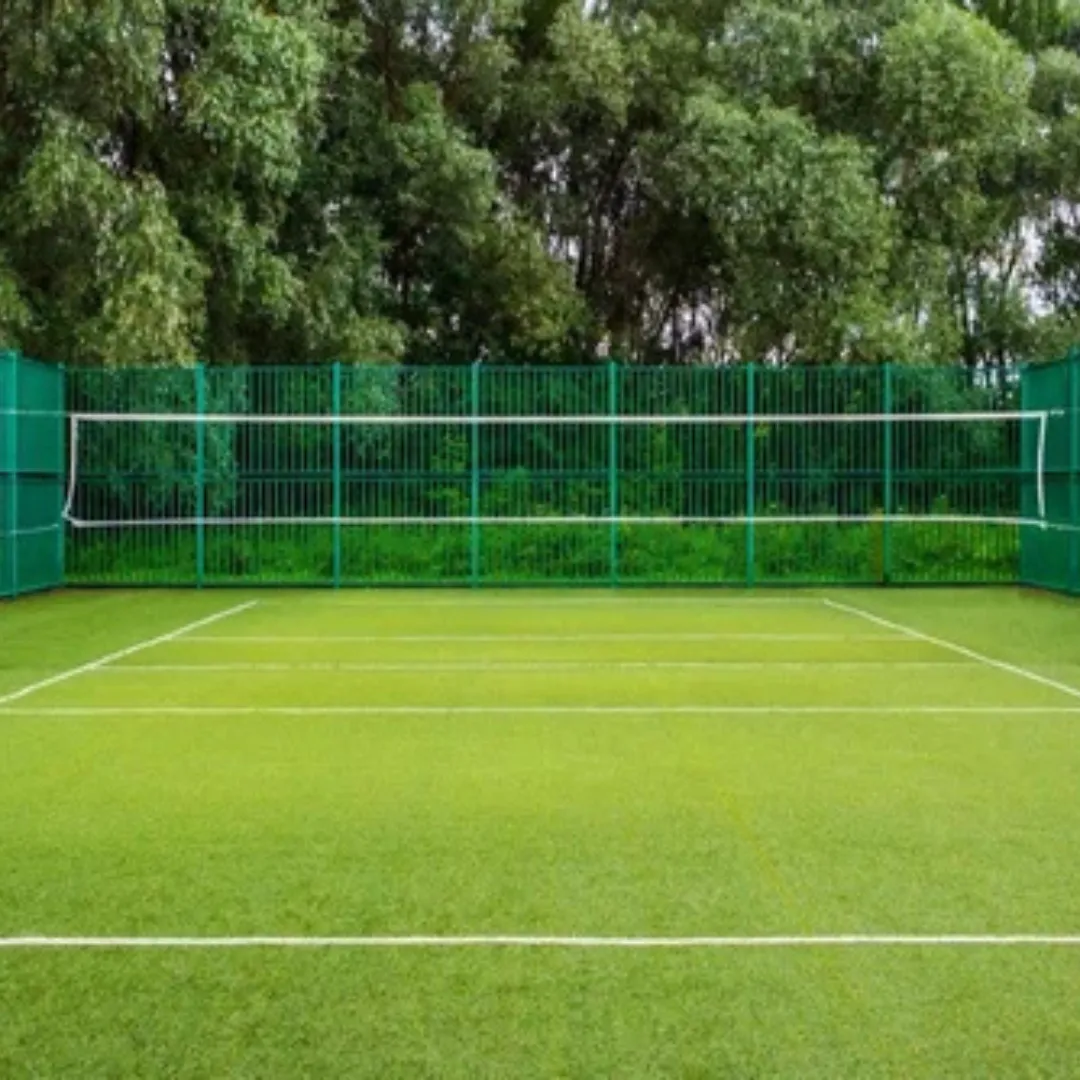
1. Artificial (synthetic) turf with sand infill
What it is
Short-pile synthetic turf installed over a shock-pad, with silica sand spread into fibers to control ball bounce.
Pros
- Familiar feel for paddle players (good traction and controlled slide).
- Good shock absorption when used with an underlay.
- Easy to repair small sections.
- Visually attractive and available in various colors.
Cons
- Requires periodic brushing and sand top-ups.
- If drainage isn’t designed well, turf holds water and grows odor/mildew.
- UV degradation possible if cheap turf is used; quality matters.
Suitability in Pakistan
Very popular. Works well for outdoor and semi-covered courts in urban areas (Lahore, Karachi, Islamabad) if UV-stable turf and a good drainage base are used.
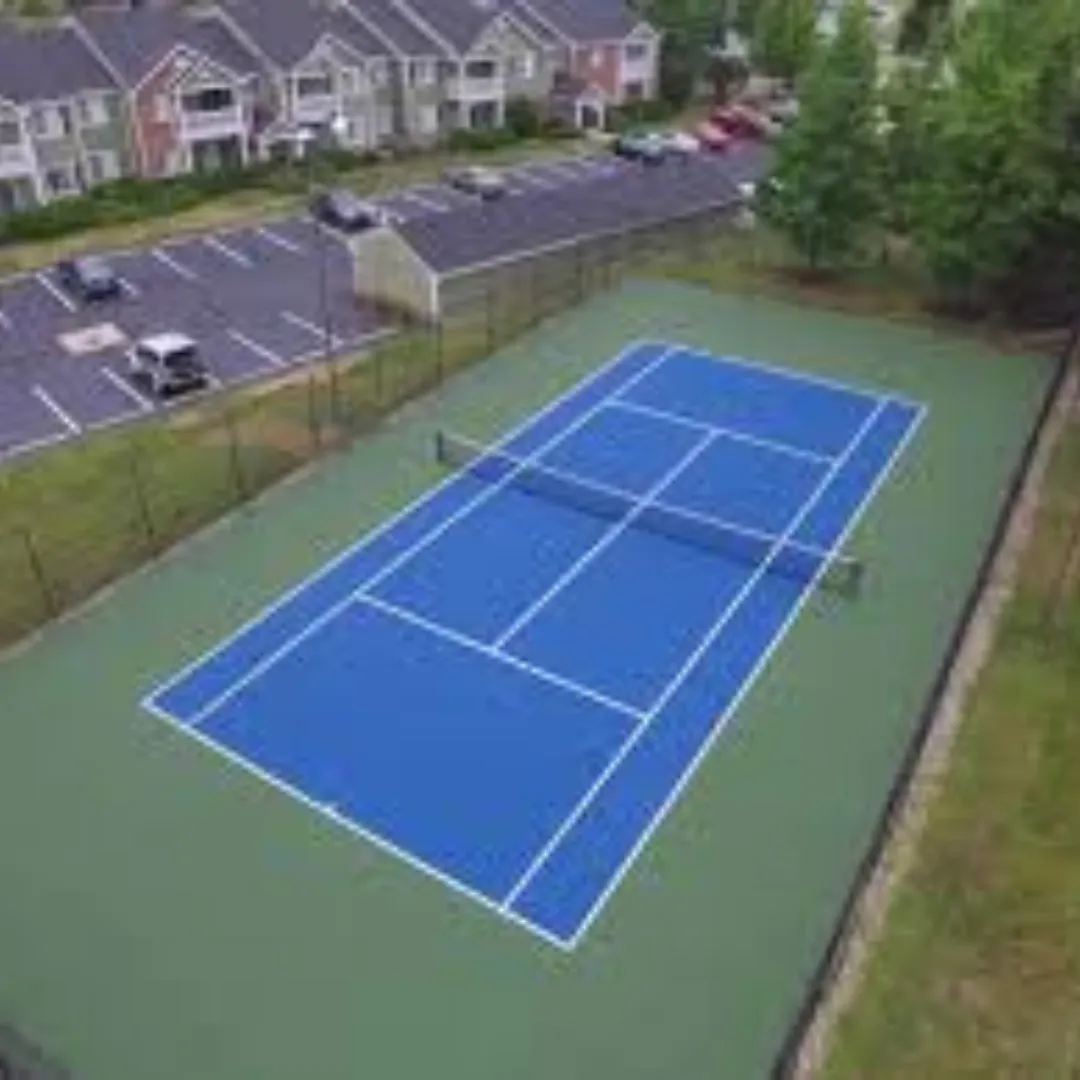
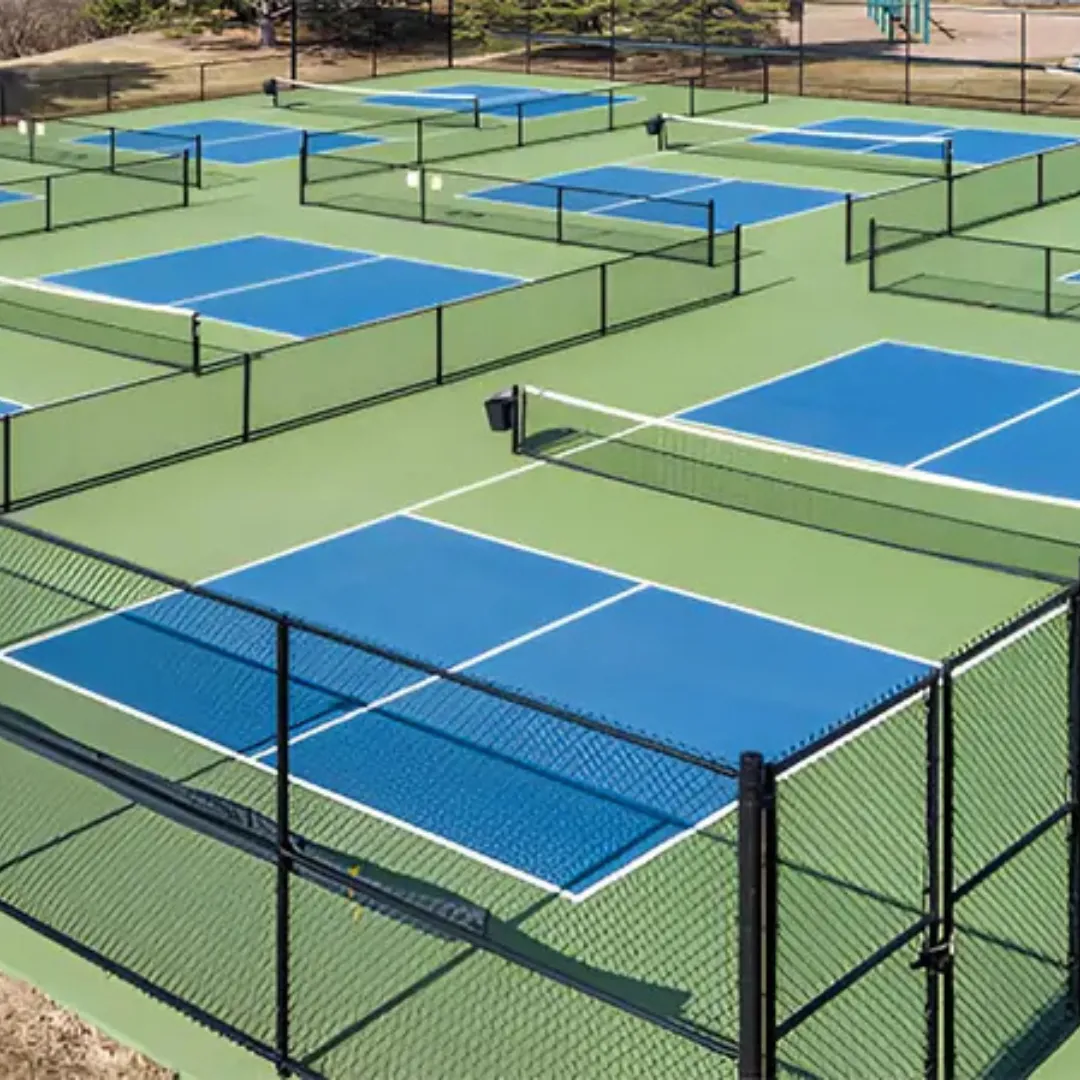
2. Acrylic (sport) coatings on concrete or asphalt

What it is
Multi-layer acrylic paint systems applied to prepared concrete or asphalt base, often used for tennis converted courts.
Pros
- Durable and low till medium maintenance.
- Wide range of colors; line markings are integral.
- Predictable ball bounce on a well-prepared base.
Cons
- Harder surface — less shock absorption (can be mitigated with cushioned asphalt or underlay).
- Surface can become slippery when wet unless textured.
- Cracking of concrete/asphalt under thermal stress can damage finish.
Suitability in Pakistan
Cost-effective for club courts with high use. For player comfort, combine with shock-absorbing underlayer if possible.
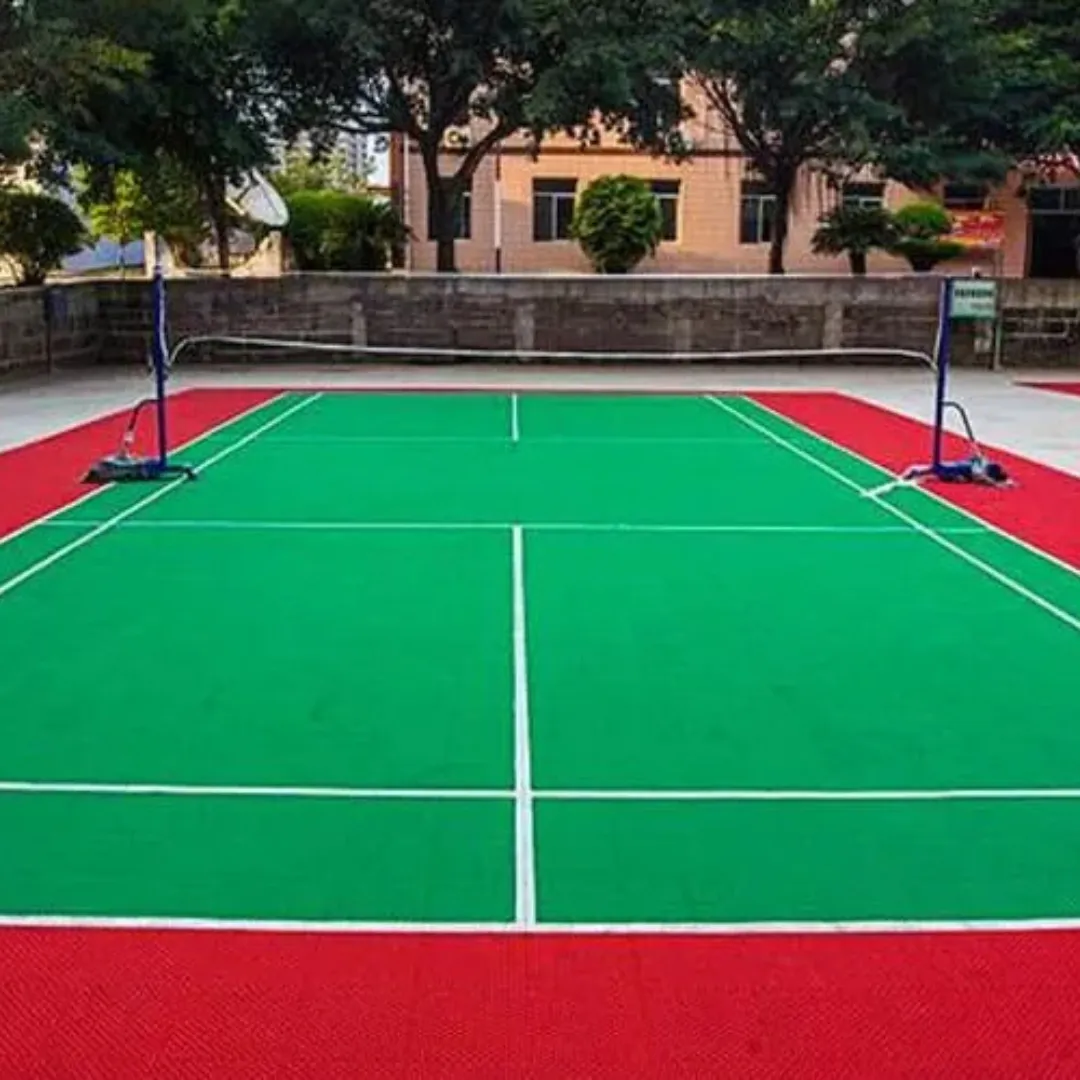
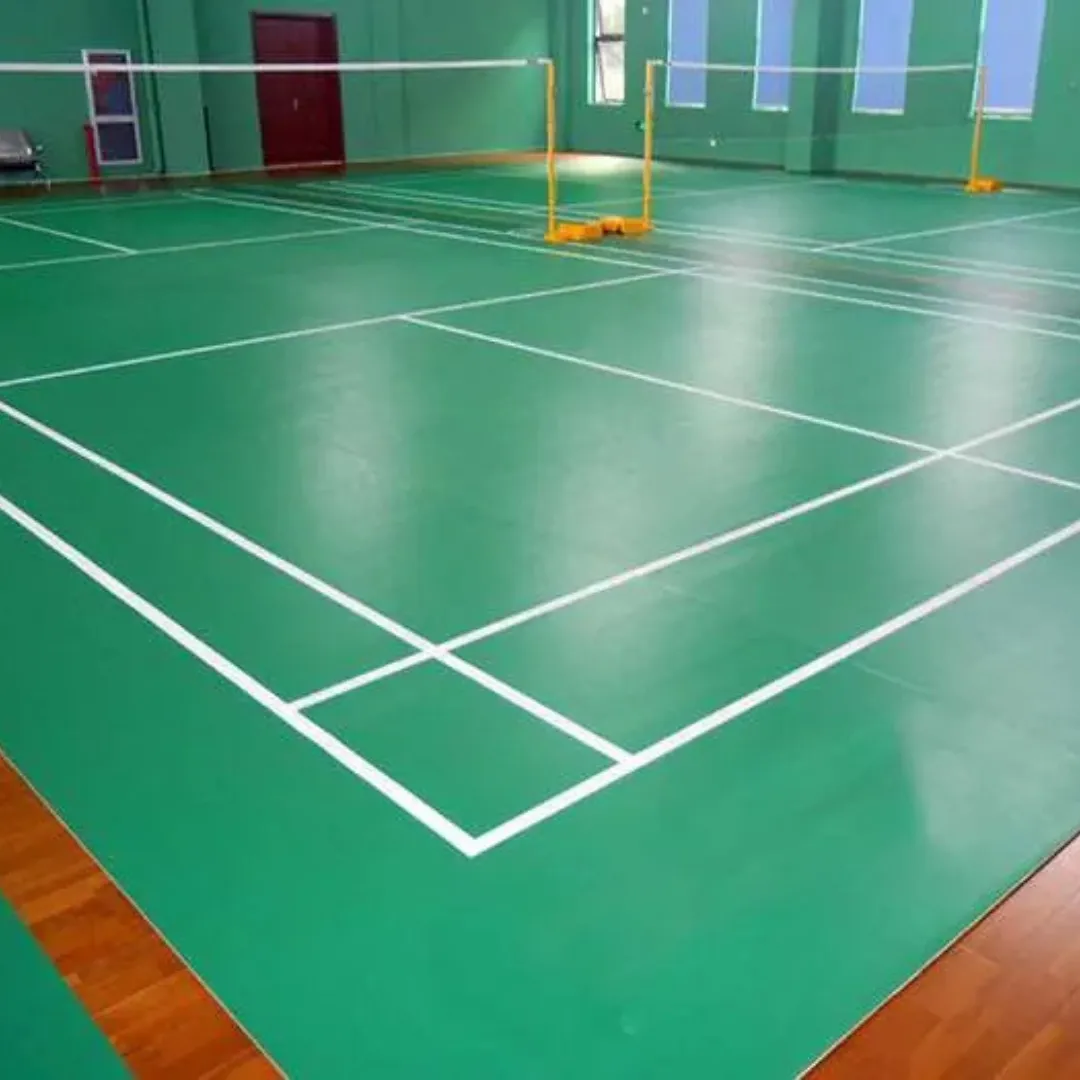
3. PU (Polyurethane) elastic sports flooring

What it is
Resin-based polyurethane poured in layers to create a continuous flexible surface; can include textured top coats.
Pros
- Excellent shock absorption, consistent playing characteristics.
- Seamless surface — easy to clean.
- Can be tuned for grip/slide and ball behavior.
Cons
- Higher upfront cost.
- Requires professional installation and precise curing conditions.
- Surface can be damaged by sharp objects or poor maintenance.
Suitability in Pakistan
Great for indoor or covered courts where player comfort and longevity are priorities. Needs climate-aware curing and high-quality installers.
4. Modular interlocking sports tiles
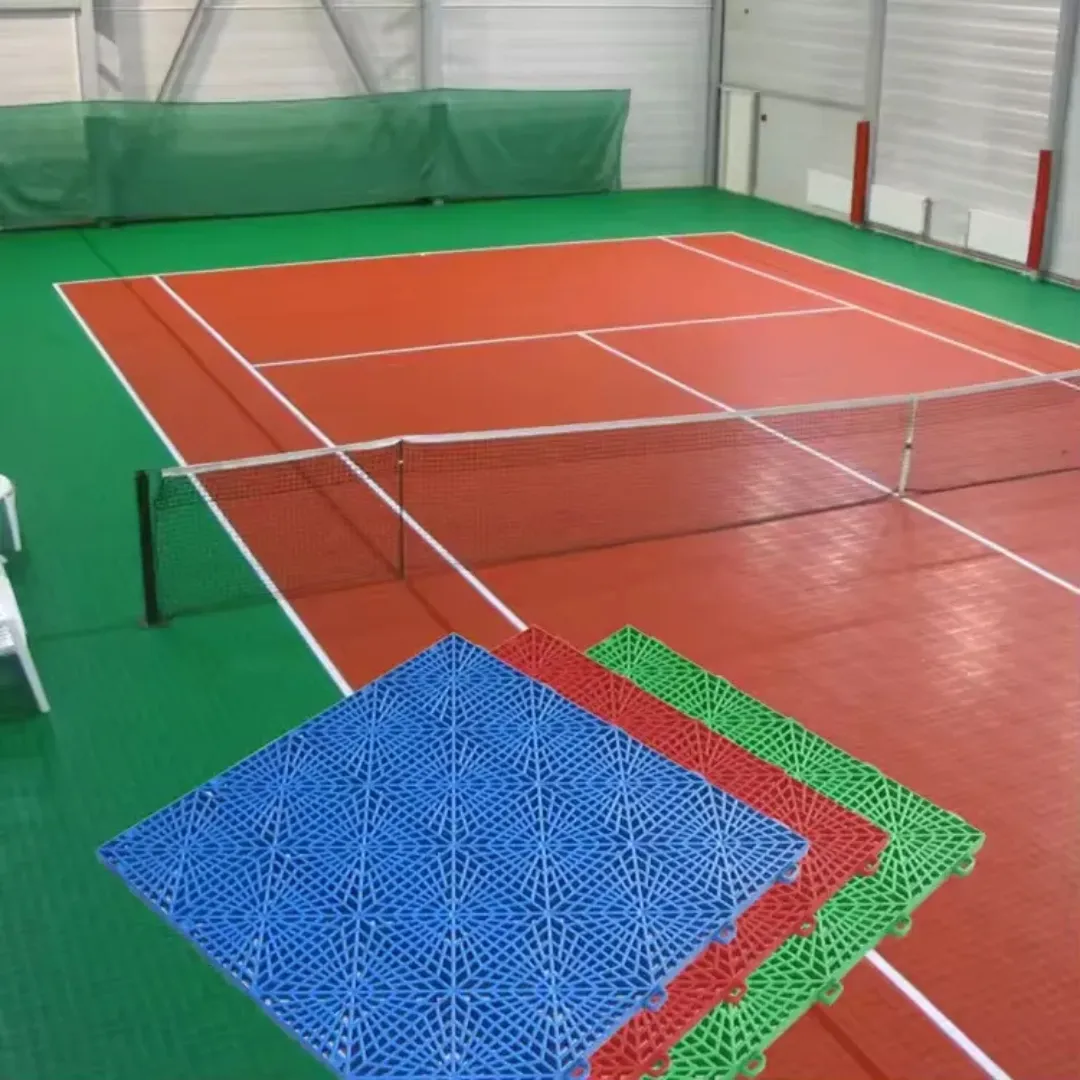
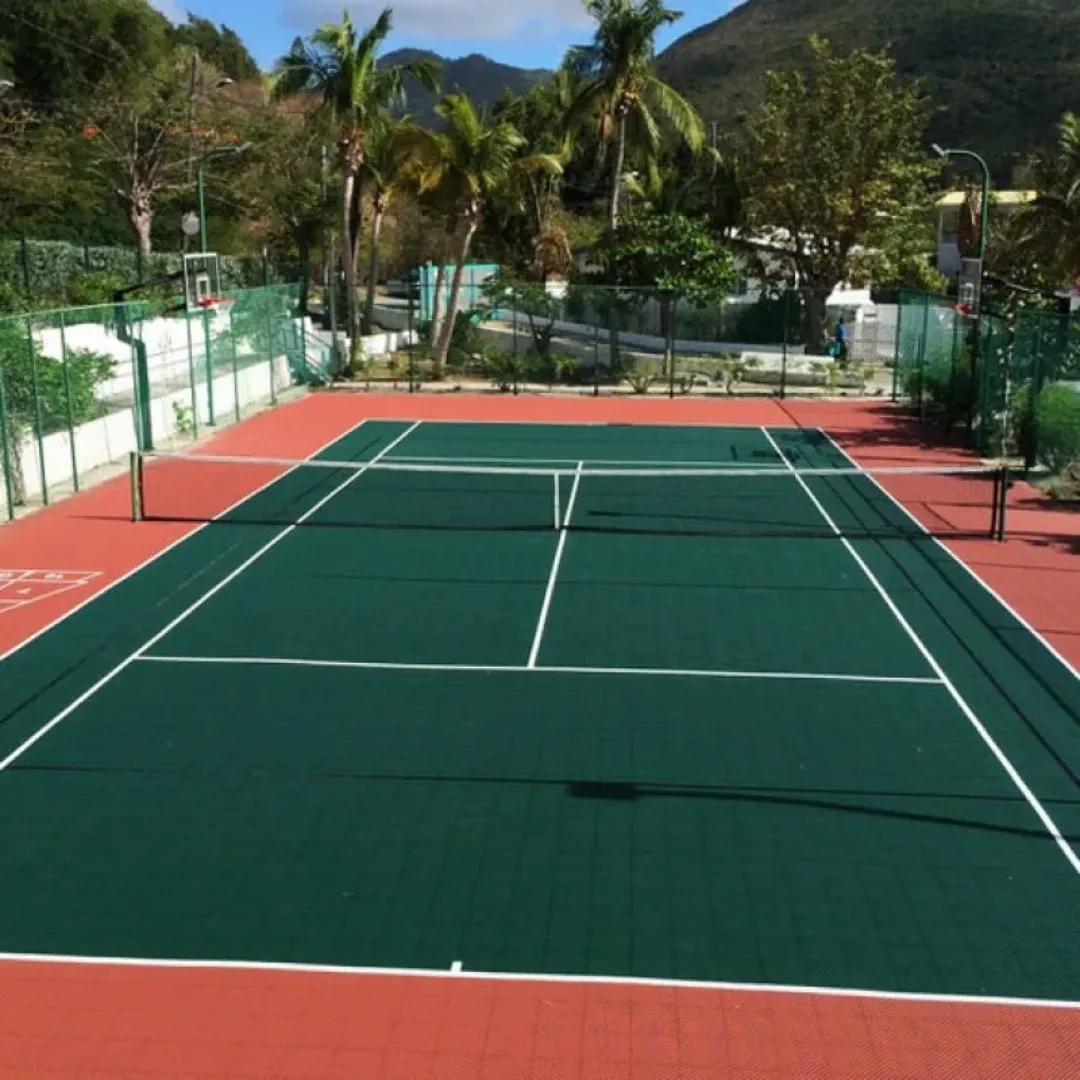
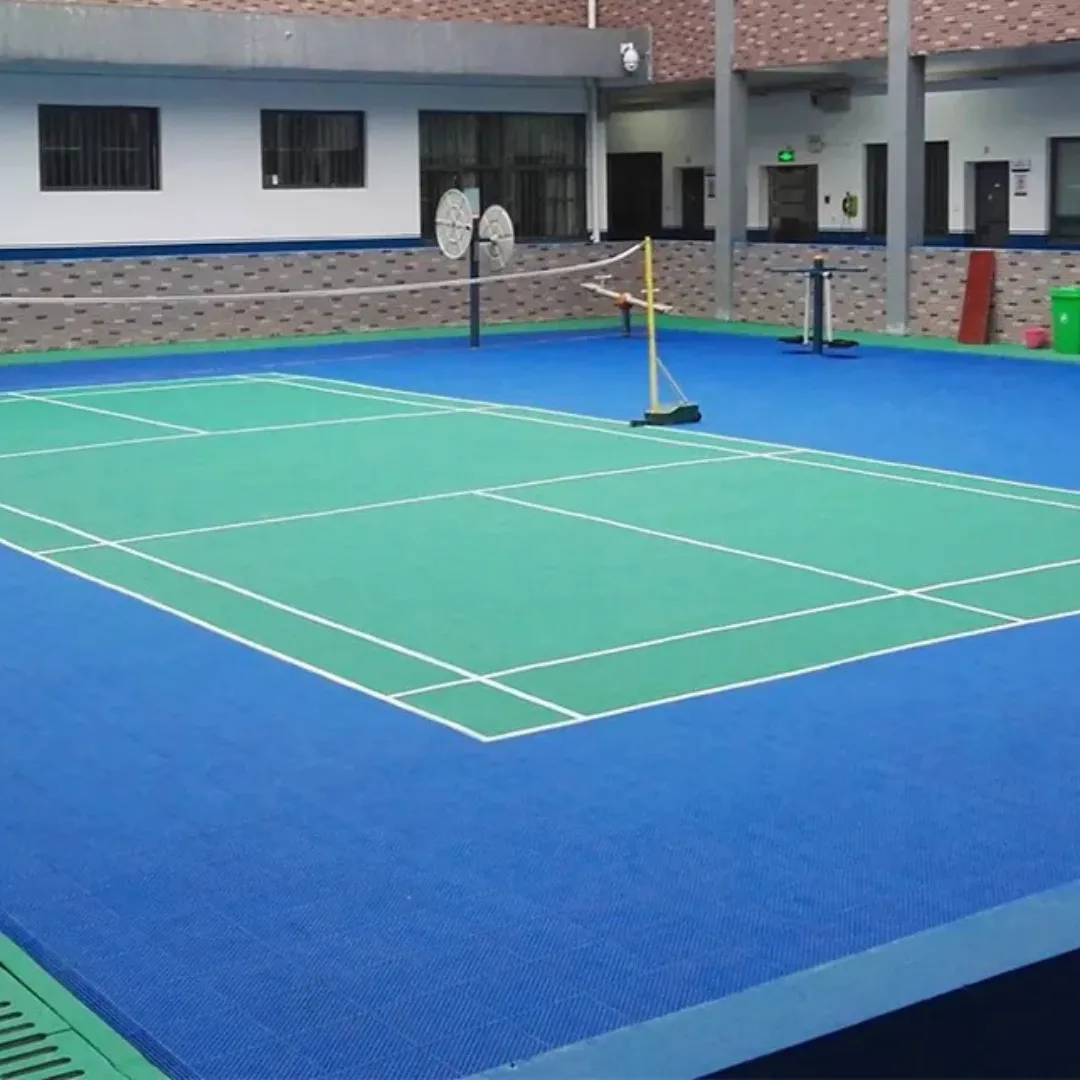
What it is
Heavy-duty polypropylene or composite tiles that snap together, creating a perforated modular surface.
Pros
- Fast installation and replacement.
- Excellent drainage — good for outdoor monsoon-prone areas.
- Shock-absorbing variants exist; good traction.
Cons
- Can have a different “clicky” feeling underfoot; some players dislike it.
- Requires precise leveling of the sub-base.
- Edges need good fixing to avoid movement.
Suitability in Pakistan
Ideal for venues that need quick installation or temporary courts, or where drainage during heavy rains is a concern.
5. Hybrid systems (turf over modular tiles, or turf over PU)
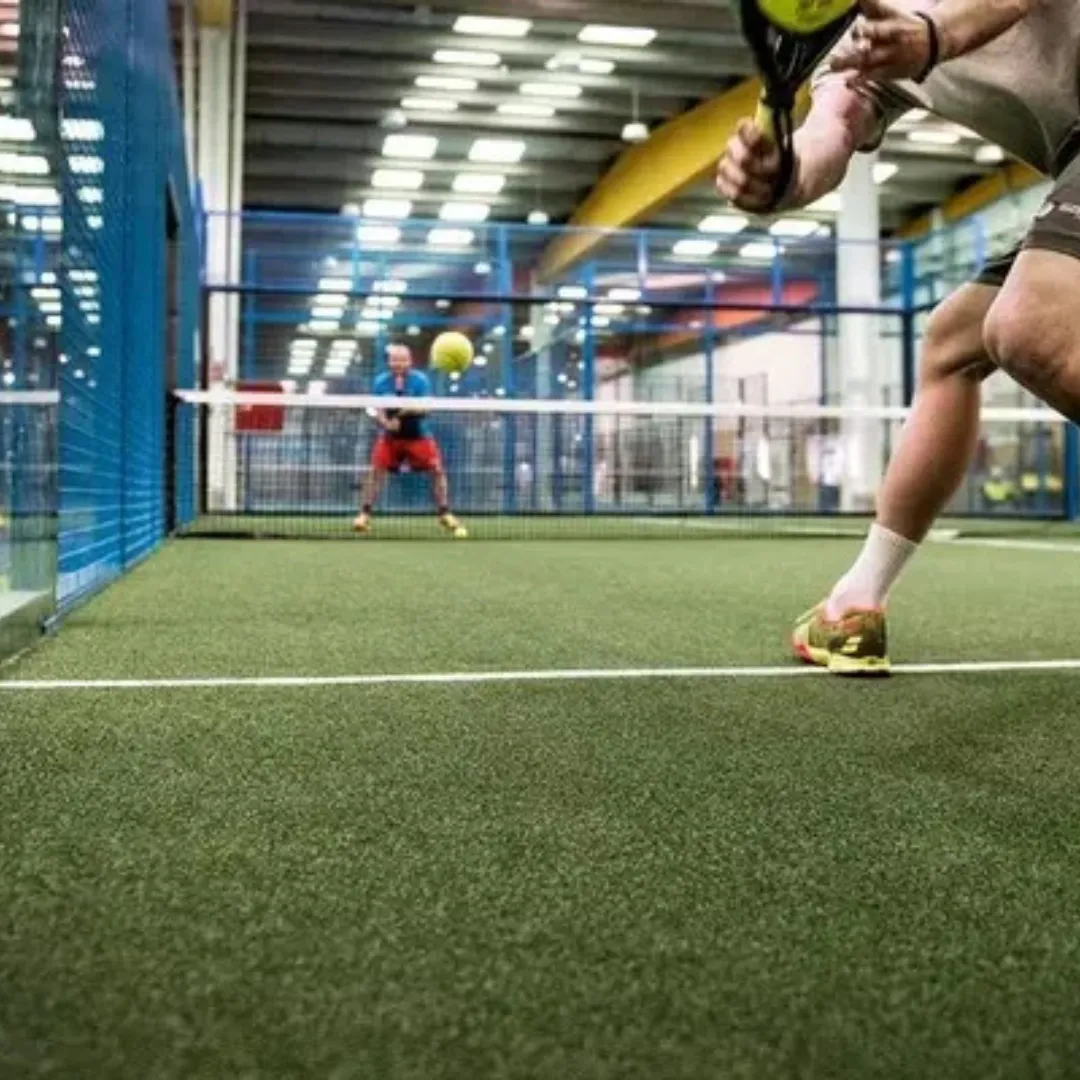
What it is
Combining layers — e.g., turf on top of shock-absorbing tiles, or turf over poured PU base.
Pros
Can offer the best of both worlds: turf playability + shock absorption + drainage.
Cons
- More complex and costly.
- Requires careful detailing to avoid delamination.
Suitability in Pakistan
Strong option for premium installations where budget allows.
Climate & site considerations in Pakistan
Pakistan’s broad climate — hot summers, monsoon rains in many regions, and UV-intense sunlight — directly affects flooring choice and installation strategy.
- UV exposure (Karachi, Lahore, Islamabad): Use UV-stable fibers or UV-resistant topcoats. Cheap materials will fade and become brittle.
- Heat expansion: Concrete or asphalt bases expand; choose systems that accommodate thermal movement to avoid cracking and delamination.
- Monsoon & drainage: For outdoor courts, prioritize drainage. Perforated modular tiles or well-designed sand-infill turf with sloped base are essential in monsoon-prone cities.
- Dust & sand: In desert-adjacent regions, low-pile turf and sealed acrylic/PUs are better because they trap less dust versus long-pile surfaces.
- Indoor humidity: If building indoor courts in humid zones, ensure good ventilation to avoid mildew on turf and to allow polymeric surfaces to cure properly.
Sub-base and drainage — the hidden make-or-break
No matter what surface you choose, the sub-base below it will determine longevity and playability.
- Concrete slab: Most durable. Requires correct expansion joints, a slight slope for drainage (if outdoor), and a smooth, crack-free finish for acrylic/PU.
- Asphalt base: Slightly less rigid than concrete — can be good for some acrylic finishes and reduces transmission of freeze-thaw stress (less of a problem in Pakistan).
- Compact granular base (for modular tiles): Well-compacted sand/gravel with geotextile prevents weeds and allows drainage.
Tips
- Always build with a minimum gradient (1–2%) away from the court for surface water to drain.
- Include perimeter drains (French drains) in outdoor courts.
- Use a vapor barrier/ISOLATION layer when installing over damp ground for PU systems.
Installation process for paddle tennis court flooring
Below is a generalized sequence. Exact steps depend on your chosen system.
Site survey & leveling — check existing levels, soil compaction, slope, and utilities.
Excavation & base preparation — remove poor soil, compact subgrade, add granular base (crushed stone), compact in layers.
Base layer — pour and level concrete or lay and compact asphalt; allow proper cure time for concrete (per manufacturer requirements).
Waterproofing/drainage work — install drains, weep holes, or suitable filtering layers.
Shock pad (if applicable) — roll-out or pour-in pads to provide cushioning.
Main surface installation:
- Turf: adhesive + rolling, then sand infill spread and brushed in.
- Acrylic: primer, leveling coats, textured top coats, line painting.
- PU: primer, base coat, elastic middle layers, textured top coat with anti-slip profile.
- Modular tiles: lay on compacted base, fix edges, secure expansion gaps.
Perimeter finishing — fix trim, ensure glass fencing or walls sit firmly with appropriate expansion gaps.
Markings & line painting — ensure correct colors and durable paint systems.
Commissioning & handover — final sweep, sand settling for turf, and playability testing.
Maintenance: keep it playable and long-lived
Every surface needs care — here’s a practical maintenance schedule to keep courts in top shape in Pakistan.
Synthetic turf
- Daily/weekly: Brush fibers back upright; remove debris.
- Monthly: Check and top up silica sand; inspect seams.
- Annually: Deep clean with specialized machines; replace infill where compacted.
Acrylic and PU surfaces
- Daily: Sweep leaves and dust; clear standing water after rains.
- Monthly: Inspect for cracks or chips, especially after temperature extremes.
- Every 3–6 years: Recoat top layers if wear becomes visible; fill small cracks promptly to stop spreading.
Modular tiles
- Weekly: Sweep or blow debris out of drains.
- Monthly: Inspect and replace any damaged tiles.
- As needed: Level correction if sub-base shifts after heavy rains.
Player safety checks
Inspect seams, perimeter trims, and drainage after heavy storms; ensure no glass panels are loose.
Cost guide for Paddle Tennis Court Flooring in Pakistan
Costs vary with materials, site prep, scale and region. The numbers below are indicative ranges per square foot (PKR) for Pakistan as of typical market conditions — use them only to budget; get quotes from local contractors for accuracy.
- Basic acrylic over concrete (mid-quality): PKR 400–900 / sq. ft.
- Good quality synthetic turf (with shock pad & sand infill): PKR 600–1,600 / sq. ft.
- PU poured elastic surface (mid to high quality): PKR 1,200–2,500 / sq. ft.
- Modular interlocking tiles (sports grade): PKR 700–1,500 / sq. ft.
- Premium hybrid systems (turf over PU/shock pad): PKR 1,800–3,500 / sq. ft.
These ranges include materials, installation and basic edge finishing but may not include extensive excavation, drainage overhaul, fencing/glass walls or lighting. High-quality glass & fencing, floodlighting, HVAC (for indoor) and accessories will add significantly to the total.
Choosing the right contractor in Pakistan — checklist
Relevant experience — ask for paddle/tennis/padel courts completed in Pakistan; request photos and client references.
Material transparency — make them show product specs (UV rating, pile height, shock pad density, PU resin brand).
Warranty & aftercare — get a clear warranty for materials and workmanship (typical 1–5 years). Clarify what voids the warranty (e.g., improper use, lack of maintenance).
Sub-contractors & timeline — who does the base work vs surface? Get expected milestones.
Tests & samples — ask for samples of turf or a small cured sample of PU; request a test patch if possible.
Drainage strategy — ensure they propose site-specific drainage, not a one-size-fits-all plan.
Health & safety compliance — safe storage of materials, correct handling of chemical adhesives and resins.
Local support — prefer contractors who can provide maintenance support and spare tiles/patches.
Real-world tips for Pakistani owners & managers
- Plan for the sun: Install UV-resistant surfaces and consider shade structures at spectator edges.
- Local sourcing: While some high-quality turf/PU materials might need import, check for reputable local suppliers to save cost — but verify specs and UV ratings.
- Lighting matters: Good uniform floodlighting (lux levels appropriate for paddle) improves playability and prolongs court life by discouraging late-evening dampness accumulation.
- Security & access: Keep courts locked when not supervised — surface vandalism and litter are real cost drivers.
- Insurance & liability: Carry public liability insurance if the court is opened to paying customers; document maintenance to show due diligence if an injury occurs.
Sample maintenance calendar (one page quick reference)
- Daily: Sweep; remove litter; check lighting.
- Weekly: Brush turf; clear drains; inspect seams and joints.
- Monthly: Light clean/coating inspections; sand top-up for turf as needed.
- Quarterly: Deep clean or mechanical grooming of turf; check line markings.
- Annually: Full professional inspection; recoat acrylic/PU if surface wear indicates.
Final thoughts — balancing budget, players & longevity
Selecting paddle tennis court flooring in Pakistan is a balancing act: initial budget, expected intensity of use, climate resilience, and player experience all steer the decision. For community courts or short-term projects, synthetic turf is practical and popular. For clubs and venues that expect heavy play and want premium feel, consider PU systems or well-executed acrylic systems over a properly engineered concrete base. Modular tiles are the wildcard — great in tricky drainage situations or where speed of installation matters.
Whatever you choose, invest in proper base work, good materials, and regular maintenance — those three levers deliver the best long-term value. If you want, I can help next with a tailored checklist for contractors, a sample tender document you can send to three bidders in Pakistan, or a 1-page budget worksheet to estimate your total project cost. Which would help you most right now?
FAQ’S
Which surface is best for casual community courts?
Synthetic turf with sand infill — user-friendly, good value and visually appealing.
Which floor is best for club-level competitive play?
PU elastic or high-grade acrylic over a well-prepared concrete base — they offer the most consistent play and shock absorption.
How long before the court can be used after installation?
Turf can often be used within a few days after installation and infill settles. Acrylic and modular tiles are usable quickly. PU systems require proper curing — factor in 3–7 days depending on ambient temperature and humidity.
How to protect a court during monsoon season?
Ensure good drainage, keep debris cleared, and install a perimeter French drain where needed. For temporary protection, use tarpaulins designed for sports surfaces only (consult manufacturer).
What are common mistakes to avoid?
Skimping on sub-base prep, using low-grade materials, neglecting drainage, and hiring installers without paddle-specific experience.