Sports Flooring Services
By Sports Flooring Pakistan Technical Team
Specialists in Indoor & Outdoor Sports Surface Systems, Court Construction and Surface Preparation
Content reviewed and updated: August 2026
We provide professional sports flooring services for schools, colleges, universities, sports clubs, gyms, academies, community facilities, residential projects, and commercial sports complexes.
A sports floor does more than cover the ground. It affects player comfort, traction, ball response, shock absorption, drainage, durability, and maintenance requirements. The right system depends on the sport, location, level of play, existing base, and expected usage.
A badminton court requires a different surface from a football field. A basketball court has different ball-bounce and traction requirements from a jogging track. Outdoor facilities must also handle sunlight, rain, temperature changes, and drainage.
Our approach is simple: We assess the sport, inspect the base, understand how the facility will be used, and recommend a sports flooring system suited to the project.
What Is Sports Flooring?
Sports flooring is a specialised surface designed for athletic activity. Depending on the system, it can provide controlled traction, shock absorption, ball response, player comfort, surface durability, weather resistance, drainage, and easier maintenance.
A sports flooring system usually includes more than the visible top surface. The exact build-up changes according to the sport and flooring technology.
PU sports flooring, vinyl PVC flooring, acrylic court systems, artificial grass, EPDM wet pour, rubber flooring, PP interlocking tiles, and maple hardwood all use different system designs and installation methods.
Important: Sports flooring is a complete system. A high-quality visible surface cannot compensate for a poor base. Despite using premium materials, a sports floor may underperform when the concrete is uneven, drainage is poor, moisture is uncontrolled, or the sub-base moves.
Why Professional Sports Flooring Matters
Sports flooring directly affects how a facility performs. The wrong surface can create practical problems for players, operators, and facility owners.
Player Movement
- Too little grip can affect player control
- Too much grip may increase stress during sudden movement
- Surface consistency supports predictable movement
Surface Performance
- Hard surfaces may provide limited impact comfort
- Uneven bases can affect ball response
- Different sports require different surface characteristics
Outdoor Conditions
- Poor drainage can interrupt play
- Weak UV resistance can affect service life
- Rain and temperature changes affect surface requirements
Project-Specific Selection
There is no single best sports floor for every project. A professional badminton facility, school playground, football academy, and commercial gym all have different requirements.
We recommend flooring based on the sport and facility requirements rather than using one material for every project.
Professional Sports Flooring Solutions
Sports Facility Assessment
We begin by understanding the actual requirements of your project.
- Type of sport
- Indoor or outdoor location
- Professional or recreational use
- Expected number of users
- Daily playing hours
- Existing ground condition
- Drainage and moisture concerns
- Maintenance expectations
Base and Surface Preparation
The base plays a major role in sports surface performance. We assess or prepare the existing substrate before installing the visible flooring system.
- Concrete bases
- Asphalt bases
- Compacted sub-bases
- Existing sports courts
- Surface levels
- Slope and drainage
- Cracks and surface defects
PU Sports Flooring
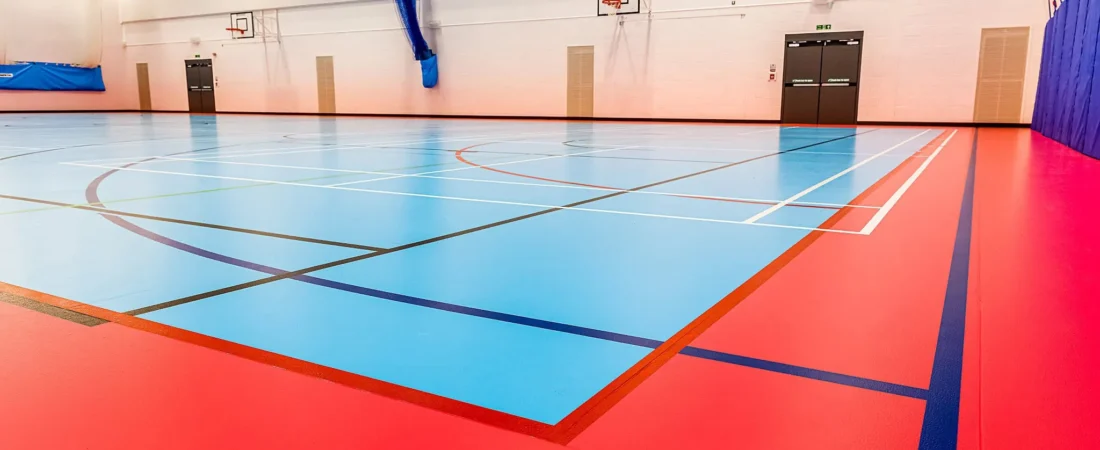
PU sports flooring can provide a seamless and resilient surface for indoor sports facilities and multi-purpose halls.
- Basketball courts
- Volleyball courts
- Badminton facilities
- Multi-purpose sports halls
- Indoor training facilities
- Gymnasiums
Vinyl PVC Sports Flooring
Vinyl PVC flooring can provide a consistent sports surface for indoor facilities where controlled playing characteristics are required.
- Badminton courts
- Basketball courts
- Volleyball courts
- Table tennis areas
- School sports facilities
- Multi-purpose halls
Acrylic Sports Flooring
Acrylic flooring is commonly used for outdoor sports courts over suitable concrete or asphalt bases.
- Tennis courts
- Basketball courts
- Pickleball courts
- Volleyball courts
- Multi-purpose courts
Artificial Turf & Synthetic Grass
We provide artificial grass and synthetic turf solutions for different outdoor sports applications.
- Football grounds
- Futsal courts
- Hockey facilities
- Cricket practice areas
- Padel courts
- Multi-sport training areas
EPDM Wet Pour Flooring
EPDM wet pour creates a seamless and resilient surface for recreational and selected sports-related applications.
- Kids’ play areas
- Playgrounds
- Jogging tracks
- Walking paths
- Recreational areas
PP Interlocking Sports Tiles
PP interlocking tiles form a modular floating sports surface suitable for selected indoor and outdoor applications.
- Basketball courts
- Futsal courts
- Volleyball courts
- Tennis practice courts
- Multi-purpose courts
Rubber Gym Flooring
Rubber flooring is designed for fitness and training environments where equipment impact and floor protection are important.
- Commercial gyms
- Home gyms
- Weight training zones
- Cross-training areas
- Cardio areas
- Functional fitness spaces
Maple Hardwood Sports Flooring
Maple hardwood remains a traditional flooring option for selected professional indoor sports courts and gymnasiums.
- Basketball courts
- Sports halls
- Training facilities
- School gymnasiums
Sports Flooring Comparison
| Flooring System | Typical Applications | Main Strength | Important Consideration |
|---|---|---|---|
| PU Sports Flooring | Indoor courts and sports halls | Seamless and resilient surface | Requires suitable substrate conditions |
| Vinyl PVC Flooring | Badminton, basketball and volleyball | Consistent indoor sports surface | Seam quality and dry substrate matter |
| Acrylic Flooring | Tennis and outdoor courts | Suitable for outdoor court systems | Base slope and drainage are critical |
| Artificial Turf | Football, hockey, cricket and padel | Durable outdoor sports surface | Base, drainage and turf specification matter |
| EPDM Wet Pour | Playgrounds and jogging tracks | Resilient seamless surface | Thickness must suit the application |
| PP Interlocking Tiles | Outdoor multi-sport courts | Modular and replaceable sections | UV stability and base quality matter |
| Rubber Flooring | Gyms and fitness facilities | Impact and equipment protection | Thickness must match the activity |
| Maple Hardwood | Indoor basketball courts | Traditional sports court performance | Moisture and acclimatisation are critical |
The Same Sports Facility Can Require Different Flooring Systems
A sports complex does not automatically need one type of flooring. Different zones have different performance requirements.
Performance Zones
- Basketball: Ball response, traction and player comfort
- Badminton: Surface consistency and controlled grip
- Gym: Equipment impact protection
- Tennis: Outdoor durability and court performance
- Play Area: Resilient surface requirements
Why Zone Planning Matters
Dividing a facility into performance zones can help avoid overspending on unnecessary performance in low-demand areas.
It can also reduce the risk of under-specifying critical areas where higher impact resistance, better traction, or specialised playing characteristics are required.
Key project insight: The best sports flooring decision often starts by dividing the facility into performance zones and selecting each system according to its primary activity.
Multi-Sport Facility Flooring Project
A multi-purpose sports facility required flooring for several activity zones, including an indoor court, gym training area, outdoor recreational court, and children’s activity space.
The Challenge
- Multiple sports in one facility
- Different traffic levels
- Indoor and outdoor environments
- Different player and equipment demands
- Need to control project costs
The Approach
- Divide the project into activity zones
- Assess each existing base
- Select flooring according to use
- Consider impact and traction requirements
- Review outdoor drainage requirements
- Match each system to its primary activity
Main project lesson: Instead of applying one material throughout the facility, a project-specific approach allows each zone to receive a flooring system suited to its actual use.
Sports Flooring for Different Environments
Indoor Sports Facilities
Indoor facilities can use PU sports flooring, vinyl PVC flooring, maple hardwood, rubber flooring, and selected modular systems.
- Type of sport
- Ball response requirements
- Player movement and comfort
- Traction requirements
- Existing substrate
- Temperature and humidity
- Maintenance expectations
Outdoor Sports Facilities
Outdoor surfaces must handle direct sunlight, UV exposure, rain, temperature changes, drainage, and water movement.
- Acrylic sports flooring
- Artificial grass
- PP interlocking tiles
- EPDM wet pour
- Selected rubber systems
The drainage principle: Outdoor flooring should not rely on the visible surface alone to solve water problems. Water needs a controlled path away from the playing area. A premium surface installed over a poorly drained base can still create a poor sports facility.
Our Sports Flooring Installation Process
Understand the activity.
Check the existing area.
Check levels and drainage.
Choose the flooring system.
Prepare the base.
Install the sports surface.
Mark, inspect and guide.
After installation, we review the finished surface and provide guidance on suitable cleaning and maintenance practices for the selected flooring system.
What Actually Affects Sports Flooring Service Life?
There is no single lifespan that applies to every sports floor. Service life depends on the actual material, installation quality, environment, and use.
Material and Installation
- Material quality
- UV stabilisation
- Surface preparation
- Installation quality
- Base and substrate condition
Environment and Use
- Player traffic
- Equipment traffic
- Weather exposure
- Drainage conditions
- Maintenance and cleaning
Our approach: We focus on realistic project conditions rather than promising one lifespan for every installation. A high-traffic commercial sports facility will normally experience different wear from a low-traffic residential court.
A System-Based Approach to Sports Flooring
We take a project-specific approach and consider the sports surface together with the existing base, environment, expected use, and maintenance requirements.
Our Services Can Include
- Sports facility assessment
- Flooring system recommendations
- Concrete and asphalt assessment
- Surface preparation
- Crack and defect repair
- Levelling where required
- Drainage and slope considerations
- Indoor and outdoor flooring
- Artificial turf installation
- Gym and playground flooring
- Court line marking
Our Key Questions
What sport will be played here?
How often will the facility be used?
Is the project indoor or outdoor?
What condition is the existing base in?
These answers help determine the most suitable flooring solution for the actual project.
Industry Standards and Technical Considerations
This content was reviewed and updated in August 2026. Professional sports flooring should consider recognised technical guidance and the requirements of the relevant sport.
FIBA
Basketball facility requirements and competition-related technical guidance.
International Tennis Federation (ITF)
Court and surface-related classification and performance information for tennis.
World Athletics
Guidance and certification frameworks relevant to athletics tracks and facilities.
FIFA
Quality programmes and technical frameworks relevant to football turf systems.
FIH
Technical guidance and standards relevant to hockey field systems.
EN 1177
A recognised framework for evaluating impact attenuation of playground surfacing.
ASTM International
Standards and test methods relevant to materials, surface systems, and performance.
Manufacturer Technical Data
Current product specifications and installation requirements should guide final system selection and project installation.
Choosing the Right Sports Flooring
Sports flooring is not a one-size-fits-all product. The correct system depends on the sport, location, player traffic, base condition, performance requirements, environmental exposure, and maintenance expectations.
Sport or activity
Indoor or outdoor location
Traffic and intensity of use
Existing base condition
Traction and shock absorption
Ball response requirements
Drainage and weather exposure
Maintenance expectations
Project budget
The key takeaway: The visible sports surface is only one part of the facility. The best results come from matching the flooring system to the sport and preparing the base correctly. Despite the importance of premium materials, even a high-quality sports surface can underperform when installed over an unsuitable base or in conditions it was not designed to handle.
Request a Sports Flooring Quote
Looking for professional sports flooring for your basketball court, badminton court, tennis court, volleyball court, futsal court, football ground, hockey ground, cricket practice pitch, pickleball court, padel court, running track, gym, playground, or multi-sport facility?
- Sport and facility requirements
- Existing surface condition
- Indoor or outdoor location
- Suitable flooring options
- Base preparation requirements
- Drainage considerations
- Required performance
- Expected traffic
- Maintenance requirements
- Project budget
Explore Related Sports & Flooring Solutions
Explore our related flooring systems for sports facilities, recreational spaces and demanding environments where comfort, durability, safety and surface performance matter.
Vinyl Flooring
Resilient vinyl flooring for selected sports, commercial and institutional environments where comfort, cleaning and routine maintenance matter.
PU Flooring
Resilient polyurethane flooring systems for demanding spaces where durability, comfort and long-term surface performance are important.
Kids Play Area Flooring
Safety-focused surfacing solutions for playgrounds and children’s recreational areas where impact protection, comfort and durability matter.
Concrete Flooring
Durable concrete surfaces that can provide a structural base for selected sports and protective flooring systems when properly prepared.
Industrial Flooring
Heavy-duty flooring solutions for facilities where high traffic, abrasion resistance and long-term surface performance are required.
Self-Leveling Epoxy Flooring
Smooth seamless epoxy flooring for suitable areas where surface uniformity, easy cleaning and a continuous finish are important.