
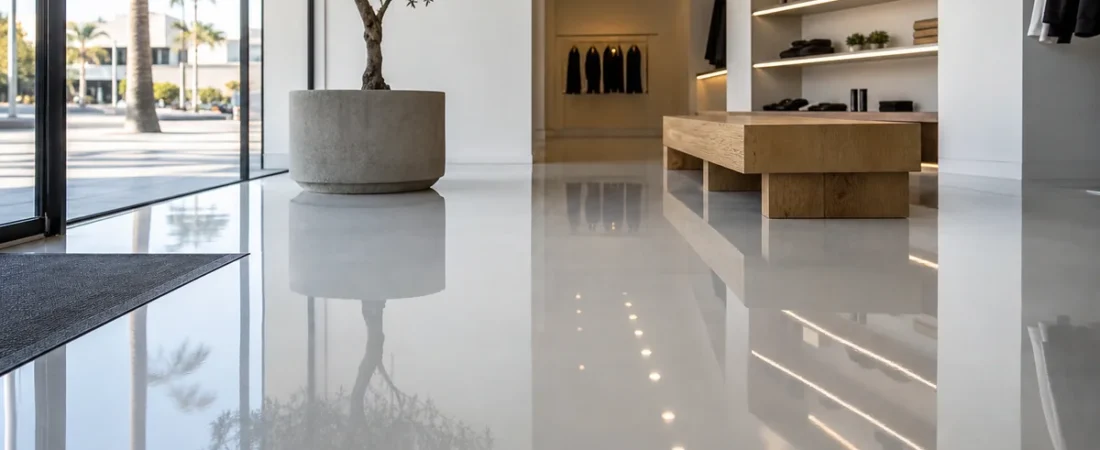
Epoxy Flooring Services
By Epoxy Flooring Pakistan Technical Team
Epoxy Flooring, Industrial Floor Protection, Concrete Repair and Surface Preparation Specialists
Content reviewed and updated: August 2026
Epoxy flooring creates a durable, continuous surface over properly prepared concrete. It is widely used in factories, warehouses, workshops, garages, laboratories, commercial buildings and production areas.
However, epoxy flooring is not a single product or one fixed thickness. A light-duty commercial floor, a decorative showroom and a heavy-duty manufacturing area can require very different systems.
Our approach: We assess the substrate, traffic, exposure and working conditions before recommending the epoxy flooring system.
What Is Epoxy Flooring?
Epoxy flooring is a resin-based flooring system installed over a properly prepared substrate, usually concrete. Epoxy resin reacts with a compatible hardener and cures into a strong protective flooring layer.
Depending on the selected system, installers apply the material in multiple layers to achieve the required protection, build-up and surface finish.
Selected heavy-duty and anti-slip systems may also include aggregate layers. Not every epoxy floor requires the same number of layers or the same build-up.
Important: A decorative epoxy floor and a heavy-duty industrial epoxy floor may use different products, thicknesses and application methods. The correct system depends on how the floor will actually be used.
Why Choose Epoxy Flooring?
A properly specified epoxy flooring system can provide practical protection for commercial and industrial concrete floors.
Seamless Surface
Epoxy flooring can create a continuous finished surface with fewer joints than many traditional flooring materials.
Easier Cleaning
A properly finished epoxy surface can make routine cleaning easier and help reduce dust from unprotected concrete.
Abrasion Protection
Suitable systems can help protect concrete from foot traffic, trolleys, equipment and regular surface wear.
Selected Chemical Resistance
Certain systems can resist selected chemicals. Performance depends on the exact product, chemical type and exposure conditions.
Decorative Options
Choose from solid colours, metallic effects, flake finishes and other suitable decorative epoxy flooring options.
Anti-Slip Options
Suitable aggregate or texture can be incorporated where additional surface grip is required.
System selection matters: Despite the strength of epoxy materials, problems can occur when the system is installed over unsuitable concrete, exposed to excessive moisture or used in conditions beyond its design requirements.
Epoxy Flooring vs Epoxy Coating
These terms are often used interchangeably. However, they can describe systems with different purposes and different levels of build-up.
| Feature | Epoxy Coating | Epoxy Flooring System |
|---|---|---|
| Main Purpose | Surface protection | Protective flooring system |
| Typical Build-Up | Usually thinner | Can provide greater build-up |
| Common Use | Light to medium-duty areas | Commercial and industrial floors |
| Traffic Resistance | Depends on the selected system | Designed according to traffic requirements |
| Appearance | Smooth or textured | Smooth, decorative, textured or aggregate broadcast |
| System Selection | Based on surface exposure | Based on substrate, traffic and exposure |
A thicker floor is not automatically a better floor. Proper concrete preparation, compatible materials and the correct flooring system remain essential.
Professional Epoxy Flooring Services
Epoxy Flooring Site Inspection
We assess the existing floor before recommending the flooring system.
- Concrete condition
- Surface cracks
- Damaged areas
- Existing coatings
- Traffic and equipment
- Water and chemical exposure
Concrete Surface Preparation
We prepare the concrete to create suitable conditions for epoxy bonding.
- Mechanical preparation
- Weak concrete removal
- Old coating removal
- Loose material removal
- Surface contamination treatment
- Dust removal
Concrete Crack & Surface Repair
We repair suitable defects before installing the epoxy flooring system.
- Surface cracks
- Holes and voids
- Spalled areas
- Damaged concrete sections
- Selected joint defects
Industrial Epoxy Flooring
Systems selected for actual industrial traffic and operational exposure.
- Manufacturing plants
- Factories
- Production areas
- Equipment zones
- Forklift routes
- Industrial workspaces
Warehouse Epoxy Flooring
Protective flooring systems based on traffic concentration and warehouse activity.
- General storage areas
- Forklift routes
- Turning zones
- Loading areas
- Dispatch sections
- Equipment locations
Commercial Epoxy Flooring
Flooring solutions that balance appearance, cleaning and daily traffic requirements.
- Showrooms
- Retail spaces
- Service areas
- Storage rooms
- Commercial facilities
- Back-of-house areas
Garage & Workshop Flooring
Epoxy systems for floors exposed to vehicles, oil and mechanical activity.
- Vehicle movement
- Tyre traffic
- Oil exposure
- Grease exposure
- Tools and equipment
- Mechanical work areas
Decorative Epoxy Flooring
Custom epoxy finishes for projects where appearance is an important requirement.
- Solid colour epoxy
- Metallic epoxy
- Flake epoxy floors
- Gloss finishes
- Satin finishes
- Custom colour combinations
Epoxy Flooring Systems for Different Applications
We select flooring systems according to the challenges of each environment rather than applying one identical specification everywhere.
| Application | Main Challenge | System Consideration |
|---|---|---|
| Factory | Production activity | Traffic, abrasion and chemical exposure |
| Warehouse | Forklift movement | Abrasion and concentrated traffic |
| Workshop | Oil and mechanical activity | Protection and cleanability |
| Garage | Vehicle movement | Tyre and oil exposure |
| Laboratory | Cleaning requirements | Smooth and cleanable surface |
| Showroom | Appearance | Decorative finish and durability |
| Commercial Kitchen | Wet conditions | Suitable textured finish |
Warehouse Epoxy Flooring Traffic Analysis
A warehouse required an epoxy flooring solution over an existing concrete slab. The original requirement was to create a cleanable and protective industrial floor. However, site assessment showed that different areas experienced very different levels of wear.
Operating Zones
- General storage areas
- Forklift routes
- Forklift turning zones
- Loading sections
- Pedestrian walkways
Key Assessment Factors
- Traffic concentration
- Repeated tyre movement
- Turning friction
- Local abrasion
- Loading activity
Key finding: A floor can experience different levels of wear within the same building. Despite having one concrete slab, forklift turning areas and loading zones can receive more concentrated stress than low-traffic storage areas.
Our Epoxy Flooring Installation Process
Review the floor and project.
Identify traffic and exposure.
Check concrete and defects.
Choose the flooring system.
Prepare the substrate.
Apply the flooring system.
Allow proper curing.
Technical note: The exact preparation method, mixing ratio, application procedure, build-up and curing schedule should follow the current technical data sheet for the selected epoxy flooring system.
What Determines Epoxy Flooring Performance?
Epoxy flooring performance depends on several connected factors. The resin is only one part of the complete flooring system.
Substrate & Installation
- Concrete condition
- Surface preparation
- Moisture condition
- Crack and defect repair
- Primer compatibility
- System build-up
Operating Environment
- Foot traffic
- Trolleys and pallet jacks
- Forklift movement
- Vehicle traffic
- Machinery and equipment
- Cleaning procedures
Chemical Exposure
- Chemical type
- Concentration
- Exposure frequency
- Contact duration
- Floor temperature
- Cleaning chemicals
Application Conditions
- Temperature
- Humidity
- Ventilation
- Application timing
- Recoat intervals
- Curing conditions
Epoxy Flooring, Moisture and Direct Sunlight
Concrete Moisture
Concrete can contain moisture even when it appears dry. Excessive moisture may affect bonding in systems that are not designed for the existing conditions.
- Assess substrate condition
- Consider moisture requirements
- Use suitable testing where required
- Follow product-specific limits
Direct Sunlight
Standard epoxy materials can change colour during prolonged UV exposure. For areas receiving significant direct sunlight, a compatible finishing system may be considered.
- Assess sunlight exposure
- Consider colour stability
- Check product compatibility
- Select a suitable final finish
Common Epoxy Flooring Problems
Peeling or Delamination
- Weak concrete
- Poor surface preparation
- Surface dust
- Oil contamination
- Moisture issues
- Unsuitable primer
Cracking
Cracks and movement in the concrete substrate can affect the finished epoxy surface. An epoxy flooring system cannot always stop active structural movement.
Blistering
Blistering can result from different substrate or application conditions. Effective repairs should identify and address the underlying cause.
Premature Wear
Early wear may result from high abrasion, concentrated traffic, an unsuitable flooring system or inadequate preparation.
Slippery Surface
Very smooth finishes may not suit regularly wet areas. Additional texture can improve grip, although excessive texture can make cleaning more difficult.
Colour Change
Prolonged UV exposure can change the appearance of standard epoxy materials. The final system should consider the amount of direct sunlight.
Industry Guidance and Technical Resources
Content reviewed: August 2026. Epoxy flooring projects should follow the current technical documentation for the selected products and applicable project requirements.
ASTM International
ASTM develops standards used for testing materials and evaluating properties related to concrete, coatings, adhesion and abrasion.
American Concrete Institute (ACI)
ACI provides technical guidance relating to concrete construction, slabs, floors and concrete repair.
International Concrete Repair Institute (ICRI)
ICRI provides recognised resources related to concrete surface preparation and repair practices.
AMPP
AMPP provides technical resources concerning protective coatings, corrosion control and surface protection.
Manufacturer Technical Data
Current product data sheets should guide surface preparation, mixing, application, system build-up, recoat periods and curing.
Project-Specific Assessment
Final flooring selection should consider actual site conditions, traffic patterns, environmental exposure and operational requirements.
Choosing the Right Epoxy Flooring System
Epoxy flooring can provide a durable and practical surface for commercial and industrial environments. However, the best flooring system depends on the specific project.
We assess the actual floor conditions before recommending the epoxy flooring solution.
Concrete Condition
Surface Strength
Moisture Condition
Cracks & Damage
Foot Traffic
Forklift Movement
Vehicle Traffic
Oil Exposure
Chemical Exposure
Water Exposure
Direct Sunlight
Slip Resistance
Key takeaway: Epoxy flooring performance depends on the complete installation system. Surface preparation, concrete repair, moisture assessment, product compatibility, application and curing all affect the final result.
Despite the strength of epoxy materials, even a high-quality flooring product can fail when applied over unsuitable concrete or selected without considering the actual working environment.
Request an Epoxy Flooring Quote
We provide epoxy flooring solutions for factories, warehouses, manufacturing plants, workshops, garages, commercial buildings, laboratories, production areas, storage facilities, showrooms and service areas.
We can discuss your project requirements, including:
- Existing concrete condition
- Cracks and surface damage
- Traffic and equipment requirements
- Forklift and vehicle movement
- Machinery and operational loads
- Oil and chemical exposure
- Water and moisture considerations
- Cleaning requirements
- Required flooring system
- Anti-slip requirements
- Decorative finish options
- Project budget
Explore Our Epoxy & Flooring Solutions
Choose the flooring system that matches your surface, traffic, chemical exposure, appearance and maintenance requirements.
Self-Leveling Epoxy Flooring
Create a smooth, seamless surface for commercial, industrial and high-traffic areas where surface uniformity and easy cleaning matter.
Metallic Epoxy Flooring
Achieve a decorative three-dimensional appearance with metallic pigments suspended within a durable epoxy flooring system.
Epoxy Flake Flooring
Combine epoxy resin with decorative flakes to create a practical, textured surface for commercial, industrial and utility areas.
Epoxy Coating
Protect suitably prepared concrete substrates with an epoxy coating designed for abrasion, chemical exposure and everyday traffic.
Industrial Flooring
Select heavy-duty flooring systems according to forklift traffic, abrasion, chemicals, cleaning requirements and operating conditions.
PU Flooring
Explore polyurethane flooring for demanding environments where resilience, cleaning and temperature variation require careful consideration.