
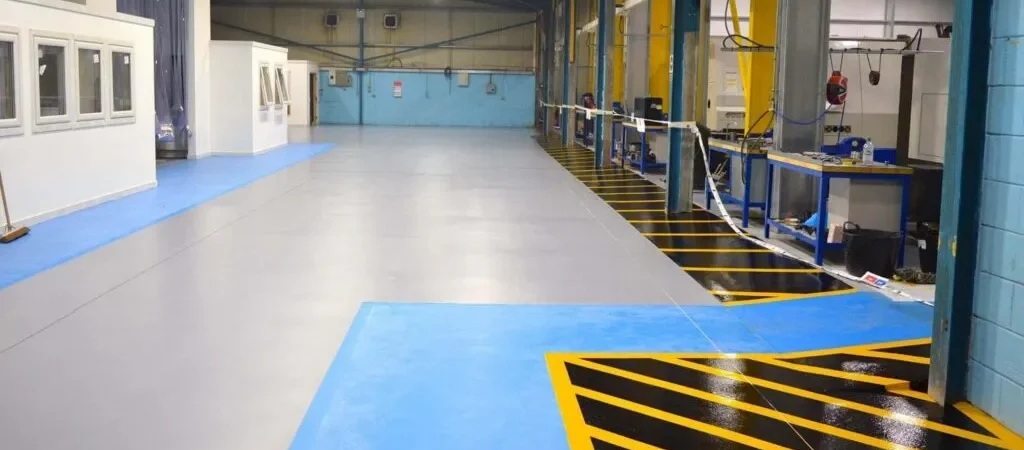
Commercial Epoxy Flooring in Pakistan: Cost, Benefits, Types & Applications
Discover the cost, benefits, types and applications of commercial epoxy flooring in Pakistan for offices, showrooms, hospitals, warehouses, restaurants, factories and other business spaces.
A commercial floor needs to do more than look attractive. It may need to handle continuous foot traffic, equipment, trolleys, chemicals, spills, cleaning and daily operational wear.
Commercial epoxy flooring provides a practical solution for businesses that need a strong, seamless and professional-looking floor. Depending on the selected system, epoxy can also provide features such as chemical resistance, abrasion resistance, slip resistance and easy maintenance.
The correct flooring system depends on how the area will be used. A retail showroom, for example, may prioritize appearance, while a warehouse or commercial kitchen may require greater durability and slip resistance.
What Is Commercial Epoxy Flooring?
Commercial epoxy flooring is a resin-based flooring system designed for business and commercial environments. The epoxy material is applied over a properly prepared concrete substrate and cures to create a continuous, protective surface.
Commercial epoxy systems can range from relatively thin protective coatings to thicker self-leveling and heavy-duty resin flooring systems. The final specification should match the expected traffic, floor condition, chemical exposure and maintenance requirements.
- Seamless and easy-to-clean flooring surface
- Suitable for high-traffic commercial environments
- Available in smooth and slip-resistant finishes
- Can be designed for oil and chemical resistance
- Helps protect the underlying concrete
- Available in decorative and industrial finishes
- Can be used with primers and specialized topcoats
Benefits of Commercial Epoxy Flooring
High Durability
Commercial-grade epoxy systems can be selected to handle regular foot traffic, trolleys, equipment and demanding daily operations.
Seamless Surface
Epoxy creates a continuous floor with fewer joints, helping reduce areas where dirt and contaminants can accumulate.
Easy Maintenance
A properly installed epoxy floor can be easier to clean and maintain than flooring systems with numerous grout joints.
Chemical & Stain Resistance
Selected systems can provide resistance to oils, chemicals and stains depending on the specific epoxy formulation.
Professional Appearance
Epoxy is available in different colors, gloss levels and decorative finishes for commercial spaces where appearance matters.
Safety Options
Anti-slip textures and specialized coatings can be incorporated for areas exposed to water, spills or increased slip risk.
Types of Commercial Epoxy Flooring
Different commercial spaces require different epoxy systems. Choosing the right type is more important than simply choosing the cheapest coating.
Standard Epoxy Coating
A practical option for offices, small shops, retail spaces and commercial areas with moderate traffic requirements.
Self-Leveling Epoxy
Designed to create a smooth and seamless finish. It can be suitable for hospitals, laboratories, food facilities and other hygiene-focused environments.
Metallic Epoxy Flooring
A decorative epoxy option that can create a distinctive flowing or marble-like appearance for showrooms and premium commercial interiors.
Quartz-Filled Epoxy
Uses quartz aggregate to provide texture, improved durability and slip resistance for suitable commercial environments.
Heavy-Duty Epoxy Mortar
A thicker system designed for demanding areas exposed to heavy loads, impact and intensive industrial or commercial use.
Decorative Epoxy Systems
Decorative finishes, flakes and custom designs can be selected for retail spaces, restaurants, salons and customer-facing areas.
Where Is Commercial Epoxy Flooring Used?
Commercial epoxy flooring can be adapted for many types of business environments when the system is selected according to actual operating conditions.
Offices
Provides a modern and professional floor finish for offices, reception areas and high-traffic corridors.
Retail Stores
Suitable for shops and retail areas that need an attractive surface capable of handling regular customer traffic.
Showrooms
Decorative, glossy and metallic epoxy finishes can create a premium appearance for product and automobile showrooms.
Hospitals & Clinics
Seamless flooring systems can be useful in healthcare areas where cleanability and hygiene are important requirements.
Restaurants & Kitchens
Suitable systems can be selected for easy cleaning, slip resistance and resistance to the operational conditions of commercial kitchens.
Warehouses
Heavy-duty epoxy systems can help protect concrete floors exposed to regular movement, storage equipment and operational traffic.
Factories
Industrial-grade epoxy systems can be specified for machinery areas, production floors and environments requiring enhanced durability.
Parking Areas
Suitable coating systems can be used in selected parking and vehicle areas where abrasion and automotive fluids must be considered.
Commercial Epoxy Flooring Cost in Pakistan
Commercial epoxy flooring costs vary according to the selected system, coating thickness, concrete condition, total area and level of surface preparation required.
| Epoxy System | Typical Commercial Use | Price Consideration |
|---|---|---|
| Standard Epoxy | Offices and small retail | Lower-cost commercial option |
| Self-Leveling Epoxy | Hospitals, clinics and food areas | Higher material and installation cost |
| Metallic Epoxy | Showrooms and premium interiors | Depends on design complexity |
| Quartz-Filled Epoxy | Wet and high-traffic areas | Additional aggregate and texture requirements |
| Heavy-Duty Epoxy | Factories and warehouses | Higher thickness and performance requirements |
What Affects Commercial Epoxy Flooring Cost?
Floor Size
Larger projects require a bigger total investment, but the per-square-foot installation cost may be lower because equipment and labor can be used more efficiently.
Concrete Condition
Cracked, weak, uneven or contaminated concrete requires additional preparation and repair before epoxy installation.
Epoxy System Type
Standard coatings, self-leveling systems, decorative epoxy and heavy-duty mortar floors have different material requirements.
Coating Thickness
Thicker flooring systems generally require more material and can provide greater protection for demanding applications.
Surface Preparation
Grinding, coating removal, crack repair and cleaning are important parts of the installation process and affect the overall cost.
Special Performance Requirements
Anti-slip, chemical-resistant, anti-static and decorative features can increase the cost of the selected flooring system.
Commercial Epoxy Flooring Installation Process
Proper installation is essential for long-term epoxy flooring performance. The process begins with evaluating and preparing the concrete substrate.
Site & Floor Inspection
The existing floor is checked for cracks, contamination, weak concrete, moisture concerns and other conditions that may affect adhesion.
Mechanical Surface Preparation
The concrete is prepared using a suitable mechanical method to remove weak material and create an appropriate surface for epoxy bonding.
Crack & Concrete Repair
Cracks, holes and damaged areas are repaired before applying the primer and epoxy flooring system.
Primer Application
A compatible primer is applied where required to help establish adhesion between the prepared concrete and epoxy layers.
Base Coat or Main Epoxy Layer
The selected epoxy system is mixed and applied according to its specified thickness and installation requirements.
Topcoat & Finish
A suitable topcoat or finish can provide additional protection, appearance, chemical resistance or slip resistance.
Proper Curing
The floor should be allowed to cure according to the selected product system before being opened to foot traffic, equipment or vehicles.
Commercial Epoxy Flooring vs Other Flooring Options
| Flooring Type | Advantages | Considerations |
|---|---|---|
| Commercial Epoxy | Seamless, durable and easy to clean | Requires proper substrate preparation |
| Ceramic Tile | Wide range of designs | Grout joints require maintenance |
| Porcelain Tile | Durable and attractive | Installation and replacement can be costly |
| Vinyl Flooring | Comfortable and available in many designs | Performance depends on product grade and traffic |
| Concrete Floor | Strong base for commercial facilities | May require protection against dust and stains |
Why Professional Installation Matters
Commercial epoxy flooring is not simply a matter of rolling paint over a concrete floor. The performance of the finished system depends heavily on surface preparation, moisture conditions, material selection, mixing and application.
- Correct assessment of the existing concrete
- Proper grinding and mechanical preparation
- Suitable crack and surface repairs
- Correct epoxy system selection
- Accurate resin and hardener mixing
- Professional application techniques
- Appropriate curing before returning the area to service
How to Maintain Commercial Epoxy Flooring
Regular maintenance helps preserve the appearance and performance of commercial epoxy flooring.
- Remove loose dirt and debris regularly.
- Clean spills as soon as practical.
- Use cleaning products suitable for the installed epoxy system.
- Avoid unnecessary use of aggressive chemicals.
- Inspect high-traffic areas for signs of wear.
- Use protective measures under heavy equipment where required.
- Repair damaged sections before deterioration spreads.
How to Choose the Right Commercial Epoxy Floor
Before selecting an epoxy flooring system, consider how the commercial space will actually be used.
Traffic Level
Consider whether the area handles light foot traffic, heavy customer traffic, trolleys, forklifts or other equipment.
Chemical Exposure
Identify oils, cleaning chemicals, fuels and other substances that may regularly come into contact with the floor.
Safety Requirements
Wet areas and spaces with frequent spills may require a suitable anti-slip finish.
Floor Condition
Existing cracks, weak concrete and moisture conditions should be addressed before selecting the final flooring system.
Appearance
Customer-facing spaces may prioritize decorative finishes, colors and gloss levels alongside durability.
Maintenance Needs
Choose a flooring system that matches the cleaning procedures and maintenance capabilities of the business.
Need Commercial Epoxy Flooring in Pakistan?
Get professional guidance on selecting the right epoxy flooring system for your office, showroom, restaurant, hospital, warehouse, factory or other commercial property.
Request a Free ConsultationFrequently Asked Questions About Commercial Epoxy Flooring
What is commercial epoxy flooring?
Commercial epoxy flooring is a resin-based floor system designed for business environments. It is applied over properly prepared concrete to create a durable and seamless protective surface.
How much does commercial epoxy flooring cost in Pakistan?
The cost depends on the epoxy system, floor condition, project size, coating thickness, surface preparation and performance requirements. A site-specific quotation provides the most accurate price.
Is epoxy flooring suitable for offices?
Yes. Suitable epoxy systems can be used in offices, reception areas and commercial spaces where a durable, modern and easy-to-maintain floor is required.
Can commercial epoxy flooring handle heavy traffic?
Yes, when the correct commercial or heavy-duty epoxy system is selected for the expected traffic and properly installed over a prepared substrate.
Is commercial epoxy flooring easy to clean?
Its seamless surface can make routine cleaning easier. The correct cleaning products and procedures should be used according to the installed flooring system.
Can epoxy flooring be made slip resistant?
Yes. Suitable aggregates, textures and specialized coatings can be incorporated to increase slip resistance for appropriate applications.
How long does commercial epoxy flooring last?
Service life depends on the epoxy system, traffic level, concrete condition, installation quality and maintenance. Heavy-use commercial environments should use a system designed for their specific demands.
Why does surface preparation matter before epoxy installation?
Surface preparation removes weak material and contamination and helps create suitable conditions for epoxy adhesion. Inadequate preparation can contribute to peeling and other coating failures.
Related Epoxy Flooring Services
Conclusion
Commercial epoxy flooring can provide a durable, seamless and professional flooring solution for a wide range of business environments in Pakistan. However, the best system depends on the actual use of the space.
Consider traffic, concrete condition, chemical exposure, safety requirements, appearance and maintenance before selecting an epoxy system. Proper surface preparation and professional installation are equally important for achieving long-term performance.
Whether you need flooring for an office, showroom, restaurant, hospital, warehouse or factory, selecting the right commercial epoxy flooring system can help protect your concrete and create a practical, easy-to-maintain business environment.