
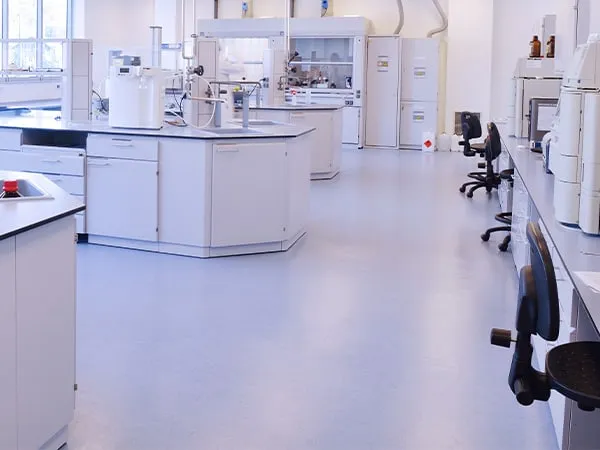
Pharmaceutical Flooring
By Epoxy Flooring Pakistan Technical Team
Industrial Flooring & Protective Coating Specialists
Content reviewed and updated: August 2026
Pharmaceutical flooring requires more than a visually clean surface. It must support hygiene, contamination control, chemical resistance, easy cleaning and controlled maintenance.
Production rooms, laboratories, cleanrooms, storage areas and processing spaces can expose floors to disinfectants, chemicals, water, frequent washing, trolley traffic and temperature changes.
For these environments, the flooring system must work as part of the facility’s overall hygiene strategy.
Important: There is no single pharmaceutical flooring system suitable for every area. A formulation laboratory may require a different system from a wet processing room, warehouse or controlled cleanroom.
What Is Pharmaceutical Flooring?
Pharmaceutical flooring refers to specialized seamless or low-joint flooring systems designed for pharmaceutical manufacturing, laboratories, healthcare-related production and controlled environments.
Epoxy Flooring
A dense resin surface suitable for many dry pharmaceutical, laboratory and production environments.
Self-Leveling Epoxy
Creates a smooth, continuous resin surface over a properly prepared concrete substrate.
PU Flooring
A resilient option for environments exposed to demanding cleaning, moisture or temperature conditions.
PU-Cement Flooring
Designed for demanding wet-process and industrial areas where thermal, chemical and mechanical exposure is significant.
ESD / Conductive Flooring
Used where the facility requires control of electrostatic discharge as part of its operational requirements.
Chemical-Resistant Flooring
Specialized systems selected according to the actual chemicals, concentration, temperature and exposure conditions.
Typical system:
Concrete Substrate → Moisture Assessment → Surface Preparation → Primer → Resin Layer → Coving → Topcoat → Final Inspection
Each component performs a specific function within the flooring system.
Why Pharmaceutical Facilities Need Specialized Flooring
Seamless Surface
Seamless resin flooring reduces unnecessary joints across the main floor surface and creates a continuous finish.
However, structural and movement joints still need appropriate detailing.
Easy Cleaning
Pharmaceutical environments may require frequent cleaning and sanitation. A dense, properly cured resin surface can simplify routine cleaning.
Chemical Resistance
Floors may encounter cleaning agents, disinfectants, solvents, acids, alkalis and process chemicals.
Chemical resistance depends on the specific resin formulation and exposure conditions.
Low Dusting
Exposed concrete can generate dust when its surface deteriorates. A suitable resin system can seal the surface and reduce dust generation.
Hygienic Detailing
Floor-to-wall coving, penetrations, drains and thresholds can be as important as the resin coating itself.
Controlled Maintenance
The flooring system should be compatible with the facility’s actual cleaning, sanitation and maintenance procedures.
Pharmaceutical Flooring Systems
Epoxy Pharmaceutical Flooring
Epoxy flooring provides a hard, dense and seamless surface for many dry pharmaceutical environments.
- Laboratories
- Production rooms
- Packaging areas
- Storage rooms
- Corridors
- Technical areas
Self-Leveling Epoxy
Self-leveling epoxy creates a smooth resin surface over a suitably prepared substrate.
- Smooth appearance
- Seamless finish
- Easy cleaning
- Surface protection
- Controlled surface profile
PU Flooring
Polyurethane flooring can be selected where the floor needs greater resilience or improved resistance to demanding operational conditions.
- Frequent cleaning
- Moisture exposure
- Temperature variation
- Heavy traffic
- Mechanical stress
PU-Cement Flooring
PU-cement systems can be considered for demanding wet or process areas where thermal, chemical and mechanical exposure is significant.
- Wet processing rooms
- Wash-down areas
- Manufacturing areas
- Utility rooms
ESD / Conductive Flooring
Conductive or dissipative flooring systems can help control static electricity where required.
The system must be correctly designed and connected to an appropriate grounding system.
Chemical-Resistant Flooring
Chemical-resistant epoxy or PU systems can protect the substrate where chemicals are regularly used.
Selection should consider chemical type, concentration, temperature and contact time.
Pharmaceutical Flooring Installation Services
Facility Assessment
We evaluate the room before selecting the flooring system.
- Room function
- Existing substrate
- Chemical exposure
- Cleaning procedure
- Temperature
- Moisture
- Traffic
- Drainage
- ESD requirements
Substrate Inspection
The concrete substrate strongly influences resin floor performance.
- Cracks
- Weak concrete
- Surface contamination
- Existing coatings
- Moisture
- Surface profile
- Level variations
- Joint conditions
Mechanical Surface Preparation
Proper preparation removes weak material and contaminants and creates an appropriate surface profile for the flooring system.
- Diamond grinding
- Shot blasting
- Scarifying
- Vacuum cleaning
- Crack repair
- Joint preparation
Primer Application
A compatible primer helps establish adhesion between the prepared substrate and the resin flooring system.
Resin Flooring Installation
We install the specified epoxy, PU, PU-cement, conductive or chemical-resistant system according to its required build-up.
Floor-to-Wall Coving
Coving creates a continuous transition between the floor and wall and reduces difficult-to-clean corners.
Drain & Penetration Detailing
Drains, pipe penetrations, columns and equipment bases require careful detailing to reduce areas where moisture and contaminants can accumulate.
Final Inspection
We inspect surface continuity, joints, coving, drainage areas, visible defects and overall finish quality before handover.
Pharmaceutical Flooring Installation Process
Assess room function and conditions.
Select the suitable flooring system.
Evaluate the concrete substrate.
Mechanically prepare the substrate.
Apply the compatible primer.
Install the specified flooring.
Cure, inspect and hand over.
Typical Pharmaceutical Flooring System
| Component | Function |
|---|---|
| Concrete Substrate | Provides the structural foundation. |
| Mechanical Preparation | Removes weak material and surface contamination. |
| Primer | Promotes adhesion between the substrate and resin system. |
| Body Coat | Provides thickness and surface protection. |
| Broadcast Aggregate | Adds texture or improves slip resistance where required. |
| Self-Leveling Layer | Creates a smooth continuous surface. |
| PU / Epoxy Topcoat | Provides final surface protection. |
| Coving | Creates a hygienic floor-to-wall transition. |
| Joint Treatment | Maintains required movement and floor detailing. |
| Final Inspection | Checks the finished floor for visible defects and quality. |
Pharmaceutical Flooring by Area
Production Rooms
Production areas may require seamless, cleanable and chemical-resistant flooring.
The system should match the process chemicals and cleaning regime.
Cleanrooms
Cleanroom flooring should form part of the facility’s overall contamination-control strategy.
Floor finish, coving, penetrations and joints should be detailed to minimize difficult-to-clean areas.
Laboratories
Laboratories can require resistance to chemicals, solvents and frequent cleaning.
Packaging Areas
Packaging areas often require smooth, durable and easy-to-clean flooring for trolley and personnel traffic.
Pharmaceutical Warehouses
- Forklift traffic
- Pallet movement
- Rack loads
- Impact
- Abrasion
- Cleaning
Wash-Down Areas
Wet areas require additional attention to drainage, slip resistance, chemical exposure, thermal shock and coving.
PU-cement systems can be considered for particularly demanding wet-process environments.
Pharmaceutical Epoxy vs PU Flooring
| Feature | Epoxy | PU |
|---|---|---|
| Hard Surface | Excellent | Excellent |
| Chemical Resistance | System-dependent | System-dependent |
| Mechanical Resistance | High | High |
| Flexibility | Generally lower | Generally higher |
| Temperature Changes | More limited | Better suited to many temperature variations |
| Wet Areas | Suitable with the correct system | Often suitable for demanding wet areas |
| Decorative Options | Excellent | Good |
| ESD Options | Available | Available |
Which is better? Neither material is universally better.
Epoxy can be an excellent choice for many dry pharmaceutical environments. PU or PU-cement can be more suitable for areas exposed to frequent wash-down, temperature changes or demanding process conditions.
The correct choice depends on the actual facility and operating conditions.
Important Pharmaceutical Flooring Design Factors
Chemical Exposure
Identify the actual chemicals used in the room and consider their concentration, temperature and contact duration.
Cleaning & Disinfection
The flooring should tolerate the facility’s actual cleaning and sanitation procedures.
Moisture
Concrete moisture can affect resin adhesion and curing. Moisture assessment should be completed before installation.
Slip Resistance
Wet areas may require additional texture or aggregate to achieve suitable slip resistance.
Coving
Floor-to-wall coving helps create a cleaner and easier-to-maintain transition.
Drainage
Wet pharmaceutical areas require appropriate drainage and floor falls to manage water.
Traffic
Forklifts, pallet trucks, carts and pedestrian traffic create different flooring demands.
Temperature
Flooring must be selected according to the temperatures and cleaning processes expected in the facility.
How We Approach Pharmaceutical Flooring Differently
We do not specify flooring simply because it is labelled “pharmaceutical grade.”
We first examine how the room operates and what the flooring must withstand.
Beyond the Resin
We consider coving, joints, drains, penetrations and substrate preparation because these details influence hygiene and long-term maintenance.
Application-Specific Selection
We select the flooring system according to the room’s actual chemical, cleaning, traffic, moisture and temperature conditions.
Despite a seamless surface, a resin floor can still perform poorly if the concrete contains excessive moisture, weak areas or contaminants.
However, proper substrate preparation combined with the correct resin system and hygienic detailing can create a durable and easier-to-maintain pharmaceutical floor.
Pharmaceutical Flooring for Pakistan’s Climate
Pharmaceutical flooring projects in Pakistan should account for temperature, humidity, moisture, water exposure and seasonal conditions.
High Temperatures
Hot weather can influence resin working time and curing. Installation conditions should remain within the selected manufacturer’s recommended range.
Humidity
High humidity can affect curing and moisture conditions during resin flooring installation.
Concrete Moisture
Moisture is particularly important when installing epoxy or PU systems over concrete.
Monsoon Conditions
Wet weather can increase moisture levels in substrates and surrounding areas.
Cleaning Requirements
Facilities using frequent wet cleaning should select flooring that can withstand the actual cleaning chemicals and procedures.
Controlled Installation
Temperature and humidity should be monitored during resin application where required by the flooring system.
Pharmaceutical Flooring Standards & References
Content reviewed and updated: August 2026. Pharmaceutical flooring should be specified as part of the facility’s broader quality, hygiene and contamination-control requirements.
GMP Principles
Good Manufacturing Practice principles emphasize controlled manufacturing environments, cleanliness and suitable facility design.
World Health Organization
WHO publishes guidance relevant to pharmaceutical manufacturing and Good Manufacturing Practice.
PIC/S
The Pharmaceutical Inspection Co-operation Scheme provides GMP guidance and inspection-related resources used by regulatory authorities and pharmaceutical manufacturers.
ISO Standards
Relevant ISO standards may apply depending on the facility, cleanroom classification, quality system and environmental requirements.
Choosing the Right Pharmaceutical Flooring System
Pharmaceutical flooring is not simply an epoxy floor installed inside a pharmaceutical building.
It is a flooring system designed around hygiene, cleaning, chemical exposure, traffic, moisture, temperature and facility requirements.
Seamless & Cleanable Surface
Chemical Resistance
Low Dusting
Hygienic Coving
Suitable Slip Resistance
Correct Moisture Management
Get a Pharmaceutical Flooring Consultation
We provide pharmaceutical, laboratory and hygienic industrial flooring solutions for production rooms, cleanrooms, laboratories, packaging areas, warehouses and wet-process environments.
Our services can include:
- Pharmaceutical epoxy flooring
- Self-leveling epoxy flooring
- PU flooring
- PU-cement flooring
- ESD and conductive flooring
- Chemical-resistant flooring
- Floor-to-wall coving
- Drain and penetration detailing
- Substrate preparation
- Moisture assessment
- Protective topcoats
- Final flooring inspection
Explore Our Flooring Solutions
Explore related flooring systems to find the right solution for your application, environment and performance requirements.
Epoxy Flooring
Seamless and durable resin flooring systems for commercial, industrial and specialized environments.
Self-Leveling Epoxy Flooring
Smooth seamless epoxy surfaces designed for areas where cleanability and surface uniformity matter.
PU Flooring
Resilient polyurethane flooring systems for demanding industrial and process environments.
Industrial Flooring
Heavy-duty flooring solutions designed around traffic, chemicals, abrasion and operational requirements.
Anti-Static Flooring
Flooring systems designed to help control electrostatic discharge in sensitive environments.
Anti-Bacterial Flooring
Hygienic flooring solutions for environments where cleanability and maintenance are important.