
Industrial Flooring Services
By Epoxy Flooring Pakistan Technical Team
Specialists in Industrial Floor Coatings, Epoxy Flooring, PU Flooring,
Chemical-Resistant Systems and Concrete Surface Protection
Content reviewed and updated: August 2026
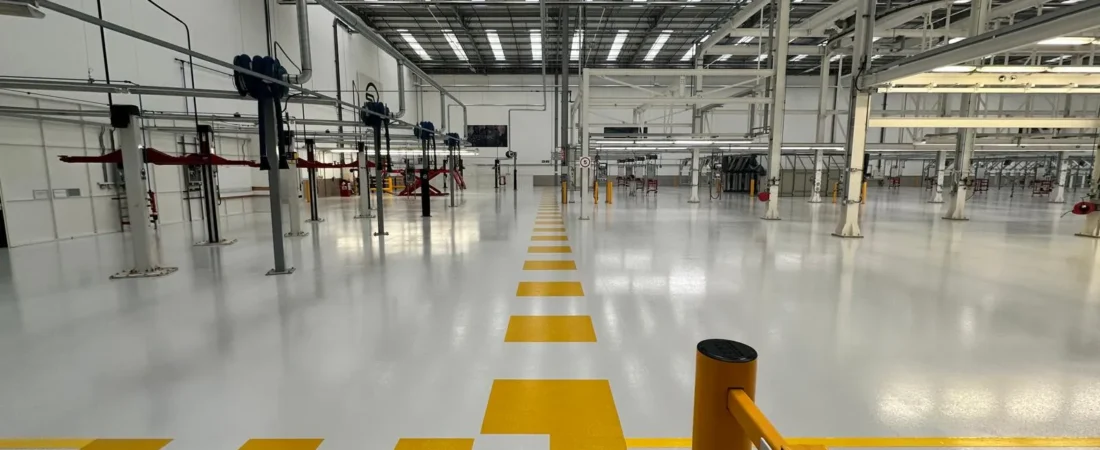
We provide professional industrial flooring services for factories, warehouses, manufacturing plants, workshops, food processing facilities, pharmaceutical areas, laboratories, automotive facilities, power plants, logistics centres, and commercial production spaces.
Industrial flooring must do more than create a clean appearance. The floor may face forklift traffic, pallet movement, impact, abrasion, chemicals, oils, water, heat, thermal changes, and continuous daily use.
The correct flooring system depends on the environment and the type of exposure. A warehouse with constant forklift traffic needs a different floor from a food processing area exposed to frequent washdowns. A chemical plant may require greater chemical resistance, while a workshop may prioritise impact and abrasion resistance.
Our approach is simple: We assess how the floor is used, inspect the concrete substrate, identify the main exposure risks, and recommend an industrial flooring system designed for the actual operating environment.
What Is Industrial Flooring?
Industrial flooring is a high-performance floor system designed to protect and improve concrete in demanding working environments. Depending on the selected system, it can provide abrasion resistance, impact resistance, chemical resistance, oil resistance, water resistance, easier cleaning, dust reduction, and improved surface durability.
Industrial flooring is usually a complete system rather than simply one coat of paint. The final build-up depends on traffic, exposure, substrate condition, and required performance.
A light-duty epoxy coating may require a different thickness from a heavy-duty epoxy mortar floor. Chemical-resistant systems may also require different resin technology depending on the substances handled in the facility.
Important: Industrial flooring starts with the concrete. Despite using premium epoxy or polyurethane materials, a floor can fail when the concrete is weak, contaminated, excessively moist, or poorly prepared. The substrate and flooring system must work together.
Why Professional Industrial Flooring Matters
Industrial facilities place continuous stress on floors. Over time, an unprotected or unsuitable concrete floor may develop surface dusting, abrasion, cracks, oil staining, chemical damage, surface wear, and difficult-to-clean areas.
Warehouse
Warehouse flooring may prioritise abrasion resistance, wheel traffic performance, and durability under repeated forklift movement.
Manufacturing Plant
Manufacturing facilities may require protection against chemicals, oils, equipment movement, production traffic, and continuous daily wear.
Food Processing Area
These areas may require seamless, durable, and cleanable flooring suited to the actual washdown and operating conditions.
Chemical Processing Area
Chemical zones may require specialised flooring selected according to the actual chemical type, concentration, temperature, and exposure duration.
There is no single coating suitable for every industrial environment. We recommend the flooring system according to actual exposure instead of using the same specification for every industrial floor.
Professional Flooring Systems for Industrial Facilities
Industrial Floor Assessment
We assess the operating environment before recommending a flooring system.
- Type of industry
- Production process
- Forklift and pallet traffic
- Equipment movement
- Impact exposure
- Chemical and oil exposure
- Water and washdown frequency
- Existing concrete condition
Concrete Surface Preparation
Surface preparation creates a suitable substrate for the selected industrial flooring system.
- Weak surface layer removal
- Laitance removal
- Old coating preparation
- Dust and loose material removal
- Surface contamination treatment
- Minor defect preparation
Epoxy Industrial Flooring
Epoxy flooring can create a durable and seamless surface for demanding industrial environments.
- Factories
- Warehouses
- Manufacturing facilities
- Workshops
- Production areas
- Storage facilities
- Logistics centres
Heavy-Duty Epoxy Flooring
Heavy-duty flooring systems are designed for areas with greater mechanical demands and repeated industrial traffic.
- Forklift routes
- Loading areas
- Manufacturing lines
- Heavy workshops
- Equipment zones
- High-traffic warehouses
Epoxy Self-Levelling Flooring
Self-levelling epoxy can create a smooth and seamless industrial surface for controlled production and clean working environments.
- Production areas
- Manufacturing plants
- Laboratories
- Pharmaceutical facilities
- Electronics facilities
- Assembly areas
PU Industrial Flooring
Polyurethane flooring can be selected where flexibility or resistance to specific operating conditions is important.
- Manufacturing areas
- Food processing facilities
- Commercial kitchens
- Production spaces
- Temperature-variable environments
Chemical-Resistant Flooring
Chemical-resistant flooring is selected according to the substances and operating conditions within the facility.
- Chemical processing plants
- Laboratories
- Pharmaceutical areas
- Battery areas
- Industrial production zones
- Acid and alkali exposure areas
Anti-Slip Industrial Flooring
Textured flooring systems can improve grip in areas exposed to water, oils, chemicals, and frequent industrial movement.
- Production areas
- Workshops
- Loading zones
- Washdown areas
- Ramps
- Industrial walkways
Epoxy Mortar & Industrial Screed
Epoxy mortar and screed systems can provide greater build-up where heavy mechanical exposure or local concrete restoration is required.
- Damaged industrial concrete
- Heavy-duty production areas
- Equipment zones
- High-impact locations
- Forklift routes
Industrial Floor Restoration
Not every damaged industrial floor requires complete replacement. We can assess repair and restoration options for suitable existing surfaces.
- Crack repair
- Joint repair
- Surface defect repair
- Damaged coating removal
- Local concrete repair
- Floor patching
- Recoating preparation
Industrial Flooring System Comparison
| Flooring System | Typical Applications | Main Strength | Important Consideration |
|---|---|---|---|
| Epoxy Coating | Warehouses and factories | Durable and seamless protection | Substrate preparation is critical |
| Heavy-Duty Epoxy | High-traffic industrial areas | Improved mechanical resistance | Thickness must match traffic demands |
| Self-Levelling Epoxy | Production and clean areas | Smooth and seamless finish | Major defects require prior repair |
| PU Flooring | Temperature-variable environments | Flexible performance options | System type must match exposure |
| Chemical-Resistant Flooring | Chemical and laboratory areas | Protection against specified chemicals | Actual chemicals must be reviewed |
| Anti-Slip Flooring | Wet and active work zones | Improved surface grip | More texture can increase cleaning needs |
| Epoxy Mortar / Screed | Heavy-duty and damaged floors | Greater build-up and repair capability | Requires suitable substrate design |
| Concrete Floor Restoration | Existing damaged floors | Can restore selected areas | The cause of damage should be identified |
The Same Factory Can Need Different Flooring Systems
A large industrial facility does not always need one flooring system throughout. Different areas experience different types of traffic, impact, chemical exposure, and cleaning conditions.
Industrial Performance Zones
- Forklift Warehouse: Abrasion and wheel traffic resistance
- Production Area: Seamless and cleanable surface
- Chemical Zone: Protection based on actual chemical exposure
- Workshop: Oil, impact and mechanical wear resistance
- Washdown Area: Water resistance and suitable grip
- Office Area: May not require the same heavy-duty specification
Why Zone Planning Matters
Using performance zones allows the flooring specification to focus greater protection where the floor experiences the highest demand.
This can avoid applying an unnecessarily expensive heavy-duty system to every square metre while reducing the risk of under-specifying critical production or traffic areas.
Key project insight: Industrial flooring should follow how the facility actually operates, not simply the total size of the building.
Industrial Warehouse Flooring Assessment
An industrial warehouse required flooring protection across several operational areas, including forklift routes, storage zones, loading areas, equipment locations, and pedestrian walkways.
The initial plan considered applying one thin coating system across the complete floor. However, the traffic was not evenly distributed. Specific forklift routes, turning areas, and loading points experienced much greater mechanical stress.
The Challenge
- Repeated forklift traffic
- High stress at turning areas
- Loading and pallet movement
- Different traffic levels across the warehouse
- Need to balance performance and project cost
Assessment Approach
- Divide the warehouse into operational zones
- Identify major traffic routes
- Assess loading and turning locations
- Review concrete surface condition
- Match flooring build-up to expected demand
- Consider safety and pedestrian zones
Main project lesson: A zone-based specification can focus additional flooring performance where the floor experiences the greatest mechanical demand instead of automatically applying the highest specification throughout the entire warehouse.
Industrial Flooring for Different Working Environments
Warehouses
Warehouse floors can experience forklift movement, pallet traffic, wheel turning, braking forces, abrasion, dropped loads, and continuous daily use.
- Traffic frequency
- Equipment type
- Wheel materials
- Load conditions
- Turning areas
Manufacturing Plants
Manufacturing facilities can require flooring selected around the actual production process and environmental exposure.
- Production processes
- Machinery locations
- Chemical exposure
- Oil and lubricant exposure
- Worker and equipment traffic
Food & Processing Areas
Food and processing environments may require seamless, cleanable, and durable flooring suited to the actual cleaning and operating conditions.
- Repeated cleaning
- Water exposure
- Washdown frequency
- Cleaning chemicals
- Slip-resistance requirements
Chemical & Laboratory Areas
The flooring system should be selected after reviewing the actual chemical exposure rather than relying only on a general chemical-resistant claim.
- Chemical type
- Chemical concentration
- Exposure temperature
- Duration of exposure
- Frequency of spills
Industrial Flooring Installation Process
Review the facility and floor.
Determine traffic and exposure.
Check concrete and defects.
Choose the flooring system.
Mechanically prepare the surface.
Apply the selected system.
Cure and review the floor.
Installation is system-specific. Depending on the selected flooring, the build-up may include primer, body layers, mortar or screed, industrial topcoats, anti-slip aggregates, and safety zone markings.
What Affects Industrial Flooring Service Life?
There is no single service life that applies to every industrial floor. Performance depends on the flooring system, substrate, installation quality, traffic, and actual operating conditions.
System & Installation Factors
- Resin technology
- Coating thickness
- Concrete condition
- Surface preparation
- Adhesion quality
- Installation conditions
Operating Environment Factors
- Traffic volume
- Wheel loads
- Impact exposure
- Chemical exposure
- Temperature conditions
- Cleaning and maintenance
Our approach: We focus on actual exposure conditions instead of promising one lifespan for every industrial floor. A floor exposed to occasional foot traffic experiences very different wear from one operating under continuous forklift traffic.
Common Industrial Flooring Problems We Help Address
Coating Peeling or Delamination
- Weak substrate
- Poor surface preparation
- Moisture conditions
- Oil contamination
- Incorrect primer selection
- Unsuitable application conditions
Concrete Dusting
Concrete can produce surface dust when the upper layer becomes weak or deteriorates. A suitable flooring system can help protect the surface after correct preparation.
Forklift Wear
Repeated equipment movement can wear heavily used routes faster than other areas. Traffic assessment helps determine where greater protection may be needed.
Chemical Staining or Damage
The flooring system should be checked against actual chemical exposure, including concentration, temperature, and exposure duration.
Cracks & Surface Defects
Not every crack requires the same repair. The cause, movement, location, and condition of the crack should be assessed before selecting a repair method.
Damaged Existing Coatings
Before recoating, we consider why the previous system failed. Reapplying the same material without correcting the underlying cause may repeat the problem.
Industry Standards and Technical Considerations
This content was reviewed and updated in August 2026. Industrial flooring projects should consider recognised standards, technical guidance, manufacturer specifications, and the actual requirements of the operating environment.
ASTM International
Standards and test methods relevant to concrete, coatings, chemical resistance, abrasion, surface performance, and materials.
American Concrete Institute (ACI)
Recognised technical guidance related to concrete construction, concrete floors, substrate performance, and repair principles.
International Concrete Repair Institute (ICRI)
Guidance relating to concrete surface preparation and concrete surface profile concepts.
AMPP
Technical resources and standards relevant to protective coatings and surface protection.
ISO Standards
Relevant ISO standards may apply to quality management, testing, material performance, and industrial processes depending on the project.
Manufacturer Technical Data
Current technical data sheets, safety information, mixing requirements, thickness recommendations, and curing instructions should guide final installation.
Choosing the Right Industrial Flooring System
Industrial flooring should be selected according to how the facility actually operates. The correct system depends on traffic, impact, chemicals, cleaning, temperature, substrate condition, and the performance required from the floor.
Type of industry
Daily floor use
Forklift and vehicle traffic
Equipment and wheel loads
Impact exposure
Chemical and oil exposure
Water and cleaning conditions
Temperature conditions
Existing concrete condition
Required flooring thickness
Maintenance expectations
Project budget
The key takeaway: The visible topcoat is only one part of an industrial flooring system. Concrete condition, surface preparation, repair work, primer selection, system thickness, resin technology, and curing conditions all influence final performance.
Despite the importance of high-quality epoxy and PU materials, premium products can still underperform when the flooring system does not match the actual industrial environment.
Request an Industrial Flooring Quote
Looking for professional industrial flooring for your factory, warehouse, manufacturing plant, workshop, production area, food processing facility, pharmaceutical area, laboratory, automotive facility, logistics centre, chemical storage area, or heavy-duty equipment zone?
We can discuss your project requirements, including:
- Industry and operational requirements
- Existing concrete condition
- Forklift and equipment traffic
- Chemical exposure
- Oil and water exposure
- Suitable flooring systems
- Surface preparation requirements
- Concrete repair requirements
- Anti-slip requirements
- Flooring thickness
- Maintenance needs
- Project budget
Explore Related Industrial Flooring Solutions
Explore our related flooring systems for factories, warehouses, production facilities and other demanding environments where durability and surface protection matter.
Self-Leveling Epoxy Flooring
Smooth and seamless epoxy flooring for industrial areas where surface uniformity, easy cleaning and durability are important.
PU Flooring
Polyurethane flooring systems for demanding environments where resilience, cleaning requirements and temperature variation need careful consideration.
Epoxy Flooring
Seamless resin flooring systems for factories, warehouses and commercial facilities requiring a durable and maintainable surface.
Epoxy Coating
Protective epoxy coatings for prepared concrete surfaces exposed to abrasion, chemicals and regular industrial traffic.
Anti-Static Flooring
Specialized flooring systems designed to help control electrostatic discharge in sensitive industrial, electronic and technical environments.
Concrete Flooring
Durable concrete floor solutions for industrial spaces, including surfaces that may later receive protective epoxy or resin-based systems.