
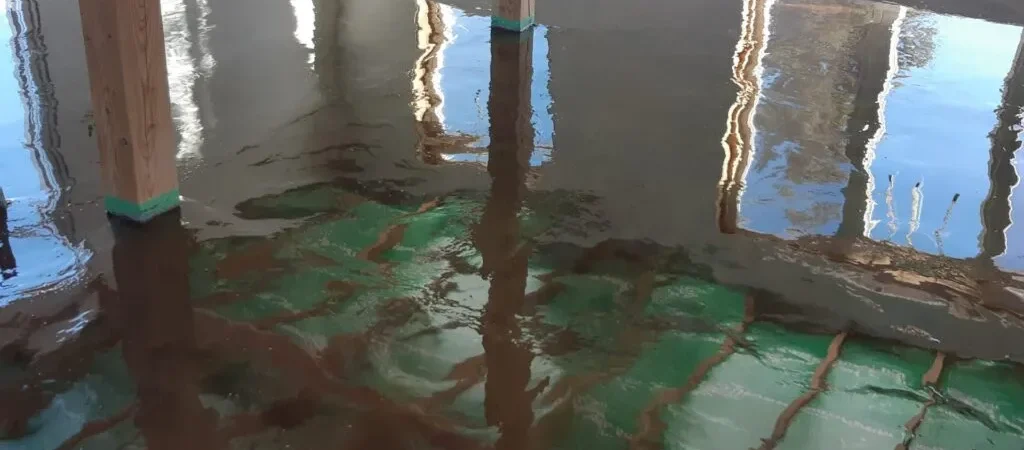
Epoxy Floor Peeling Fix: Common Causes, Repair Methods & Prevention
Is your epoxy floor peeling, bubbling, flaking or separating from the concrete? Learn why epoxy floors fail, how to repair peeling epoxy flooring and how proper surface preparation can prevent the problem from happening again.
Epoxy flooring is known for creating a strong, seamless and easy-to-clean surface over concrete. However, even a high-quality epoxy system can peel when the substrate is not properly prepared or when moisture and contamination interfere with adhesion.
Peeling may begin as small flakes or loose edges and eventually spread across larger sections of the floor. In industrial, commercial and residential environments, early repair is important because continuing traffic can make the damaged area larger.
This guide explains the most common reasons for epoxy floor peeling, how professionals diagnose the problem, the correct repair process and the steps that can help prevent future coating failure.
What Does Epoxy Floor Peeling Look Like?
Epoxy floor failure does not always appear in the same way. Depending on the cause, you may notice lifting, flaking, blistering, bubbling or complete delamination of the coating.
- Epoxy coating lifting away from the concrete
- Flakes or chips appearing on the surface
- Bubbles or blisters underneath the coating
- Large areas separating from the substrate
- Cracks followed by peeling around the damaged area
- Hollow or loose-sounding sections of the coating
- Moisture appearing underneath the epoxy
- Edges of the coating becoming loose or curled
These symptoms indicate that the bond between the epoxy system and the underlying substrate has been compromised. The correct repair depends on identifying why the bond failed in the first place.
Why Is My Epoxy Floor Peeling?
There are several possible causes of epoxy floor peeling. In many cases, more than one factor contributes to the failure.
Poor Surface Preparation
One of the most common causes is inadequate preparation of the concrete. Dust, laitance, weak concrete and surface contaminants can prevent epoxy from forming a strong mechanical bond.
Moisture Under the Concrete
Moisture moving through the slab can create pressure beneath an epoxy coating. This may result in bubbling, blistering and eventual peeling. Moisture testing should be considered before installation.
Oil & Chemical Contamination
Oil, grease, chemicals and other contaminants can interfere with epoxy adhesion. Industrial floors require thorough cleaning and mechanical preparation before coating.
Weak or Dusty Concrete
Epoxy is only as reliable as the substrate underneath it. Weak, powdery or poorly cured concrete can cause the coating to pull away from the surface.
Incorrect Mixing Ratio
Two-component epoxy systems require the resin and hardener to be mixed according to the manufacturer’s specified ratio. Incorrect mixing can affect curing, hardness and adhesion.
Improper Application Conditions
Temperature, humidity, substrate condition and curing conditions can all influence coating performance. Application should follow the product’s technical requirements.
Can Moisture Cause Epoxy Flooring to Peel?
Yes. Moisture is one of the important factors to investigate when an epoxy floor starts bubbling or peeling.
Concrete can contain moisture internally or allow moisture vapor to move upward from the ground. If an impermeable coating is installed before the moisture condition is understood, pressure can develop beneath the coating.
Professional flooring contractors can assess the substrate and recommend an appropriate moisture-control system when required.
How to Fix a Peeling Epoxy Floor
A permanent epoxy floor peeling repair requires more than applying fresh epoxy over the damaged surface. The failed coating needs to be removed and the concrete prepared before a new system is applied.
Inspect the Existing Floor
First, identify the extent and pattern of the failure. The contractor should inspect peeling, bubbling, cracks, weak concrete, contamination and possible moisture problems.
Remove Loose & Failed Epoxy
Loose coating must be removed until a stable substrate is reached. Depending on the condition of the floor, mechanical grinding, scraping, shot blasting or other suitable preparation methods may be used.
Clean the Concrete
Dust, oil, grease, dirt and other contaminants should be removed. Cleaning is essential because contaminants can prevent the new coating from bonding properly.
Repair Cracks and Damaged Areas
Cracks, holes and deteriorated concrete should be repaired using a suitable repair material before the new epoxy system is installed. Structural cracks may require additional investigation.
Check Moisture Conditions
Where moisture may be a concern, the concrete should be assessed using an appropriate moisture-testing method. A suitable moisture-control primer or system may be required depending on the substrate condition.
Apply the Correct Primer
A compatible epoxy primer helps establish adhesion between the prepared substrate and the new flooring system. Primer selection should match the concrete condition and the specified epoxy system.
Apply the New Epoxy System
After the primer has been properly applied and cured, the selected epoxy coating, self-leveling epoxy or heavy-duty flooring system can be installed according to the required thickness and application procedure.
Allow Proper Curing
The repaired floor should remain protected during curing. Foot traffic, vehicle traffic, water exposure and chemical exposure should be controlled according to the coating manufacturer’s requirements.
What Not to Do When Epoxy Flooring Peels
Some quick repairs can make the floor look better temporarily but fail again because the underlying cause has not been corrected.
- Do not simply paint over loose epoxy.
- Do not ignore moisture problems beneath the slab.
- Do not apply epoxy over oily or contaminated concrete.
- Do not skip mechanical surface preparation.
- Do not guess the resin-to-hardener mixing ratio.
- Do not install a new coating over weak or dusty concrete.
- Do not expose the repaired floor to heavy traffic before proper curing.
Epoxy Floor Repair vs. Complete Recoating
Not every damaged epoxy floor requires complete removal. The correct approach depends on the extent and cause of the failure.
| Floor Condition | Recommended Approach |
|---|---|
| Small isolated damage | Localized repair may be suitable |
| Widespread peeling | Remove failed coating and rebuild the system |
| Blistering or bubbling | Investigate moisture before recoating |
| Oil contamination | Thorough cleaning and mechanical preparation required |
| Weak concrete | Repair or strengthen substrate before coating |
| Structural cracking | Address underlying structural movement before epoxy repair |
How to Prevent Epoxy Floor Peeling
The best epoxy floor repair is the one you do not need to repeat. Proper installation practices can significantly reduce the risk of premature coating failure.
Prepare the Concrete Properly
Mechanical preparation helps remove weak surface material and creates a suitable profile for epoxy adhesion.
Control Moisture
Assess moisture conditions before installation and use a compatible moisture-control system where necessary.
Use Compatible Materials
Primer, epoxy coating and topcoat should be compatible and selected according to the intended application.
Follow Mixing Instructions
Maintain the manufacturer’s specified resin-to-hardener ratio and mixing procedure.
Respect Application Conditions
Temperature, humidity and substrate conditions should remain within the product’s recommended application range.
Allow Proper Curing
Protect the floor during curing and do not introduce heavy traffic before the coating reaches the required cure level.
Epoxy Floor Peeling in Pakistan: What Should You Check?
Flooring conditions can vary significantly between projects in Pakistan. Concrete age, substrate quality, groundwater, humidity, previous coatings, industrial contamination and application conditions should all be considered.
In factories, warehouses and commercial facilities, additional factors such as forklift traffic, chemical exposure, oil contamination and heavy equipment can influence the flooring system that should be selected.
For residential floors, garages and commercial spaces, the same principle applies: diagnose the cause before applying a new coating.
When Should You Hire an Epoxy Floor Repair Professional?
Professional assessment is recommended when peeling affects a large area, when the coating repeatedly fails, or when moisture and structural problems may be involved.
- The epoxy is peeling across large sections.
- The floor has widespread bubbling or blistering.
- Moisture appears to be coming through the concrete.
- The concrete underneath is weak or powdery.
- The floor is exposed to chemicals or heavy industrial traffic.
- The existing coating has multiple layers of failed paint or epoxy.
- Previous repair attempts have failed.
A professional repair team can determine whether the existing coating should be repaired, mechanically removed, or completely rebuilt.
Need an Epoxy Floor Peeling Fix?
If your epoxy floor is peeling, bubbling, cracking or losing adhesion, get the problem assessed before applying another coating. Proper diagnosis, surface preparation and material selection can help restore a durable floor.
Request a Free ConsultationFrequently Asked Questions About Epoxy Floor Peeling
Why is my epoxy floor peeling?
Epoxy flooring can peel because of poor surface preparation, moisture beneath the concrete, oil or chemical contamination, weak concrete, incorrect mixing or unsuitable application conditions.
Can peeling epoxy flooring be repaired?
Yes. The appropriate repair depends on the extent and cause of the failure. Loose coating should normally be removed and the concrete properly prepared before a compatible new epoxy system is applied.
Can I put new epoxy over peeling epoxy?
Applying new epoxy directly over loose or poorly bonded coating is generally not a reliable repair. The failed material should be removed and the substrate evaluated and prepared first.
Does moisture cause epoxy floors to bubble and peel?
Yes. Moisture vapor or water beneath a concrete slab can contribute to blistering and delamination. Moisture conditions should be checked before installing a replacement epoxy system.
How can I prevent epoxy flooring from peeling?
Proper concrete preparation, moisture assessment, contamination removal, compatible primer and coating selection, correct mixing and proper curing are important steps in preventing premature peeling.
Can epoxy floor peeling be fixed in industrial facilities?
Yes. Industrial epoxy floor repair can involve coating removal, concrete preparation, crack repair, moisture control, priming and installation of a heavy-duty epoxy system selected for the facility’s traffic and chemical exposure.
Is peeling epoxy a sign of poor-quality epoxy?
Not necessarily. Even a high-quality epoxy can fail if the substrate is contaminated, damp, weak or inadequately prepared. Installation conditions and preparation are major factors in coating performance.
Related Epoxy Flooring Services
Conclusion
Epoxy floor peeling is usually a symptom of an underlying problem rather than simply a cosmetic defect. Poor surface preparation, moisture, contamination, weak concrete, incorrect mixing and unsuitable application conditions can all contribute to coating failure.
The most reliable epoxy floor peeling fix starts with identifying the cause. Failed coating should be removed, the concrete properly prepared and the new flooring system installed according to the requirements of the substrate and application environment.
Whether the floor is in a home, garage, warehouse, factory, showroom or commercial facility, proper preparation is the foundation of a long-lasting epoxy flooring system.