Industrial Flooring in Lahore: Durable Flooring Solutions for Every Industry
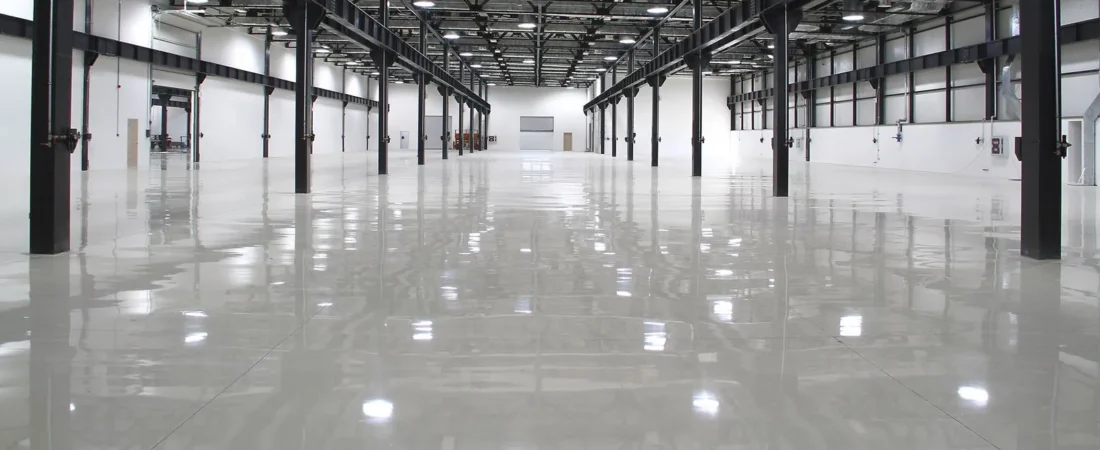
Industrial facilities need flooring that can handle heavy traffic, machinery, chemical exposure, impact, moisture, oil, abrasion and demanding working conditions. Industrial flooring in Lahore is therefore not simply about creating an attractive surface—it is about building a floor that supports safe, efficient and reliable industrial operations.
From factories and warehouses to production plants, workshops, pharmaceutical facilities and food-processing units, the correct flooring system depends on the type of industrial activity, expected traffic, chemical exposure, cleaning requirements and condition of the existing concrete.
Lahore’s industrial areas include manufacturing facilities, warehouses, workshops, food-processing plants, pharmaceutical facilities, automotive service centers and logistics operations. Each environment can place different demands on the floor.
What Is Industrial Flooring?
Industrial flooring refers to heavy-duty flooring systems designed for demanding commercial and manufacturing environments. Unlike ordinary decorative flooring, industrial floors are engineered to withstand operational stresses such as forklifts, pallet trucks, machinery, chemical spills, impact and repeated cleaning.
Heavy Traffic
Industrial floors can be designed for continuous movement of workers, vehicles, forklifts and material-handling equipment.
Chemical Resistance
Specialist systems can be selected where oils, solvents, cleaning agents or other chemicals are present.
Impact Resistance
Heavy-duty flooring can help withstand impacts from equipment, tools, pallets and industrial operations.
Easy Maintenance
Seamless resin floors can provide a surface that is easier to clean and maintain than damaged or porous concrete.
Why Industrial Flooring Is Important in Lahore
Industrial floors are part of the working infrastructure of a factory or warehouse. A damaged, dusty, slippery or uneven floor can affect movement, cleaning, maintenance and workplace safety.
A properly specified flooring system can provide a more durable surface while improving the overall appearance and maintainability of an industrial facility.
- Protects concrete from wear and abrasion.
- Helps control dust from concrete surfaces.
- Provides a more maintainable working surface.
- Can improve slip resistance in appropriate areas.
- Can provide chemical and oil resistance where required.
- Supports heavy industrial traffic.
- Improves the appearance of factories and warehouses.
- Can reduce recurring surface repair requirements.
Types of Industrial Flooring in Lahore
Different industrial environments require different flooring systems. The following are among the most commonly considered industrial flooring solutions.
Epoxy Flooring
Seamless epoxy flooring is suitable for many factories, warehouses, workshops and commercial-industrial areas where durability and easy maintenance are important.
PU Flooring
Polyurethane flooring can provide a resilient seamless surface for environments requiring durability, chemical resistance and resistance to demanding operating conditions.
Self-Leveling Epoxy
Self-leveling epoxy creates a smooth, seamless finish that can be suitable for selected factories, commercial areas, laboratories and industrial spaces.
Anti-Slip Flooring
Textured flooring systems can be specified for wet, oily or high-risk areas where additional traction is required.
Anti-Static Flooring
ESD and anti-static systems are used in environments where controlling electrostatic discharge is important.
Concrete Floor Hardener
Concrete hardeners can improve the surface durability of suitable industrial concrete floors and reduce surface dusting.
Epoxy Industrial Flooring
Epoxy is one of the most widely used resin flooring systems for industrial applications. When correctly specified and installed, epoxy can provide a hard, seamless and durable surface over a properly prepared concrete substrate.
Factories
Suitable epoxy systems can help protect production floors from abrasion, traffic and selected chemical exposure.
Warehouses
Epoxy can provide a cleanable surface for warehouses with pedestrian and material-handling traffic.
Workshops
Heavy-duty epoxy systems can be considered for workshops exposed to oils, tools, equipment and vehicle traffic.
Commercial Facilities
Decorative and industrial epoxy systems can combine performance with a professional appearance.
PU Industrial Flooring in Lahore
Polyurethane flooring is another option for industrial environments. PU systems can provide a resilient surface and may be selected for facilities where mechanical stress, chemical exposure, moisture or demanding cleaning conditions are important.
The exact PU formulation should be selected according to the temperature, chemical exposure, traffic, substrate and operating requirements of the facility.
Industrial Flooring for Factories
Factory floors are exposed to machinery, workers, material handling, spills, vibration, impact and continuous traffic. Flooring should therefore be selected according to the production process rather than simply the visual appearance.
- Production areas.
- Assembly lines.
- Machine rooms.
- Maintenance workshops.
- Material storage areas.
- Loading and unloading zones.
- Packaging areas.
- Utility and service rooms.
Warehouse Flooring in Lahore
Warehouses require flooring capable of supporting storage systems, pallet trucks, forklifts, workers and continuous movement of goods. The floor should also be easy to clean and maintain.
Forklift Traffic
Select a system capable of handling the expected traffic and wheel loads.
Abrasion Resistance
Repeated movement of vehicles and equipment can wear unsuitable surfaces.
Dust Control
Proper floor treatments can reduce dusting from exposed concrete surfaces.
Easy Cleaning
Smooth and properly finished floors can simplify warehouse cleaning and housekeeping.
Industrial Flooring for Food Processing Plants
Food-processing environments have demanding cleaning and hygiene requirements. Flooring should be selected to withstand the facility’s cleaning procedures, moisture and expected traffic.
Seamless epoxy and PU systems can be considered for appropriate food and beverage environments. Drainage, coving, joints, slip resistance and chemical compatibility should all be addressed in the specification.
- Easy-to-clean surface.
- Appropriate slip resistance.
- Resistance to cleaning chemicals.
- Moisture management.
- Durable surface under heavy traffic.
- Proper wall-floor coving.
- Suitable drainage and floor detailing.
Industrial Flooring for Pharmaceutical Facilities
Pharmaceutical manufacturing and laboratory areas require carefully specified flooring because cleanliness, chemical resistance and maintenance are important considerations.
Seamless resin flooring can be used in selected pharmaceutical environments when the complete system is specified according to the facility’s requirements, cleaning procedures and applicable standards.
Anti-Static Industrial Flooring
Some industrial environments contain sensitive electronics, electrical equipment or processes where electrostatic discharge needs to be controlled.
Anti-static and ESD flooring systems can be designed as part of a complete electrostatic-control strategy. These systems typically require appropriate conductive layers, grounding and testing rather than simply applying an ordinary anti-static coating.
Chemical-Resistant Industrial Flooring
Industrial facilities may use acids, alkalis, solvents, oils, detergents and other chemicals. Flooring should be selected based on the specific substances, concentration, temperature and exposure duration.
No single epoxy or PU product provides identical resistance to every chemical. Always review the manufacturer’s chemical-resistance data for the actual substances present at the facility.
| Exposure | Flooring Consideration |
|---|---|
| Oil & Grease | Select a system suitable for petroleum and industrial contamination |
| Cleaning Chemicals | Verify compatibility with the facility’s cleaning products |
| Acids | Check specific acid concentration and exposure conditions |
| Alkalis | Select a formulation tested for the expected alkaline exposure |
| Solvents | Confirm resistance to the actual solvent and exposure duration |
Anti-Slip Industrial Flooring
Industrial areas can become slippery because of water, oils, chemicals or cleaning operations. Anti-slip flooring can improve traction when the appropriate aggregate and surface profile are selected.
However, extremely rough flooring can become difficult to clean. The correct balance between slip resistance and cleanability should therefore be established for each area.
Industrial Flooring Applications in Lahore
Manufacturing Plants
Heavy-duty floors for machinery, production lines and continuous industrial traffic.
Warehouses
Durable floors for forklifts, pallet trucks, storage and material handling.
Automotive Workshops
Flooring designed for vehicle movement, oil exposure, tools and maintenance operations.
Cold Storage
Specialized systems can be selected for low-temperature environments and wet operating conditions.
Food Processing
Cleanable and slip-resistant systems for demanding food production environments.
Pharmaceutical Plants
Seamless flooring solutions for selected clean and controlled production areas.
Power Plants
Heavy-duty flooring for demanding industrial and utility environments.
Packaging Areas
Durable and easy-to-maintain surfaces for high-traffic packaging operations.
Industrial Flooring Installation Process
Professional installation is essential for the performance of an industrial flooring system. The process generally involves several stages.
- Site Survey: Assess the existing concrete, industrial processes, traffic, chemicals, moisture and operating conditions.
- Concrete Inspection: Check substrate strength, cracks, joints, contamination, moisture and surface condition.
- Mechanical Preparation: Grind, shot blast or otherwise prepare the concrete to achieve the required surface profile.
- Repairs: Repair cracks, damaged concrete, holes and weak areas before applying the flooring system.
- Primer: Apply the appropriate primer to promote adhesion.
- Base Layer: Install the specified epoxy, PU or other body coat.
- Texture or Reinforcement: Add aggregate, reinforcement or texture where required.
- Topcoat: Apply the protective finishing layer according to the specification.
- Coving and Detailing: Complete wall-floor coving, joints, edges and drainage details where required.
- Curing: Allow the flooring system to cure before returning the area to industrial service.
Concrete Preparation for Industrial Flooring
The concrete substrate is the foundation of any resin flooring system. Even premium epoxy or PU material can fail if the substrate is weak, contaminated or excessively damp.
Grinding
Mechanical grinding can remove weak surface material, coatings and contaminants while creating a suitable profile.
Shot Blasting
Shot blasting can provide efficient mechanical preparation for suitable large industrial floors.
Crack Repair
Cracks and damaged concrete should be assessed and repaired before coating.
Moisture Testing
Moisture should be evaluated before installing systems that are sensitive to substrate moisture.
Industrial Flooring Layers
A typical resin flooring system may consist of multiple layers. The exact construction depends on the required thickness and performance.
| Layer | Purpose |
|---|---|
| Concrete Substrate | Structural base for the flooring system |
| Primer | Improves adhesion and seals the prepared substrate |
| Body Coat | Provides the primary thickness and performance |
| Aggregate | May improve thickness, texture or slip resistance |
| Topcoat | Provides the final protective and aesthetic finish |
Industrial Flooring Thickness
Flooring thickness should be selected according to the traffic, impact, chemical exposure, substrate condition and expected service requirements.
Light-Duty Coating
Suitable only where the operating environment does not require a heavy-duty build-up.
Medium-Duty Flooring
Suitable for selected commercial-industrial areas with moderate traffic and wear.
Heavy-Duty Flooring
Designed for demanding environments involving machinery, forklifts, impact and intensive traffic.
Heavy-Duty Screed
High-build systems can be specified where greater thickness and mechanical performance are required.
Industrial Flooring Cost in Lahore
The cost of industrial flooring in Lahore depends on several factors. A low-cost coating and a heavy-duty multi-layer industrial system are not directly comparable.
| Cost Factor | Why It Matters |
|---|---|
| Floor Area | Total square meterage affects material, labour and project logistics |
| Substrate Condition | Damaged or contaminated concrete requires additional preparation and repairs |
| Floor Thickness | Higher-build systems require more material and labour |
| Flooring Type | Epoxy, PU, anti-static and specialty systems have different costs |
| Chemical Resistance | Special formulations may cost more than standard coatings |
| Anti-Slip Requirements | Aggregates and additional layers can increase project cost |
| Coving | Integral wall-floor detailing adds materials and installation work |
| Site Access | Operating factories may require phased installation and additional logistics |
Benefits of Industrial Epoxy Flooring
Durable Surface
Properly specified epoxy can withstand significant wear and industrial traffic.
Seamless Finish
Resin flooring can provide a continuous surface with minimal conventional joints.
Easy Maintenance
Smooth, properly finished surfaces can simplify cleaning and routine housekeeping.
Chemical Resistance
Suitable formulations can provide resistance to specified chemicals and industrial contaminants.
Custom Finish
Industrial flooring can be supplied in different colors, textures and finishes.
Safety Options
Anti-slip and anti-static systems can be specified for suitable industrial environments.
Industrial Flooring Maintenance
Proper maintenance can help preserve the performance and appearance of industrial flooring. Cleaning procedures should be compatible with the flooring system and the chemicals used in the facility.
- Remove dust and debris regularly.
- Clean oil and chemical spills promptly.
- Use compatible cleaning chemicals.
- Avoid damaging the surface with unsuitable equipment.
- Inspect high-traffic areas regularly.
- Repair damaged sections before deterioration increases.
- Maintain joints and movement joints where applicable.
- Follow the flooring manufacturer’s maintenance recommendations.
Common Industrial Flooring Problems
Peeling
Poor substrate preparation, contamination, moisture or incompatible layers can cause adhesion failure.
Cracking
Structural movement, existing cracks and unsuitable flooring specifications can contribute to cracking.
Bubbling
Moisture, trapped air and application conditions can cause bubbles or blistering.
Wear
Incorrect flooring thickness or unsuitable material can result in premature abrasion.
Slipperiness
Wet or oily surfaces can become hazardous if the correct slip-resistant finish was not specified.
Discoloration
Chemicals, UV exposure, contamination and aging can affect the appearance of some flooring systems.
How to Choose Industrial Flooring in Lahore
- Identify the Industrial Activity: Determine whether the area is used for manufacturing, warehousing, food processing, pharmaceuticals, automotive work or another activity.
- Assess Traffic: Identify pedestrian traffic, forklifts, pallet trucks, vehicles and machinery.
- Check Point Loads: Consider racks, machinery legs, storage systems and other concentrated loads.
- Identify Chemicals: List oils, solvents, acids, alkalis, detergents and other substances that may contact the floor.
- Evaluate Moisture: Check substrate moisture and possible rising damp before selecting the system.
- Specify Slip Resistance: Select a suitable texture for wet, dry or oily operating conditions.
- Consider Cleaning: Make sure the floor is compatible with the facility’s cleaning procedures.
- Plan Installation: Consider production schedules, shutdown periods, access and curing time before starting work.
Industrial Flooring for Different Lahore Industries
| Industry | Recommended Flooring Considerations |
|---|---|
| Manufacturing | Heavy-duty wear resistance, impact resistance and easy maintenance |
| Warehousing | Forklift traffic, abrasion resistance and dust control |
| Food Processing | Hygiene, cleanability, slip resistance and chemical compatibility |
| Pharmaceutical | Seamless, cleanable, chemical-resistant and controlled-environment flooring |
| Automotive | Oil resistance, abrasion resistance and anti-slip performance |
| Electronics | ESD and electrostatic-control flooring where required |
| Power & Utilities | Heavy-duty performance and resistance to demanding industrial conditions |
| Packaging | Durability, cleanability and high-traffic performance |
| Cold Storage | Low-temperature performance, moisture management and slip resistance |
Why Professional Industrial Flooring Installation Matters
Industrial flooring is a complete system rather than simply a layer of paint. The performance of the finished floor depends on substrate preparation, moisture control, primer selection, resin formulation, application thickness, curing and detailing.
Professional contractors should evaluate the existing concrete and industrial environment before recommending a flooring system. This approach helps avoid problems such as peeling, cracking, blistering and premature wear.
Frequently Asked Questions
What is industrial flooring in Lahore?
Industrial flooring refers to heavy-duty flooring systems designed for factories, warehouses, workshops, production areas and other demanding industrial environments in Lahore.
What is the best industrial flooring in Lahore?
The best industrial flooring depends on the application. Epoxy, PU, concrete hardeners, anti-slip and anti-static systems can all be suitable for different environments.
Is epoxy suitable for industrial floors?
Yes. Properly specified epoxy flooring can provide a hard, seamless and durable surface for many industrial applications.
Is PU flooring better than epoxy for industrial use?
Neither is universally better. Epoxy and PU have different properties and should be selected according to traffic, chemical exposure, moisture, temperature and other operating conditions.
How much does industrial flooring cost in Lahore?
Industrial flooring cost depends on the floor area, substrate condition, system type, thickness, preparation, chemical resistance, anti-slip requirements, coving and installation conditions. A site inspection is recommended for an accurate quotation.
How thick should industrial epoxy flooring be?
Thickness depends on traffic, impact, point loads, chemical exposure and the condition of the concrete. Light-duty coatings, medium-build systems and heavy-duty resin screeds have different specifications.
Can epoxy flooring handle forklifts?
Suitable industrial epoxy systems can be designed for forklift traffic. The flooring thickness, substrate strength and wheel loads should be considered when selecting the system.
Is industrial epoxy flooring chemical resistant?
Many epoxy systems provide chemical resistance, but the actual performance depends on the formulation and chemical exposure. The manufacturer’s resistance data should be checked for the specific chemicals involved.
Can industrial flooring be anti-slip?
Yes. Aggregates and textured finishes can be incorporated into suitable flooring systems to improve slip resistance. The texture should be balanced with cleaning requirements.
Is anti-static flooring available for industrial facilities?
Yes. Anti-static and ESD flooring systems can be installed where electrostatic control is required. These systems should be designed with appropriate conductive components and grounding.
How long does industrial epoxy flooring last?
Service life depends on the flooring specification, traffic, substrate, chemicals, installation quality and maintenance. A properly selected heavy-duty system can provide long-term performance.
Can epoxy flooring be installed over old concrete?
It can often be installed over suitable existing concrete after proper inspection and mechanical preparation. Cracks, contamination, moisture and weak concrete must be addressed before installation.
Why does industrial epoxy flooring peel?
Peeling can result from poor surface preparation, moisture, contamination, inadequate primer, incorrect mixing, incompatible coatings or unsuitable application conditions.
Need Industrial Flooring in Lahore?
Get a flooring system designed around your industrial operation. Tell us about your floor area, substrate condition, traffic, machinery and chemical exposure so the appropriate flooring specification can be recommended.
Request an Industrial Flooring QuoteRelated Industrial Flooring Services
Conclusion
Industrial flooring in Lahore requires careful consideration of the environment in which the floor will operate. Factories, warehouses, food-processing plants, pharmaceutical facilities, workshops and electronics areas all have different requirements.
Epoxy, PU, anti-slip, anti-static and concrete hardener systems can all provide valuable industrial flooring solutions when correctly specified. The most important factors are substrate preparation, suitable material selection, correct thickness, professional installation and ongoing maintenance.
Instead of choosing an industrial floor based only on the lowest price, evaluate the complete system and its expected performance. A properly engineered industrial floor can provide a cleaner, safer, more durable and easier-to-maintain working environment for years to come.