Indoor Play Area Flooring Services in Pakistan
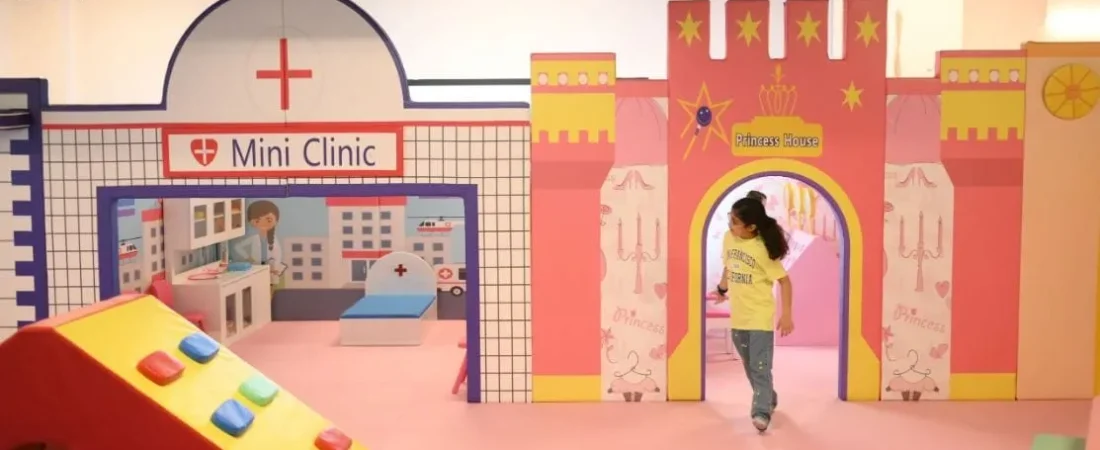
Indoor play area flooring provides a cushioned, comfortable and practical surface for children’s playgrounds, activity centers, schools, nurseries, daycare facilities, family entertainment centers and indoor recreational spaces.
The right flooring system can help create a safer and more attractive play environment while providing resistance to everyday foot traffic, cleaning and recreational use. Flooring should be selected according to the age of children, type of play equipment, impact requirements, indoor environment and maintenance needs.
At Epoxy Flooring Pakistan, indoor play area flooring can be designed around the specific requirements of schools, daycare centers, indoor playgrounds, gyms, activity centers and commercial play facilities.
What Is Indoor Play Area Flooring?
Indoor play area flooring is a specialized flooring surface used in children’s play and activity areas. Unlike conventional concrete, ceramic tiles or other hard surfaces, suitable play flooring can provide cushioning and improved comfort for children during crawling, walking, running and playing.
Depending on the system selected, the flooring may be supplied as interlocking tiles, rolls, mats, modular panels or a seamless poured-in-place surface.
The flooring system should be selected based on the actual use of the space rather than appearance alone. Areas containing climbing frames, slides or elevated play equipment may have different impact requirements from simple toddler activity rooms.
Why Is Proper Flooring Important for Indoor Play Areas?
Children spend significant amounts of time moving, sitting, crawling and playing on the floor. A hard, slippery or damaged surface can create unnecessary safety and maintenance concerns.
Cushioning
Suitable flooring can provide a softer surface than concrete or ceramic tiles.
Comfort
Cushioned flooring provides a more comfortable surface for children during floor-based activities.
Traction
Appropriate surface textures can provide grip for walking, running and play activities.
Easy Maintenance
Properly selected flooring can be cleaned regularly to maintain a hygienic play environment.
Types of Indoor Play Area Flooring
EVA Foam Flooring
Lightweight interlocking EVA tiles provide cushioning and are commonly used in indoor children’s activity areas, playrooms and selected recreational spaces.
Rubber Flooring
Rubber tiles and mats provide durability, cushioning and resistance to repeated foot traffic and recreational activity.
EPDM Wet Pour Flooring
EPDM rubber granules can be installed as a seamless resilient surface where a customized, attractive and impact-attenuating system is required.
PVC & Vinyl Flooring
Commercial-grade vinyl flooring can provide a smooth, easy-to-clean surface for selected indoor activity areas.
Rubber Tiles
Modular rubber tiles are practical for areas where individual sections may need to be replaced or maintained.
Custom Play Flooring
Flooring can be designed with different colours, patterns and activity zones according to the layout of the facility.
EVA Flooring for Indoor Play Areas
EVA flooring is a popular option for indoor children’s areas because it is lightweight, cushioned and available in interlocking tile formats.
EVA tiles can be installed relatively quickly over a suitable clean and level substrate. If a tile becomes damaged, individual pieces can often be removed and replaced without rebuilding the entire floor.
- Lightweight and easy to handle.
- Available in multiple colours and thicknesses.
- Provides cushioning for floor-based activities.
- Easy to install in modular formats.
- Individual tiles can often be replaced.
- Suitable for many indoor playroom applications.
Rubber Flooring for Indoor Play Areas
Rubber flooring is another practical option for indoor playgrounds and activity centers. Rubber is generally more durable than lightweight foam products and can withstand frequent foot traffic and repeated recreational use.
Rubber flooring can be supplied in tiles, rolls or other formats. Product density and thickness should be selected according to the application and required impact performance.
Durability
Suitable rubber systems can withstand regular commercial traffic and active use.
Impact Absorption
Rubber provides cushioning and can be engineered for applications requiring impact attenuation.
Traction
Textured rubber surfaces can provide useful grip for active indoor environments.
Long-Term Use
High-quality rubber flooring can be suitable for facilities receiving frequent daily use.
EPDM Wet Pour Flooring for Indoor Play Areas
EPDM wet-pour flooring consists of rubber granules bonded together to create a resilient surface. It can be installed in different colours and patterns, making it suitable for decorative children’s play environments.
One of the major advantages of a poured rubber system is its seamless appearance. The surface can also be designed around play equipment, activity zones and customized layouts.
For any play area where fall protection is required, the system must be specified according to the required critical fall height and appropriate impact-testing requirements rather than simply selecting a soft-looking surface.
Indoor Play Area Flooring Applications
Indoor Playgrounds
Resilient flooring can be installed beneath and around indoor playground equipment.
Daycare Centers
Cushioned flooring can create a comfortable surface for toddlers and young children.
Schools
Suitable flooring can be used in children’s activity rooms, playrooms and recreational areas.
Nurseries
Soft and easy-to-maintain flooring can support indoor crawling, sitting and play activities.
Family Entertainment Centers
Durable flooring can help withstand frequent commercial traffic and active children’s use.
Kids Activity Centers
Different flooring colours can be used to create activity zones and attractive play environments.
Indoor Sports & Recreation
Resilient flooring can be selected for children’s recreational and movement-based activities.
Home Playrooms
Modular foam or rubber flooring can provide a practical cushioned surface for residential playrooms.
Key Features of Good Indoor Play Area Flooring
- Appropriate impact attenuation for the intended activity.
- Comfortable surface for children.
- Suitable slip resistance and traction.
- Easy routine cleaning.
- Resistance to regular foot traffic.
- Durable construction for the intended use.
- Low-maintenance surface.
- Non-sharp and properly finished edges.
- Appropriate resistance to everyday wear.
- Colours and patterns suitable for children’s environments.
Indoor Play Area Flooring Thickness
Flooring thickness should be selected according to the type of activity, equipment and required cushioning. There is no single thickness that is suitable for every indoor play area.
| Application | Typical Flooring Approach | Key Consideration |
|---|---|---|
| Toddler Activity Area | Cushioned foam or resilient flooring | Comfort and easy cleaning |
| General Play Area | EVA, rubber or resilient modular flooring | Durability and cushioning |
| Active Play Zone | Higher-performance rubber or impact system | Impact and wear resistance |
| Elevated Play Equipment | Engineered impact-attenuating system | Critical fall height and safety requirements |
The required thickness should always be determined from the flooring manufacturer’s specifications and the requirements of the particular play equipment and installation.
Indoor Play Area Flooring Installation Process
- Site Inspection: Inspect the existing floor and identify cracks, uneven areas, moisture problems and other substrate defects.
- Substrate Preparation: Clean, repair and level the substrate as required by the selected flooring system.
- Moisture Assessment: Check the substrate where moisture could affect the flooring installation.
- Layout Planning: Plan flooring zones, colours, patterns and equipment locations.
- Material Installation: Install the selected EVA, rubber, EPDM, vinyl or other flooring system according to manufacturer specifications.
- Edge Finishing: Ensure transitions, perimeter edges and joints are properly finished.
- Quality Inspection: Inspect the finished surface for loose sections, gaps, raised edges or installation defects.
- Final Cleaning: Clean the surface and prepare it for use after the required installation or curing period.
Substrate Preparation for Indoor Play Flooring
Proper substrate preparation is one of the most important parts of a successful flooring installation. A soft flooring system installed over a damaged or uneven substrate may not perform as intended.
- Remove dust, dirt and loose material.
- Repair damaged concrete or other substrate defects.
- Correct significant unevenness.
- Remove sharp projections.
- Address visible cracks where required.
- Check for moisture problems.
- Ensure the substrate meets the flooring manufacturer’s requirements.
Safety Considerations for Indoor Play Areas
Flooring is only one component of an indoor playground safety system. The complete environment should be considered, including equipment design, installation, spacing, edges, barriers and impact protection.
Fall Height
Flooring requirements should account for the maximum possible fall height from the play equipment.
Impact Attenuation
Where fall protection is required, use a system designed and tested for the applicable impact requirements.
Surface Grip
The floor should provide suitable traction without creating an unnecessarily abrasive surface.
Edges & Transitions
Flooring edges should be properly finished to reduce trip hazards and installation defects.
Indoor Play Area Flooring Maintenance
Indoor play areas require regular cleaning because children frequently touch and use the floor. The maintenance program should match the flooring material and the amount of daily traffic.
Daily Cleaning
Remove dust, dirt, food particles and other debris from the surface.
Spill Removal
Clean liquids and spills promptly to maintain a clean and suitable play surface.
Disinfection
Use cleaning and disinfecting products compatible with the selected flooring material.
Regular Inspection
Check joints, edges, tiles and surface condition for damage or movement.
Advantages of Indoor Play Area Flooring
Enhanced Comfort
Cushioned flooring is more comfortable than conventional hard surfaces for floor-based activities.
Impact Reduction
Appropriate resilient systems can help reduce impact from certain falls and activities.
Attractive Appearance
Multiple colours and designs can be used to create engaging children’s environments.
Easy Maintenance
Suitable commercial flooring systems can be cleaned and maintained as part of a regular facility program.
Durability
Properly selected flooring can withstand repeated daily recreational use.
Custom Design
Flooring can be configured into different colours, zones and patterns.
Indoor Play Area Flooring vs Conventional Flooring
| Feature | Play Area Flooring | Conventional Hard Flooring |
|---|---|---|
| Cushioning | Good to Excellent depending on system | Very Limited |
| Impact Attenuation | Available with suitable systems | Limited |
| Comfort | High | Low to Moderate |
| Design Options | Multiple colours and patterns | Dependent on tile or finish |
| Maintenance | Material dependent | Material dependent |
| Children’s Activities | Designed for suitable applications | Less suitable where cushioning is required |
Indoor Play Area Flooring in Pakistan
Indoor play facilities in Pakistan require flooring that can handle regular children’s activity while remaining practical to clean and maintain. The ideal system depends on the building, climate, ventilation, floor substrate and intended use.
Lahore
Suitable resilient flooring can be installed in indoor playgrounds, schools, daycare facilities and activity centers.
Karachi
Flooring selection should consider indoor humidity, cleaning requirements and ventilation.
Islamabad & Rawalpindi
Indoor play flooring can be used in schools, nurseries, recreational centers and family entertainment facilities.
Other Cities
Material selection should be based on the local environment, facility use and project requirements.
Indoor Play Area Flooring Cost in Pakistan
The cost of indoor play area flooring in Pakistan depends on the flooring material, thickness, density, impact requirements, floor area, substrate condition, design and installation method.
| Cost Factor | Why It Matters |
|---|---|
| Flooring Material | EVA, rubber, EPDM and vinyl have different material costs. |
| Thickness | Thicker systems generally require more material. |
| Density | Higher-performance materials may have higher costs. |
| Floor Area | Total project quantity affects material and installation costs. |
| Substrate Preparation | Repairs, leveling and preparation can add to project cost. |
| Design | Multiple colours, patterns and custom layouts can affect pricing. |
| Impact Requirements | Specialized impact-attenuating systems can require additional material and testing. |
How to Choose the Best Indoor Play Area Flooring
- Identify the Type of Play: Determine whether the area is intended for toddlers, general children’s play, climbing equipment or active recreational use.
- Check Fall Heights: Identify whether children can fall from elevated equipment.
- Select the Appropriate System: Compare EVA, rubber, EPDM, vinyl and other suitable options.
- Consider Thickness and Density: Select the specification according to the expected activity and performance requirements.
- Evaluate Maintenance: Choose a surface that can be cleaned and maintained according to the facility’s daily requirements.
- Check the Substrate: Make sure the existing floor can support the selected system.
- Consider Appearance: Select colours and patterns that complement the play environment.
Common Indoor Play Area Flooring Mistakes
Choosing Only by Price
The cheapest material may not provide the required durability or impact performance.
Ignoring Fall Height
Softness alone does not establish that a surface provides adequate fall protection.
Poor Substrate Preparation
Uneven or damaged substrates can affect the performance and appearance of the finished flooring.
Using the Wrong Cleaner
Incompatible cleaning chemicals can damage some flooring materials.
Frequently Asked Questions
What is the best flooring for an indoor play area?
The best flooring depends on the type of play equipment, required impact attenuation, age of children, traffic and maintenance requirements. EVA, rubber and EPDM systems are common options for suitable indoor applications.
Is EVA flooring suitable for indoor playgrounds?
EVA can be suitable for many indoor playroom and activity applications because it is lightweight and cushioned. Where fall protection is required, the complete system should be evaluated against the applicable safety requirements.
Is rubber flooring good for kids play areas?
Yes, suitable rubber flooring can provide durability, cushioning and traction for indoor children’s activity areas. The correct thickness and performance specification should be selected for the intended use.
What is EPDM wet pour flooring?
EPDM wet pour flooring is a resilient surface made by bonding rubber granules together to create a seamless floor. It can be installed in different colours and thicknesses and may be engineered for suitable impact-attenuating applications.
Is indoor play area flooring waterproof?
Water resistance depends on the flooring system and installation. Some rubber and vinyl systems are highly resistant to routine moisture, while joints, seams and substrates still need appropriate detailing.
How thick should indoor play area flooring be?
There is no universal thickness. The required specification depends on the type of play, equipment, fall height and impact requirements. The flooring manufacturer should provide the appropriate thickness for the intended application.
Is indoor play area flooring easy to clean?
Many indoor play flooring systems can be cleaned routinely using suitable detergents and cleaning methods. The cleaning procedure should follow the flooring manufacturer’s recommendations.
Can indoor play flooring be customized?
Yes. Many flooring systems are available in different colours, patterns and configurations. Custom designs can be used to create activity zones and attractive children’s environments.
Can indoor play flooring be installed over concrete?
Yes, many systems can be installed over suitable concrete substrates. The concrete should be clean, structurally sound, reasonably level and meet the moisture and preparation requirements of the selected flooring system.
How much does indoor play area flooring cost in Pakistan?
Pricing varies according to material, thickness, density, floor area, design, substrate preparation and installation. A site-specific quotation is recommended for accurate pricing.
Is soft flooring enough to protect children from falls?
Not necessarily. A surface being soft does not automatically mean that it provides adequate impact protection. Where elevated play equipment is present, an appropriate tested impact-attenuating system should be selected based on the required critical fall height.
Need Indoor Play Area Flooring?
Choose a flooring system designed around your children’s play area, equipment, floor condition, design requirements and expected traffic.
Request an Indoor Play Area Flooring QuoteRelated Flooring Services
Conclusion
Indoor play area flooring should provide an appropriate combination of cushioning, comfort, traction, durability, cleanability and impact performance for the intended application.
EVA foam, rubber, EPDM wet pour and vinyl are among the options that can be considered for different indoor play environments. The right choice depends on the type of activity, play equipment, fall height, traffic level, substrate and maintenance requirements.
For commercial indoor playgrounds and children’s activity centers, selecting the flooring based on performance rather than appearance or price alone can help create a more practical, comfortable and durable environment.