EVA Flooring in Pakistan: Benefits, Applications, Thickness, Cost & Installation
EVA flooring is a lightweight, resilient and impact-absorbing flooring solution commonly used in gyms, children’s play areas, fitness studios, martial arts facilities, nurseries and other spaces where comfort, cushioning and user safety are important.
EVA stands for ethylene-vinyl acetate, a flexible polymer material that can be manufactured into foam flooring tiles, mats and interlocking surfaces. Its cushioning properties make it different from conventional hard flooring systems such as epoxy, concrete or ceramic tiles.
EVA flooring is available in different densities, thicknesses, colours, surface textures and tile formats. Choosing the right product depends on whether the floor will be used for general fitness, children’s activities, weight training, martial arts or another application.
What Is EVA Flooring?
EVA flooring is a resilient foam flooring material manufactured from ethylene-vinyl acetate. It has a closed-cell or semi-closed-cell structure depending on the product, allowing it to provide cushioning and resistance to everyday impact.
EVA tiles are commonly supplied as interlocking pieces, making installation relatively quick without permanent adhesive in many applications. Individual tiles can also be removed and replaced if a damaged section needs repair.
The material is softer than conventional hard flooring and is therefore often selected where users spend long periods standing, exercising, stretching or playing on the surface.
Why Choose EVA Flooring?
Impact Absorption
EVA foam helps absorb impact and provides cushioning beneath users and equipment.
Comfort
The resilient surface provides a softer and more comfortable walking, standing and exercise surface.
Lightweight
EVA is considerably lighter than many conventional flooring materials, making handling and installation easier.
Easy Installation
Interlocking EVA tiles can often be installed quickly without complicated wet construction processes.
Key Features of EVA Flooring
- Lightweight construction.
- Good cushioning properties.
- Impact-absorbing surface.
- Comfortable underfoot.
- Available in interlocking tile formats.
- Easy to remove and replace.
- Available in different colours and thicknesses.
- Suitable for temporary and permanent installations.
- Easy routine maintenance.
- Suitable for many indoor fitness and recreational applications.
EVA Flooring Applications
Gym Flooring
EVA mats and tiles can be used in selected fitness areas where cushioning and comfort are more important than extreme resistance to heavy equipment.
Home Gyms
Lightweight EVA tiles are convenient for home workout rooms, exercise areas and small training spaces.
Kids Play Areas
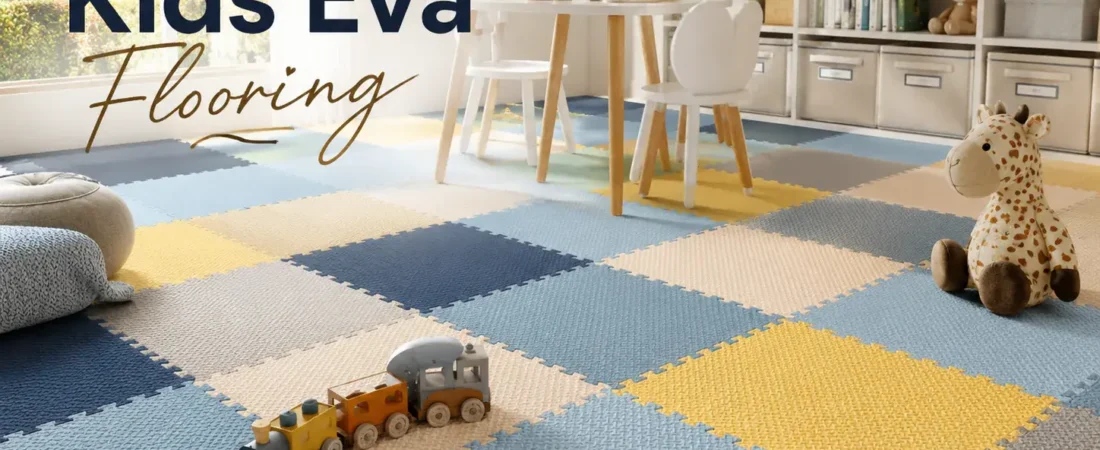
Cushioned EVA surfaces can provide a softer surface for children’s indoor play and activity areas.
Martial Arts Areas
Higher-density EVA mats are commonly used for selected martial arts and training applications where cushioning is required.
Yoga & Fitness Studios
EVA can provide a comfortable surface for stretching, floor exercises and low-impact fitness activities.
Nurseries & Activity Rooms
EVA flooring can be used in indoor activity spaces where a softer floor is desirable.
Playrooms
Interlocking EVA tiles can provide a practical cushioned surface for residential playrooms and children’s activity spaces.
Recreational Areas
EVA flooring can be used in selected indoor recreational spaces requiring comfort and impact absorption.
EVA Flooring for Gyms
EVA flooring can be suitable for light and moderate gym activities, particularly stretching, yoga, bodyweight exercises and general fitness. Its cushioning makes it comfortable for users who spend considerable time exercising on the floor.
However, EVA should not automatically be considered the best solution for every gym zone. Areas exposed to repeated heavy barbell drops, sharp equipment loads or very high mechanical stress may require denser and heavier-duty rubber flooring.
EVA Flooring for Kids Play Areas
EVA foam tiles are commonly considered for indoor children’s play areas because they provide a softer surface than concrete, ceramic tile and other hard flooring.
Interlocking tiles can also make it easier to replace individual damaged pieces without removing the entire floor.
For playgrounds where fall-height protection is required, however, EVA flooring should not be selected solely on the basis of softness. Appropriate impact-attenuating playground surfacing should be evaluated according to the equipment, fall height and applicable safety requirements.
EVA Flooring for Martial Arts
Martial arts and combat-training areas require flooring with appropriate cushioning, stability and resilience. EVA foam mats can be manufactured in higher densities and thicknesses for selected martial arts applications.
The appropriate mat should be selected according to the activity. Judo, karate, taekwondo, wrestling and mixed training environments may have different requirements for firmness, shock absorption and surface grip.
EVA Flooring Thickness
EVA flooring is available in different thicknesses. The correct thickness depends on the activity, user weight, impact level, equipment and desired cushioning.
| Approx. Thickness | Typical Application | General Performance |
|---|---|---|
| 6–8 mm | Light exercise and general comfort | Basic cushioning |
| 10–12 mm | Home gyms, fitness and activity areas | Moderate cushioning |
| 15–20 mm | Higher-impact fitness and selected training areas | Enhanced cushioning |
| 20 mm+ | Selected martial arts and higher-impact applications | Higher impact absorption |
Thickness alone does not determine performance. Density, foam structure, product quality, surface finish and intended application should also be considered.
EVA Flooring Density
Density is an important consideration when selecting EVA flooring. A higher-density material generally provides a firmer and more stable surface, while a softer product can provide a different level of cushioning and comfort.
The appropriate density depends on the application. A children’s activity area, yoga studio and martial arts facility may require different combinations of softness, stability and impact absorption.
EVA Interlocking Floor Tiles
Interlocking EVA tiles are designed with puzzle-style edges that connect adjacent pieces. This allows the floor to be assembled without permanently bonding every tile to the substrate in many indoor applications.
- Fast installation.
- No complex wet installation process.
- Individual tiles can be replaced.
- Easy transportation and handling.
- Suitable for temporary installations.
- Can be configured for different room sizes.
Benefits of Interlocking EVA Flooring
Easy Installation
Tiles can be connected directly on a suitable clean and level substrate.
Easy Replacement
Damaged sections can often be removed and replaced without rebuilding the complete floor.
Portable
EVA tiles are lightweight and can be moved or reconfigured when required.
Flexible Design
Different colours can be combined to create zones or patterns.
EVA Flooring vs Rubber Flooring
EVA and rubber flooring are both used in fitness and recreational environments, but they are designed for different performance requirements.
| Feature | EVA Flooring | Rubber Flooring |
|---|---|---|
| Weight | Lightweight | Heavier |
| Cushioning | Good | Good to Excellent |
| Heavy Weight Training | Limited / Application Dependent | Excellent for suitable rubber systems |
| Impact Resistance | Good for suitable applications | Excellent for heavy-duty applications |
| Installation | Very Easy | Easy to Moderate |
| Portability | Excellent | Moderate |
| Typical Use | Fitness, play, yoga, martial arts | Gyms, weight rooms, heavy-duty fitness |
EVA Flooring vs EPDM Flooring
EVA and EPDM are different material systems. EVA is commonly supplied as lightweight foam tiles and mats, while EPDM is a durable synthetic rubber widely used in sports and playground surfacing.
EVA may be preferable where lightweight cushioning and easy installation are priorities. EPDM can be more appropriate for outdoor or high-performance applications where weathering, UV exposure and long-term rubber durability are important.
EVA Flooring Installation Process
- Inspect the Substrate: Ensure the existing surface is sound, clean, dry and reasonably level.
- Clean the Area: Remove dust, dirt, grease and loose particles.
- Check Floor Level: Correct significant unevenness before installing the tiles.
- Plan the Layout: Measure the room and plan tile placement to minimize unnecessary cuts.
- Allow Material to Acclimatize: Follow the manufacturer’s recommendations before installation.
- Start Installation: Position the first tiles accurately and connect the interlocking edges.
- Complete the Floor: Continue connecting tiles across the room and cut perimeter pieces where necessary.
- Check the Surface: Ensure the completed floor is stable, properly aligned and free from significant gaps or raised edges.
Substrate Requirements for EVA Flooring
EVA flooring performs best when installed over a suitable substrate. Although the material can accommodate minor imperfections, significant unevenness can affect tile stability and appearance.
- The substrate should be reasonably level.
- The surface should be clean and free from grease.
- Loose concrete or damaged material should be repaired.
- Standing water should not be present.
- Sharp projections should be removed.
- Major cracks and substrate defects should be addressed.
- The installation area should be suitable for the selected product.
EVA Flooring Maintenance
One advantage of EVA flooring is that routine maintenance can be relatively simple. Regular cleaning helps prevent dirt and contaminants from building up on the surface.
Daily Cleaning
Remove dust, dirt and debris using a soft broom, vacuum or suitable cleaning equipment.
Spill Removal
Clean spills promptly to reduce staining and prevent slippery surface contamination.
Deep Cleaning
Use a manufacturer-approved cleaning solution and avoid chemicals that can damage the foam.
Tile Inspection
Periodically inspect interlocking joints and replace damaged or excessively worn tiles.
How to Clean EVA Flooring
- Remove loose dirt and debris.
- Use a damp mop or suitable cleaning equipment.
- Use a mild, compatible cleaning solution where required.
- Do not flood the floor unnecessarily.
- Remove spills as soon as possible.
- Allow the surface to dry properly after cleaning.
- Follow the manufacturer’s cleaning recommendations.
Advantages of EVA Flooring
Comfortable
Provides a cushioned surface for walking, exercising and floor-based activities.
Shock Absorbing
Foam construction helps reduce the hardness of the underlying floor.
Lightweight
Easier to transport, handle and install than many heavy flooring materials.
Modular
Interlocking tiles can be removed, replaced or rearranged.
Versatile
Suitable for a range of fitness, recreational and indoor activity applications.
Easy to Install
Many interlocking systems can be installed without permanent adhesive.
Limitations of EVA Flooring
EVA flooring is not a universal replacement for every type of sports or industrial flooring. Its lightweight foam construction means that application and product selection are important.
- May not be suitable for heavy industrial traffic.
- Not the first choice for repeated heavy barbell drops.
- Can be damaged by sharp objects or unsuitable equipment.
- Some products may be affected by excessive heat.
- Outdoor suitability depends on the specific product.
- Different EVA densities have different performance characteristics.
- Not every EVA product is suitable for playground fall protection.
Indoor vs Outdoor EVA Flooring
| Factor | Indoor EVA | Outdoor Use |
|---|---|---|
| Typical Suitability | Excellent for suitable applications | Product dependent |
| UV Exposure | Limited exposure | Important consideration |
| Rain & Water | Generally easier to control | Requires appropriate product selection |
| Temperature | Controlled environment | Thermal exposure must be considered |
| Common Uses | Gyms, playrooms, studios | Only selected products/applications |
EVA should not be installed outdoors simply because it is suitable for indoor fitness applications. UV exposure, rain, temperature changes and drainage should be considered before outdoor installation.
EVA Flooring for Pakistan
EVA flooring can be used in suitable indoor applications throughout Pakistan, including gyms, fitness studios, children’s activity areas, home gyms, martial arts facilities and recreational spaces.
Pakistan’s climate makes product selection particularly important for areas exposed to high temperatures or direct sunlight. For outdoor applications, the selected material should be specifically rated for the environmental conditions.
Lahore
Suitable EVA flooring can be installed in indoor gyms, fitness studios, schools and activity areas.
Karachi
Indoor applications should account for humidity, cleaning conditions and ventilation.
Islamabad & Rawalpindi
EVA tiles can be used for indoor fitness, children’s areas and recreational facilities.
Other Cities
Product density, thickness and environmental suitability should be selected according to the specific project.
EVA Flooring Price in Pakistan
The EVA flooring price in Pakistan depends on thickness, density, tile dimensions, surface design, material quality, colour, quantity and installation requirements.
| Factor | Effect on Price |
|---|---|
| Thickness | Thicker products generally require more material. |
| Density | Higher-performance materials may cost more. |
| Tile Size | Different tile formats affect material and installation efficiency. |
| Surface Finish | Specialized textures and patterns may affect pricing. |
| Project Quantity | Large projects may have different material rates. |
| Installation | Substrate preparation and installation can affect total project cost. |
How to Choose the Best EVA Flooring
- Identify the Application: Determine whether the floor will be used for a gym, play area, martial arts, yoga or another activity.
- Select Thickness: Choose a thickness suitable for the expected impact and activity.
- Check Density: Compare the density and firmness of available products.
- Check Surface Texture: Select a surface appropriate for the intended movement and activity.
- Consider Environment: Determine whether the flooring will be exposed to sunlight, moisture or temperature changes.
- Inspect the Substrate: Ensure the underlying floor is suitable and reasonably level.
- Compare Alternatives: For heavy-duty gym applications, compare EVA with rubber flooring before making the final decision.
When EVA Flooring Is Not the Best Choice
EVA flooring may not be appropriate for every application. Consider another flooring system when the area requires extreme mechanical durability, heavy industrial traffic, repeated heavy weight drops, severe chemical exposure or long-term outdoor weather resistance.
Heavy Weightlifting
High-density rubber flooring is often more suitable for repeated heavy barbell impact.
Industrial Areas
Industrial epoxy, PU or heavy-duty resin systems may be more appropriate for industrial traffic and chemicals.
Outdoor Sports
Acrylic, PU, EPDM or other outdoor sports systems may be better suited to UV and weather exposure.
Playground Fall Protection
Certified impact-attenuating systems should be evaluated where playground fall-height protection is required.
Frequently Asked Questions
What is EVA flooring?
EVA flooring is a resilient foam flooring material made from ethylene-vinyl acetate. It is commonly supplied as tiles or mats and is used where cushioning, comfort and impact absorption are required.
Is EVA flooring good for gyms?
EVA can be suitable for light and moderate fitness activities, home gyms, stretching and floor exercises. For heavy weightlifting and repeated barbell drops, high-density rubber flooring may be a better option.
Is EVA flooring suitable for kids play areas?
EVA can provide a softer surface for indoor children’s activity areas. However, where playground fall-height protection is required, the complete surfacing system should be evaluated against the applicable safety requirements.
Is EVA flooring waterproof?
Many EVA foam products have relatively low water absorption, but water resistance varies by product and installation. The manufacturer’s technical specification should be checked for wet-area applications.
Can EVA flooring be used outdoors?
Outdoor use depends on the specific EVA product. UV exposure, rain, temperature changes and drainage should be considered before installing EVA outdoors.
What thickness of EVA flooring is best?
The appropriate thickness depends on the activity and desired cushioning. Common options include approximately 6 mm to 20 mm or more, but the correct specification should consider density and impact requirements as well.
Is EVA better than rubber flooring?
Neither is universally better. EVA is lightweight and convenient for cushioning and portable applications, while rubber is generally preferred for demanding gym environments, heavy equipment and repeated impact.
Is EVA flooring easy to install?
Yes. Interlocking EVA tiles can generally be installed relatively quickly on a suitable clean and level substrate. Individual tiles can also be removed and replaced when required.
How do you clean EVA flooring?
Remove dust and debris regularly and clean the surface using a suitable mild cleaning solution. Avoid aggressive chemicals, solvents and cleaning methods that are not approved for the particular EVA product.
Does EVA flooring absorb impact?
Yes. EVA foam is designed to provide cushioning and impact absorption, although actual performance depends on density, thickness, construction and application.
What is EVA flooring used for?
EVA flooring is commonly used for gyms, home workout areas, children’s playrooms, fitness studios, yoga spaces, martial arts areas and other indoor recreational applications.
How much does EVA flooring cost in Pakistan?
EVA flooring prices vary according to thickness, density, quality, tile size, design, quantity and installation requirements. A project-specific quotation is recommended for accurate pricing.
Looking for EVA Flooring in Pakistan?
Choose the right EVA flooring thickness, density and format for your gym, fitness studio, play area or recreational space.
Request an EVA Flooring QuoteRelated Flooring Services
Conclusion
EVA flooring is a lightweight and comfortable flooring solution for indoor fitness, recreational and children’s activity areas. Its cushioning, impact absorption, modular installation and easy replacement make it useful for applications where comfort is a priority.
The correct product should be selected according to thickness, density, activity, expected impact, environmental exposure and maintenance requirements. For heavy-duty gym areas or severe industrial conditions, rubber or resin flooring systems may provide better long-term performance.
By matching the EVA specification to the application and installing it over a suitable substrate, you can create a practical, comfortable and durable flooring surface for a wide range of indoor environments.