
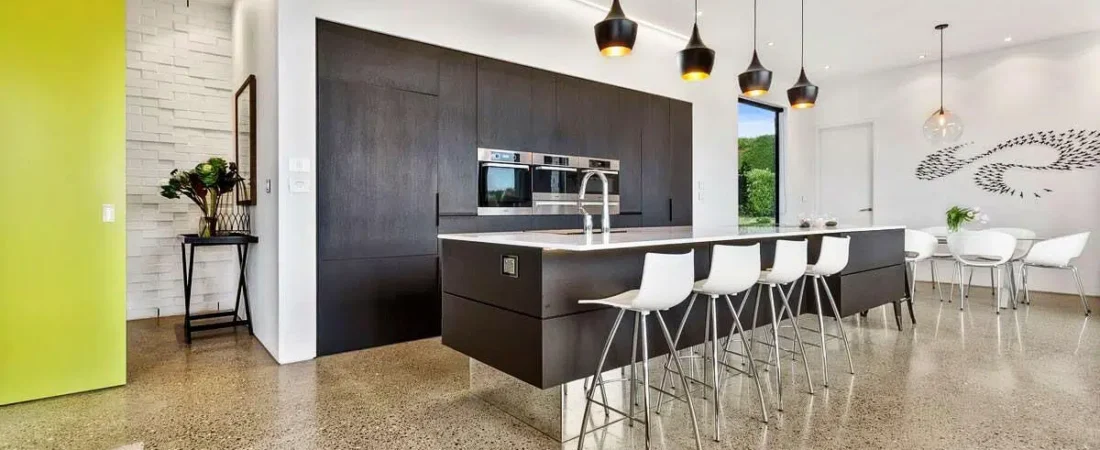
Polished Concrete Flooring in Pakistan: Price, Benefits, Process & Applications
A practical guide to polished concrete flooring, including its cost, preparation, polishing process, durability, maintenance, advantages, limitations and best applications.
Polished concrete is a concrete flooring system in which the existing concrete surface is mechanically ground, refined and polished to create a smooth, dense and attractive finish. Depending on the required appearance, the surface can range from a low-sheen satin finish to a highly reflective polished floor.
Unlike a conventional coating, polished concrete does not depend on a thick layer of paint or resin to create the finished surface. The appearance comes primarily from the concrete itself and the mechanical polishing process. This makes it a practical option for warehouses, commercial buildings, showrooms, offices, retail spaces, factories and selected residential interiors.
What Is Polished Concrete?
Polished concrete is produced by using industrial grinding and polishing equipment to progressively refine a concrete slab. Coarse diamond tools remove surface irregularities, while finer tools create the desired smoothness and sheen.
The concrete may also receive a densifier to chemically harden the surface and improve its resistance to abrasion. Depending on the project, contractors may also use stain, dye, guard products or protective treatments to achieve a particular visual effect or performance requirement.
A good polished concrete floor therefore depends on more than simply making concrete shiny. The condition of the slab, aggregate exposure, moisture, cracks, joints, grinding sequence and final protection all affect the finished result.
Polished Concrete Price in Pakistan
The cost of polished concrete in Pakistan varies considerably because it is a process-based flooring system. The final quotation depends on the existing concrete condition, required polishing level, aggregate exposure, floor area, repairs, access, equipment requirements and desired appearance.
| Cost Factor | Why It Matters |
|---|---|
| Existing concrete condition | Cracks, holes, uneven areas and damaged concrete require additional preparation. |
| Grinding depth | More aggressive grinding can expose additional aggregate and require more work. |
| Polishing level | Higher refinement levels generally require additional passes and labor. |
| Floor size | Larger areas can improve equipment productivity and affect the overall rate. |
| Repairs and joint treatment | Crack and joint repairs can add to the project cost. |
| Decorative requirements | Stains, dyes, exposed aggregate and special finishes may increase the price. |
For a commercial or industrial project, it is better to compare quotations based on the specified grinding and polishing system rather than comparing only the price per square foot.
How Polished Concrete Is Installed
Professional polished concrete installation normally follows a series of mechanical preparation and refinement stages. The exact sequence varies according to the concrete slab and the desired finish.
Inspect the Concrete
The contractor checks the slab for cracks, surface contamination, weak areas, moisture concerns, joints, unevenness and previous coatings.
Prepare the Surface
Existing coatings, dirt, laitance and weak surface material are removed where necessary. Cracks, holes and damaged areas are repaired before polishing continues.
Coarse Grinding
Diamond grinding tools are used to flatten and open the concrete surface. The contractor determines how much material needs to be removed based on the slab condition and desired aggregate exposure.
Crack and Joint Treatment
Suitable cracks and surface defects are filled or repaired. Existing movement joints are generally respected rather than simply covered over.
Apply Concrete Densifier
A compatible concrete densifier can be applied to harden the surface and improve its resistance to wear and dusting.
Progressive Polishing
Finer diamond abrasives are used progressively to refine the surface. The number of stages depends on the required finish and specification.
Final Protection
A suitable guard or protective treatment may be applied depending on the intended use and maintenance requirements.
Final Cleaning and Inspection
The floor is cleaned and inspected for consistency, scratches, visible repairs, sheen and overall finish before handover.
Types of Polished Concrete Finishes
Low-Sheen Finish
A subtle finish with less reflection. It can be suitable where a more natural concrete appearance is preferred.
Satin Finish
A balanced appearance between a raw concrete look and a highly reflective polished surface.
High-Gloss Finish
Multiple refinement stages can produce a more reflective surface for applications where appearance is an important consideration.
Exposed Aggregate
Deeper grinding can reveal the natural aggregate within the concrete, creating a distinctive stone-like appearance.
Benefits of Polished Concrete Flooring
- Durable surface: Properly prepared and polished concrete can withstand substantial pedestrian and equipment traffic.
- Low routine maintenance: The smooth surface is relatively easy to clean compared with many textured floor systems.
- Long service life: A properly constructed concrete slab can provide a durable flooring base for many years.
- Modern appearance: Polished concrete provides a clean industrial and contemporary aesthetic.
- Low dusting: Concrete densification can help reduce surface dusting associated with weak concrete surfaces.
- Custom appearance: Different aggregate exposures, stains and polishing levels can create different visual results.
- No conventional coating layer: The finished appearance is primarily developed from the concrete itself rather than a thick decorative coating.
- Suitable for large areas: Mechanical polishing can be efficient for warehouses, commercial spaces and other large floor areas.
Limitations of Polished Concrete
Polished concrete is not automatically the correct flooring system for every building. Understanding its limitations is important before selecting it.
- Existing cracks and movement in the concrete can remain visible after polishing.
- Very uneven or badly damaged slabs may require substantial repair work.
- The appearance depends heavily on the quality and composition of the underlying concrete.
- Wet contamination can make polished concrete slippery, particularly where no suitable slip-management strategy is used.
- It does not provide the same chemical-resistance characteristics as a properly specified industrial resin system for every chemical environment.
- Achieving a high-gloss finish requires more grinding and polishing stages.
- Future repairs can sometimes be visible because the surrounding polished surface has already developed a particular appearance.
Where Is Polished Concrete Used?
Warehouses
Suitable concrete slabs can be polished to create a hard-wearing surface for pedestrian and selected material-handling traffic.
Factories
Polished concrete can be considered for manufacturing areas where the concrete slab and operating conditions are compatible with the system.
Showrooms
The clean, contemporary appearance makes polished concrete suitable for selected automobile, furniture and retail showrooms.
Retail Stores
It can provide a modern floor finish for retail environments when the existing slab and maintenance conditions are suitable.
Offices
Polished concrete can complement modern commercial interiors and open-plan workplace designs.
Residential Interiors
Homes, lofts and modern interiors can use polished concrete where the desired design and existing slab conditions make it practical.
Polished Concrete vs Epoxy Flooring
Polished concrete and epoxy flooring are often compared because both can provide durable and visually attractive floors. However, they work differently. Polished concrete is a mechanically refined concrete surface, while epoxy flooring is a resin-based coating or flooring system installed over a prepared substrate.
| Feature | Polished Concrete | Epoxy Flooring |
|---|---|---|
| Basic system | Mechanically polished concrete | Resin-based flooring system |
| Appearance | Natural concrete / aggregate appearance | Wide range of colors and decorative finishes |
| Chemical resistance | Depends on concrete and protection | Can be specified for many demanding chemical environments |
| Substrate influence | Very high | High, because coating performance depends on preparation and substrate |
| Design options | Aggregate, sheen and stains can change appearance | Colors, flakes, quartz, metallic effects and other systems are available |
| Repairs | May remain visually noticeable | Can also show repair or color differences |
The appropriate choice depends on the building, traffic, chemicals, moisture, aesthetics, maintenance requirements and condition of the existing concrete.
Polished Concrete Maintenance
One of the advantages of polished concrete is relatively straightforward routine maintenance. However, a polished floor still requires an appropriate cleaning program to preserve its appearance.
- Remove loose dust and dirt regularly using dust mopping or suitable vacuum equipment.
- Clean spills promptly, particularly in commercial and industrial environments.
- Use cleaning products recommended for polished concrete and the installed protection system.
- Avoid harsh cleaning practices that can unnecessarily damage the protective treatment.
- Use suitable entrance mats in high-traffic areas to reduce abrasive dirt.
- Periodically inspect high-traffic areas for wear and loss of finish.
- Follow the contractor’s recommended maintenance schedule for the specific floor system.
Is Polished Concrete Waterproof?
Polished concrete should not automatically be described as a waterproofing system. Concrete contains pores and can absorb moisture, while cracks and joints can provide pathways for water movement.
Polishing and densification can change surface characteristics and reduce dusting, but they do not replace a properly designed waterproofing system where water penetration is a critical concern.
Can Existing Concrete Be Polished?
In many cases, an existing concrete floor can be polished, but the result depends heavily on the condition and composition of the slab.
Contractors should inspect the floor for previous coatings, paint, adhesive, contamination, cracks, unevenness, weak concrete and moisture-related problems. The inspection also helps determine whether the desired aggregate exposure and appearance are realistically achievable.
If the existing concrete is too damaged or inconsistent, an alternative flooring system may provide a more predictable final appearance.
How to Choose a Polished Concrete Contractor
- Ask for examples of completed polished concrete projects.
- Confirm the proposed grinding and polishing sequence.
- Ask how cracks, joints and damaged concrete will be treated.
- Clarify the expected aggregate exposure and sheen level.
- Confirm whether densifier and protective treatment are included.
- Request a written specification instead of comparing only the quoted price.
- Ask for a sample area when appearance is important.
- Discuss maintenance requirements before approving the final system.
Common Mistakes to Avoid
Choosing Only on Price
A low quotation may not include the same grinding depth, polishing stages, repairs or protective treatment as another quotation.
Ignoring Moisture
Moisture problems should be investigated before installing or polishing a floor.
Expecting a Perfectly Uniform Slab
Natural concrete variation, aggregate distribution and previous repairs can influence the final appearance.
Skipping Sample Approval
A sample area helps the client understand the actual aggregate exposure, color, sheen and surface character before full installation.
Polished Concrete for Industrial Floors
Industrial environments need more than an attractive surface. Traffic, forklifts, machinery, oils, chemicals, impact and cleaning procedures should all be considered.
Polished concrete can work well where the existing concrete slab is suitable and the operating conditions are compatible. However, environments with aggressive chemical exposure, severe impact or specialized hygiene requirements may require an epoxy, polyurethane or another resin-based flooring system.
The correct specification should therefore be based on actual operating conditions rather than simply selecting a floor because it looks durable.
Polished Concrete for Commercial Spaces
Retail stores, offices, restaurants, showrooms and commercial buildings often choose polished concrete for its contemporary appearance and relatively simple maintenance. The natural variation of aggregate can also complement industrial, minimalist and modern architectural designs.
For commercial projects, the design should consider pedestrian traffic, furniture movement, cleaning methods, entrance dirt, slip conditions and the desired visual consistency across the entire floor.
Polished Concrete: Pros and Cons
| Pros | Cons |
|---|---|
| Durable when properly specified | Final appearance depends heavily on existing concrete |
| Modern architectural appearance | Existing cracks may remain visible |
| Relatively easy routine cleaning | Badly damaged slabs can require extensive preparation |
| Different sheen levels available | High-gloss finishes require additional polishing stages |
| Can expose natural aggregate | Not automatically a waterproofing system |
| Suitable for many large floor areas | May not be ideal for every chemical or industrial environment |
Frequently Asked Questions
What is polished concrete flooring?
Polished concrete is a flooring finish created by mechanically grinding and progressively polishing a concrete surface. A densifier and protective treatment may also be used depending on the specification.
What is the polished concrete price in Pakistan?
An indicative planning range can be around PKR 150–450+ per sq. ft., but actual pricing depends on the concrete condition, grinding depth, polishing level, repairs, floor size and required finish.
Is polished concrete cheaper than epoxy flooring?
Not necessarily. The cost of each system depends on the substrate condition, preparation, specification, area and desired finish. A proper quotation should compare equivalent performance requirements rather than only the material price.
Can old concrete be polished?
Yes, existing concrete can often be polished if the slab is structurally and cosmetically suitable. Cracks, coatings, contamination and damaged areas should be assessed before work begins.
Is polished concrete suitable for factories?
It can be suitable for factories where the concrete slab and operating conditions are compatible. Areas exposed to aggressive chemicals, severe impact or specialized hygiene requirements may require another flooring system.
Does polished concrete crack?
Polishing does not eliminate structural or movement-related cracks in the concrete. Existing cracks should be assessed and treated appropriately, but future movement can still produce visible cracking.
Is polished concrete waterproof?
No. Polished concrete should not be treated as a complete waterproofing system. Moisture problems, leakage, hydrostatic pressure and dampness need separate investigation and treatment.
How long does polished concrete last?
Service life varies according to concrete quality, traffic, maintenance, environment and installation quality. A properly constructed and maintained polished concrete floor can provide long-term service.
Does polished concrete require maintenance?
Yes. Routine dust removal, cleaning, spill management and periodic inspection are recommended. Maintenance requirements depend on the traffic level and protective treatment used.
What is better for an industrial floor: polished concrete or epoxy?
Neither system is automatically better for every industrial environment. The choice should consider chemical exposure, impact, traffic, moisture, hygiene, maintenance and the condition of the existing slab.
Need Polished Concrete Flooring?
Planning a polished concrete floor for a factory, warehouse, showroom, office, commercial building or home? Get the floor assessed before choosing the finish, specification and polishing level.
Request a Flooring Quote