
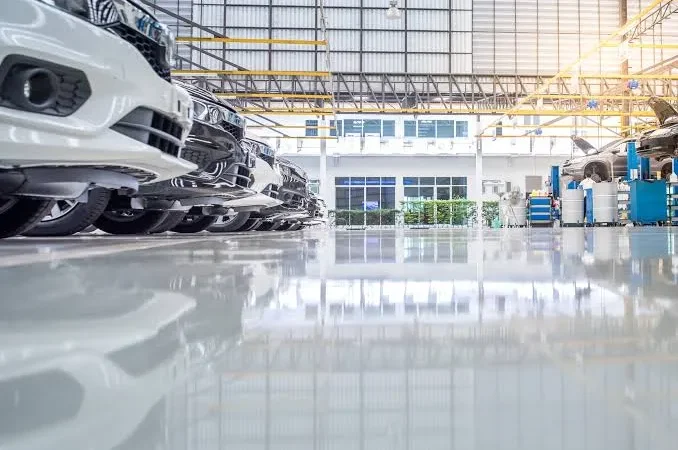
Showroom Epoxy Flooring: Benefits, Types, Cost & Installation
Discover how showroom epoxy flooring creates a seamless, durable and visually attractive surface for retail stores, automobile showrooms, furniture outlets, electronics stores and commercial display spaces across Pakistan.
A showroom floor is more than just a surface to walk on. It forms an important part of the customer’s first impression. Scratched concrete, stained tiles, worn surfaces and visible joints can make an otherwise premium showroom look outdated.
Epoxy flooring provides a practical alternative by creating a continuous surface that can be customised with colours, gloss levels, decorative flakes, metallic effects, logos and other design elements.
In Pakistan, epoxy showroom flooring is suitable for automobile dealerships, furniture showrooms, electronics stores, fashion outlets, supermarkets, industrial product displays, warehouses with customer areas and modern commercial interiors.
What Is Showroom Epoxy Flooring?
Showroom epoxy flooring is a resin-based flooring system applied over a properly prepared concrete or compatible substrate. The system can include a primer, epoxy body coat, decorative layer and protective topcoat depending on the required performance and appearance.
Unlike traditional tiles, epoxy creates a seamless finish without conventional grout joints. This gives showrooms a clean and modern appearance while also making routine floor cleaning easier.
Seamless Finish
Creates a continuous floor surface without traditional tile joints and grout lines.
Decorative Appearance
Available in solid colours, metallic effects, flakes, quartz and other decorative finishes.
High Traffic Performance
Properly specified systems can withstand frequent pedestrian traffic and selected commercial loads.
Easy Maintenance
The seamless surface can simplify routine sweeping, mopping and cleaning.
Why Choose Epoxy Flooring for a Showroom?
Showrooms need a flooring system that combines appearance with practical performance. The floor may experience continuous customer foot traffic, movement of products, trolleys, display equipment and, in automobile showrooms, vehicle traffic.
Premium Appearance
Glossy, satin and decorative epoxy finishes can create a modern architectural appearance that complements showroom displays.
Brand Customisation
Colours and decorative effects can be selected to complement corporate branding and interior design.
Seamless Design
The absence of traditional grout joints provides a clean, continuous visual appearance.
Easy Cleaning
Dust, dirt and everyday spills can generally be removed more easily from a properly installed seamless surface.
Durability
Commercial-grade epoxy systems can be designed for areas with substantial pedestrian and mechanical traffic.
Long-Term Value
A correctly specified and maintained epoxy floor can provide years of service without the frequent replacement associated with some decorative flooring surfaces.
Types of Epoxy Flooring for Showrooms
Different showroom environments require different finishes. The correct system should be selected according to traffic, aesthetics, maintenance requirements and exposure conditions.
High-Gloss Epoxy Flooring
Provides a bright reflective appearance that works well in automobile, electronics and premium retail showrooms.
Metallic Epoxy Flooring
Creates a decorative three-dimensional appearance with metallic pigments and unique colour movement.
Epoxy Flake Flooring
Decorative vinyl flakes can add texture and visual depth while helping disguise minor dirt and wear.
Solid Colour Epoxy
A clean, uniform finish suitable for modern commercial and retail interiors.
Quartz Epoxy Flooring
Combines resin with graded aggregate for a decorative, durable and potentially textured surface.
Self-Leveling Epoxy
A high-flow, high-build system that can create an especially smooth finish over appropriately prepared concrete.
Where Can Showroom Epoxy Flooring Be Used?
Automobile Showrooms
Suitable systems can handle customer traffic and vehicle movement while providing a premium display environment.
Furniture Showrooms
Seamless decorative floors can complement modern furniture displays without visually competing with products.
Electronics Showrooms
Smooth decorative epoxy can provide a clean contemporary background for electronics and technology displays.
Fashion & Retail Stores
Custom colours and decorative effects can be coordinated with retail branding and interior design.
Sanitary & Tile Showrooms
Durable epoxy surfaces can create a clean display environment while making routine floor cleaning straightforward.
Industrial Product Showrooms
Heavy-duty systems can be specified where products, equipment or machinery are displayed in demanding environments.
Epoxy Flooring for Automobile Showrooms
Automobile showrooms have specific flooring requirements because the surface may be exposed to vehicle tyres, oil contamination, cleaning chemicals and heavy pedestrian traffic.
A properly designed epoxy system can provide a seamless and visually clean surface suitable for vehicle display areas. Anti-slip finishes can also be considered in areas where water or cleaning liquids may be present.
Benefits of Showroom Epoxy Flooring
Modern Appearance
Epoxy can transform plain concrete into a polished, professional-looking showroom floor.
Seamless Surface
A continuous surface provides a cleaner visual appearance than traditional tiled floors with multiple joints.
Custom Colours
A wide range of colour options allows the floor to be coordinated with walls, displays and corporate branding.
Decorative Options
Metallic pigments, flakes, quartz and other decorative elements can create distinctive showroom designs.
Easy Cleaning
The seamless surface makes routine dust removal and mopping straightforward.
Wear Resistance
Commercial-grade epoxy can provide good resistance to normal showroom traffic when correctly specified.
Stain Resistance
Properly cured epoxy can resist many common showroom spills and contaminants, depending on the formulation.
Low Joint Maintenance
Unlike tiled flooring, epoxy does not require conventional grout-joint cleaning and maintenance.
Recommended Epoxy Flooring Thickness for Showrooms
The required thickness depends on the showroom’s traffic level, substrate condition and intended use. A pedestrian-only retail showroom may require a different system from an automobile showroom.
| Showroom Application | Typical System | Indicative Thickness |
|---|---|---|
| Light Retail Showroom | Epoxy Coating | 0.5–1.5 mm |
| Commercial Showroom | High-Build Epoxy | 1.5–3 mm |
| Premium Showroom | Self-Leveling / Decorative Epoxy | 2–4 mm |
| Automobile Showroom | Heavy-Duty Epoxy | 2–4 mm+ |
Thickness recommendations are indicative. The final system should be selected after evaluating the actual substrate, traffic and project requirements.
Showroom Epoxy Flooring Price in Pakistan
Showroom epoxy flooring prices in Pakistan vary according to the flooring system, project size, concrete condition, preparation requirements, decorative finish and material quality.
| Showroom Flooring System | Indicative Price / Sq. Ft. | Typical Use |
|---|---|---|
| Basic Epoxy Coating | PKR 120–200+ | Light commercial areas |
| High-Build Epoxy | PKR 160–280+ | Retail and commercial showrooms |
| Self-Leveling Epoxy | PKR 200–350+ | Premium smooth flooring |
| Metallic Epoxy | PKR 250–450+ | Luxury and feature showrooms |
| Flake Epoxy Flooring | PKR 180–320+ | Decorative commercial areas |
Factors Affecting Showroom Epoxy Flooring Cost
Floor Area
Larger projects may achieve better material and labour efficiency, while small projects can have higher unit costs.
Concrete Condition
Cracks, holes, contamination, weak concrete and old coatings may require additional preparation.
System Thickness
Higher-build systems require more material and usually cost more than thin epoxy coatings.
Decorative Finish
Metallic pigments, flakes, quartz and custom designs can increase the project cost.
Topcoat
UV-resistant, polyurethane, anti-slip or other specialised topcoats can affect the final price.
Moisture Treatment
Damp substrates may require additional moisture-control measures before epoxy installation.
Showroom Epoxy Flooring Installation Process
A professional epoxy installation starts with the concrete substrate. Proper preparation is essential because epoxy performance depends heavily on the quality and condition of the surface underneath.
Site Inspection
Inspect the concrete for cracks, moisture, contamination, weak areas and existing coatings.
Cleaning
Remove dust, dirt, grease, oil and other contaminants that could interfere with adhesion.
Mechanical Preparation
Diamond grinding, shot blasting or another suitable method is used to prepare the concrete surface.
Crack Repair
Suitable repair materials are used for cracks, holes and damaged areas before coating.
Primer
A compatible epoxy primer is applied to improve adhesion between the concrete and flooring system.
Base Coat
The selected epoxy body coat is installed at the specified thickness.
Decorative Layer
Flakes, metallic pigments, quartz or other decorative elements are incorporated when required.
Topcoat
A compatible protective topcoat can improve wear, chemical or UV resistance depending on the selected product.
Curing
The showroom remains closed to traffic for the required curing period.
Concrete Preparation Before Showroom Epoxy Flooring
Surface preparation is one of the most important stages of an epoxy flooring project. Even a premium epoxy material can fail if it is applied over contaminated, weak or poorly prepared concrete.
- Remove dust, dirt, grease and oil contamination.
- Remove loose or weak concrete.
- Mechanically profile the surface using an appropriate method.
- Repair suitable cracks, holes and damaged areas.
- Check the substrate for moisture-related issues.
- Ensure the surface is clean and suitable before priming.
- Follow the selected manufacturer’s substrate requirements.
Showroom Epoxy Flooring Design Ideas
Corporate Brand Colours
Match the floor with the company’s logo, walls, furniture and showroom branding.
High-Gloss Black & White
A monochrome floor can create a premium appearance for luxury automotive and product showrooms.
Metallic Effects
Metallic epoxy can create distinctive visual movement and depth for high-end interiors.
Decorative Flakes
Flake systems can introduce colour variation while providing a practical decorative finish.
Custom Logos
Logos and graphics can be incorporated into selected resin flooring systems for branded commercial spaces.
Contrasting Zones
Different colours can visually separate reception areas, product displays, walkways and service zones.
Epoxy Flooring vs Tiles for Showrooms
| Feature | Epoxy Flooring | Tile Flooring |
|---|---|---|
| Surface | Seamless | Joints between tiles |
| Design | Colours, flakes, metallics and custom effects | Tile-based patterns and designs |
| Cleaning | Generally easy to clean | Grout joints require additional cleaning |
| Customisation | Highly customisable | Depends on tile selection |
| Joint Maintenance | No traditional grout joints | Grout may require maintenance |
| Repair | Damaged areas may require resin repair or recoating | Individual tiles can be replaced |
| Installation | Requires specialised surface preparation | Requires tile bedding and grouting |
How to Maintain Showroom Epoxy Flooring
Regular maintenance helps preserve the appearance and performance of showroom epoxy flooring. The cleaning schedule should be adjusted according to customer traffic and the type of products displayed.
- Dust mop or sweep regularly to remove abrasive particles.
- Clean spills as soon as practical.
- Use a suitable pH-neutral cleaning solution for routine cleaning.
- Avoid harsh abrasive cleaning methods unless approved for the system.
- Use suitable pads under heavy display furniture.
- Protect the floor during shop fitting and renovation work.
- Inspect high-traffic areas for early signs of wear.
- Follow the manufacturer’s recommended maintenance procedure.
Showroom Epoxy Flooring in Pakistan’s Climate
Epoxy flooring in Pakistan must be installed with consideration for local temperature, humidity and moisture conditions. These factors can affect mixing, curing and adhesion.
Hot Weather
High temperatures can reduce working time after mixing. Installation should follow the manufacturer’s temperature and application requirements.
Humidity
Humidity and condensation should be controlled during installation to avoid surface defects and adhesion problems.
Monsoon Moisture
Concrete moisture should be assessed carefully during periods of high rainfall and humidity.
Sunlight
Where direct sunlight reaches the showroom floor, a suitable UV-resistant protective system may be required.
How Long Does Showroom Epoxy Flooring Last?
The lifespan of showroom epoxy flooring depends on the system specification, surface preparation, installation quality, traffic, maintenance and environmental conditions.
A properly installed commercial epoxy system can often provide many years of service. Light pedestrian retail areas may experience less wear than automobile showrooms, where vehicles and heavier loads can increase mechanical demands.
Quality Installation
Proper preparation and application provide the foundation for long-term performance.
Correct Specification
The system should match the actual traffic and environmental conditions of the showroom.
Regular Maintenance
Routine cleaning helps preserve the floor’s appearance and protective finish.
Traffic Control
Proper protection during moving, construction and renovation work can prevent unnecessary damage.
Common Mistakes When Installing Showroom Epoxy Flooring
Poor Surface Preparation
Applying epoxy over dust, oil, weak concrete or unsuitable old coatings can lead to adhesion problems.
Ignoring Moisture
Excessive moisture beneath the flooring system can contribute to blistering or debonding.
Wrong Thickness
A thin decorative coating may not be appropriate for a showroom exposed to vehicle or heavy commercial traffic.
Incorrect Mixing
Resin and hardener must be mixed according to the manufacturer’s specified ratio and procedure.
Opening Too Early
Allow sufficient curing time before allowing customers, vehicles or equipment onto the new floor.
Choosing Appearance Over Performance
A beautiful finish is only successful when the underlying flooring system also meets the project’s performance requirements.
Frequently Asked Questions About Showroom Epoxy Flooring
What is showroom epoxy flooring?
Showroom epoxy flooring is a seamless resin-based flooring system designed to provide a durable, attractive and easy-to-clean surface for retail and commercial display environments.
How much does showroom epoxy flooring cost in Pakistan?
Indicative showroom epoxy flooring prices can range from around PKR 120 to PKR 450+ per square foot depending on the system, thickness, surface preparation and decorative finish.
Is epoxy flooring suitable for automobile showrooms?
Yes. A properly specified commercial or heavy-duty epoxy system can be suitable for automobile showrooms exposed to vehicles, pedestrian traffic and routine cleaning.
Can showroom epoxy flooring be customised?
Yes. Showroom epoxy can be customised using colours, metallic pigments, decorative flakes, quartz, contrasting zones and selected custom graphics.
Is epoxy flooring better than tiles for a showroom?
Epoxy offers a seamless surface and extensive decorative customisation, while tiles offer different design and repair characteristics. The best option depends on the showroom’s design, traffic and maintenance requirements.
What thickness is recommended for showroom epoxy?
Light commercial showrooms may use thin epoxy coatings, while high-traffic or vehicle showrooms may require approximately 2–4 mm or more depending on the system specification.
Can metallic epoxy be used in showrooms?
Yes. Metallic epoxy is particularly suitable for feature areas, luxury retail spaces and showrooms where a distinctive decorative appearance is desired.
Is showroom epoxy flooring easy to clean?
Yes. A properly installed seamless epoxy surface can generally be cleaned easily with regular sweeping, dust mopping and suitable wet-cleaning methods.
Does showroom epoxy flooring become slippery?
Glossy epoxy can become slippery when contaminated with water or other liquids. Anti-slip aggregates or textured finishes can be incorporated where slip resistance is required.
How long does showroom epoxy flooring last?
Service life varies according to system quality, preparation, traffic and maintenance. A properly specified commercial epoxy system can provide many years of service.
Does showroom epoxy require concrete preparation?
Yes. Cleaning, mechanical profiling, crack repair and moisture assessment are important steps before epoxy installation.
Can epoxy flooring be used over existing tiles?
Epoxy may be installed over some existing tile substrates only after suitable evaluation and preparation. Loose tiles, weak areas, contamination and movement must be addressed first.
Need Epoxy Flooring for Your Showroom?
Get professional guidance on showroom epoxy flooring thickness, decorative finishes, surface preparation, material selection and project pricing in Pakistan.
Request a Flooring ConsultationRelated Epoxy Flooring Guides
Conclusion
Showroom epoxy flooring combines visual appeal with practical commercial performance. Its seamless appearance, decorative flexibility, easy maintenance and durability make it a strong option for many retail and display environments.
From automobile dealerships and furniture stores to electronics outlets and premium retail spaces, the correct epoxy system can be designed around the showroom’s traffic, branding and aesthetic requirements.
The most important consideration is not simply choosing an attractive epoxy colour. The substrate must be properly prepared, moisture must be assessed, the correct thickness must be selected and the system must be installed according to the manufacturer’s requirements.
With the right specification and professional installation, epoxy flooring can provide a clean, modern and durable foundation for a showroom designed to make a strong impression on customers.