
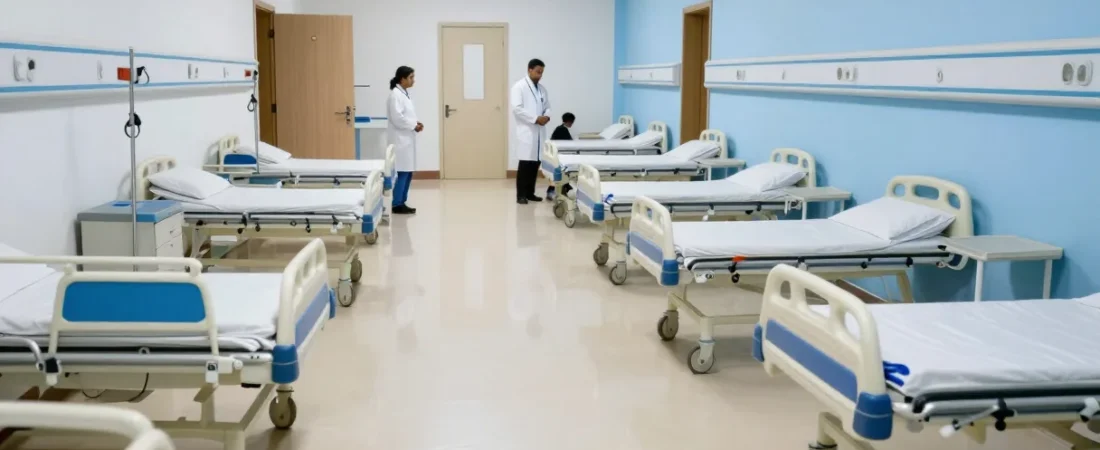
Hospital Flooring in Pakistan: Hygienic, Safe & Durable Healthcare Flooring
Hospital flooring in Pakistan plays an important role in healthcare infrastructure. Unlike ordinary commercial floors, hospital floors must withstand heavy foot traffic, medical equipment, frequent cleaning, moisture, chemicals and demanding hygiene requirements.
The right flooring system can support infection-control practices, improve slip resistance, simplify cleaning and provide a durable surface for patients, doctors, nurses and hospital staff. Different areas such as operating theatres, ICUs, corridors, laboratories, patient rooms, pharmacies and utility areas may require different flooring systems.
There is no single flooring material that is ideal for every part of a hospital. A professional flooring specification normally matches the flooring system with the environmental and operational requirements of each room or department.
Why Is Hospital Flooring Important?
Hospitals are continuously occupied environments where flooring is exposed to people, wheelchairs, stretchers, medical carts, equipment, cleaning chemicals and regular washing. Flooring failure can create maintenance problems and may interfere with the operation of healthcare spaces.
Hygiene
Seamless and easy-to-clean surfaces can reduce areas where dirt and contaminants may accumulate.
Heavy Traffic
Hospital corridors and entrances require flooring capable of handling continuous pedestrian and equipment traffic.
Slip Resistance
Appropriate slip-resistant flooring can help reduce the risk of accidents in healthcare environments.
Easy Maintenance
Healthcare floors need to tolerate regular cleaning and maintenance without rapidly deteriorating.
Types of Hospital Flooring in Pakistan
Different hospital departments have different performance requirements. Common healthcare flooring options include epoxy, polyurethane, vinyl, rubber, linoleum and other specialist seamless flooring systems.
Epoxy Flooring
Seamless epoxy systems can provide durable, chemical- resistant and easy-to-clean surfaces for selected hospital environments.
PU Flooring
Polyurethane flooring can provide a resilient seamless surface where chemical resistance, durability and hygiene are important.
Vinyl Flooring
Healthcare-grade vinyl can be suitable for corridors, patient rooms and other areas when properly specified and installed.
Rubber Flooring
Rubber flooring provides resilience and slip resistance and can be considered for selected clinical, rehabilitation and staff areas.
Linoleum Flooring
Linoleum can provide a resilient flooring option for appropriate hospital areas, including selected administrative and public spaces.
Ceramic & Porcelain Tiles
Tile systems can be suitable for selected wet areas, bathrooms and utility spaces when joints and cleaning requirements are properly considered.
Epoxy Flooring for Hospitals
Epoxy flooring is widely considered for healthcare environments where a seamless, durable and easy-to-clean surface is required. It can be formulated for different levels of chemical resistance, wear resistance and slip resistance.
- Seamless surface with minimal joints.
- Good resistance to many chemicals and stains when properly specified.
- Suitable for heavy pedestrian traffic.
- Easy routine cleaning.
- Available in multiple colors and finishes.
- Can be designed with slip-resistant texture where required.
- Suitable for selected clinical and service areas.
- Can be combined with coving and detailing for improved hygiene.
PU Flooring for Healthcare Facilities
Polyurethane flooring can be a useful option for healthcare spaces that require a resilient seamless floor with resistance to wear, chemicals, moisture and regular cleaning.
PU systems can be particularly useful where thermal movement, mechanical stress or demanding cleaning conditions need to be considered. The exact system should be selected according to the substrate, service environment and expected traffic.
Vinyl Flooring for Hospitals
Healthcare-grade vinyl flooring is commonly selected for areas such as patient rooms, corridors, consultation rooms and other appropriate hospital spaces.
Easy Cleaning
Properly installed healthcare vinyl provides a smooth surface that can be maintained through routine cleaning.
Design Options
Vinyl is available in a wide range of colors and patterns, allowing hospitals to create organized and visually comfortable spaces.
Seam Treatment
Correct seam installation is important where hygiene and moisture resistance are critical.
Healthcare Specification
Flooring should be selected specifically for healthcare use rather than using ordinary residential-grade vinyl.
Hospital Flooring by Department
Flooring requirements can vary considerably from one hospital department to another. A proper flooring schedule should consider the activity, traffic, equipment, cleaning regime and exposure in each area.
| Hospital Area | Common Flooring Considerations |
|---|---|
| Operating Theatre | Seamless, hygienic, easy-clean, chemical-resistant and suitable for controlled environments |
| ICU | Seamless, durable, easy-clean and suitable for frequent movement of medical equipment |
| Hospital Corridors | High-wear resistance, easy maintenance and appropriate slip resistance |
| Patient Rooms | Comfort, cleanability, durability and appropriate acoustic performance |
| Laboratories | Chemical resistance, seamless detailing and easy cleaning |
| Pharmacy | Cleanable, durable and resistant to routine chemical exposure |
| Emergency Department | Heavy-duty wear resistance, hygiene and fast maintenance |
| Physiotherapy Areas | Comfort, resilience, slip resistance and easy maintenance |
| Bathrooms & Wet Areas | Moisture management, drainage, slip resistance and easy cleaning |
| Service Areas | Heavy-duty durability, chemical resistance and maintenance practicality |
Hospital Corridor Flooring
Corridors experience some of the highest traffic levels in a hospital. Patients, visitors, nurses, doctors, wheelchairs, stretchers and medical carts can operate continuously throughout the day.
- High abrasion resistance.
- Easy routine cleaning.
- Suitable slip resistance.
- Resistance to frequent trolley movement.
- Low-maintenance surface.
- Appropriate visual contrast and wayfinding design.
- Good resistance to stains and common cleaning chemicals.
ICU Flooring
Intensive care areas require carefully selected flooring because they combine medical equipment, frequent staff movement and strict cleaning routines.
Seamless epoxy, PU and healthcare-grade resilient flooring systems may be considered depending on the project requirements. Particular attention should be given to joints, wall-floor transitions, coving, cleaning compatibility and slip resistance.
Operating Theatre Flooring
Operating theatres require flooring that supports demanding hygiene and cleaning protocols. Seamless flooring systems can reduce the number of joints and make routine cleaning easier.
Seamless Construction
Seamless resin systems can minimize conventional floor joints where appropriate.
Easy Cleaning
Smooth, properly cured surfaces can simplify routine cleaning and maintenance.
Coving
Resin coving can create a more hygienic transition between floors and walls in selected healthcare areas.
Slip Resistance
Texture should be specified carefully to balance slip resistance with cleanability.
Anti-Bacterial & Hygienic Hospital Flooring
Hygiene is one of the most important considerations when specifying hospital flooring. However, antimicrobial performance should not be treated as a substitute for proper cleaning, disinfection, ventilation and infection-control procedures.
The flooring surface should be smooth and maintainable, with appropriate resistance to the cleaning products used by the healthcare facility.
- Easy-to-clean surface.
- Minimal unnecessary joints.
- Compatible with approved cleaning chemicals.
- Appropriate moisture resistance.
- Durable surface under repeated cleaning.
- Properly sealed transitions and detailing.
Anti-Slip Hospital Flooring
Slip resistance is particularly important in hospitals because floors may become wet during cleaning or through accidental spills. Patients with limited mobility may also be more vulnerable to slipping.
Anti-slip texture should be selected according to the area and cleaning requirements. Excessively rough surfaces can be difficult to clean, while surfaces that are too smooth may provide inadequate traction in wet conditions.
Chemical-Resistant Flooring for Hospitals
Healthcare facilities use disinfectants, cleaning agents, laboratory chemicals and other substances that can affect flooring materials over time.
Chemical exposure should therefore be identified before selecting a resin or resilient flooring system. The flooring manufacturer should provide chemical-resistance information relevant to the products actually used in the facility.
Hospital Flooring Installation Process
Correct installation is just as important as choosing the right material. Many flooring failures originate from moisture, contamination, poor preparation, inadequate detailing or incorrect curing.
- Site Inspection: Assess the existing floor, room function, traffic, moisture, drainage and expected chemical exposure.
- Substrate Testing: Check the concrete for moisture, strength, contamination, cracks and other conditions that could affect adhesion.
- Surface Preparation: Mechanically prepare the substrate using suitable grinding, shot blasting or other approved methods.
- Repair: Repair cracks, joints, holes, weak concrete and other defects before installing the flooring system.
- Primer: Apply the specified primer to establish proper adhesion.
- Base Layer: Install the required body coat, screed or intermediate layer.
- Topcoat: Apply the selected finishing layer with the specified thickness and texture.
- Coving & Detailing: Install required wall-floor coving, edges, drains and transitions.
- Curing: Allow the flooring system to cure according to the manufacturer’s requirements.
- Final Inspection: Inspect the surface for defects, adhesion, finish, cleanliness and overall workmanship before returning the area to service.
Concrete Preparation for Hospital Flooring
Concrete preparation is a critical part of resin flooring installation. Dust, laitance, oil, old coatings, weak concrete and excessive moisture can interfere with adhesion and reduce the service life of the flooring system.
Mechanical Preparation
Grinding or shot blasting can remove contaminants and weak surface material while creating a suitable profile.
Crack Repair
Visible cracks should be assessed and repaired using a suitable repair method before coating.
Moisture Control
Moisture levels should be tested and controlled before installing moisture-sensitive resin systems.
Clean Substrate
The prepared concrete should be free from dust, oil, grease and other contaminants before primer application.
Hospital Flooring Cost in Pakistan
Hospital flooring costs vary according to the flooring material, thickness, surface preparation, room size, substrate condition, coving, chemical-resistance requirements, slip resistance and installation complexity.
| Cost Factor | Effect on Project Price |
|---|---|
| Flooring Material | Epoxy, PU, vinyl, rubber and other systems have different material costs |
| Floor Thickness | Heavy-duty and high-build systems require more material |
| Surface Preparation | Damaged or contaminated concrete requires additional preparation |
| Coving | Integral wall-floor detailing increases material and labour requirements |
| Moisture Treatment | High moisture may require additional substrate treatment |
| Area Size | Larger projects may have different unit rates depending on scope and access |
| Location | Transportation, labour and site conditions affect total cost |
Benefits of Modern Hospital Flooring
Improved Hygiene
Properly selected seamless and resilient flooring can make routine cleaning easier.
Durability
Heavy-duty systems can withstand demanding traffic and equipment movement.
Easy Maintenance
Durable flooring can reduce the frequency of major repairs when correctly installed and maintained.
Improved Safety
Appropriate slip-resistant flooring can help reduce slip-related risks.
Professional Appearance
Modern flooring systems are available in a wide range of colors and finishes suitable for healthcare interiors.
Long-Term Value
Investing in a properly specified flooring system can help reduce premature replacement and recurring maintenance.
Hospital Flooring Maintenance
Even the best hospital flooring requires an appropriate maintenance program. Cleaning procedures should follow the flooring manufacturer’s recommendations and the healthcare facility’s infection-control requirements.
- Remove dust and debris regularly.
- Use cleaning products compatible with the flooring system.
- Clean spills promptly.
- Avoid aggressive chemicals unless approved for the floor.
- Inspect high-traffic areas regularly.
- Repair damaged areas before deterioration spreads.
- Maintain expansion joints and movement joints where applicable.
- Inspect coving, drains and wall-floor transitions.
Common Hospital Flooring Problems
Peeling
Poor surface preparation, contamination, moisture or incompatible coating systems can contribute to adhesion failure.
Cracking
Substrate movement, structural cracks or unsuitable repair methods can lead to visible flooring cracks.
Bubbling
Moisture, trapped air, contamination or incorrect installation can contribute to blistering and bubbling.
Staining
Some chemicals, disinfectants and contaminants can stain unsuitable flooring systems.
Excessive Slipperiness
Smooth surfaces can become hazardous when wet if slip resistance has not been properly considered.
Joint Failure
Poorly detailed joints and transitions can become difficult to clean and may allow moisture intrusion.
How to Choose Hospital Flooring in Pakistan
The correct flooring should be selected based on the actual requirements of the healthcare facility rather than choosing a product simply because it is advertised as hospital flooring.
- Identify the Area: Determine whether the floor is required for an ICU, OT, corridor, patient room, laboratory, pharmacy, emergency area or service space.
- Assess Traffic: Consider pedestrian traffic, wheelchairs, stretchers, carts and equipment.
- Evaluate Chemical Exposure: List cleaning chemicals, disinfectants and other substances that may contact the floor.
- Check Moisture: Assess the substrate and environmental moisture before selecting moisture-sensitive systems.
- Specify Slip Resistance: Select an appropriate finish based on wet and dry operating conditions.
- Consider Cleaning: Confirm that the flooring is compatible with the facility’s cleaning and disinfection procedures.
- Review Installation: Ensure that the contractor understands substrate preparation, curing and healthcare-specific detailing.
Hospital Flooring vs Ordinary Commercial Flooring
| Requirement | Hospital Flooring | Ordinary Commercial Flooring |
|---|---|---|
| Hygiene | High priority | Depends on application |
| Cleaning Frequency | Often frequent and demanding | Generally moderate |
| Slip Resistance | Important for patient and staff safety | Depends on building use |
| Chemical Exposure | May be significant | Usually lower |
| Traffic | Can be continuous and equipment-intensive | Varies |
| Joint Detailing | Hygiene and cleanability are important | Application dependent |
Hospital Flooring Trends in Pakistan
Healthcare facilities are increasingly interested in flooring systems that combine hygiene, durability, cleanability and modern aesthetics.
Seamless Flooring
Resin-based seamless systems are increasingly considered for areas where minimizing joints is beneficial.
Healthcare Vinyl
Specialized vinyl systems continue to be useful for patient rooms, corridors and other suitable spaces.
PU Flooring
PU systems are considered where resilience and demanding service conditions require a durable seamless surface.
Custom Color Coding
Different colors can help create visually organized healthcare environments and distinguish departments.
Why Professional Installation Matters
Hospital flooring performance depends on more than the product selected. Incorrect substrate preparation, inadequate moisture control, poor mixing, incorrect application thickness and insufficient curing can cause premature failure.
Professional flooring contractors should understand the complete system, including concrete preparation, primers, repair materials, resin layers, coving, joints, topcoats and curing conditions.
Frequently Asked Questions
What is the best flooring for hospitals in Pakistan?
The best flooring depends on the hospital area. Epoxy, PU, healthcare vinyl, rubber and other specialist systems may all be appropriate for different applications.
Is epoxy flooring suitable for hospitals?
Yes, appropriately specified epoxy flooring can be suitable for selected healthcare areas because it can provide a seamless, durable and easy-to-clean surface with chemical resistance.
What flooring is best for hospital corridors?
Hospital corridors generally require durable, easy-to-clean flooring with suitable slip resistance. Healthcare-grade vinyl, epoxy and PU systems can be considered depending on the project requirements.
Is PU flooring suitable for hospitals?
PU flooring can be suitable for selected healthcare environments where a resilient, seamless and durable surface is required.
What flooring is used in operating theatres?
Operating theatres may use specialist seamless resin or healthcare flooring systems selected for hygiene, cleanability, durability, chemical exposure and slip resistance requirements.
What flooring is suitable for ICU areas?
Seamless epoxy, PU and specialist healthcare resilient flooring can be considered for ICU environments depending on the facility’s specifications and cleaning requirements.
How much does hospital flooring cost in Pakistan?
Hospital flooring cost depends on the material, thickness, floor area, substrate condition, preparation, coving, chemical-resistance requirements and installation conditions. A site-specific quotation is recommended.
How long does hospital flooring last?
Service life varies by flooring type, traffic, cleaning practices, substrate condition, installation quality and maintenance. Proper specification and installation can significantly improve long-term performance.
Is hospital epoxy flooring easy to clean?
Properly installed seamless epoxy flooring can be relatively easy to clean because it provides a continuous surface with minimal conventional joints. Cleaning products should be compatible with the cured system.
Does hospital flooring need to be anti-slip?
Slip resistance is an important consideration in healthcare environments, especially in areas that may become wet. The appropriate texture should be selected according to the area’s use and cleaning requirements.
Can hospital flooring be installed over old concrete?
Resin flooring can often be installed over suitable existing concrete after proper inspection and mechanical preparation. Cracks, contamination, moisture and weak concrete must be addressed before installation.
Why does hospital epoxy flooring peel?
Peeling can result from poor surface preparation, moisture, contamination, inadequate primer application, incorrect mixing, incompatible layers or unsuitable installation conditions.
Planning Hospital Flooring in Pakistan?
Choose a flooring system according to the requirements of each healthcare area. Professional consultation can help determine the appropriate combination of epoxy, PU, vinyl, rubber or other specialist flooring systems.
Request a Hospital Flooring QuoteRelated Flooring Services
Conclusion
Hospital flooring in Pakistan must balance hygiene, durability, safety, comfort, maintenance and cost. The most appropriate solution depends on the specific requirements of each hospital department rather than on a single universal flooring material.
Epoxy and PU flooring can provide seamless, durable solutions for selected clinical and service areas, while healthcare-grade vinyl, rubber, linoleum and other systems may be better suited to other parts of the facility.
For a successful hospital flooring project, focus on substrate preparation, moisture control, correct system specification, professional installation, appropriate detailing and a suitable maintenance program. A properly engineered floor can contribute to a cleaner, safer and more durable healthcare environment.