Table Tennis Court Flooring: Types, Benefits, Cost & Installation Guide
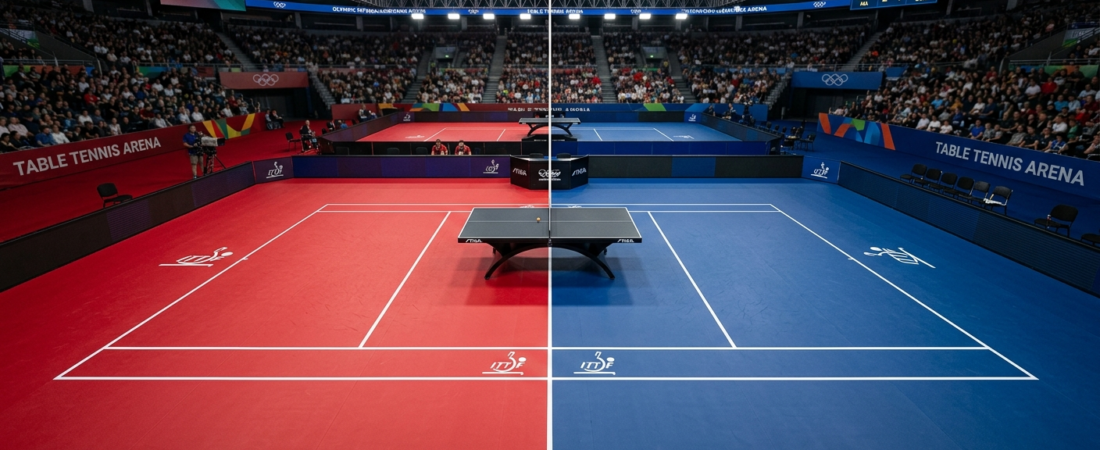
Table tennis court flooring plays an important role in player movement, safety and overall playing performance. A suitable sports floor should provide consistent grip, controlled movement, comfortable footwork and sufficient durability for repeated training and competition.
Unlike ordinary commercial flooring, table tennis flooring is designed around the rapid lateral movement, sudden stops and repeated footwork involved in the sport. The right surface can create a professional playing environment for clubs, schools, academies, gyms and sports complexes.
The flooring should be selected as a complete system rather than based only on the visible top layer. Subfloor preparation, moisture control, cushioning, surface texture, installation and maintenance can all affect the final performance of the court.
What Is Table Tennis Court Flooring?
Table tennis court flooring is a specialized sports surface designed for indoor table tennis facilities. Players constantly move from side to side around the table and require a floor that provides reliable traction without restricting movement.
A professional sports floor should also be durable enough to withstand repeated foot traffic and should remain easy to clean and maintain.
Controlled Grip
Provides suitable traction for quick lateral movement and changes of direction.
Player Comfort
Appropriate sports systems can provide a more comfortable surface for repeated footwork.
Durability
Designed to withstand regular training sessions, competitions and high foot traffic.
Easy Maintenance
Sports flooring can be selected for practical cleaning and long-term facility maintenance.
Why Is Table Tennis Flooring Important?
Table tennis requires fast movement, short explosive steps and frequent changes in direction. Players need to maintain balance while moving around the table and returning to their playing position.
An unsuitable floor can be excessively slippery, too hard, uneven or uncomfortable. A purpose-designed sports surface helps create a more predictable environment for training and play.
- Provides suitable traction for quick footwork.
- Supports controlled lateral movement.
- Can improve player comfort during extended sessions.
- Creates a consistent playing environment.
- Provides a professional appearance for sports facilities.
- Can withstand repeated player traffic.
- Can be maintained with appropriate sports-floor cleaning.
Types of Table Tennis Court Flooring
Different flooring systems can be used for table tennis facilities. The right choice depends on the facility type, expected traffic, budget, subfloor and required performance.
PVC / Vinyl Sports Flooring
Sports-grade PVC flooring is a popular option for indoor table tennis courts because it can provide durability, controlled traction and a practical maintenance surface.
PU Sports Flooring
Polyurethane sports flooring can provide a seamless, resilient surface and can be designed as a multi-layer sports system.
Rubber Sports Flooring
Rubber flooring can provide resilience, durability and impact management for selected training and multi-purpose sports areas.
Sports Hardwood
Hardwood sports floors can provide a premium indoor sports surface when installed with a suitable athletic subfloor system.
PVC Table Tennis Court Flooring
PVC or vinyl sports flooring is widely used for indoor sports facilities. Specialized sports-grade products are different from ordinary household vinyl because they are designed for repeated athletic movement and sports traffic.
Durability
Sports-grade PVC can withstand repeated player movement and regular facility traffic.
Controlled Surface
Suitable sports surfaces can provide consistent traction for table tennis footwork.
Low Maintenance
Properly installed sports vinyl can be practical to clean and maintain.
Professional Appearance
Sports PVC is available in colors and finishes suitable for professional indoor facilities.
PU Table Tennis Court Flooring
Polyurethane sports flooring is another option for indoor table tennis facilities. PU systems can be designed as multi-layer sports floors with resilient characteristics.
The performance of a PU sports floor depends on the complete assembly, including the substrate, primer, elastic layers, surface coating and finishing system.
Rubber Flooring for Table Tennis
Rubber flooring can be considered for training areas, recreational facilities and multi-purpose sports spaces. It can provide resilience and durability while helping manage impact from regular player movement.
The surface texture should be carefully evaluated for table tennis because excessive softness, texture or grip may not be appropriate for every playing environment.
Hardwood Table Tennis Court Flooring
Sports hardwood can provide a premium appearance and athletic playing environment. It is commonly associated with high-quality indoor sports facilities and can be installed over an engineered sports subfloor.
Hardwood requires careful moisture control, acclimatization, expansion planning and ongoing maintenance. Environmental conditions should be controlled according to the flooring manufacturer’s requirements.
Table Tennis Court Flooring Dimensions
The official playing area and the total flooring requirement are not always the same. The table occupies a defined playing area, while players need additional space around it for movement and safety.
A standard table tennis table is approximately 2.74 metres long and 1.525 metres wide. The surrounding playing area should be planned according to the level of play and facility requirements.
| Item | Standard / Planning Information |
|---|---|
| Table Length | 2.74 m |
| Table Width | 1.525 m |
| Table Height | 0.76 m |
| Playing Space | Depends on recreational, club or competition requirements |
| Total Flooring Area | Should include player movement and circulation areas |
For competition facilities, the playing area and environmental requirements should be checked against the applicable table tennis federation regulations before construction.
Table Tennis Court Flooring Installation Process
Professional installation is important for achieving a flat, consistent and durable sports surface.
- Site Inspection: Evaluate the existing floor, dimensions, access and environmental conditions.
- Subfloor Preparation: Remove dust, contaminants, weak material and unsuitable coatings.
- Crack and Surface Repairs: Repair cracks, holes and damaged areas before flooring installation.
- Leveling: Correct unsuitable irregularities to create a suitable base for the sports system.
- Moisture Assessment: Confirm that the substrate meets the flooring manufacturer’s moisture requirements.
- Primer or Adhesive: Apply the specified bonding layer.
- Sports Flooring: Install PVC, PU, rubber, hardwood or another selected system.
- Seam Treatment: Weld, join or finish seams according to the manufacturer’s instructions.
- Final Finishing: Complete transitions, edges and any required sports markings.
- Inspection and Handover: Check the finished surface before opening the court for regular use.
Concrete Floor Preparation for Table Tennis Flooring
The quality of the subfloor directly affects the finished sports floor. Concrete should be structurally sound, clean, suitably level and within the moisture limits specified for the selected flooring system.
- Remove dust, oil, grease and other contaminants.
- Repair cracks, holes and damaged areas.
- Remove weak or loose concrete where necessary.
- Mechanically prepare the surface when required.
- Check substrate moisture before installation.
- Correct unsuitable surface irregularities.
- Allow repair materials to cure properly.
Table Tennis Court Flooring Cost
The cost of table tennis court flooring depends on the flooring type, total area, subfloor condition, installation method, cushioning requirements and quality level.
| Cost Factor | Effect on Price |
|---|---|
| Flooring Material | PVC, PU, rubber and hardwood have different material costs |
| Floor Area | Larger playing areas require more material and installation |
| Subfloor Condition | Cracks, uneven areas and moisture problems increase preparation costs |
| Cushioning | Multi-layer systems can increase overall project cost |
| Installation | Professional installation contributes to labor costs |
| Accessories | Tables, nets, barriers and other equipment may be additional |
Benefits of Professional Table Tennis Court Flooring
Better Footwork
A suitable sports surface provides controlled traction for rapid movement around the table.
Player Comfort
Resilient sports systems can provide a more comfortable surface during extended training sessions.
Durability
Commercial sports floors are designed to withstand repeated player traffic.
Consistent Surface
A professionally installed floor provides a more uniform playing environment.
Easy Cleaning
Many sports flooring systems are designed for regular cleaning and maintenance.
Professional Appearance
Dedicated sports colors and clean finishing improve the overall appearance of the facility.
Table Tennis Flooring for Schools and Academies
Schools, universities and sports academies need flooring that can handle repeated training sessions and regular player traffic. A durable sports system can provide a practical solution for these environments.
When selecting a floor for an educational facility, consider the age of players, frequency of use, maintenance requirements, budget and whether the room will be used for other sports.
Table Tennis Flooring for Clubs and Sports Complexes
Commercial clubs and sports complexes can experience high daily usage. Flooring should therefore be selected according to the expected number of players, cleaning schedule, equipment movement and required durability.
Premium facilities may benefit from specialized sports systems designed specifically for high-frequency indoor use.
How to Choose the Best Table Tennis Court Flooring
- Determine Usage: Identify whether the facility is recreational, educational, training, club or competition focused.
- Inspect the Subfloor: Check concrete condition, levelness and moisture.
- Choose the Flooring Type: Compare PVC, PU, rubber and hardwood systems according to the project requirements.
- Evaluate Traction: The surface should provide appropriate grip without being excessively sticky or slippery.
- Consider Comfort: Evaluate the resilience and cushioning of the complete sports system.
- Check Durability: Match the flooring to expected daily traffic and playing frequency.
- Review Maintenance: Choose a system that can be maintained with the facility’s available cleaning procedures.
- Hire Professional Installers: Proper preparation and installation are essential for a consistent sports floor.
Table Tennis Court Flooring Maintenance
Regular maintenance helps preserve the appearance and playing characteristics of the floor.
- Remove dust and loose dirt regularly.
- Use cleaning products recommended for the flooring system.
- Avoid excessive water and standing moisture.
- Do not use harsh chemicals unless approved by the manufacturer.
- Inspect seams and damaged areas periodically.
- Repair damaged sections promptly.
- Use suitable non-marking sports footwear.
- Avoid dragging heavy equipment across the playing surface.
Common Table Tennis Flooring Problems
Slippery Surface
Dirt, unsuitable cleaning products or incorrect flooring selection can affect surface traction.
Peeling
Poor substrate preparation or moisture problems can cause flooring or coatings to lose adhesion.
Uneven Surface
An inadequately prepared subfloor can create irregularities in the finished sports surface.
Seam Failure
Incorrect installation or unsuitable adhesive can cause joints to open or deteriorate.
Surface Wear
Heavy traffic and unsuitable maintenance can accelerate surface wear.
Moisture Damage
Excessive moisture beneath certain flooring systems can cause adhesion and performance problems.
Indoor Table Tennis Flooring in Pakistan
Indoor table tennis facilities in Pakistan should consider temperature, humidity, ventilation and concrete moisture when selecting and installing sports flooring.
Moisture management is particularly important for adhesive-backed vinyl systems, PU floors and hardwood. The indoor environment and substrate should meet the flooring manufacturer’s installation requirements.
Table Tennis Court Flooring vs Ordinary Flooring
| Feature | Sports Flooring | Ordinary Flooring |
|---|---|---|
| Player Movement | Designed for sports footwork | Not necessarily designed for rapid movement |
| Traction | Controlled sports-specific characteristics | Varies by flooring material |
| Comfort | Can include resilient or cushioned construction | Usually not designed around athletic impact |
| Sports Traffic | Designed for repeated player use | Depends on product type |
| Maintenance | Designed around sports-floor cleaning requirements | Depends on flooring type |
Frequently Asked Questions
What is the best flooring for a table tennis court?
Sports-grade PVC, PU and selected rubber or hardwood systems can be suitable for table tennis. The best option depends on the facility, playing level, subfloor, performance requirements and budget.
Is PVC flooring good for table tennis?
Yes. Specialized sports-grade PVC flooring can provide suitable traction, durability and a practical surface for indoor table tennis facilities.
Is PU flooring suitable for table tennis?
PU sports flooring can be suitable for indoor table tennis facilities when it is specified and installed as a complete sports flooring system.
What is the standard size of a table tennis table?
A standard table tennis table is approximately 2.74 metres long and 1.525 metres wide, with a height of approximately 0.76 metres.
How much does table tennis court flooring cost?
Cost depends on the flooring type, total playing area, subfloor preparation, cushioning, installation and finishing requirements.
Can table tennis flooring be installed over concrete?
Yes. Many sports flooring systems can be installed over properly prepared concrete. The substrate should be clean, level, structurally sound and within the manufacturer’s moisture limits.
Does table tennis flooring need cushioning?
Cushioning requirements depend on the selected flooring system and intended level of play. A suitable resilient construction can improve player comfort during repeated movement.
How long does table tennis flooring last?
Service life depends on the flooring material, quality, installation, traffic, maintenance and environmental conditions. Properly maintained commercial sports floors can provide many years of service.
Can table tennis flooring be used for other sports?
Some sports flooring systems can be designed for multi-purpose indoor facilities. The surface should be selected according to the requirements of all intended sports.
Why is professional installation important?
Professional installation helps ensure correct substrate preparation, proper adhesive application, accurate seams, consistent surface quality and suitable finishing.
What flooring is suitable for a table tennis academy?
A durable sports-grade PVC or PU system can be suitable for an academy, depending on traffic, playing level, subfloor and budget. A site assessment should be completed before selecting the final system.
How should table tennis court flooring be cleaned?
Regular dust removal and cleaning with products approved for the specific flooring system are recommended. Avoid excessive water and harsh chemicals that may affect the surface.
Looking for Table Tennis Court Flooring?
Choose a sports flooring system based on player movement, traction, comfort, durability, subfloor condition and maintenance requirements.
Request a Table Tennis Flooring QuoteRelated Sports Flooring Services
Conclusion
Table tennis court flooring should provide a suitable balance of traction, player comfort, durability and consistent surface performance. Sports-grade PVC, PU, rubber and hardwood systems can all be considered depending on the facility and intended use.
The flooring material is only one part of a successful installation. Proper concrete preparation, moisture management, adhesive selection, installation quality and regular maintenance are equally important.
For schools, academies, clubs, gyms and professional sports facilities, investing in an appropriate sports flooring system can create a safer, more comfortable and professional table tennis environment.