
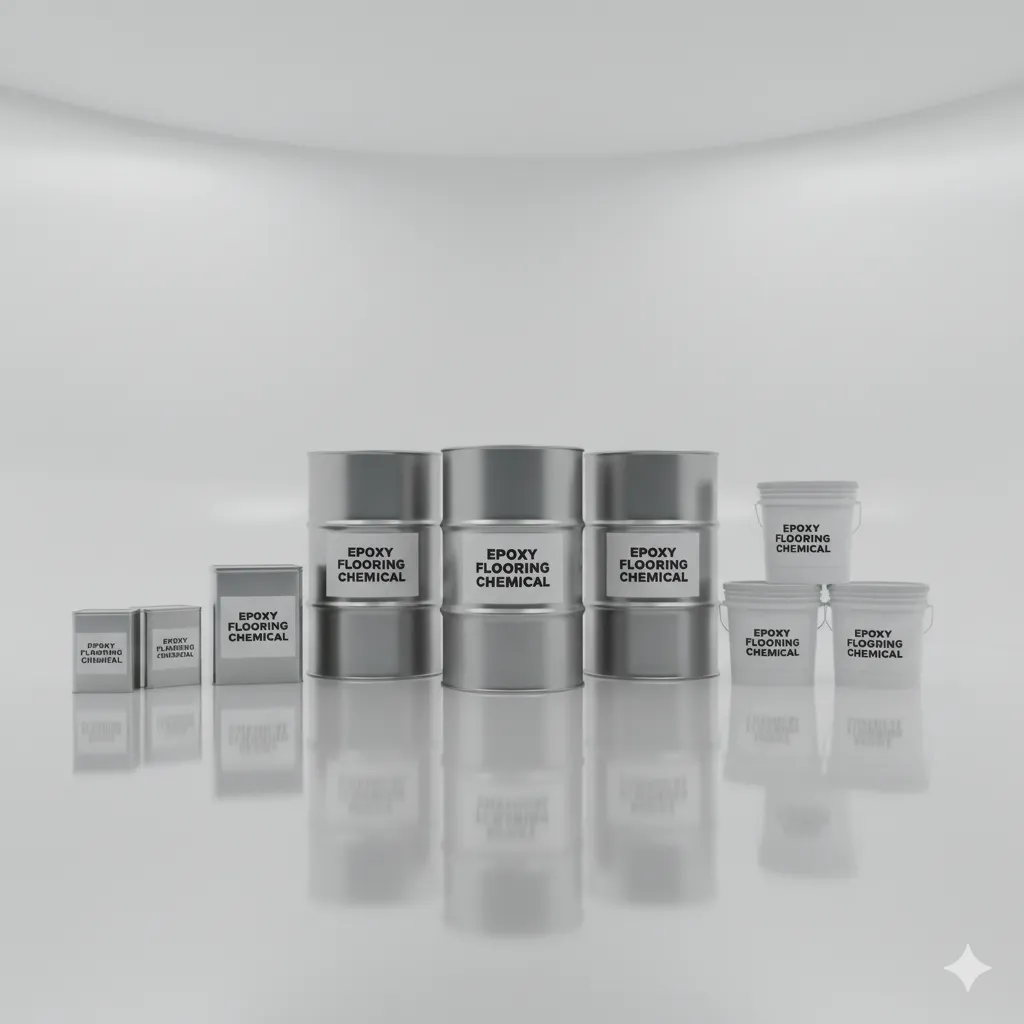
Description
Epoxy Self-Leveling
Flooring Chemical
Epoxy self-leveling flooring chemical is a high-build resin system designed to create a smooth, seamless and durable floor surface. It combines epoxy resin, a compatible hardener and selected additives or fillers to improve flow, strength and surface performance.
High-Performance Epoxy System
A properly selected self-leveling epoxy system can protect prepared concrete while producing a smooth and uniform finished surface.
What Is Epoxy Self-Leveling Flooring Chemical?
Epoxy self-leveling flooring chemical is defined as a resin-based flooring material formulated to flow across a properly prepared surface and form a smooth, continuous coating after curing.
The system usually contains two or more components. These may include epoxy resin, a compatible curing agent, mineral fillers, pigments and flow-control additives. After mixing, the material has a limited working time. During this period, installers spread it across the prepared floor using suitable application tools.
The word “self-leveling” does not mean the material can correct every major defect in a concrete slab. A self-leveling epoxy can help smooth minor surface irregularities, but deep holes, structural cracks, major slopes and weak concrete normally require separate repair or leveling work before installation.
Prepare Surface
Repair Defects
Apply Primer
Mix Components
Pour & Spread
Cure & Inspect
How Does Epoxy Self-Level?
The self-leveling effect comes from the formulation and flow properties of the mixed material.
Epoxy resin refers to the main reactive component of the system. The hardener reacts with the resin and starts the curing process. Manufacturers can also include fillers and additives to control viscosity, flow, working time and final surface properties.
After the installer mixes the components at the specified ratio, the material begins to flow. It is poured onto the prepared substrate and spread with a suitable notched or flat squeegee. The material can then flow and settle before curing.
The curing reaction gradually changes the liquid material into a hard thermoset surface. Once fully cured, the floor forms a continuous finish with no grout joints between tiles.
Simple Explanation
The reactive base material that forms part of the final cured floor.
The curing component that reacts with the resin.
Refers to the ability of a correctly formulated liquid material to flow and produce a more uniform surface during application.
The chemical curing process that changes the mixed epoxy system into a hard, durable material.
Features of Epoxy Self-Leveling Flooring
Actual performance depends on the selected formulation, substrate preparation, thickness and service environment.
Smooth Surface
The material can flow across prepared concrete and create a uniform, seamless finished surface.
High Build
Selected systems can be applied at greater thickness than conventional thin epoxy floor coatings.
Seamless Finish
The finished floor has no tile grout lines, which can simplify cleaning and maintenance.
Abrasion Resistance
Suitable formulations can provide resistance to daily foot traffic and selected industrial wear.
Chemical Resistance
Many industrial epoxy systems resist selected oils, cleaning agents and chemicals. Always check chemical compatibility.
Decorative Options
Selected systems are available in different colours and may accept compatible quartz, flakes or anti-slip aggregates.
Advantages and Limitations
Advantages
- Creates a seamless finished floor.
- Can produce a smooth and uniform appearance.
- Offers strong adhesion when applied to a properly prepared substrate.
- Suitable formulations can resist abrasion and impact.
- Selected systems provide chemical resistance.
- Easy-to-clean surface with no conventional grout joints.
- Can improve the appearance of industrial and commercial floors.
- Available in different colours and finishes.
Limitations
- It does not automatically repair major structural problems.
- Weak concrete and deep defects require separate repair.
- Excess substrate moisture can cause adhesion or coating failures.
- Incorrect resin-to-hardener mixing can prevent proper curing.
- Temperature can affect flow, pot life and curing speed.
- Standard epoxy may require UV protection for long-term outdoor exposure.
- Smooth finishes can become slippery when wet unless the system includes suitable anti-slip measures.
Applications of Epoxy Self-Leveling Flooring Chemical
Select the complete flooring system according to traffic, chemical exposure, hygiene requirements and substrate condition.
Factories & Production Areas
Suitable for selected manufacturing areas that need a durable and easy-to-maintain seamless floor.
Warehouses
Used in selected warehouse and logistics areas where the floor system matches the expected traffic and loading conditions.
Food Processing Areas
Suitable epoxy systems can provide seamless surfaces that simplify cleaning. Confirm hygiene and chemical requirements before selection.
Pharmaceutical Facilities
Selected systems are used where a smooth, continuous and easy-to-clean floor surface is required.
Laboratories
The chemical resistance requirements should be checked against the specific substances used in the laboratory.
Hospitals & Clean Areas
Suitable systems can create smooth surfaces with fewer joints where dirt and contaminants can collect.
What Does the Chemical System Contain?
The exact composition varies between manufacturers and products.
| Component | Main Function |
|---|---|
| Epoxy Resin | Provides the main reactive polymer component of the flooring system. |
| Hardener / Curing Agent | Reacts with the resin and starts the curing and cross-linking process. |
| Mineral Fillers | Can influence body, thickness, flow, mechanical properties and material cost. |
| Flow Additives | Help control the movement and surface appearance of the liquid system during application. |
| Pigments | Provide the required floor colour. |
| Performance Additives | May be included to modify properties such as flow, surface finish or specific performance requirements. |
Typical System Information
These are general system ranges. The product Technical Data Sheet should control final specification and application values.
| Property | Typical Consideration |
|---|---|
| System Type | Two-component, three-component or multi-component epoxy flooring system. |
| Application Thickness | Often specified as a high-build floor system. Some self-leveling systems operate around 1–3 mm, while other systems use different thicknesses depending on design. |
| Surface Finish | Smooth, seamless and generally decorative. Gloss level depends on the selected system. |
| Working Time | Depends on the formulation, material temperature and site conditions. |
| Recoat Time | Follow the product-specific Technical Data Sheet. |
| Full Cure | Depends on temperature, formulation and environmental conditions. |
| Substrate | Usually properly prepared concrete or another compatible substrate. |
| Chemical Resistance | Must be evaluated against the actual chemical, concentration, temperature and exposure duration. |
Surface Preparation Is Critical
The epoxy coating can only perform as well as the prepared substrate allows.
Inspect the Concrete
Check for weak concrete, cracks, loose material, contamination, previous coatings and major surface irregularities.
Test Moisture Conditions
Evaluate substrate moisture according to the selected epoxy system requirements before installation.
Mechanically Prepare
Grinding, shot blasting or another suitable method may be required to remove weak surface material and create the required profile.
Repair Defects
Repair cracks, holes and damaged areas with a compatible system before the self-leveling coat is applied.
Remove Dust
Remove dust and loose particles before primer application.
Apply Compatible Primer
Use the primer specified for the selected flooring system and substrate condition.
Typical Installation Sequence
Prepare the Substrate
Complete mechanical preparation and repair work.
Prime the Floor
Apply the compatible primer according to the system specification.
Mix Correctly
Mix resin and hardener at the manufacturer’s specified ratio and follow the required mixing procedure.
Pour the Material
Pour the mixed material onto the primed and prepared floor within its working time.
Spread to Required Thickness
Use suitable application tools to distribute the material consistently across the surface.
Allow the Floor to Cure
Protect the floor from traffic, contamination and unsuitable conditions until it reaches the required cure stage.
Temperature and Curing Conditions
Environmental conditions can directly affect epoxy flow and curing.
High Temperature
Higher temperatures can shorten working time and accelerate curing. Installers should plan mixing quantities and application speed accordingly.
Low Temperature
Lower temperatures can increase material viscosity and slow the curing process. Follow the product’s approved temperature range.
Moisture
Excess substrate moisture or moisture transmission can affect adhesion and may cause floor coating problems. Check the slab before installation.
Example Self-Leveling Epoxy Flooring Project
The following is an example project format. Replace these details with verified information from your actual completed project before publishing as a case study.
Industrial Production Floor Upgrade
Example project information for website presentation.
Industrial Production Floor Upgrade
Lahore, Punjab, Pakistan
Approximately 3,000 sq. ft.
August 2026
Existing Prepared Concrete
Primer + Self-Leveling Epoxy + Compatible Finish
Approximately 2–3 mm total dry system thickness
Smooth, Seamless and Easy-to-Maintain Floor Finish
The completed floor achieved a continuous, seamless and visually uniform surface. No significant visible pinholes, major roller marks or application-related defects were observed during the final inspection. The floor was released for service after completion of the applicable curing period.
Common Application Mistakes
Poor Surface Preparation
Dust, weak concrete, oil or old loose coatings can reduce adhesion.
Solution: Mechanically prepare and thoroughly clean the substrate.
Incorrect Mixing Ratio
Too much or too little hardener can interfere with proper curing.
Solution: Follow the manufacturer’s exact mixing ratio.
Ignoring Moisture
Excess moisture can create adhesion and coating performance problems.
Solution: Check moisture conditions before installation.
Applying Too Late
Mixed epoxy gradually loses its workable flow properties.
Solution: Plan application around the specified working time.
Using Epoxy to Fix Major Slopes
A self-leveling coating does not replace structural floor repair.
Solution: Repair major defects before installing the flooring system.
Returning to Service Too Early
Early traffic can damage an epoxy system before adequate curing.
Solution: Follow the product’s stated cure and return-to-service schedule.
How to Choose the Right Epoxy Flooring Chemical
Check the Floor Condition
Assess concrete strength, cracks, contamination, flatness and moisture before selecting a flooring system.
Define Traffic Levels
Consider foot traffic, wheeled equipment, forklifts, impact and expected mechanical loading.
Identify Chemical Exposure
List the actual chemicals, concentration, temperature and exposure duration before selecting the resin system.
Select Required Thickness
Thickness should match the flooring design, surface condition and expected service requirements.
Consider Surface Safety
Wet or high-slip-risk areas may require compatible anti-slip aggregates or texture.
Review the Complete System
Do not select resin on price alone. Primer, repair materials, epoxy coat and topcoat should work together as a compatible system.
Project Information Checklist
| Information Required | Why It Matters |
|---|---|
| Project Area | Helps estimate material quantity and installation requirements. |
| Existing Floor Type | Determines the required preparation and compatible primer. |
| Floor Condition | Identifies repairs, cracks and weak areas before coating. |
| Expected Traffic | Helps select the required flooring system and performance level. |
| Chemical Exposure | Allows compatibility checks against actual site chemicals. |
| Required Finish | Determines colour, gloss and anti-slip requirements. |
Epoxy Self-Leveling Flooring FAQs
Epoxy self-leveling flooring chemical is defined as a multi-component epoxy system designed to flow across a properly prepared substrate and create a smooth, continuous floor surface. The system usually includes epoxy resin, hardener, pigments and selected fillers or additives.
Epoxy self-leveling flooring is used in industrial plants, warehouses, factories, laboratories, hospitals, pharmaceutical areas, food processing facilities, workshops and commercial spaces. The selected system should match the expected traffic, chemical exposure and cleaning requirements.
The epoxy components are mixed at the specified ratio and poured onto a properly prepared surface. The material flows and spreads before curing. After curing, it forms a hard, seamless and durable floor layer.
Epoxy self-leveling material has good flow properties, but it does not automatically correct every major floor defect. Large holes, deep depressions, uneven areas and damaged concrete may require repair before the self-leveling epoxy is applied.
Epoxy self-leveling flooring usually creates a smoother and more decorative continuous finish at a controlled thickness. Epoxy screed generally uses a higher amount of aggregate and provides a thicker system for areas requiring greater mechanical strength or impact resistance.
The required thickness depends on the selected product and project conditions. Different systems are designed for different thickness ranges. The final thickness should be selected according to the substrate condition, traffic, loads and manufacturer recommendations.
Yes, suitable epoxy self-leveling systems can be applied over properly prepared concrete. The concrete should have adequate strength and be free from loose material, dust, oil, grease and other contaminants that can reduce adhesion.
Yes, old concrete can often receive an epoxy flooring system if it is structurally sound and properly prepared. Cracks, weak concrete, contamination and damaged areas should be repaired or treated before installation.
Many epoxy flooring systems use a compatible primer to improve adhesion and help control substrate absorption. The exact primer requirement depends on the selected flooring system and the condition of the concrete substrate.
A properly selected and fully cured epoxy floor can provide strong resistance to water and many cleaning liquids. However, waterproofing performance depends on the complete system, coating thickness, joints, cracks and actual exposure conditions.
Many epoxy systems provide resistance to selected chemicals, oils and industrial liquids. Chemical resistance varies according to the epoxy formulation, chemical concentration, temperature and exposure time. Always check the Technical Data Sheet for the selected system.
Suitable heavy-duty epoxy systems can be designed for areas with industrial traffic. The flooring thickness and system should be selected according to expected foot traffic, trolley movement, forklifts, wheeled loads, impact and other mechanical demands.
A smooth epoxy floor can become slippery when wet depending on the finish and contamination present. Where slip resistance is important, the flooring system can be designed with suitable anti-slip aggregates or textured finishes.
Suitable seamless epoxy flooring systems can be used in hospitals, laboratories and other controlled environments where a smooth, easy-to-clean surface is required. Product selection should match the cleaning chemicals, hygiene requirements and expected service conditions.
Suitable epoxy flooring systems may be used in selected food processing environments. The system should be chosen according to hygiene requirements, cleaning procedures, temperature conditions and chemical exposure. Specific regulatory or food-contact requirements should be checked for the project.
Curing time depends on the epoxy formulation, temperature, humidity and applied thickness. Different systems have different working, recoating, light-traffic and full-cure times. Always follow the current Technical Data Sheet for the selected product.
Service life depends on surface preparation, substrate condition, system thickness, traffic, impact, chemical exposure, cleaning methods and maintenance. A properly specified and professionally installed system can provide long-term performance, but no single lifespan applies to every project.
Yes, many damaged epoxy floors can be repaired. The repair method depends on the type and extent of damage. Cracks, chips, worn areas and delamination may require different preparation and repair procedures before recoating.
Most standard epoxy self-leveling systems require moisture conditions to remain within the manufacturer’s specified limits. Excess moisture can affect adhesion and cause flooring failure. Some specialised moisture-tolerant systems are available for suitable applications.
Some epoxy systems can be used in outdoor or semi-exposed areas, but prolonged sunlight may cause standard epoxy products to chalk or change colour. A compatible UV-resistant topcoat may be required where the floor receives significant UV exposure.
Common causes include poor surface preparation, excessive substrate moisture, incorrect mixing, contamination, applying the material outside the recommended conditions, insufficient thickness and selecting a system that does not match the expected traffic or chemical exposure.
Incorrect mixing can cause incomplete curing, soft or sticky areas, reduced strength, poor adhesion and premature failure. Always follow the manufacturer’s specified mixing ratio and mixing procedure.
The price depends on the selected epoxy system, required thickness, colour, project area, concrete condition, surface preparation and installation requirements. Larger quantities and project specifications can also affect the final cost.
Bulk supply may be available for flooring contractors, construction companies, industrial buyers, factories and large projects, depending on the required system, quantity and project specifications.
Choose the system based on substrate condition, required thickness, floor flatness, expected traffic, mechanical loads, impact, chemical exposure, moisture conditions, cleaning requirements and required finish. However, price alone should not determine the selection. The complete primer, self-leveling epoxy and topcoat system should match the actual project requirements.
Key Takeaways
Epoxy self-leveling flooring chemical can provide a durable and seamless flooring solution when the complete system matches the actual project conditions.
Concrete condition directly affects adhesion and long-term performance.
Repair major defects before applying the epoxy system.
Incorrect mixing can cause incomplete curing and reduced performance.
Traffic, chemicals, moisture and temperature should determine system selection.
Need an Epoxy Self-Leveling Flooring System?
Share your project area, existing floor condition, required thickness and intended use. A suitable epoxy flooring system can then be selected according to your project requirements.
- Industrial flooring projects
- Commercial floor protection
- Warehouse and production areas
- Bulk chemical requirements
Get Project Pricing
Reviews
There are no reviews yet.