
Description
Epoxy Tile Grout
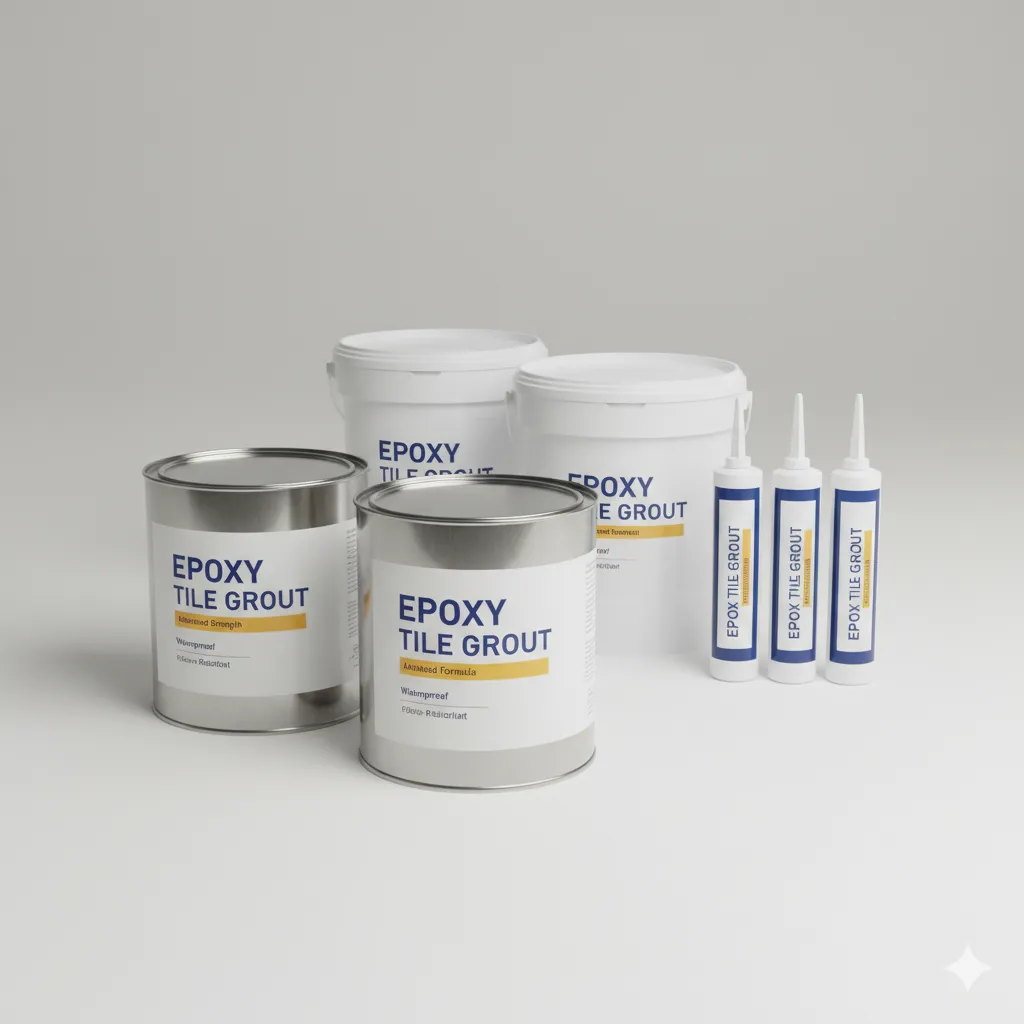
Epoxy tile grout is a high-performance joint filling material made from epoxy resin, hardener and selected fillers. It creates dense, durable tile joints with strong resistance to moisture, stains and selected chemicals. It is suitable for areas where ordinary cement grout may absorb water or become difficult to clean.
Product Overview
Epoxy tile grout provides a dense and durable finish for tile joints. The exact performance depends on the selected formulation, mixing, installation and service environment.
What Is Epoxy Tile Grout?
Epoxy tile grout is defined as a resin-based grout system used to fill and protect joints between tiles. Unlike conventional cement grout, epoxy grout uses a chemical curing system. After the components are mixed correctly, the material cures and forms a dense joint.
Epoxy tile grout can provide better resistance to water absorption, staining and selected chemical exposure than many standard cement-based grouts. However, the correct product must match the tile type, joint width, application area and expected exposure.
Measure Components
Mix Correctly
Apply to Joints
Fill Completely
Clean Excess
Allow Full Cure
Why Use Epoxy Tile Grout?
Epoxy grout is selected for demanding tile installations where joint durability, cleanliness and resistance are important.
Low Water Absorption
A properly cured epoxy grout system can form a dense joint that resists water penetration better than many conventional grout materials.
Stain Resistance
The dense surface can make cleaning easier and can help reduce staining from suitable substances during normal service.
Chemical Resistance
Selected epoxy grout systems can resist certain chemicals. Actual resistance depends on the chemical type, concentration, temperature and exposure time.
Strong Tile Joints
The cured material provides a hard and durable joint when installers use the correct mixing ratio and application procedure.
Easy-Clean Finish
Its dense cured surface can make it suitable for areas where regular cleaning and hygiene are important.
Suitable for Demanding Areas
Depending on the formulation, epoxy grout can be used in commercial, industrial and high-moisture tile installations.
Where Is Epoxy Tile Grout Used?
Product selection should always consider the tile system, substrate, joint size, moisture exposure and cleaning or chemical conditions.
Bathrooms & Shower Areas
Epoxy grout can be used for suitable tiled wet areas where improved water and stain resistance is required.
Kitchens & Food Preparation Areas
Its dense and easy-clean surface makes suitable epoxy grout systems useful for tiled areas that require frequent cleaning.
Restaurants & Commercial Kitchens
Suitable systems can provide durable joints in commercial tiled areas exposed to regular cleaning and service traffic.
Industrial & Processing Areas
Selected formulations may suit tiled industrial environments where moisture, cleaning chemicals or other exposure conditions are present.
Hospitals & Laboratories
Dense grout joints can support easier cleaning in suitable tiled healthcare and laboratory areas.
Swimming Pool Surrounds
Product selection should consider continuous moisture exposure, cleaning chemicals and the specific requirements of the pool tile system.
Epoxy Grout vs Cement Grout
Epoxy grout refers to a resin-based joint filling material that cures through a chemical reaction.
Cement grout generally refers to a cement-based material that hardens through hydration after mixing with water.
Epoxy grout can provide stronger resistance to staining and moisture absorption. However, it generally requires more careful mixing and installation.
Advantages & Limitations
Advantages:
- Dense and durable cured joints
- Strong resistance to moisture absorption
- Good stain resistance
- Suitable for many demanding tiled areas
- Can provide resistance to selected chemicals
Limitations:
- Requires accurate component mixing
- Installation may require experienced applicators
- Working time can be limited after mixing
- Excess material must be cleaned at the correct stage
- Higher initial material cost than many cement grouts
Typical Product Characteristics
Values vary between formulations. Always confirm the current product specifications before ordering or applying an epoxy tile grout system.
| Property | Typical Requirement / Consideration |
|---|---|
| Material Type | Multi-component epoxy resin grout system |
| Application | Tile joints and suitable tiled surfaces |
| Water Resistance | Depends on formulation, correct installation and full curing |
| Chemical Resistance | Must be checked against the actual chemical exposure |
| Working Time | Depends on temperature and selected formulation |
| Curing | Follow the product Technical Data Sheet |
| Joint Width | Use within the manufacturer’s specified application range |
| Colour | Available colours depend on the selected product range |
How to Apply Epoxy Tile Grout
Correct installation directly affects the appearance and long-term performance of the finished tile joints.
Prepare the Tile Joints
Remove loose material, dust, adhesive residue and contamination. Check that the tile joints are ready for grouting.
Measure the Components
Follow the manufacturer’s specified resin, hardener and filler ratio. Do not estimate component quantities.
Mix Thoroughly
Mix the components until the material becomes uniform. Incorrect mixing can cause soft spots or incomplete curing.
Fill the Tile Joints
Press the grout firmly into the joints and ensure that the joints receive complete and even filling.
Remove Excess Material
Clean excess grout from the tile surface according to the selected product instructions before the material becomes difficult to remove.
Allow the System to Cure
Protect the area during curing. Follow the Technical Data Sheet for handling and full service times.
Temperature & Site Conditions
Hot Weather
Higher temperatures can reduce working time. Prepare smaller batches when necessary and follow the product’s recommended temperature range.
Cold Conditions
Lower temperatures can slow the curing process. Do not assume that normal room-temperature cure times apply in cold conditions.
Moisture & Humidity
Check the product requirements and site conditions before installation. The substrate and tile system should meet the selected product requirements.
How to Choose the Right Epoxy Tile Grout
Check the Application Area
Consider whether the grout will be used in a bathroom, kitchen, industrial area, swimming environment or another tiled location.
Check Chemical Exposure
If chemicals are present, identify the chemical type, concentration, temperature and exposure duration before selecting the product.
Check Joint Size
Select a product suitable for the actual tile joint width and depth. Do not use a grout outside its recommended application range.
Consider Cleaning Requirements
Areas with frequent cleaning may benefit from a dense grout surface that supports easier maintenance.
Epoxy Tile Grout Case Study
Project-specific information should replace the example details below. Use actual site records when publishing a completed project case study.
Commercial Kitchen Tile Joint Protection
Example format for documenting an epoxy tile grout installation.
Commercial Kitchen and Wash Area Tile Grouting Project
Approximately 2,000 sq. ft.
Ceramic and Porcelain Tiles
Approximately 3–5 mm
Water, cleaning and service conditions
Joint Preparation + Two-Component Epoxy Tile Grout + Final Cleaning
Removal of dust, loose debris, adhesive residue and contaminants from tile joints before grout application
The completed tile joints achieved a dense, continuous and visually uniform finish. No significant visible voids, cracks or incomplete grout joints were observed during final inspection.
Standards & Good Practice
Technical requirements vary by project. The selected grout system should meet the applicable product specifications and installation requirements.
ISO 13007
ISO 13007 is a family of standards covering ceramic tile adhesives and grouts, including requirements and test methods for grout products.
ANSI Tile Installation Standards
Tile installation projects may also follow relevant ANSI standards and approved installation practices where required by the project specification.
Manufacturer Technical Data
Always give priority to the current Technical Data Sheet, Safety Data Sheet and installation instructions for the exact epoxy grout formulation being used.
Common Epoxy Grout Mistakes
Incorrect Mixing Ratio
Incorrect proportions can prevent the material from curing correctly.
Solution: Follow the specified component ratio exactly.
Poor Joint Preparation
Dust, loose material and contamination can affect joint quality.
Solution: Clean and prepare joints before application.
Mixing Too Much Material
Mixed epoxy grout has a limited working time.
Solution: Mix quantities that can be applied within the working time.
Late Surface Cleaning
Cured epoxy residue can become difficult to remove from tile surfaces.
Solution: Clean according to the specified application procedure.
Ignoring Temperature
Temperature can change working time and curing speed.
Solution: Check the approved application temperature range.
Choosing by Price Alone
A low-cost product may not match the actual exposure conditions.
Solution: Select the complete system according to project requirements.
Epoxy Tile Grout Checklist
| Check | Requirement |
|---|---|
| Tile Joints | Clean and free from loose material |
| Tile Surface | Free from contamination that may interfere with application |
| Mixing Ratio | Follow the exact manufacturer specification |
| Temperature | Within the approved application range |
| Joint Dimensions | Within the selected product’s recommended range |
| Cleaning Tools | Ready before grout application begins |
| Curing Protection | Area protected until the specified cure stage |
Epoxy Tile Grout Summary
Epoxy tile grout is a resin-based joint filling material designed for applications where ordinary grout may not provide the required resistance or durability. Correct product selection and installation are essential.
Properly cured epoxy grout creates hard and durable tile joints.
Suitable systems can provide low water absorption and improved moisture resistance.
Accurate mixing is essential for proper curing and performance.
Select the grout according to the tile system and actual service conditions.
Epoxy Tile Grout FAQs
Epoxy tile grout is a high-performance grouting material made from epoxy resin, hardener and selected fillers. It is used to fill and seal joints between tiles and provides strong adhesion, low water absorption and good resistance to stains and chemicals.
Epoxy tile grout is used for grouting ceramic, porcelain, mosaic and other suitable tiles. Common applications include bathrooms, kitchens, swimming pool areas, hospitals, commercial spaces, food preparation areas and industrial environments.
A properly mixed and cured epoxy grout provides very low water absorption and strong resistance to moisture. However, grout should not replace a complete waterproofing system where the structure requires dedicated waterproofing.
Epoxy grout generally provides better resistance to stains, moisture and many chemicals than standard cement-based grout. However, it usually costs more and requires more careful mixing and application. The best choice depends on the project requirements.
Yes, epoxy tile grout is suitable for many bathroom applications because it offers strong resistance to moisture and common stains. Proper surface preparation and correct application are important for long-term performance.
Yes, epoxy grout can be used in kitchens. Its resistance to stains, moisture, oils and cleaning products can make it suitable for tile joints in domestic and commercial kitchen areas.
Yes, suitable epoxy grout systems can be used for floor tile joints. Select the product according to the tile type, joint width, traffic level and expected exposure conditions.
Yes, epoxy grout can be used for suitable wall tile applications. It can provide durable and easy-to-clean joints in bathrooms, kitchens and other tiled areas.
Epoxy tile grout generally provides strong resistance to many common stains. Actual performance depends on the grout formulation, proper mixing, complete curing and the type and duration of exposure.
Many epoxy grout systems provide good resistance to selected chemicals and cleaning agents. However, chemical resistance depends on the specific formulation, chemical concentration, temperature and exposure time.
Selected epoxy grout systems may be suitable for swimming pool and wet-area applications. Check the manufacturer’s technical requirements to confirm suitability for continuous water exposure and pool chemicals.
Curing time depends on the product formulation, temperature, humidity and application conditions. Always check the product Technical Data Sheet for working time, cleaning time and full cure requirements.
Epoxy grout usually requires more careful application than standard cement grout. Installers should mix the components correctly, work within the available working time and clean excess material before it fully cures.
Epoxy grout can crack if the substrate or tile system moves beyond the material’s ability to accommodate movement. Structural cracks and movement joints should be addressed with the correct repair or flexible joint system rather than relying on grout alone.
Colour performance depends on the specific product and service conditions. Some epoxy products may change appearance after prolonged exposure to UV light, strong chemicals or unsuitable cleaning products.
Some epoxy grout systems may be suitable for outdoor applications. However, prolonged UV exposure can affect the colour or appearance of some standard epoxy products. Outdoor applications may require a compatible UV-resistant system or product specifically designed for external use.
Regular cleaning with suitable cleaning products helps maintain the appearance of epoxy grout. Avoid using aggressive products unless they are confirmed as compatible with the specific grout system.
The price of epoxy tile grout in Pakistan depends on the product formulation, colour, packaging size, quantity, joint size and project requirements. Bulk quantities and commercial project specifications can also affect the final price.
Bulk epoxy tile grout supply may be available for tile contractors, construction companies, developers, retailers and commercial projects, depending on the product type and required order quantity.
Choose epoxy tile grout based on the tile type, joint width, colour requirement, water exposure, chemical exposure, cleaning conditions and expected use of the area. The selected product should match the actual project requirements rather than being chosen on price alone.
Need Epoxy Tile Grout for Your Project?
Share your tile type, joint width, total area and application conditions. We can help you identify a suitable epoxy grout system for your project requirements.
- Product selection guidance
- Bulk and project quantity enquiries
- Technical application information
- Commercial and industrial requirements
Get Product Information
Reviews
There are no reviews yet.