

What Is Epoxy Flooring?
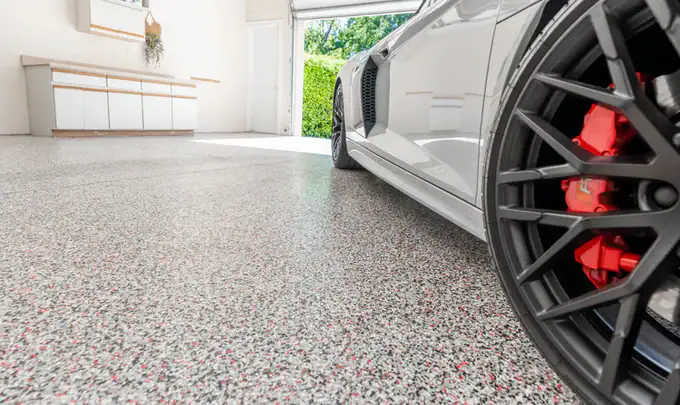
Epoxy flooring uses two chemical components — a resin and a hardener. When mixed together, they create a tough, plastic-like surface. This surface bonds directly to concrete floors. The result is a smooth, glossy, and extremely durable finish.
Many people confuse epoxy paint with epoxy flooring. However, they are different. Epoxy paint is thin and wears off quickly. True epoxy floor coating Pakistan professionals use is much thicker — usually 2mm to 3mm deep. It creates a solid layer, not just a coat of color.
Epoxy resin floor Pakistan applications are popular in hospitals, factories, and parking areas. Now, homeowners are using it in basements and garages too. The results speak for themselves.
Quick Fact: Epoxy flooring is not just paint. It is a chemical-bonded, semi-rigid surface system that fuses to your concrete slab permanently when applied correctly.
Why Pakistani Basements Need Special Flooring
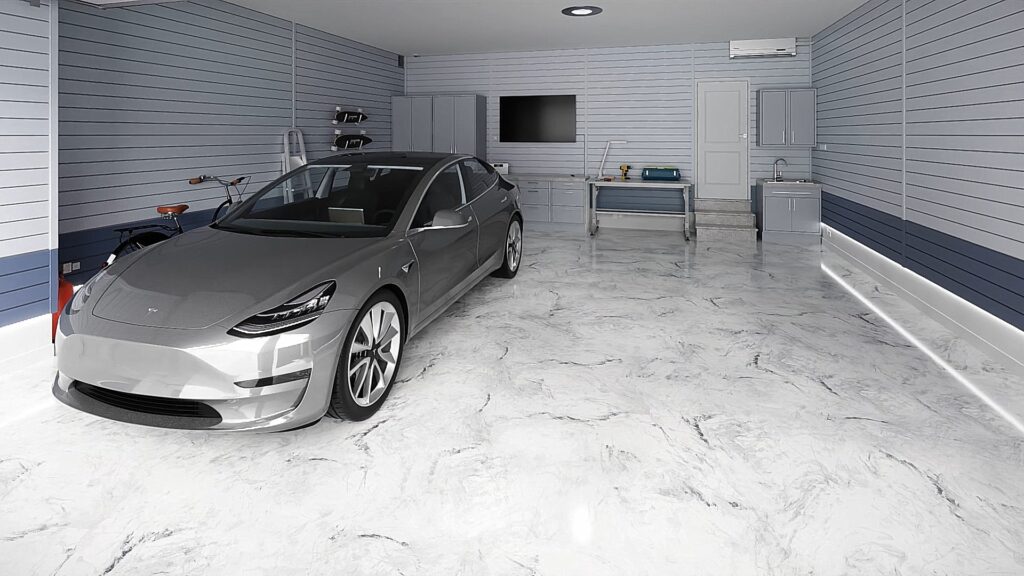
Pakistan’s climate is tough on buildings. Cities like Lahore, Karachi, and Multan see extreme heat in summer. Many areas also face heavy monsoon rains. Both of these conditions directly affect basements.
Pakistani basements face five major problems:
- Rising moisture from the ground (capillary action)
- Poor waterproofing in older construction
- Temperature swings that crack plain concrete
- Heavy load usage for storage and parking
- Chemical spills from generators, cars, or cleaning agents
A damp basement solution Pakistan homeowners often need starts from the floor. Plain concrete absorbs moisture. It also stains easily and cracks over time. Therefore, a proper concrete floor treatment Pakistan experts recommend is essential — not optional.
Basement waterproofing Lahore and other cities requires a surface that blocks water from below. Epoxy floor coating Pakistan products offer exactly this protection. Furthermore, they handle the chemical stress that Pakistani basements endure daily.
Benefits of Basement Epoxy Flooring in Pakistan
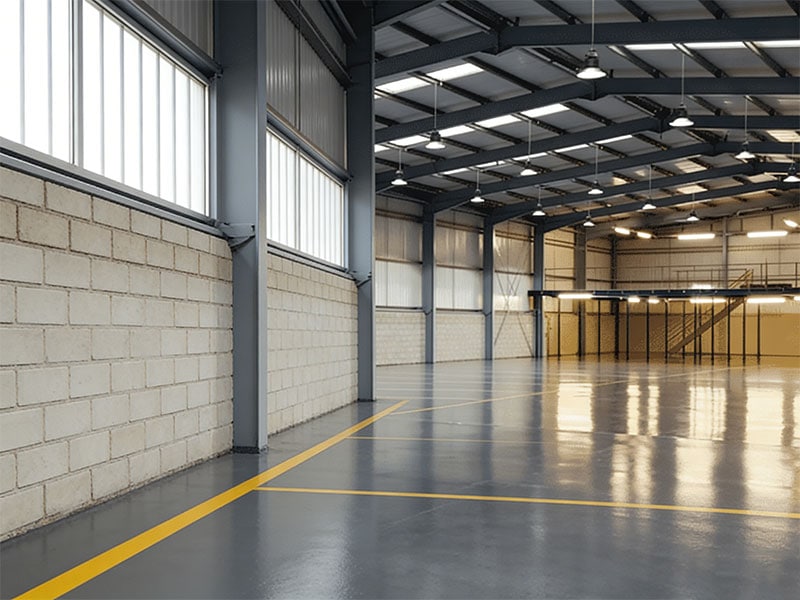
Moisture and Water Resistance
Moisture is the number one enemy of Pakistani basements. Epoxy creates a seamless, non-porous layer. Water simply cannot pass through it. Moreover, it protects the concrete slab underneath from slow water damage.
This is why waterproof basement floor Pakistan solutions almost always include epoxy. It handles both surface spills and rising ground moisture effectively.
Extreme Durability
Pakistani basements take heavy abuse. Cars, motorbikes, heavy machinery, and storage racks all create pressure. Epoxy flooring withstands this load without cracking or chipping. In fact, industrial floor coating Pakistan facilities have used epoxy for decades because of this very reason.
A properly applied epoxy floor lasts 10 to 20 years. Comparatively, plain tiles crack within 3 to 5 years under similar conditions.
Chemical Resistance
Pakistani basement floors often come in contact with engine oil, battery acid, cleaning chemicals, and diesel. Regular tiles or plain concrete absorb these substances. They stain permanently and weaken over time. However, a chemical resistant floor coating like epoxy repels all of these substances easily.
Cleaning becomes effortless. A mop and simple detergent remove most stains completely.
Temperature Tolerance
Karachi summers reach 45°C. Lahore summers are not far behind. Epoxy handles high temperatures without softening or lifting. Additionally, it does not expand and contract as dramatically as tiles do. This reduces cracking caused by temperature changes.
Aesthetic Appeal
Basement renovation Pakistan projects often focus on utility. However, looks matter too. Epoxy gives a high-gloss, professional finish. It reflects light beautifully and makes basements look larger and cleaner.
Available colors include solid tones, metallic finishes, and decorative flake patterns. Therefore, Pakistani homeowners can match their interior style easily.
Cost-Effectiveness Over Time
The upfront epoxy flooring cost Pakistan homeowners pay is higher than regular paint. However, long-term savings are significant. No re-tiling, no repeated waterproofing, and minimal maintenance make epoxy the smarter financial choice over five to ten years.
Key Insight: Pakistani basements face moisture, heat, heavy load, and chemical exposure simultaneously. Epoxy is one of the very few flooring options that addresses all four challenges at once.
Challenges to Consider in Pakistan
High Humidity During Application
Humidity resistant flooring performs well after installation. However, humidity during installation is a serious problem. Epoxy does not cure well in humid conditions. If applied during monsoon season, it may bubble, peel, or not bond properly to the concrete.
Therefore, timing matters greatly. October to February is the ideal application window in most Pakistani cities.
Surface Preparation Is Critical
Epoxy only bonds to a clean, dry, and slightly rough concrete surface. Pakistani basements often have old paint, oil stains, or moisture-damaged concrete. Proper concrete floor treatment Pakistan professionals follow includes grinding, acid etching, and thorough drying before any epoxy goes down.
Skipping this step causes delamination — where the epoxy peels off within months. Sadly, many local contractors skip it to save time.
Skill Availability
Finding a properly trained epoxy applicator in smaller Pakistani cities is difficult. Poorly mixed or poorly applied epoxy looks bad and fails quickly. Consequently, homeowners must carefully vet their contractors.
Always ask for past project photos. Request references from previous clients. Verify whether the contractor uses moisture meters before applying.
Rising Damp Problem
Some Pakistani basements have severe rising damp — moisture pushing up from below the slab. Epoxy alone does not solve this. A separate waterproofing layer must go under the epoxy first. Skipping this step leads to epoxy bubbling and lifting over time.
Initial Cost
Standard flooring like tiles costs less upfront. The initial epoxy flooring cost Pakistan homeowners face ranges from Rs. 180 to Rs. 450 per square foot depending on quality and finish. This is higher than basic floor tiles. However, the long-term value justifies the investment.
Warning: Never apply epoxy during or immediately after rain. The concrete must be completely dry — ideally with less than 4% moisture content. Use a moisture meter to confirm before starting.
Pros and Cons at a Glance
Pros
- Fully waterproof and moisture resistant
- Lasts 10–20 years with care
- Resists chemicals, oil, and diesel
- Easy to clean — just mop it
- Handles heavy load without cracking
- Looks polished and professional
- Available in many colors and finishes
- Reduces dust from bare concrete
- Ideal for garage floor epoxy Pakistan use
Cons
- Higher upfront cost vs tiles
- Needs perfectly dry concrete to apply
- Hard to remove once cured
- Slippery when wet without anti-slip additive
- Skilled applicators are scarce in Pakistan
- Not suitable for active water leaks
- Can yellow slightly under direct UV light
- Needs 24–72 hours to fully cure
Epoxy Flooring Cost in Pakistan (2024–2025)
Pricing varies by city, brand quality, and finish type. Below is a realistic cost breakdown for basement epoxy flooring Pakistan projects:
| Epoxy Type / Finish | Cost per Sq. Ft. (PKR) | Durability | Best For |
|---|---|---|---|
| Basic Solid Epoxy | Rs. 180 – 250 | Medium | Storage basements |
| Mid-Grade Epoxy Coating | Rs. 250 – 350 | High | Residential use, garages |
| Flake / Chip System | Rs. 300 – 400 | High | Home basements, workshops |
| Metallic Epoxy | Rs. 400 – 600+ | Very High | Showrooms, premium homes |
| Industrial Epoxy (3mm+) | Rs. 450 – 700 | Very High | Factories, car workshops |
These prices include labor and material. However, surface preparation — grinding, acid washing, patching — may cost extra. Budget an additional Rs. 50 to Rs. 100 per square foot for proper prep work.
Compared to imported tiles at Rs. 120 to Rs. 250 per square foot (plus fixing charges), quality epoxy is competitive in the mid to long run.
Step-by-Step Application Process
Proper application is the difference between a floor that lasts 15 years and one that peels in 6 months. Here is how basement epoxy flooring Pakistan professionals apply it correctly:
- Test moisture levels. Use a moisture meter. The slab must read below 4%. Never skip this step in Pakistani conditions.
- Clean the surface thoroughly. Remove all oil, grease, dust, and old coatings. Use degreasers and power washing as needed.
- Grind or acid-etch the concrete. This creates a rough surface for bonding. Grinding gives better results than acid etching alone.
- Repair cracks and holes. Fill any crack with epoxy paste or polyurethane filler. A smooth, crack-free base is essential.
- Apply primer coat. A thin epoxy primer soaks into the concrete and seals it. Allow 12 to 24 hours to cure fully.
- Mix epoxy resin and hardener. Follow the ratio exactly — usually 2:1 or 3:1. Wrong ratios cause soft, sticky floors.
- Apply base coat. Use a notched squeegee followed by a roller for even coverage. Work in small sections for best control.
- Add decorative elements (optional). Broadcast flakes or metallic pigments before the base coat cures.
- Apply topcoat sealer. This protects the design and adds gloss. Choose an anti-slip additive for wet areas.
- Allow full cure time. Light foot traffic is safe after 24 hours. Full vehicle load should wait 72 hours minimum.
Best Epoxy Products Available in Pakistan
The Pakistani market offers both local and imported options. Each has its place depending on budget and performance needs.
Locally Available Brands
Several Pakistani chemical companies now produce epoxy floor coating Pakistan products. Brands like Berger Paints, Master Paints, and Nippon offer entry-level epoxy paint for floor applications. These work for light-use basements. However, they are thinner than proper two-component systems.
Imported Options
Sika, Fosroc, and Rust-Oleum products are available through industrial suppliers in Lahore, Karachi, and Islamabad. These are true two-component epoxy resin floor Pakistan systems. They offer significantly better moisture resistance and durability. Sika EpoCem, for example, is specifically designed for damp concrete — ideal for Pakistani basement conditions.
Which One to Choose?
For storage-only basements, local brands work adequately. For parking, workshops, or high-moisture areas, invest in a Sika or Fosroc product. The price difference is roughly Rs. 80 to Rs. 150 per square foot. The performance difference is enormous.
Pro Tip: Always buy epoxy from a licensed distributor. Counterfeit or expired epoxy products are common in Pakistani markets. Check the manufacturing date before purchasing — epoxy older than 12 months loses effectiveness significantly.
Epoxy vs Other Basement Flooring Options in Pakistan
Pakistani homeowners often compare epoxy against three alternatives. Here is an honest comparison:
Epoxy vs Ceramic Tiles
Ceramic tiles are affordable and widely available. However, grout lines absorb moisture. In a damp basement, grout cracks and mold grows. Tiles also crack under heavy vehicle weight. Epoxy wins on moisture resistance and load bearing. Tiles win only on initial cost.
Epoxy vs Plain Concrete (Cement Plaster)
Plain concrete is the cheapest option. It absorbs water, stains easily, and creates dust. Floor sealing Pakistan professionals agree — bare concrete in a basement is a long-term maintenance burden. Epoxy eliminates all of these problems at a reasonable cost increase.
Epoxy vs PVC / Vinyl Flooring
Vinyl flooring looks nice and is easy to install. However, it cannot handle rising moisture from below. It bubbles and delaminates in wet Pakistani basements. Additionally, vinyl tears under heavy point loads like shelf legs or car jacks. A polished concrete alternative like epoxy handles these challenges far better.
Epoxy vs Polyurethane Coating
Polyurethane coatings are more flexible than epoxy. They handle UV light better too. However, polyurethane is more expensive and less widely available in Pakistan. For most basement applications, epoxy provides the better cost-to-performance balance locally.
Tips for Pakistani Homeowners
Choose the Right Season
Apply epoxy between October and February. Avoid monsoon months — July, August, and September — completely. High humidity ruins the curing process. Also avoid the peak of summer heat in June and July, as temperatures above 40°C affect working time.
Always Fix Leaks First
Epoxy does not stop active water leaks. Fix any cracks, wall seepage, or pipe leaks before applying epoxy. Use waterproof injection grout for cracks. Install proper drainage around the building foundation if needed. Damp basement solution Pakistan experts always address the source before the surface.
Add Anti-Slip Additive
Pakistani basements double as parking areas or workshops. Wet epoxy floors are slippery. Always ask your contractor to add anti-slip quartz aggregate to the topcoat. This single addition prevents many accidents.
Hire a Verified Contractor
Ask contractors to share previous epoxy projects. Visit the site if possible. Garage floor epoxy Pakistan projects and home basements have different requirements. Make sure the contractor understands both surface preparation and humidity management.
Maintain It Properly
Epoxy is low-maintenance but not no-maintenance. Use a pH-neutral floor cleaner. Avoid harsh acids or bleach on the surface. Place rubber pads under heavy furniture. Sweep regularly to prevent abrasive grit from scratching the gloss coat.
Final Verdict — Is It Worth It in Pakistan?
The short answer is yes — with the right preparation. Basement epoxy flooring in Pakistan makes excellent sense for most homeowners and businesses.
Pakistani basements face a brutal combination of heat, humidity, moisture, and heavy use. No other affordable flooring option handles all four simultaneously the way epoxy does. Tiles crack. Vinyl peels. Plain concrete stains and crumbles. Epoxy endures.
The key is correct application. Surface preparation, moisture testing, and seasonal timing are non-negotiable. Hire a skilled contractor. Use quality materials from verified brands. The upfront investment pays back within three to five years through reduced repairs, replacements, and maintenance costs.
Whether you have a storage basement in Lahore, a parking garage in Karachi, or a home workshop in Islamabad — basement epoxy flooring Pakistan professionals recommend is the smartest long-term flooring decision you can make.
FAQ’S
Is basement epoxy flooring suitable for the Pakistani monsoon season?
Once cured, epoxy performs excellently in wet conditions. However, do not apply it during monsoon. High humidity prevents proper bonding. Wait for dry weather — October to February is ideal in most Pakistani cities.
How long does epoxy flooring last in Pakistan’s climate?
A properly applied industrial floor coating Pakistan system lasts 10 to 20 years. In residential basements with moderate use, 12 to 15 years is realistic. Regular cleaning and avoiding harsh chemicals extends this further.
Can epoxy stop water seeping through my basement floor?
Epoxy creates a waterproof surface layer. It blocks surface moisture and minor ground moisture effectively. However, it does not stop high-pressure water seeping through cracks. Fix structural leaks first, then apply epoxy for ongoing moisture protection.
What is the typical epoxy flooring cost Pakistan homeowners should expect?
Expect to pay Rs. 180 to Rs. 450 per square foot for residential basement applications, including labor and material. Metallic and industrial systems cost more — up to Rs. 700 per square foot. Always get three quotes from verified contractors.
Is epoxy flooring good for a car parking basement in Pakistan?
Yes. Garage floor epoxy Pakistan use is one of the most common applications. Epoxy resists tire marks, engine oil, diesel, and heavy vehicle weight. Add an anti-slip topcoat for safety. Choose a 3mm or thicker industrial system for vehicle parking areas.