
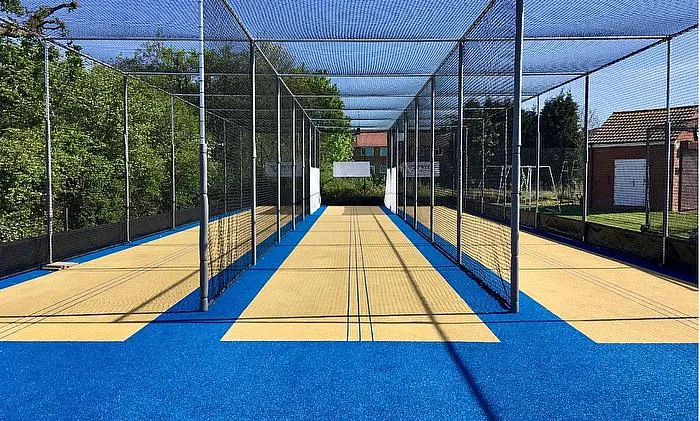
Cricket Practice Pitch Flooring in Pakistan: Types, Cost, Installation & Maintenance
Cricket practice pitch flooring is designed to provide consistent ball bounce, suitable pace, player traction and a durable training surface for cricket academies, schools, clubs and private practice facilities.
In Pakistan, cricket pitches are exposed to demanding conditions including heat, sunlight, rain and frequent use. Choosing the right combination of surface material, base construction, drainage and shock absorption is therefore essential for creating a reliable practice environment.
A cricket pitch is more than just its visible playing surface. The foundation, leveling, drainage, underlay or shock pad and final surface all contribute to the way the ball behaves and how long the pitch remains usable.
Why Is Good Cricket Pitch Flooring Important?
Cricket training requires predictable ball behavior. Differences in surface hardness, levelness or moisture can affect bounce, pace and player movement. A professionally constructed practice pitch helps create more consistent training conditions.
Consistent Bounce
A properly engineered surface can provide predictable ball bounce for batting and bowling practice.
Player Safety
Appropriate surface construction and cushioning can help improve player comfort during repeated training sessions.
Durability
Sports-grade materials can withstand repeated cricket training and regular player traffic.
Lower Maintenance
Synthetic systems can require less daily maintenance than traditional clay or natural grass pitches.
Types of Cricket Practice Pitch Flooring in Pakistan
The best cricket practice pitch depends on whether the facility is indoors or outdoors, how frequently it will be used and the desired playing characteristics.
1. Artificial Turf Cricket Pitch
Synthetic cricket turf is one of the most practical options for outdoor training pitches. It can provide consistent surface characteristics while requiring less routine maintenance than natural grass.
- Suitable for cricket academies.
- Suitable for school and club practice areas.
- Can withstand frequent use.
- Available with different underlay systems.
2. Cemented Cricket Pitch
A properly constructed cement or concrete pitch can provide a hard and durable practice surface. Synthetic cricket mats can also be installed over suitable hard bases for improved playing characteristics.
- Durable structural base.
- Low routine maintenance.
- Suitable for selected school and backyard facilities.
- Can support synthetic mat systems.
3. Clay Cricket Pitch
Clay pitches provide traditional cricket playing conditions but require more maintenance, including rolling, watering and regular surface preparation.
- Traditional playing characteristics.
- Suitable for selected outdoor grounds.
- Higher maintenance requirements.
- More sensitive to weather conditions.
4. Natural Grass Pitch
Natural grass can provide authentic cricket conditions but requires specialist turf management and regular maintenance.
- Natural playing environment.
- Suitable for high-level cricket grounds.
- Requires irrigation and turf care.
- Weather can affect availability.
5. PU Synthetic Cricket Flooring
PU sports flooring can be considered for indoor cricket training facilities and multi-purpose sports environments. It provides a seamless surface and can be designed with resilient characteristics.
- Seamless finish.
- Suitable for indoor facilities.
- Easy routine cleaning.
- Suitable for multi-purpose sports spaces.
Artificial Turf Cricket Practice Pitch
Artificial cricket turf has become a practical solution for many training facilities because it combines durability with relatively predictable playing characteristics.
A quality cricket turf system can be installed over a properly prepared base and may include an underlay or shock-absorbing layer depending on the intended application.
All-Weather Use
Properly designed outdoor systems can remain usable under changing weather conditions when drainage is adequate.
Low Maintenance
Synthetic turf does not require the watering, mowing and routine turf management associated with natural grass.
UV Resistance
UV-stabilized materials can be selected for outdoor pitches exposed to strong sunlight.
Consistent Training
A properly installed surface can provide more predictable conditions for repetitive cricket drills.
Cricket Pitch Flooring Specifications
Cricket pitch specifications should be selected according to the intended playing system rather than using one specification for every project. Important parameters include turf construction, underlay, surface hardness, drainage and overall base stability.
| Parameter | Typical Consideration | Purpose |
|---|---|---|
| Turf Pile Height | Approximately 10–15 mm for selected systems | Supports consistent surface behavior |
| Shock Pad / Underlay | System dependent | Improves cushioning and impact characteristics |
| UV Resistance | Important for outdoor applications | Helps resist sunlight-related degradation |
| Drainage | Designed according to site conditions | Helps prevent water accumulation |
| Base Levelness | Uniform and properly compacted | Supports consistent ball behavior |
Cricket Pitch Base Construction
The quality of the foundation is one of the most important factors in a cricket practice pitch. Even a premium synthetic surface can perform poorly if it is installed over an unstable, uneven or poorly drained base.
- Site Survey: Inspect the existing ground, dimensions, drainage and intended use of the pitch.
- Leveling: Establish the required finished levels and remove unsuitable material.
- Compaction: Compact the subgrade and base layers to create a stable foundation.
- Aggregate Base: Install suitable crushed aggregate or other engineered base materials where required.
- Drainage: Provide suitable drainage and grading for outdoor pitches.
- Underlay: Install a shock pad or underlay where specified by the flooring system.
- Surface Installation: Install the synthetic turf, mat, PU system or selected finish.
- Final Inspection: Check levelness, surface finish, seams, drainage and playing area markings.
Cricket Pitch Drainage System
Outdoor cricket pitches need effective drainage to prevent standing water and protect the playing surface. This is particularly important during periods of heavy rainfall and monsoon weather.
Correct Surface Levels
Proper grading helps direct water away from the playing surface.
Perimeter Drainage
Drainage channels can collect and move water away from the pitch area.
Sub-Surface Drainage
Selected projects may require perforated drainage pipes and permeable aggregate layers.
Regular Inspection
Drainage outlets should be kept free from leaves, dirt and other blockages.
Cricket Practice Pitch Flooring Installation Process
Professional installation helps ensure the pitch has the required levelness, surface consistency and durability.
- Site Measurement: Measure the pitch and assess surrounding areas.
- Ground Preparation: Remove unsuitable material and prepare the subgrade.
- Base Construction: Install and compact the required base layers.
- Drainage Installation: Provide suitable drainage for outdoor applications.
- Surface Preparation: Ensure the base is clean, stable and adequately level.
- Underlay Installation: Install the specified shock pad or cushioning layer.
- Turf or Synthetic Surface: Install the selected cricket pitch surface.
- Seaming: Secure turf sections and complete all required joints.
- Line Marking: Complete crease and other required markings.
- Final Inspection: Inspect the finished pitch before handing it over for use.
Indoor Cricket Pitch Flooring
Indoor cricket facilities need a surface that can withstand frequent use while providing suitable traction, comfort and ball response. PU and other synthetic sports flooring systems can be considered for indoor training areas.
Seamless Finish
PU flooring can provide a continuous surface without conventional turf seams.
Resilient Surface
Suitable sports systems can provide cushioning and improved player comfort.
Easy Cleaning
Indoor synthetic surfaces can be cleaned using a regular sports-floor maintenance routine.
Year-Round Training
Indoor facilities reduce dependence on outdoor weather conditions.
Outdoor vs Indoor Cricket Pitch Flooring
| Feature | Outdoor Pitch | Indoor Pitch |
|---|---|---|
| Common Surfaces | Artificial turf, mat, clay, natural grass | PU and other synthetic sports systems |
| Weather Exposure | High | Low |
| Drainage | Essential | Normally not required for the playing surface |
| Maintenance | Moderate to high depending on system | Generally lower |
| Usage | Training and selected matches | Year-round indoor training |
| UV Resistance | Important | Usually less critical |
Cricket Practice Pitch Flooring Price in Pakistan
The cricket practice pitch flooring price in Pakistan varies according to the surface type, pitch dimensions, base construction, drainage, underlay and installation requirements.
| Flooring Type | Indicative Price Range | Best Suited For |
|---|---|---|
| Artificial Turf Cricket Pitch | Approximately PKR 600–1,800 / sq. ft. | Outdoor training |
| PU Synthetic Cricket Flooring | Approximately PKR 1,200–2,500 / sq. ft. | Indoor cricket facilities |
| Cemented Pitch | Project dependent | Schools and basic practice areas |
| Clay / Natural Grass | Project dependent | Traditional outdoor grounds |
| Hybrid Systems | Specification dependent | Performance-focused facilities |
Factors Affecting Cricket Pitch Flooring Cost
Pitch Size
Larger playing areas require more surface material and installation labor.
Surface Type
Artificial turf, PU, concrete, clay and natural grass have different material and installation costs.
Base Condition
Existing ground conditions can determine how much preparation and leveling work is required.
Drainage
Outdoor drainage systems can increase project cost but are important for long-term performance.
Shock Pad
Additional cushioning layers increase the system cost but can improve comfort and impact characteristics.
Accessories
Nets, fencing, lighting and other cricket facility equipment can affect the complete project budget.
Benefits of Synthetic Cricket Practice Pitch Flooring
Consistent Surface
Synthetic systems can provide a uniform training surface when correctly installed.
Frequent Use
Sports-grade surfaces can accommodate repeated cricket training sessions.
Lower Maintenance
Synthetic systems generally require less routine maintenance than natural grass.
Weather Resistance
Outdoor synthetic turf can be selected with UV-resistant materials for demanding climates.
Fast Recovery
Synthetic practice surfaces can remain available for repeated training without requiring grass recovery periods.
Professional Appearance
A professionally installed pitch provides a clean and organized appearance for academies and sports facilities.
Cricket Pitch Flooring Maintenance
Even low-maintenance synthetic cricket pitches require regular inspection and cleaning. A simple maintenance program can help preserve the playing surface and extend its useful life.
- Remove leaves, dirt and debris regularly.
- Brush synthetic turf to maintain fiber position.
- Inspect seams and edges for damage.
- Keep drainage channels clear.
- Repair small tears or damaged areas promptly.
- Avoid unsuitable footwear such as metal spikes where prohibited.
- Inspect high-traffic areas regularly.
- Follow the manufacturer’s maintenance recommendations.
How Long Does Cricket Pitch Flooring Last?
The service life of cricket pitch flooring depends on the material, installation quality, usage frequency, weather exposure and maintenance.
Outdoor synthetic systems can provide several years of service when properly installed and maintained, while indoor PU systems may provide a longer service period under suitable conditions.
Cricket Practice Pitch Flooring for Academies
Cricket academies often require surfaces that can handle several training sessions every day. Synthetic turf can be particularly practical because it provides a dedicated training area with relatively predictable maintenance requirements.
Academy projects should also consider player traffic, bowling loads, drainage, pitch dimensions, surrounding netting and long-term maintenance.
Cricket Practice Pitch Flooring for Schools
Schools need cricket surfaces that balance safety, durability and budget. Depending on available space and usage, a synthetic mat, artificial turf pitch or properly constructed hard pitch may be suitable.
The surface should be selected according to the age of players, expected usage and whether the pitch will be used exclusively for cricket or as part of a multi-sport area.
Cricket Pitch Flooring for Indoor Training Centers
Indoor cricket facilities allow players to train without depending on outdoor weather. PU and other synthetic sports flooring systems can provide a seamless, resilient and easy-to-maintain environment.
- Suitable for year-round training.
- Protected from rain and direct sunlight.
- Controlled indoor environment.
- Easy routine cleaning.
- Can be integrated into multi-sport facilities.
Cricket Pitch Flooring in Pakistan’s Climate
Pakistan’s climate varies from region to region, so outdoor cricket pitch systems should be selected according to local environmental conditions.
- Use UV-resistant materials for outdoor pitches.
- Provide effective drainage in areas exposed to heavy rain.
- Consider high summer temperatures during material selection.
- Inspect surfaces after monsoon rainfall.
- Keep drainage outlets free from blockage.
- Choose materials designed for frequent sports use.
How to Choose the Best Cricket Practice Pitch Flooring
- Define the Purpose: Decide whether the pitch is for academy training, school use, professional practice or recreational cricket.
- Choose Indoor or Outdoor: Weather exposure significantly affects material selection.
- Assess the Base: Check soil stability, existing concrete, slope and levelness.
- Plan Drainage: Outdoor pitches should have a suitable drainage strategy.
- Select the Surface: Compare artificial turf, synthetic mat, PU, concrete, clay or natural grass according to the intended use.
- Consider Cushioning: Select an appropriate underlay or shock pad when required.
- Evaluate Maintenance: Consider how much routine maintenance the facility can support.
- Compare Complete Quotations: Make sure the quotation covers preparation, base, drainage, surface, installation and finishing.
Common Cricket Pitch Flooring Problems
Uneven Bounce
Uneven base preparation, surface wear or poor installation can affect ball behavior.
Waterlogging
Inadequate drainage can cause water to remain on or beneath an outdoor pitch.
Turf Flattening
Repeated traffic can flatten synthetic fibers if brushing and maintenance are neglected.
Surface Damage
Heavy equipment, unsuitable footwear or poor maintenance can damage synthetic surfaces.
Cracking
Movement in an unsuitable base or inadequate construction can contribute to cracking in hard surfaces.
Premature Wear
Low-quality materials, excessive use and poor maintenance can reduce service life.
Cricket Practice Pitch Flooring Installation Services in Pakistan
Professional cricket pitch installation can include complete preparation and finishing services for academies, schools, clubs, stadiums, indoor training centers and private sports facilities.
- Site inspection and measurement.
- Ground preparation and leveling.
- Base construction and compaction.
- Drainage system installation.
- Artificial turf installation.
- PU synthetic sports flooring.
- Shock pad and underlay installation.
- Cricket pitch line marking.
- Resurfacing and renovation.
- Maintenance and repair services.
Cricket Practice Pitch Flooring in Lahore, Karachi, Islamabad and Across Pakistan
Cricket pitch flooring can be designed for facilities throughout Pakistan. The final system should be selected according to local site conditions, intended use and environmental exposure.
Lahore
Cricket practice pitches for academies, schools, universities and private sports facilities.
Karachi
Outdoor and indoor cricket surfaces selected with consideration for heat, sunlight and coastal environmental conditions.
Islamabad & Rawalpindi
Synthetic cricket pitch solutions for training centers, schools, clubs and sports complexes.
Other Cities
Cricket pitch projects can also be developed in Faisalabad, Multan, Peshawar, Sialkot, Gujranwala and other cities.
Cricket Pitch Flooring Project Checklist
- Confirm pitch dimensions.
- Define the intended level of play.
- Determine indoor or outdoor installation.
- Inspect the existing ground or concrete base.
- Plan drainage for outdoor applications.
- Select the appropriate cricket surface.
- Specify turf or synthetic mat requirements.
- Evaluate shock pad requirements.
- Confirm line marking requirements.
- Plan regular maintenance.
- Confirm warranty and material specifications.
- Request a detailed installation quotation.
Frequently Asked Questions
What is the best flooring for a cricket practice pitch in Pakistan?
The best flooring depends on the application. Artificial cricket turf is a popular choice for outdoor practice pitches, while PU or other synthetic sports flooring can be suitable for indoor cricket facilities.
How much does cricket practice pitch flooring cost in Pakistan?
Cricket pitch flooring prices vary according to the surface, pitch size, base preparation, drainage, underlay and installation. Indicative synthetic turf and PU systems can range from approximately PKR 600 to PKR 2,500 per square foot depending on specifications.
How long does cricket pitch flooring installation take?
A cricket practice pitch can commonly take around 5 to 15 days depending on site preparation, base construction, surface selection, pitch size and finishing requirements.
Is artificial turf good for cricket practice?
Yes. Sports-grade artificial turf can provide a durable and relatively consistent surface for cricket practice. The final playing characteristics depend on the turf, base, underlay and installation method.
Can cricket turf be installed outdoors?
Yes. Outdoor cricket turf should be selected with appropriate UV resistance and installed over a stable, well-drained base.
What is the best cricket flooring for indoor facilities?
PU and other synthetic sports flooring systems can be suitable for indoor cricket training areas. The choice should depend on the required ball response, traction, cushioning and facility design.
Does an artificial cricket pitch require maintenance?
Yes. Regular cleaning, brushing, inspection and drainage maintenance help preserve the playing surface and extend its service life.
Is drainage necessary for an outdoor cricket pitch?
Effective drainage is important for outdoor pitches because standing water can affect usability and contribute to surface deterioration.
Can a synthetic cricket pitch be installed over concrete?
Some synthetic cricket systems can be installed over a structurally sound and suitably prepared concrete base. The installation method depends on the selected turf, matting or sports flooring system.
How long does artificial cricket pitch flooring last?
Service life depends on turf quality, usage, UV exposure, base construction and maintenance. A professionally installed sports-grade system can provide several years of regular use when properly maintained.
What should I consider before installing a cricket pitch?
Consider the purpose of the pitch, indoor or outdoor location, pitch dimensions, existing base, drainage, surface type, expected usage, maintenance requirements and total project budget.
Need Cricket Practice Pitch Flooring in Pakistan?
Get a cricket pitch system designed around your facility, playing requirements, site conditions, drainage needs and budget. Professional installation can help create a durable and consistent training surface for your players.
Request a Cricket Pitch Flooring QuoteRelated Sports Flooring Services
Conclusion
Cricket practice pitch flooring should be selected according to the level of play, frequency of use, indoor or outdoor environment, desired ball response and available budget.
Artificial cricket turf is a practical option for many outdoor training facilities, while PU and other synthetic systems can be considered for indoor cricket centers. Traditional clay and natural grass remain valuable where authentic cricket conditions and specialist maintenance are available.
Regardless of the surface selected, professional base preparation, accurate leveling, effective drainage and correct installation are essential. A properly engineered cricket pitch can provide a safer, more consistent and more durable environment for regular cricket training.