
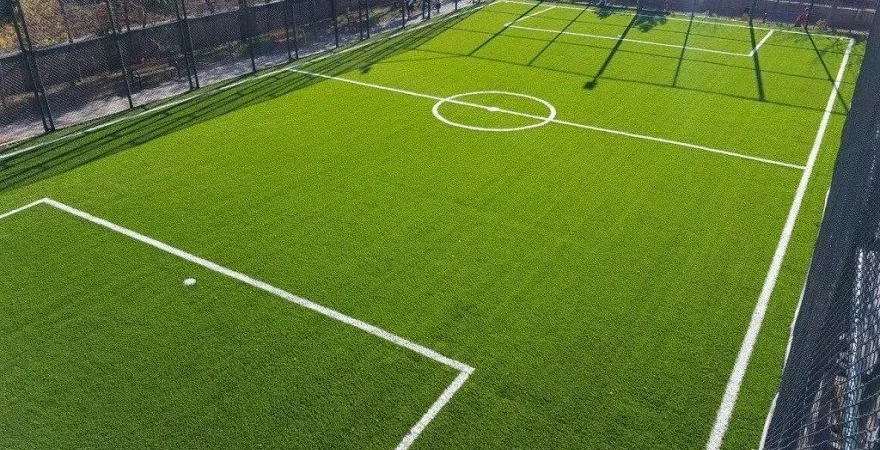
Football Court Flooring in Pakistan: Types, Cost, Benefits & Installation Guide
Football court flooring plays an important role in player safety, ball response, traction and overall playing performance. The correct surface should withstand repeated use, provide controlled grip and support fast changes of direction without becoming excessively hard or slippery.
Football facilities in Pakistan can use different surfaces depending on whether the project is an outdoor football ground, indoor futsal facility, football training area or professional synthetic turf field. Artificial grass, synthetic turf, PU systems and specialized sports surfaces can all be considered for different applications.
Choosing football flooring should not be based on appearance alone. The complete system, including the base, shock pad where applicable, turf, infill, drainage and installation quality, determines the final performance of the field.
What Is Football Court Flooring?
Football court flooring refers to the playing surface installed for football, five-a-side football, futsal or football training facilities. Depending on the application, the surface may be natural grass, artificial grass, synthetic turf, PU sports flooring or another sports-grade system.
Modern football facilities increasingly use synthetic surfaces because they can provide consistent performance and can handle frequent use throughout the year.
Player Traction
The surface should provide suitable grip for acceleration, stopping and changes of direction.
Ball Performance
A consistent surface helps provide predictable ball roll and bounce characteristics.
Durability
Football surfaces should withstand repeated training, matches and player traffic.
Drainage
Outdoor synthetic fields require an appropriate drainage and base system to manage rainwater.
Why Is Football Flooring Important?
Football involves running, sprinting, sliding, turning and sudden acceleration. An unsuitable surface can affect player comfort, traction and the overall quality of play.
A professionally designed football surface can help create a more predictable playing environment while reducing maintenance compared with some conventional surfaces.
- Provides controlled traction for players.
- Supports rapid changes of direction.
- Provides consistent ball movement.
- Withstands intensive sports traffic.
- Can be designed for indoor or outdoor use.
- Provides a professional appearance.
- Can reduce maintenance requirements when compared with natural grass.
Types of Football Court Flooring
Different football facilities require different flooring systems. The following options can be considered according to the project requirements.
1. Artificial Grass Flooring
Artificial grass is one of the most practical choices for football grounds and training facilities. It provides a consistent surface and can handle frequent use.
- Suitable for football grounds.
- Consistent appearance throughout the year.
- Suitable for intensive use.
- Available in different pile heights and specifications.
2. Synthetic Football Turf
Professional synthetic turf systems are designed specifically for sports applications and can include turf, infill, shock pad and engineered base layers.
- Suitable for football and training fields.
- Consistent playing characteristics.
- Suitable for high-traffic facilities.
- Can be designed with drainage systems.
3. PU Sports Flooring
PU flooring is more commonly considered for indoor sports halls and multi-purpose facilities where football or futsal is played alongside other sports.
- Seamless sports surface.
- Suitable for indoor facilities.
- Can provide resilient characteristics.
- Relatively easy to maintain.
4. Modular Sports Flooring
Interlocking sports tiles can be considered for selected recreational and multi-purpose football or futsal applications.
- Fast installation.
- Individual tiles can be replaced.
- Suitable for selected indoor applications.
- Available in sports-grade materials.
Artificial Grass Football Flooring
Artificial grass has become a popular solution for football grounds, academies, schools, clubs and commercial five-a-side facilities. Unlike natural grass, synthetic turf can be used more frequently without requiring the same level of irrigation, mowing and recovery.
The performance of an artificial football field depends heavily on the complete construction system. Turf quality, pile height, backing, infill, shock absorption, drainage and base preparation should all be evaluated.
High Usage
Synthetic turf can support frequent training and match schedules when properly selected and maintained.
Low Water Requirement
Artificial turf does not require regular irrigation like natural grass.
Consistent Appearance
A quality synthetic field can maintain a consistent visual appearance throughout the year.
Weather Resistance
UV-stabilized sports turf can be selected for outdoor applications in demanding climates.
Football Turf System Layers
A professional synthetic football field is not simply a layer of artificial grass. It normally consists of multiple components that work together to provide stability, drainage, cushioning and playing performance.
- Prepared Subgrade: The existing ground is compacted and prepared for construction.
- Drainage Layer: A suitable drainage arrangement helps remove rainwater from the playing surface.
- Aggregate Base: Properly graded and compacted aggregate provides structural stability.
- Shock Pad: Where required, a resilient pad can be installed beneath the turf to improve impact characteristics.
- Artificial Turf: The synthetic grass forms the visible playing surface.
- Infill: Selected systems use sand, rubber or other approved infill materials to support turf performance.
- Line Markings: Football markings are incorporated using suitable contrasting synthetic turf or sports-grade marking materials.
Football Court Flooring for Indoor Facilities
Indoor football and futsal facilities have different requirements from outdoor artificial turf fields. Indoor courts may use PU, sports vinyl, rubber or modular sports flooring depending on the intended use.
The selected surface should provide suitable traction without being excessively abrasive. It should also support quick movement and provide predictable ball response.
Futsal Court Flooring vs Outdoor Football Flooring
| Feature | Outdoor Football | Indoor Futsal |
|---|---|---|
| Common Surface | Artificial grass / synthetic turf | PU, vinyl, wood or sports flooring |
| Drainage | Essential for outdoor fields | Normally not a surface drainage requirement |
| UV Resistance | Important | Usually less critical indoors |
| Weather Exposure | High | Low |
| Maintenance | Turf brushing, infill and drainage maintenance | Cleaning and surface maintenance |
| Playing Area | Large football fields or small-sided grounds | Compact indoor courts |
Football Court Flooring Installation Process
Professional installation is essential for achieving a stable, durable and well-drained football surface.
- Site Survey: Measure the field and evaluate the existing ground conditions.
- Ground Preparation: Remove unsuitable material and prepare the subgrade.
- Compaction: Compact the base to provide adequate stability.
- Drainage Installation: Install drainage channels or sub-surface drainage where required.
- Aggregate Base: Install and compact the engineered aggregate layers.
- Shock Pad: Install the specified resilient layer where required.
- Turf Installation: Lay and secure the artificial turf system.
- Seaming: Join turf rolls using suitable seam tape and adhesive.
- Infill Installation: Apply the specified infill evenly across the playing area.
- Line Marking: Install accurate football markings.
- Final Inspection: Check the surface, seams, infill, drainage and overall finish.
Concrete Base Preparation for Football Flooring
Indoor football flooring systems may be installed over concrete or other suitable structural bases. The substrate should be sound, clean, sufficiently level and free from excessive moisture.
- Remove dust, dirt, oil and contaminants.
- Repair cracks and damaged areas.
- Correct significant unevenness.
- Check substrate moisture.
- Prepare the surface according to the flooring system.
- Allow repair compounds to cure properly.
- Verify levelness before installation.
Football Field Drainage System
Drainage is one of the most important components of an outdoor synthetic football field. Poor drainage can lead to standing water, unstable surfaces, unpleasant playing conditions and premature deterioration of the field.
Perimeter Drainage
Drainage channels around the field can help collect and remove surface and sub-surface water.
Sub-Surface Drainage
Perforated drainage pipes and suitable aggregate layers can be used where ground conditions require them.
Field Slope
Appropriate grading helps prevent water from remaining on the playing surface.
Drainage Maintenance
Drainage channels should be inspected and cleaned regularly to maintain performance.
Football Court Flooring Price in Pakistan
Football flooring prices in Pakistan vary significantly because projects differ in field size, turf quality, base construction, drainage, infill, shock pads, fencing and installation requirements.
Small-sided football and five-a-side fields generally require a smaller investment than full-size football grounds. Premium sports-grade synthetic turf can also cost more than basic recreational turf.
| Project Type | Main Cost Factors | Typical Position |
|---|---|---|
| Small Football Court | Turf, base, drainage and installation | Lower project investment |
| Five-a-Side Field | Turf, infill, shock pad, base and fencing | Medium investment |
| Training Field | Professional turf, drainage and engineered base | Medium to high investment |
| Full-Size Football Ground | Large turf area, drainage, base and accessories | High investment |
Because material prices and project conditions change, a final quotation should be prepared after measuring the site and confirming the required football flooring specification.
Factors Affecting Football Flooring Cost
Field Size
Larger fields require more turf, base material, infill and installation labor.
Turf Quality
Sports-grade turf with better fiber construction and UV stabilization generally costs more.
Base Construction
Ground conditions and the required aggregate base can have a major impact on project cost.
Drainage
Extensive drainage systems can increase the total construction investment.
Shock Pad
A performance-oriented field may require a specialized shock pad beneath the turf.
Accessories
Fencing, lighting, goals, netting and other equipment can significantly affect the complete project cost.
Benefits of Artificial Football Flooring
High Usage Capacity
Synthetic football surfaces can accommodate frequent training and matches when correctly specified and maintained.
Consistent Surface
Artificial turf provides a more consistent appearance and playing surface than worn natural grass.
Reduced Watering
Synthetic turf does not require regular irrigation for growth.
All-Season Use
A properly constructed field can remain available for use throughout much of the year.
Professional Appearance
High-quality turf provides a clean and professional appearance suitable for clubs and academies.
Predictable Maintenance
Regular brushing, infill management and cleaning provide a structured maintenance routine.
Football Turf Maintenance
Artificial football turf is not maintenance-free. Regular maintenance helps preserve the playing characteristics, appearance and service life of the field.
- Brush the turf regularly to maintain fiber position.
- Redistribute infill where required.
- Remove leaves, dirt and debris.
- Inspect seams and perimeter edges.
- Keep drainage systems clear.
- Inspect high-traffic areas regularly.
- Repair damaged turf promptly.
- Avoid unauthorized vehicles and heavy equipment.
- Follow the turf manufacturer’s maintenance schedule.
How Long Does Artificial Football Turf Last?
A quality football turf system can provide several years of service, but actual lifespan depends on turf quality, usage, climate, maintenance and installation.
Professional football turf systems can commonly be planned around approximately 8–12 years of service under suitable conditions. Heavy commercial use, poor maintenance or low-quality turf can reduce service life.
Football Flooring for Schools and Universities
Schools and universities often require durable football surfaces that can handle regular student use while keeping maintenance manageable.
Artificial grass can be a practical option for school football grounds and training areas. The final specification should consider expected daily usage, available space, drainage and budget.
Football Flooring for Academies and Training Centers
Football academies typically require a surface capable of supporting intensive training sessions. Turf quality, shock absorption, traction and drainage become particularly important.
A professional synthetic turf system can provide a consistent environment for drills, passing exercises, ball control and match practice.
Football Flooring for Commercial Five-a-Side Courts
Commercial football courts can experience heavy daily traffic. Operators should therefore prioritize durable turf, strong seams, effective drainage and a practical maintenance program.
The total project should also consider fencing, lighting, goal systems, netting, spectator access and other facility requirements.
Football Flooring in Pakistan’s Climate
Pakistan’s climate varies significantly between regions. Football turf installed outdoors should therefore be selected with local temperature, sunlight, rainfall, humidity and drainage conditions in mind.
- Use UV-stabilized turf for outdoor installations.
- Design drainage according to local rainfall conditions.
- Consider heat exposure during material selection.
- Maintain appropriate infill levels.
- Inspect seams more frequently in heavily used fields.
- Keep drainage channels clear before and during monsoon periods.
How to Choose the Best Football Court Flooring
- Define the Facility: Decide whether you need a full football field, training field, five-a-side court or indoor futsal court.
- Determine Usage: Estimate the number of players, training hours and matches per week.
- Select the Surface: Compare artificial turf, synthetic grass, PU and other suitable sports systems.
- Evaluate the Base: Inspect the existing ground and determine the required construction layers.
- Plan Drainage: Outdoor fields require appropriate drainage to handle rainfall.
- Consider Shock Absorption: Select an appropriate resilient system where required.
- Check Turf Specification: Review fiber type, pile height, backing, density and UV stabilization.
- Plan Maintenance: Make sure the facility can follow the required brushing, cleaning and infill maintenance schedule.
- Compare Complete Quotations: Confirm that the quotation clearly includes preparation, base, drainage, turf, infill, installation and finishing.
Common Football Flooring Problems
Standing Water
Poor grading or blocked drainage can cause water to remain on the playing surface.
Turf Flattening
Heavy traffic and inadequate brushing can cause synthetic fibers to remain flattened.
Infill Loss
Heavy use and poor maintenance can cause infill levels to become uneven.
Open Seams
Poor installation or excessive stress can contribute to seam separation.
Uneven Base
Insufficient ground preparation can result in an uneven playing surface.
Premature Wear
Low-quality materials, excessive traffic or inadequate maintenance can shorten turf service life.
Football Court Flooring Contractors in Pakistan
Selecting an experienced sports flooring contractor can make a major difference to the performance and lifespan of a football field. Contractors should understand turf installation, base preparation, drainage, seaming and sports surface maintenance.
Before appointing a contractor, request technical specifications, previous project references, installation methodology and a detailed quotation.
- Site inspection and field measurement.
- Ground and base preparation.
- Drainage system installation.
- Artificial turf supply and installation.
- Shock pad installation where required.
- Infill installation and distribution.
- Football line marking.
- Turf repair and maintenance.
- Complete sports field consultation.
Football Court Flooring in Lahore, Karachi, Islamabad and Across Pakistan
Football flooring projects can be designed for schools, universities, football academies, clubs, gyms, housing societies, commercial sports centers, hotels and private facilities throughout Pakistan.
Lahore
Artificial football turf and sports flooring solutions for clubs, academies, schools and commercial facilities.
Karachi
Outdoor football turf systems designed with consideration for high temperatures, UV exposure and drainage.
Islamabad & Rawalpindi
Football flooring solutions for academies, schools, clubs and sports complexes.
Other Cities
Sports turf projects can also be planned for Faisalabad, Multan, Peshawar, Sialkot, Gujranwala and other cities.
Football Court Flooring Project Checklist
- Confirm field dimensions.
- Determine intended football format.
- Assess existing soil and ground conditions.
- Plan drainage requirements.
- Select appropriate artificial turf.
- Confirm pile height and fiber specification.
- Confirm infill type and quantity.
- Evaluate shock pad requirements.
- Specify aggregate base layers.
- Confirm turf seam construction.
- Plan football line markings.
- Include maintenance requirements.
- Confirm warranty and after-sales support.
Frequently Asked Questions
What is the best flooring for a football court?
Artificial grass or professional synthetic football turf is commonly selected for outdoor football courts because it can provide consistent playing characteristics and withstand frequent use. Indoor facilities may use PU, vinyl or other sports flooring systems.
What is the price of football court flooring in Pakistan?
Football flooring prices depend on field size, turf quality, base preparation, drainage, infill, shock pad and installation. A final price should be calculated after measuring the site and selecting the complete system.
How much does artificial football turf cost in Pakistan?
Artificial turf costs vary by fiber type, pile height, density, backing, UV stabilization, infill and manufacturer. The total project cost also includes the base, drainage and installation.
How long does football artificial turf last?
Quality football turf can commonly provide approximately 8–12 years of service under suitable conditions. Heavy use, climate, turf quality and maintenance can affect actual lifespan.
Is artificial grass good for football?
Yes. Sports-grade artificial grass is widely used for football because it can provide a consistent surface and support frequent use with a structured maintenance program.
Does artificial football turf require maintenance?
Yes. Artificial turf should be brushed, cleaned and inspected regularly. Infill levels and drainage should also be monitored to maintain playing performance.
Can football turf be installed over concrete?
Some synthetic sports systems can be installed over concrete when the base is structurally sound, properly prepared and suitable for the selected installation method. Outdoor football fields normally require an engineered base and drainage system rather than simply laying turf over concrete.
What is the difference between artificial grass and synthetic football turf?
General artificial grass can be intended for landscaping, while synthetic football turf is specifically designed for sports performance. Football turf is selected according to factors such as fiber construction, pile height, density, infill, durability and playing characteristics.
Is drainage necessary for an outdoor football court?
Yes. Effective drainage is essential for outdoor football fields, especially in areas receiving significant rainfall. Drainage design should account for the site, soil conditions, field slope and local weather.
What is a shock pad in football turf?
A shock pad is a resilient layer installed beneath some synthetic turf systems to provide impact attenuation and improve the overall performance of the field.
Can football flooring be used for futsal?
Futsal is normally played indoors on a hard sports surface, while outdoor football commonly uses natural or synthetic grass. The flooring should therefore be selected according to the specific sport and court design.
What should I check before buying football turf?
Check the turf fiber, pile height, density, backing, UV resistance, infill requirements, warranty and intended sports use. Also evaluate the complete base, drainage and installation specification rather than buying turf alone.
Need Football Court Flooring in Pakistan?
Get a football flooring system designed around your field size, playing requirements, site conditions, drainage needs and budget. Professional installation can help deliver a durable and consistent sports surface.
Request a Football Flooring QuoteRelated Sports Flooring Services
Conclusion
Football court flooring should be selected according to the type of football facility, expected usage, playing requirements, climate and site conditions. For outdoor football grounds, professional artificial turf can provide a durable and consistent playing surface, while indoor football and futsal facilities may require PU, vinyl, wood or other specialized sports flooring.
The most important consideration is the complete flooring system. Proper ground preparation, engineered base layers, drainage, turf quality, infill, shock absorption and professional installation all contribute to the final performance and service life of the field.
A professional site assessment before installation can help determine the right football flooring specification and avoid costly problems caused by inadequate drainage, poor base preparation or unsuitable materials.