
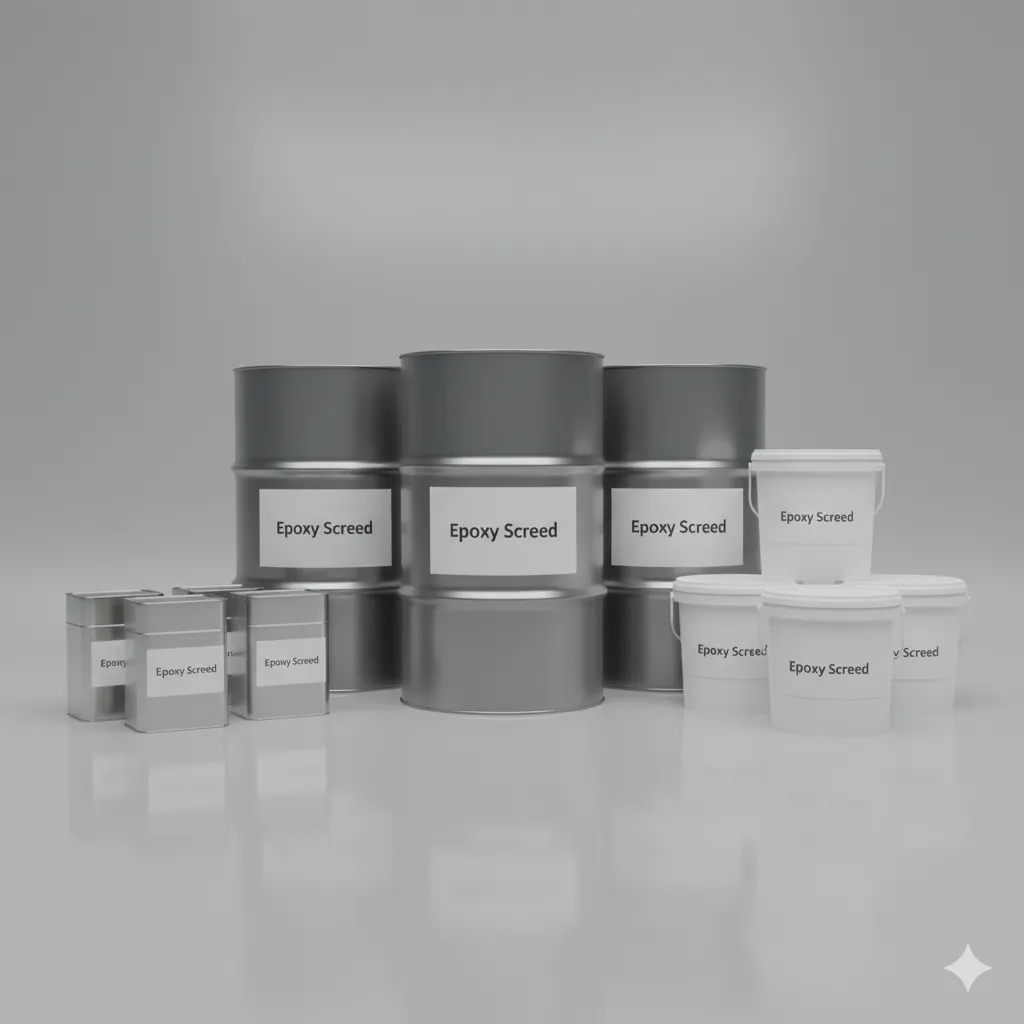
Description
Epoxy Screed Flooring in Pakistan
High-strength epoxy screed for repairing, levelling and protecting suitable industrial concrete floors. Designed for areas that required a durable and compatible base before applying an epoxy coating or other specified flooring system.
High-Strength Epoxy Screed
A resin-based screed system for suitable concrete substrates where improved strength, durability and surface preparation are required.
What Is Epoxy Screed?
Epoxy screed is defined as a resin-based flooring material used to create, repair or build up a durable surface on a suitable substrate. It commonly combines epoxy resin, hardener and selected fillers or aggregates.
Epoxy screed can help repair damaged concrete, improve surface levels and create a strong base for compatible industrial flooring systems. However, the correct screed formulation, thickness and surface preparation depend on the project.
Inspect Surface
Prepare Concrete
Repair Defects
Prime Surface
Apply Screed
Apply Finish System
Epoxy Screed Explained Simply
A screed refers to a layer used to create, repair or level a floor surface. Traditional screeds often use cement-based materials. An epoxy screed uses an epoxy binder system instead.
The epoxy resin binds the selected filler materials together. After proper mixing and curing, the system forms a hard and durable layer.
However, epoxy screed is not automatically suitable for every floor. The substrate, moisture condition, required thickness and expected service environment must be considered before selecting the system.
Key Terms
Epoxy resin refers to the resin component that reacts with a compatible hardener to form a cured polymer material.
A hardener refers to the component that reacts with the epoxy resin and starts the curing process.
A screed is defined as a layer used to create, level or repair a floor surface.
A substrate refers to the existing surface that receives the screed or coating.
Features of Epoxy Screed
Performance depends on the selected formulation, installation quality, screed thickness and actual service conditions.
High-Strength Surface
Selected epoxy screed systems can create a strong surface for suitable industrial and commercial flooring applications.
Repairs Uneven Floors
Suitable systems can help repair damaged areas and build up or level selected concrete surfaces.
Strong Bonding
When applied to a properly prepared substrate, epoxy screed can form a strong bond with compatible concrete surfaces.
Industrial Use
Epoxy screed can form part of a flooring system for factories, warehouses, workshops and other demanding environments.
Durable Base Layer
It can create a durable base before applying a compatible epoxy coating or protective topcoat.
System Compatibility
Epoxy screed can be incorporated into selected multi-layer flooring systems where the products are designed to work together.
Where Is Epoxy Screed Used?
Epoxy screed may be used in suitable commercial, industrial and construction projects where a durable resin-based screed layer is required.
Industrial Floors
Suitable for selected industrial areas requiring a strong and durable flooring base.
Factories
Can help repair and prepare suitable factory floors before installing compatible protective flooring systems.
Warehouses
Suitable for selected warehouse floors where surface condition and traffic requirements support the specified system.
Workshops
Can be used as part of a compatible flooring system for selected workshop and maintenance areas.
Damaged Concrete Floors
Selected systems can help restore suitable damaged or uneven concrete surfaces after correct preparation and repair.
Protective Flooring Systems
Epoxy screed can create a build-up layer beneath compatible epoxy, polyurethane or other specified finishes.
Where Does Epoxy Screed Work Best?
Epoxy screed is commonly considered where the project requires a strong resin-based layer to repair, build up or prepare a suitable floor.
- Damaged concrete requiring suitable repair
- Uneven industrial floor surfaces
- Areas requiring a stronger build-up layer
- Floors requiring preparation before a coating system
- Selected industrial and commercial environments
- Projects requiring a compatible multi-layer flooring system
Important Selection Factors
Despite its strength, an epoxy screed system cannot compensate for every substrate problem. Check the following before selecting the product:
- Concrete strength and condition
- Surface contamination
- Moisture conditions
- Required screed thickness
- Expected traffic and loading
- Chemical or water exposure
- Required topcoat or finish
Epoxy Screed vs Epoxy Coating
| Feature | Epoxy Screed | Epoxy Coating |
|---|---|---|
| Main Purpose | Repair, build up or create a durable screed layer | Protect and finish a suitable surface |
| Typical Use | Floor levelling, repair and surface build-up | Protective and decorative flooring systems |
| Thickness | Usually selected according to repair or flooring requirements | Generally thinner than a screed layer |
| Surface Repair | Can help repair suitable damaged floor areas | Usually requires a suitable prepared surface first |
| Final Finish | May require a compatible finishing coat | Can provide the final protective surface |
| Best Role | Building or restoring the flooring foundation | Providing final protection and appearance |
Typical Epoxy Screed Specifications
The exact technical values depend on the selected product. Always check the current Technical Data Sheet before purchase or application.
| Property | Typical Information |
|---|---|
| Product Type | Epoxy resin-based screed system |
| Main Use | Suitable floor repair, levelling and surface build-up |
| Binder | Epoxy resin with compatible hardener |
| Fillers | Product-specific mineral fillers or aggregates |
| Suitable Substrate | Properly prepared concrete and compatible cementitious surfaces |
| Application Method | Product and system-specific |
| Thickness | Specified according to product and project requirements |
| Pot Life | Depends on formulation and temperature |
| Cure Time | Depends on product, thickness and environmental conditions |
| Traffic Resistance | Depends on the selected screed and complete flooring system |
| Finish | May require a compatible topcoat depending on the project |
How to Apply Epoxy Screed
Correct surface preparation and product-specific application instructions are essential for reliable performance.
Inspect the Floor
Check concrete condition, cracks, weak areas, contamination, moisture and existing coatings.
Prepare the Surface
Remove dust, oil, laitance, weak concrete, loose coatings and other contaminants.
Repair Suitable Defects
Repair suitable cracks, holes and damaged areas using a compatible repair method.
Check Moisture Conditions
Confirm that substrate moisture conditions meet the requirements of the selected epoxy system.
Apply Compatible Primer
Apply a suitable primer where required by the selected screed system and project specification.
Mix Components Correctly
Follow the specified mixing ratio and mix only the amount that can be applied within the stated pot life.
Apply and Level the Screed
Apply the material according to the specified method and create the required thickness and surface profile.
Cure and Finish
Allow the screed to cure as specified. Apply a compatible coating or topcoat where required.
Common Epoxy Screed Mistakes
Poor Surface Preparation
Ignoring Moisture
Incorrect Mixing
Wrong Thickness
Applying Over Weak Concrete
Using an Incompatible Finish
Epoxy Screed for Pakistan’s Climate
Punjab
High temperatures, dust and seasonal humidity can affect working time, surface preparation and curing. Plan application according to the product’s specified environmental conditions.
Karachi & Coastal Areas
Humidity and salt exposure can increase the importance of moisture assessment, correct substrate preparation and complete system selection.
Monsoon Season
Rain, wet substrates and condensation can affect installation. Protect uncured material and follow the product’s moisture requirements.
Standards & Technical Guidance
ASTM International
ASTM standards and test methods may apply to concrete, flooring materials, adhesion and coating performance depending on the project requirements.
ACI
The American Concrete Institute provides technical guidance related concrete construction, repair and substrate performance.
AMPP
AMPP provides professional resources related to surface preparation, protective materials and coating performance.
ISO Standards
Relevant ISO standards may apply depending on the substrate, exposure, material testing and project specification.
Always verify the current standard edition, project specification and current product Technical Data Sheet before selecting the final system.
How to Choose the Right Epoxy Screed
What Is the Floor Condition?
- Concrete strength
- Cracks and holes
- Uneven areas
- Surface contamination
- Existing coatings
- Moisture condition
What Thickness Is Required?
Select the screed thickness according to the floor condition, repair requirements and specified flooring system.
What Is the Environment?
- Indoor or outdoor exposure
- Water or moisture exposure
- Chemical exposure
- Industrial traffic
- Mechanical loading
- Temperature conditions
What Finish Is Required?
Consider whether the screed requires a compatible epoxy coating, polyurethane finish or another specified protective top layer.
Epoxy Screed Price in Pakistan
The price of epoxy screed in Pakistan depends on the selected formulation, required thickness, project area and complete flooring system.
Despite focusing on material price, buyers should also consider substrate preparation and total system requirements. A lower material price may not provide the lowest overall project cost if the system does not match the actual floor condition.
Pricing Depends On
- Product formulation
- Required quantity
- Packaging size
- Project area in m²
- Required screed thickness
- Concrete surface condition
- Primer requirements
- Required topcoat
- Project location
For an accurate quotation, provide:
Surface Area | Floor Condition | Required Thickness | Project Location | Application Environment
Epoxy Screed Case Study
Use actual and documented project information to demonstrate real experience.
Industrial Floor Epoxy Screed Application
Actual project information should be inserted here.
Industrial Warehouse Floor Repair and Levelling
Sundar Industrial Estate, Lahore, Punjab, Pakistan
August 2026
Approximately 2,000 sq. ft.
Reinforced Concrete Floor
Uneven concrete surface with localized depressions, damaged areas and minor surface deterioration
Mechanical grinding, removal of weak concrete, cleaning and dust extraction
Epoxy Primer + Epoxy Screed + Protective Epoxy Coating
Average 5 mm
Trowel Application and Mechanical Levelling
Approximately 33°C during installation
The repaired floor achieved a continuous and level screed surface suitable for the next stage of the protective flooring system. No significant visible cracks, loose areas or application-related defects were observed during the final inspection.
About the Author
Written by: Muhammad Ahmad
Industrial Coating Specialist
Muhammad Ahmad works in epoxy flooring, industrial coatings, concrete repair in Unicorn Flooring. Their experience includes reviewing suitable
substrate conditions, coating systems and flooring requirements for commercial and industrial projects.
Why Choose Epoxy Screed?
Epoxy Screed FAQs
Epoxy screed is defined as a high-strength flooring material made by combining epoxy resin, a compatible hardener and graded aggregates. It creates a durable, thicker flooring layer for areas that require strong mechanical performance.
Epoxy screed is used for industrial floors, warehouses, factories, workshops, production areas, loading zones and other surfaces exposed to heavy traffic or mechanical wear. The correct system depends on the expected service conditions.
Epoxy screed usually refers to a thicker, aggregate-filled epoxy system designed for strength and surface build-up. Standard epoxy flooring can be thinner and may focus more on creating a seamless protective finish. However, the exact difference depends on the product formulation and specified flooring system.
Epoxy screed thickness depends on the selected system, substrate condition and project requirements. Some systems provide a relatively thin heavy-duty layer, while others are installed at greater thickness to repair uneven surfaces or handle higher mechanical loads. Always follow the selected product specification.
Suitable epoxy screed systems can help level and repair selected uneven or damaged concrete surfaces. However, they do not replace proper structural repair. Contractors should first assess cracks, weak concrete, movement and other substrate problems.
Yes, epoxy screed can be applied to properly prepared concrete. The concrete should have adequate strength and the surface should be free from dust, oil, grease, loose material and failed coatings. Moisture conditions must also meet the requirements of the selected system.
Yes, epoxy screed is commonly used in industrial environments because suitable systems can provide high strength and good resistance to mechanical wear. Despite this, the flooring system must still be selected according to actual traffic, impact, chemical exposure and temperature conditions.
Many epoxy screed systems provide resistance to selected chemicals. However, chemical resistance varies depending on the epoxy formulation, chemical type, concentration, temperature and exposure duration. Check the product Technical Data Sheet before use in chemical environments.
A properly selected and fully cured epoxy screed system can provide strong resistance to water and moisture. However, waterproof performance depends on the complete flooring system, joints, cracks, surface preparation and actual water pressure or exposure conditions.
Curing time depends on the product formulation, temperature, humidity and installed thickness. Some systems cure faster than others. Always check the current Technical Data Sheet for handling, recoating and full service times.
Some specialised epoxy systems may tolerate controlled moisture conditions, while others require a dry substrate. Excess moisture can affect adhesion and curing. Check the selected primer and epoxy screed system requirements before application.
Many epoxy screed systems use a compatible primer to improve adhesion and prepare the concrete substrate. However, primer requirements depend on the selected flooring system and substrate condition. Always follow the manufacturer’s recommended system.
Yes, compatible epoxy or polyurethane coatings can be applied over suitable epoxy screed systems when the project requires additional sealing, colour, chemical resistance or a specific finish. Follow the required recoat window and system compatibility requirements.
Epoxy screed lifespan depends on the system design, substrate preparation, installed thickness, traffic, impact, chemical exposure and maintenance. A properly specified and installed system can provide long-term service, but no single lifespan applies to every project.
Suitable heavy-duty epoxy screed systems can handle demanding industrial traffic. However, designers should consider the type and weight of vehicles, wheel loads, impact, turning forces and frequency of traffic before selecting the required system thickness and finish.
Yes, epoxy screed can be suitable for warehouses, factories, workshops and production facilities where a durable flooring base is required. The final specification should match the actual operational environment and expected floor loads.
Surface preparation generally involves removing dust, laitance, oil, grease, weak concrete, loose material and failed coatings. The required preparation method depends on the substrate and flooring system. Mechanical preparation may be necessary to create a clean and sound surface.
Incorrect mixing can cause poor curing, reduced strength, weak bonding, an uneven finish and premature flooring failure. Mix the resin, hardener and aggregates according to the manufacturer’s specified proportions and procedure.
Some systems may be suitable for outdoor applications. However, despite epoxy screed’s strong mechanical performance, prolonged UV exposure can affect some standard epoxy products. Outdoor systems may require a compatible UV-resistant finishing coat.
The epoxy screed price in Pakistan depends on the required thickness, product formulation, project area, substrate condition, surface preparation, primer requirements and selected topcoat. Larger quantities and project specifications can also affect the final cost.
Bulk epoxy screed supply may be available for contractors, industrial facilities, construction companies, flooring applicators and large-scale projects, depending on the required product system and order quantity.
Choose the system based on substrate condition, required thickness, expected traffic, mechanical loads, impact, chemical exposure, moisture conditions and required finish. However, price alone should not determine the selection. The complete primer, screed and topcoat system should match the actual project requirements.
Get Epoxy Screed Pricing in Pakistan
Share your floor details and project requirements. We can help identify suitable epoxy screed requirements and provide information about current pricing, bulk quantities and project supply.
Request Product Information


Reviews
There are no reviews yet.