
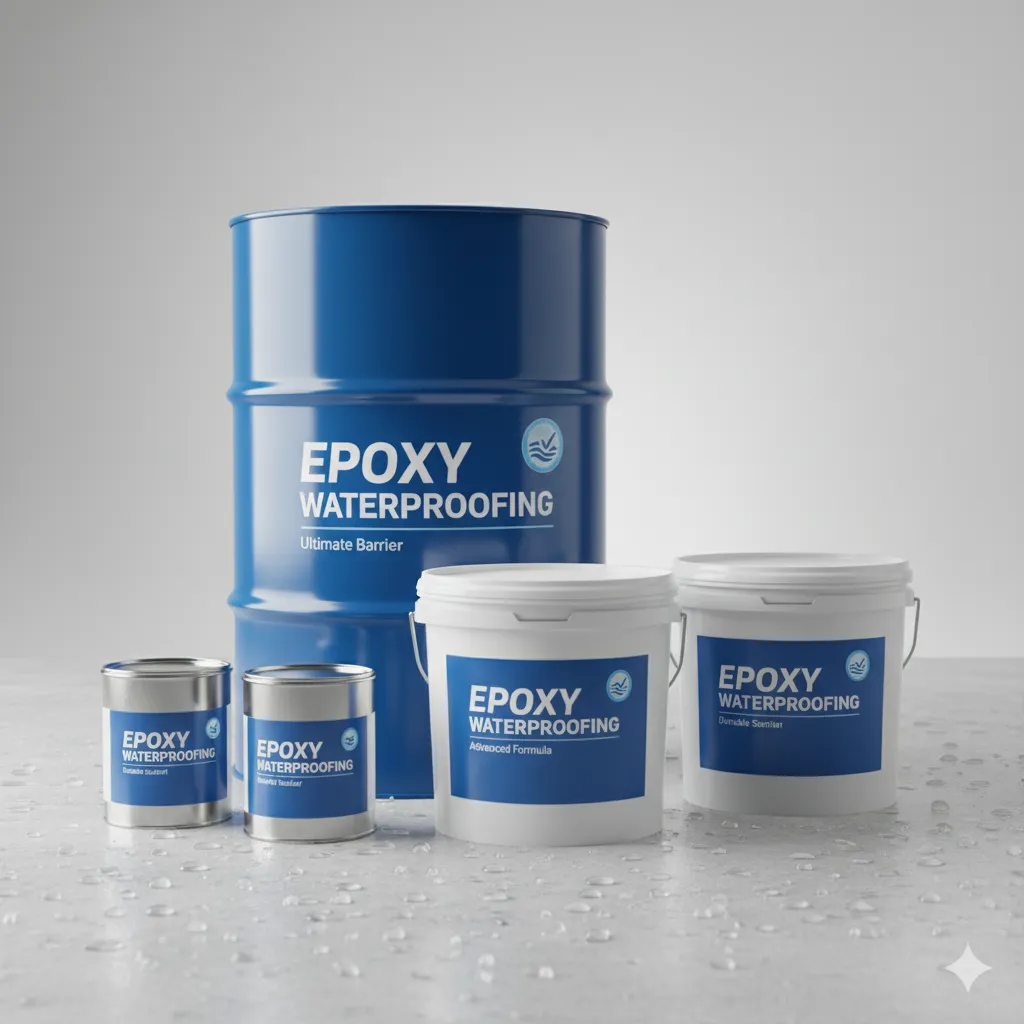
Description
Epoxy for Waterproofing in Pakistan
High-performance epoxy waterproofing coating for suitable concrete, cementitious and metal surfaces. Designed to create a durable protective barrier against water, moisture, chemicals and demanding industrial exposure.
Epoxy Waterproofing Coating
A durable protective coating system for projects where strong adhesion water resistance and industrial surface protection are required.
What Is Epoxy Waterproofing?
Epoxy waterproofing is a protective coating system made by combining epoxy resin with a compatible hardener. After correct mixing and curing, it forms a hard, continuous protective film that helps reduce water penetration through suitable coated surfaces.
In simple terms, the process is:
Inspect
Prepare Surface
Repair Defects
Apply Primer
Apply Epoxy
Allow Curing
How Does Epoxy Waterproofing Work?
After the epoxy resin and hardener are mixed correctly, the material cures and creates a dense protective layer on the prepared surface.
The coating creates a protective layer between the substrate and water, moisture or selected environmental exposure.
A properly selected system can provide strong adhesion and durable surface protection when the substrate is stable and correctly prepared.
Important to Know
Epoxy waterproofing is not a one-product solution for every waterproofing problem. The correct system depends on water pressure, surface condition, moisture, crack movement and the expected service environment.
- Assess the source of water exposure
- Check the condition of the substrate
- Identify cracks and possible movement
- Check moisture requirements
- Confirm chemical exposure
- Select the correct product system
Where significant crack movement is expected, a flexible waterproofing membrane may be more suitable than a hard epoxy coating.
Key Features of Epoxy Waterproofing
Designed for suitable projects that require durable water resistance and protective surface performance.
Strong Adhesion
Can bond strongly to properly prepared concrete, steel and compatible substrates.
Water Resistance
A correctly applied and fully cured system creates a protective barrier that helps reduce water and moisture penetration.
Chemical Resistance
Selected epoxy formulations can resist chemicals, oils and industrial contaminants depending on the specific product.
Durable Film
Creates a hard and durable protective surface for demanding commercial and industrial environments.
Seamless Finish
Liquid-applied systems can create a continuous coating with fewer joints than many sheet-based systems.
Industrial Use
Suitable for selected industrial floors, utility areas, containment zones and other protected surfaces.
Where Can Epoxy Waterproofing Be Used?
Suitability depends on water exposure, substrate condition, movement and the selected epoxy system.
Concrete Water Tanks
Selected systems may be used for suitable tanks and water containment applications. Potable-water use requires specifically approved products.
Industrial Floors
Suitable for selected industrial floors requiring water resistance, durability and protective surface performance.
Basements & Utility Areas
May be suitable where the substrate is stable and the waterproofing specification matches actual water exposure.
Concrete Slabs
Provides a protective coating for properly prepared slabs exposed to moisture or suitable service conditions.
Wet Process Areas
Suitable for selected wash areas, wet zones and industrial processing environments.
Steel & Metal Surfaces
Can form part of a specified protective coating system for suitable metal and steel applications.
Where Does Epoxy Waterproofing Work Best?
Epoxy waterproofing is often selected where a stable and properly prepared substrate requires a hard protective coating.
- A hard protective surface is required
- Strong adhesion is important
- Water resistance is required
- Chemical resistance may be required
- Abrasion resistance is important
- The substrate is structurally stable
- A seamless liquid-applied coating is preferred
It is commonly considered for internal waterproofing and protective coating applications where the concrete or substrate remains stable.
Areas exposed to major crack movement, uncontrolled active leakage permanent immersion should be assessed individually before product selection.
Epoxy Waterproofing vs Flexible Membrane
The correct waterproofing system depends on actual project conditions.
| Feature | Epoxy Waterproofing | Flexible Waterproofing Membrane |
|---|---|---|
| Surface Finish | Hard protective finish | Flexible finish |
| Adhesion | Strong on properly prepared substrate | Depends on membrane system |
| Crack Movement | Limited movement tolerance | Better movement accommodation |
| Abrasion Resistance | Generally high | Product dependent |
| Chemical Resistance | Can be high depending on formulation | Product dependent |
| Industrial Use | Common for selected applications | Depends on system |
| UV Resistance | May require suitable topcoat | Product dependent |
| Best Selection | Stable and properly prepared surfaces | Areas with expected movement |
Typical Technical Specifications
Actual values must always be confirmed from the current product Technical Data Sheet.
| Property | Typical Information |
|---|---|
| Product Type | Two-component epoxy system |
| Main Use | Waterproofing and protective coating |
| Suitable Surfaces | Properly prepared concrete, cementitious substrates and selected metal surfaces |
| Application Method | Roller, brush or spray depending on formulation |
| Finish | Smooth, gloss or semi-gloss depending on product |
| Water Resistance | Designed to provide a protective barrier after full cure |
| Chemical Resistance | Product-specific and exposure-specific |
| Cure Time | Depends on temperature and product formulation |
| Recoat Time | Product and environmental condition dependent |
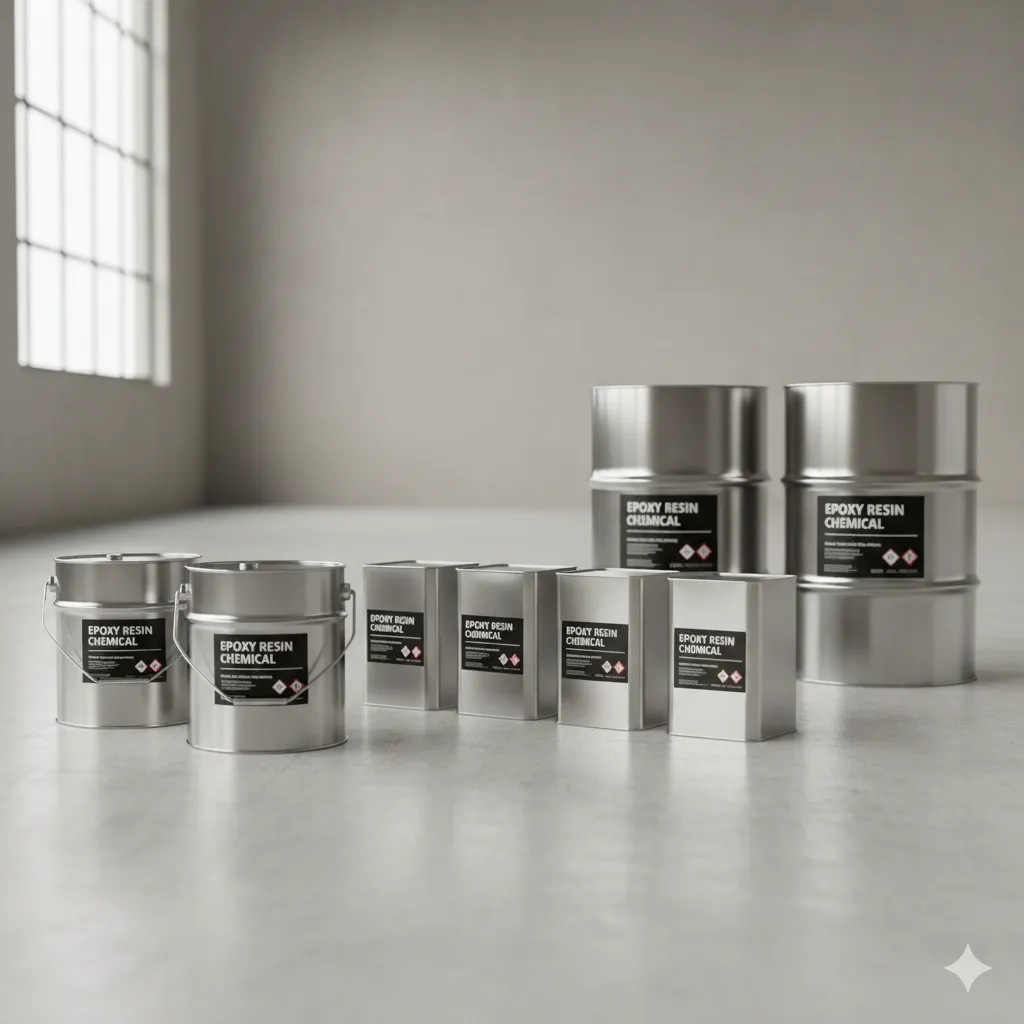
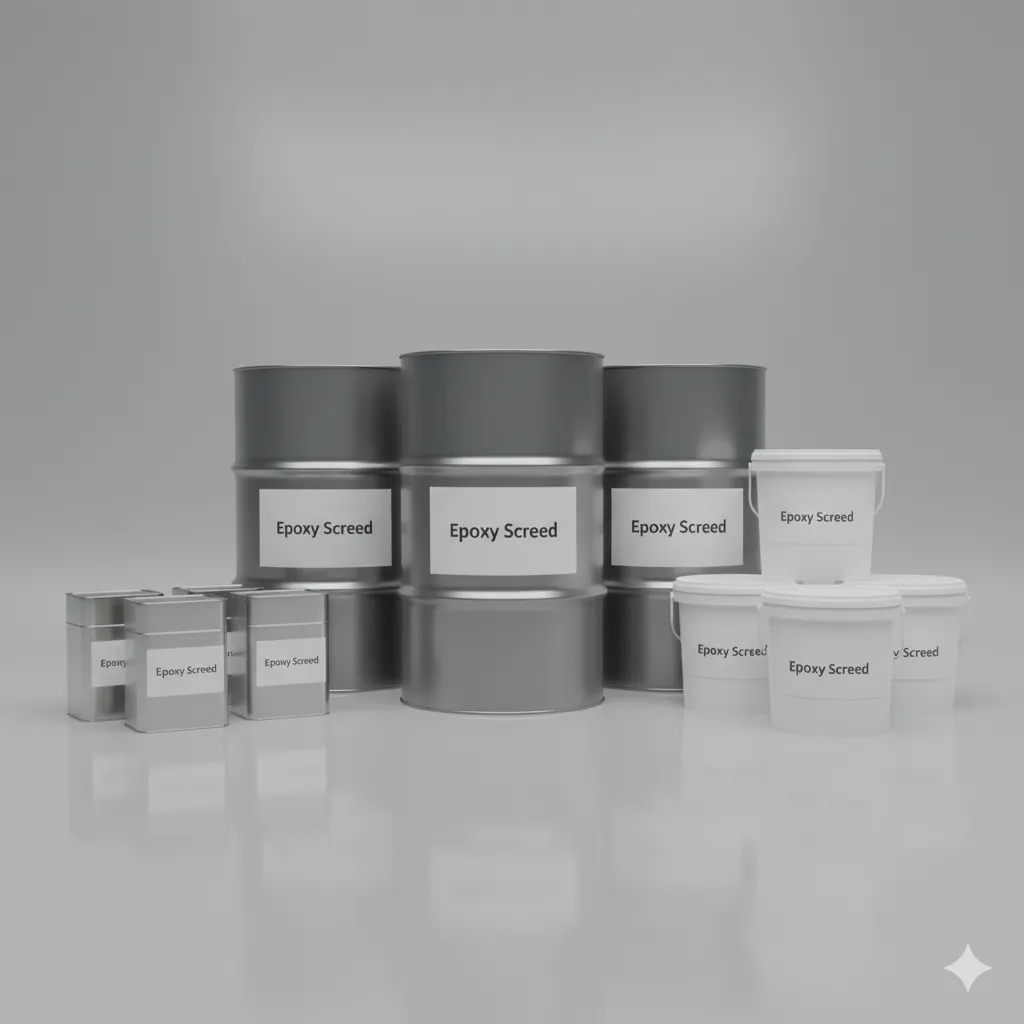
| Packaging | Tins, buckets and drums depending on product |
How to Apply Epoxy Waterproofing
Correct surface preparation and application have a major effect on coating performance.
Inspect the Surface
Check for cracks, loose concrete, failed coatings, dust, oil, moisture,
leakage and possible structural movement.
Repair Defects
Repair suitable cracks, holes and damaged areas using a compatible repair system.
Prepare the Surface
Remove dust, laitance, loose material, oil, grease and weak existing coatings.
Check Moisture
Confirm that substrate moisture conditions meet the requirements of the selected product.
Apply Primer
Apply a compatible primer where required by the coating system specification.
Mix Components
Mix the epoxy resin and hardener according to the manufacturer’s specified ratio.
Apply the Coating
Apply using the approved brush, roller or spray method and follow the specified number of coats.
Maintain Thickness
Follow the specified coverage rate and required coating thickness.
Allow Proper Curing
Do not expose the coating to water or service conditions before the required cure period.
Inspect the Surface
Check for pinholes, missed areas, blisters, damage and uneven coverage before service.
Common Epoxy Waterproofing Mistakes
Wet or Unsuitable Surface
Problem: Excess moisture can affect adhesion and curing.
Solution: Check substrate moisture and select a suitable system.
Ignoring Active Leakage
Problem: Surface coating may not stop uncontrolled water pressure from behind.
Solution: Identify and address the water source first.
Incorrect Mixing
Problem: Incorrect ratios can cause poor curing and reduced performance.
Solution: Follow the exact manufacturer mixing ratio.
Applying Too Thin
Problem: Insufficient thickness can reduce protection.
Solution: Follow the specified coverage and thickness requirements.
Ignoring Surface Damage
Problem: Water can enter through cracks and failed areas.
Solution: Repair suitable defects before coating.
Early Service Exposure
Problem: Water or traffic can damage an uncured coating.
Solution: Allow the recommended curing period.
Epoxy Waterproofing for Pakistan’s Climate
Temperature, humidity, dust and seasonal weather can affect application and long-term performance.
Punjab
High summer temperatures, dust, seasonal humidity and monsoon conditions can affect surface preparation and application timing.
Karachi & Coastal Areas
Higher humidity and salt exposure may require careful preparation and a properly specified protective coating system.
Industrial Areas
Water, chemicals, oils and mechanical wear should all be considered when selecting an epoxy system.
Monsoon Season
Avoid applying unsuitable systems when the substrate is wet, condensation is present or rain can affect uncured material.
High Temperature
Higher temperatures can affect working time and curing. Follow current product application limits.
Surface Condition
Always assess actual moisture, contamination and substrate strength before starting the coating work.
Advantages & Limitations
Advantages
- Strong adhesion to properly prepared surfaces
- Durable protective coating
- Good water and moisture resistance
- Chemical resistance with selected formulations
- Seamless liquid-applied finish
- Good abrasion resistance for many industrial uses
- Suitable for selected concrete and metal surfaces
- Can combine waterproofing with surface protection
Limitations
- Standard epoxy is generally hard rather than highly flexible
- May not suit significant crack movement
- Some systems require controlled substrate moisture
- Surface preparation is critical
- Two-component systems require correct mixing
- Pot life is limited after mixing
- UV exposure may require a compatible topcoat
- Not every epoxy is suitable for permanent immersion
- Potable-water use requires specifically approved products
How to Choose the Right Epoxy Waterproofing System
What Surface Are You Waterproofing?
Identify whether the substrate is concrete, steel, cementitious material, an existing coating, industrial floor or containment structure.
What Is the Water Exposure?
Consider occasional moisture, frequent washing, standing water, continuous exposure, water pressure or permanent immersion.
Is There Surface Movement?
If cracks or joints are expected to move, a flexible waterproofing system may be more suitable.
Are Chemicals Present?
Provide details of the actual chemicals and exposure conditions before selecting a protective coating.
Indoor or Outdoor?
Outdoor applications may require additional UV protection depending on the selected epoxy system.
What Is the Surface Condition?
Check moisture, cracks, contamination, failed coatings and substrate condition before final product selection.
Standards & Professional References
Professional coating projects should follow relevant product specifications test methods and applicable project standards.
ASTM International
ASTM publishes standards and test methods used for evaluating coatings, concrete, moisture, adhesion and other material properties.
AMPP
The Association for Materials Protection and Performance provides professional resources related to corrosion prevention, coatings and surface preparation.
American Concrete Institute (ACI)
ACI publishes technical guidance related to concrete construction, repair and substrate performance.
ISO Standards
Relevant ISO standards may apply depending on the substrate, coating system and environmental exposure conditions.
For projects planned in 2026 and beyond, verify the current applicable standard edition, project specification and manufacturer documentation before final system selection.
Epoxy Waterproofing Case Study
Replace the following placeholders with documented information from an actual project.
Actual Epoxy Waterproofing Application
Publish real measurements, photographs and inspection records to demonstrate practical project experience.
Epoxy for Waterproofing
Lahore, Punjab, Pakistan
May 2026
Approximately 1,500 sq. ft.
Reinforced Concrete
Minor cracks and surface porosity in selected areas
Exposed to direct rainwater, seasonal monsoon conditions, surface moisture and occasional standing water.
Cleaned, loose material removed and local defects repaired
Prepared substrate + epoxy waterproofing system
2 Coats
Approximately 500 microns DFT
Dry weather conditions, approximately 30–32°C, protected from water exposure during the required curing period.
Continuous coverage with no significant visible defects observed
This illustrative Lahore case study demonstrates that effective epoxy waterproofing depends on proper concrete preparation, moisture control, crack treatment, careful coating application and adequate curing.
Epoxy for Waterproofing Price in Pakistan
The price of epoxy waterproofing in Pakistan depends on the selected formulation and complete project requirements.
- Product formulation
- Required quantity
- Packaging size
- Number of coats
- Required coating thickness
- Surface condition
- Primer requirements
- Project area
- Chemical resistance requirements
- Delivery location
For an Accurate Quote, Provide:
- Surface type
- Approximate area in m²
- Project location
- Existing surface condition
- Type of water exposure
- Indoor or outdoor application
- Any chemical exposure
Available Packaging
Tins | Buckets | Drums
Available Finish
Gloss | Semi-Gloss | Product-Specific Finish
Is Epoxy the Right Waterproofing Solution?
Epoxy waterproofing can be effective when the substrate is stable, properly prepared and matched with the correct coating system.
For active leakage, significant crack movement, permanent immersion, drinking-water applications or aggressive chemical exposure, select the system according to the specific service conditions and required approvals.
Epoxy Waterproofing FAQs
Epoxy waterproofing is used to create a protective barrier on suitable concrete, cementitious and metal surfaces. Applications can include industrial floors, wet areas, tanks, machinery foundations and selected infrastructure surfaces.
A properly selected and fully cured epoxy coating can provide strong water resistance. Actual performance depends on the product, surface preparation, coating thickness and service conditions.
It depends on the cause of the leakage. Surface coatings may help protect the positive side of a suitable structure, but active water pressure, cracks or water entering from behind the substrate may require a different repair or waterproofing approach.
Yes, selected epoxy systems can be used on properly prepared concrete. The concrete condition, moisture level and expected water exposure should be assessed before application.
Neither is automatically better. Epoxy is hard and durable, while flexible membranes can better accommodate movement. The correct choice depends on the application, substrate condition and expected exposure.
Some epoxy systems can be used outdoors, but prolonged UV exposure may cause chalking or colour change. A compatible UV-resistant topcoat may be required depending on the selected system.
There is no single guaranteed lifespan. Durability depends on surface preparation, product formulation, coating thickness, water exposure, UV exposure, mechanical wear and maintenance.
Curing time depends on the product and environmental conditions. Temperature, humidity and coating thickness can affect the curing process. Always follow the current product Technical Data Sheet for the selected epoxy system.
Some specialised epoxy systems may tolerate damp substrates, while others require controlled or dry conditions. Check the specific product requirements and Technical Data Sheet before application.
The price of epoxy for waterproofing in Pakistan depends on the product type, quantity, project area, surface condition and system requirements. Contact us with your project details for current pricing and bulk rates.
Bulk epoxy waterproofing supply may be available for contractors, construction companies, industrial buyers and larger projects, depending on the product and order quantity.
Only use an epoxy coating specifically approved for potable-water contact in drinking-water tanks. A general industrial epoxy should not automatically be used for drinking-water applications.
Get Epoxy Waterproofing Product Information & Pricing
Looking for epoxy waterproofing coating in Pakistan for a commercial, industrial or construction project?
Send us your surface type, approximate area, project location, water exposure and current surface condition.
Request a Quote
Reviews
There are no reviews yet.