
Description
Premium Epoxy Paint
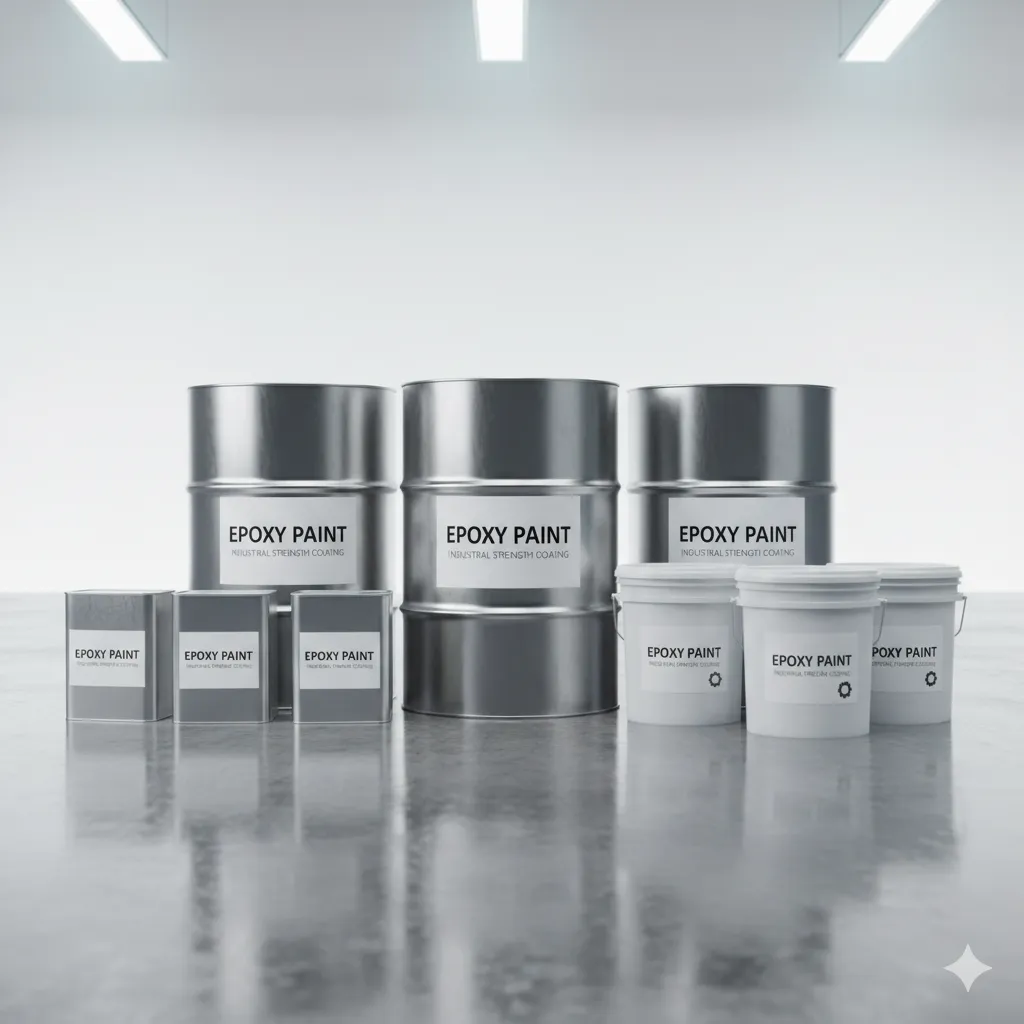
Premium Epoxy Paint is a high-performance protective coating designed for concrete, steel, metal and other suitable industrial surfaces. It forms a hard, durable coating with strong adhesion and resistance to water, chemicals, abrasion and industrial wear when the correct system is selected and applied.
Premium Epoxy Paint System
A suitable epoxy coating system can provide long-term protection for demanding surfaces exposed to moisture, chemicals, abrasion and regular industrial use.
What Is Premium Epoxy Paint?
Premium Epoxy Paint is defined as a protective coating based on epoxy resin and a compatible curing agent.
After the components react and cure, the coating forms a hard protective layer. This layer can help protect suitable surfaces against moisture, chemicals, abrasion and industrial exposure.
Premium epoxy paint refers to a higher-performance coating system selected for demanding applications. Actual performance depends on the resin formulation, hardener, surface preparation, dry film thickness and service environment.
Inspect Surface
Prepare Substrate
Repair Defects
Apply Primer
Apply Epoxy Paint
Allow Full Cure
Why Choose Premium Epoxy Paint?
A properly selected epoxy coating system combines surface adhesion, mechanical durability and resistance to demanding industrial conditions.
Strong Adhesion
Suitable epoxy systems can bond strongly to properly prepared concrete and metal surfaces.
Hard Protective Film
The cured coating forms a tough surface designed to resist regular wear and industrial exposure.
Chemical Resistance
Selected formulations can resist specific chemicals. Always check compatibility with the actual chemical and exposure conditions.
Water Resistance
A properly cured epoxy coating can provide a protective barrier against suitable moisture and water exposure.
Concrete Protection
Epoxy paint can protect suitable concrete surfaces in factories, workshops, warehouses and industrial facilities.
Industrial Performance
System selection can be matched to expected traffic, cleaning methods, chemical exposure and mechanical conditions.
Where Is Premium Epoxy Paint Used?
Premium epoxy paint can be used across industrial, commercial and infrastructure applications when the substrate and service conditions match the selected coating system.
Industrial Floors
Suitable for properly prepared concrete floors in factories, workshops, warehouses and production areas.
Steel Structures
Epoxy coating systems can help protect prepared steel structures, machinery and fabricated metal components.
Industrial Machinery
Selected systems can protect machinery bases and equipment surfaces from industrial moisture and selected chemical exposure.
Warehouses
Epoxy paint can provide a durable finish for suitable warehouse floors and operational areas.
Workshops & Garages
Suitable systems can provide protection against regular traffic, oil contact and normal workshop conditions.
Commercial Facilities
Selected epoxy systems can be used in service areas, storage spaces and other demanding commercial environments.
Understanding the Epoxy Coating System
An epoxy coating system usually contains more than one component. Each layer performs a specific function. The complete system should match the surface condition and expected service environment.
The main reactive material that forms part of the final cured coating.
The curing component that reacts with the epoxy resin at the specified mixing ratio.
A coating layer that helps prepare and improve adhesion between the substrate and the following coats.
The thickness of the cured coating after solvents or other volatile materials have evaporated.
The final exposed coating layer. It can provide additional protection, colour, appearance or specific performance properties.
Advantages and Limitations
Advantages
- Strong adhesion to properly prepared surfaces
- Hard and durable cured coating
- Suitable systems can resist water and moisture
- Selected formulations offer chemical resistance
- Can protect concrete, steel and other compatible substrates
- Available for different industrial service conditions
- Can be applied as part of a multi-coat protection system
Limitations
- Surface preparation strongly affects coating performance.
- Incorrect mixing can cause curing problems.
- Some standard epoxy coatings can chalk or change colour under prolonged UV exposure.
- Excess substrate moisture can affect selected systems.
- Chemical resistance varies between formulations.
- Epoxy paint does not automatically solve structural cracks or active water leakage.
- Heavy industrial exposure may require a specialised multi-layer system.
Typical System Considerations
Exact technical values depend on the selected product. Confirm all mixing, application and curing requirements from the current product Technical Data Sheet.
| Property | What It Means | Project Consideration |
|---|---|---|
| Surface Preparation | Cleaning and preparing the substrate before coating. | Remove dust, oil, grease, rust, loose material and other contamination. |
| Mixing Ratio | The required proportion of resin and hardener. | Follow the exact manufacturer specification. |
| Pot Life | The usable working time after mixing. | Mix quantities that can be applied within the stated working time. |
| Coating Thickness | The thickness of the applied coating system. | Select thickness according to exposure and performance requirements. |
| Recoat Interval | The time period for applying the next coat. | Apply within the approved minimum and maximum recoat window. |
| Full Cure | The stage when the coating reaches its intended cured performance. | Do not expose the coating to full service before the required cure period. |
How to Apply Premium Epoxy Paint
The exact procedure depends on the selected coating system and product instructions.
Inspect the Surface
Check the substrate for cracks, contamination, corrosion, weak concrete and moisture issues.
Prepare the Substrate
Use a suitable preparation method to create a clean and sound surface for the selected system.
Repair Defects
Repair suitable cracks, holes and damaged areas before coating where required by the system design.
Apply Compatible Primer
Apply the specified primer when the selected epoxy system requires one.
Mix and Apply Epoxy Paint
Mix resin and hardener according to the specified ratio and apply within the available working time.
Cure Before Service
Allow the coating to cure according to the product requirements before placing the surface into full service.
Premium Epoxy Paint in Pakistan
Temperature, humidity and substrate moisture can affect epoxy coating application and curing.
High Temperature
Higher temperatures can reduce the available working time after mixing. Plan mixing quantities and application work accordingly.
Humidity & Moisture
Check concrete moisture and product requirements before application. Excess moisture can affect selected epoxy systems.
Outdoor UV Exposure
Standard epoxy coatings may change colour or chalk during prolonged sunlight exposure. Consider a compatible UV-resistant topcoat where required.
How to Choose the Right Premium Epoxy Paint
Check the Surface
Identify whether you are coating concrete, steel, metal or another compatible substrate.
Check the Exposure
Consider water, chemicals, abrasion, impact, traffic and temperature exposure.
Select the Complete System
Consider whether the project requires a primer, intermediate coat, epoxy topcoat or additional UV-resistant finish.
Review Product Data
Check the current Technical Data Sheet for mixing ratio, coverage, pot life, recoat time and curing requirements.
Example Industrial Coating Project
The following example shows how system selection and preparation can affect an epoxy coating project.
Warehouse Equipment & Service Area
Illustrative project example for a demanding industrial environment.
Commercial and Industrial Facility Protective Painting
Prepared Structural Steel and Fabricated Metal Components
Existing coated steel with localized weathering, minor surface corrosion and fading in exposed areas
Mechanical cleaning, removal of loose rust and poorly adhered old coating, followed by dust and surface contaminant removal
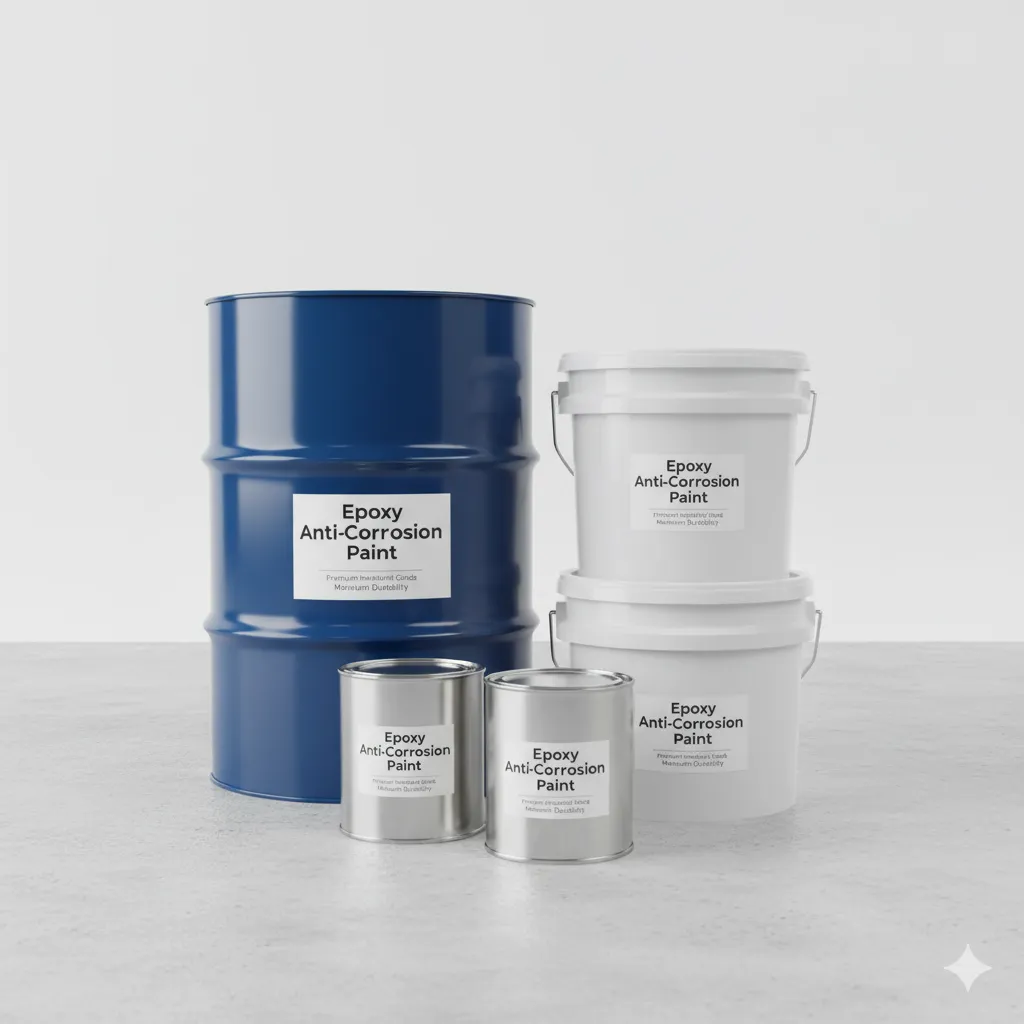
Surface Preparation + Epoxy Anti-Corrosion Primer + Premium Epoxy Intermediate Coat + Premium Epoxy Paint Topcoat
Target total system thickness of approximately 180–220 microns DFT, subject to the selected product system and project specification
The completed coating system achieved a continuous, smooth and visually uniform finish. No significant visible missed areas, major runs, peeling or application-related defects were observed during the final inspection.
Coating Standards & Good Practice
Professional coating selection and application should follow relevant project specifications, product documentation and recognised industry practices.
AMPP / SSPC Surface Preparation Practices
Surface preparation is a major factor in coating performance. Industrial coating projects commonly use recognised preparation standards and procedures to define surface cleanliness and preparation quality.
ISO 12944 Principles
ISO 12944 provides widely used guidance for corrosion protection of steel structures through protective paint systems and environmental exposure categories.
ASTM Test Methods
Coating properties can be evaluated through recognised test methods for adhesion, thickness and other performance characteristics where required by a project specification.
Standards and test requirements should be selected according to the actual project, substrate and coating specification. Always use the current edition and applicable requirements.
Common Application Mistakes
Poor Surface Preparation
Dust, oil, rust and weak material can reduce adhesion.
Solution: Prepare and clean the substrate according to the coating system requirements.
Incorrect Mixing
Wrong resin-to-hardener ratios can cause incomplete curing.
Solution: Follow the specified mixing ratio and procedure exactly.
Ignoring Moisture
Excess moisture can affect adhesion and performance in selected systems.
Solution: Test and control substrate conditions before application.
Applying Too Thick
Excessive thickness can affect curing and coating performance.
Solution: Apply within the recommended thickness range.
Missing Recoat Window
Applying the next layer outside the approved window can affect intercoat adhesion.
Solution: Follow the specified recoat schedule.
Early Service Exposure
Traffic or chemicals before full cure can damage the coating.
Solution: Allow the required curing period before full service.
Premium Epoxy Paint Selection Checklist
| Question | Check Before Selecting |
|---|---|
| What surface will you coat? | Concrete, steel, metal or another compatible substrate. |
| What exposure is expected? | Water, chemicals, abrasion, impact, traffic or outdoor exposure. |
| What is the surface condition? | Check strength, contamination, corrosion, cracks and moisture. |
| Is a primer required? | Select a compatible primer according to the substrate and coating system. |
| Is UV resistance required? | Consider a compatible UV-resistant finishing system for prolonged outdoor exposure. |
| What technical data is available? | Review the current Technical Data Sheet and Safety Data Sheet before use. |
Premium Epoxy Paint FAQs
Answers to common questions about epoxy paint selection, application and performance.
Premium epoxy paint is a high-performance protective coating based on epoxy resin and a compatible curing agent. It is designed for demanding applications where strong adhesion, durability and resistance to selected environmental conditions are required.
It can be used on suitable concrete, steel and metal surfaces in industrial floors, factories, warehouses, workshops, machinery areas and other applications. The correct use depends on the selected formulation and coating system.
A properly selected and fully cured epoxy coating can provide strong resistance to water and moisture. Performance depends on the product formulation, surface preparation, coating thickness and service conditions.
Many epoxy coating systems offer resistance to selected chemicals. Chemical resistance varies according to the formulation, chemical concentration, temperature and duration of exposure. Check compatibility before use.
Yes. Suitable epoxy paint systems can be applied to properly prepared concrete. The surface should have adequate strength and should be free from loose material, dust, oil and other contamination.
Yes. Suitable epoxy coatings can be used on properly prepared steel. Remove rust, oil, grease and loose material according to the requirements of the selected coating system.
Some systems may be suitable for outdoor applications. However, many standard epoxy coatings can chalk or change colour during prolonged UV exposure. Outdoor projects may require a compatible UV-resistant topcoat.
Curing time depends on the product formulation, temperature, humidity and coating thickness. Check the current Technical Data Sheet for handling, recoating and full cure requirements.
Incorrect mixing can cause incomplete curing, a soft or sticky coating, poor adhesion and reduced durability. Always follow the manufacturer’s specified mixing ratio.
There is no single guaranteed lifespan. Durability depends on surface preparation, coating thickness, product formulation, UV exposure, chemical exposure, mechanical wear and maintenance.
Some specialised epoxy products may tolerate damp substrates, while other systems require dry or controlled moisture conditions. Always check the specific product requirements before application.
Many epoxy systems require or benefit from a compatible primer, especially on porous concrete or prepared metal. The need for a primer depends on the selected coating system and substrate.
The price depends on the product formulation, packaging size, colour, quantity, required coating system and project conditions. Bulk requirements may also affect the final price.
Bulk supply may be available for contractors, industrial companies, coating applicators, construction companies and larger projects depending on product availability and order quantity.
Premium Epoxy Paint Key Takeaways
Premium Epoxy Paint provides a durable protective solution when the product and complete coating system match the actual application.
Need Premium Epoxy Paint for Your Project?
Share your project area, substrate type and expected exposure. Select the right epoxy coating system based on actual site and service conditions.
- Industrial and commercial projects
- Concrete and steel coating systems
- Bulk and wholesale requirements
- Product selection support
Request Product Information
Reviews
There are no reviews yet.